Best Roguelikes for Beginners: Choose Your Kind of Challenge
Compare five Steam roguelikes by controls, permanent progress, difficulty options and the cost of failure. A practical starting point for new players.

TL;DR
- Start with Vampire Survivors for simple controls, Hades for action with a difficulty assist, or Slay the Spire for decisions without timed inputs.
- Permanent upgrades and new card unlocks are different kinds of progress. Neither means you keep the build from a failed run.
- Hades II is a full release. Its old Early Access description here was incorrect.
The best first roguelike depends on which part of failure annoys you. Losing a fight, losing a carefully built deck and losing twenty minutes to controls you cannot manage are different problems.
This guide gives you five starting points and explains what survives a failed attempt. It replaces a single easiest-to-hardest ranking with choices based on controls, time pressure and progression. A turn-based game can be mechanically simple and strategically demanding at the same time.
The comparisons use developer descriptions and a Steam check on 26 October 2026. They are researched recommendations, not a claim that five new playthroughs were completed for this update. The broader best roguelikes on Steam guide covers more demanding and specialised options.
Choose the obstacle you want to remove
| Game | Starting appeal | What carries forward | What a failed run costs |
|---|---|---|---|
| Vampire Survivors | Movement with automatic attacks | Gold-funded upgrades and unlocks | The build assembled during that attempt |
| Hades | Action with God Mode available | Permanent upgrades and story progress | Temporary boons and the current escape attempt |
| Slay the Spire | Card decisions without timed inputs | More options unlocked for future runs | The deck and relic combination you assembled |
| Monster Train | Cards plus unit placement | Clan levels unlock additional cards | The current route and upgraded deck |
| Hades II | A larger action game to learn | Permanent systems alongside repeated runs | The current route's temporary build |
“Beginner-friendly” is not a promise that you will win quickly. It means there is a way into the game that fits how you like to learn. A person who enjoys considering a decision can find Slay the Spire more approachable than an action game with fewer buttons.
Vampire Survivors
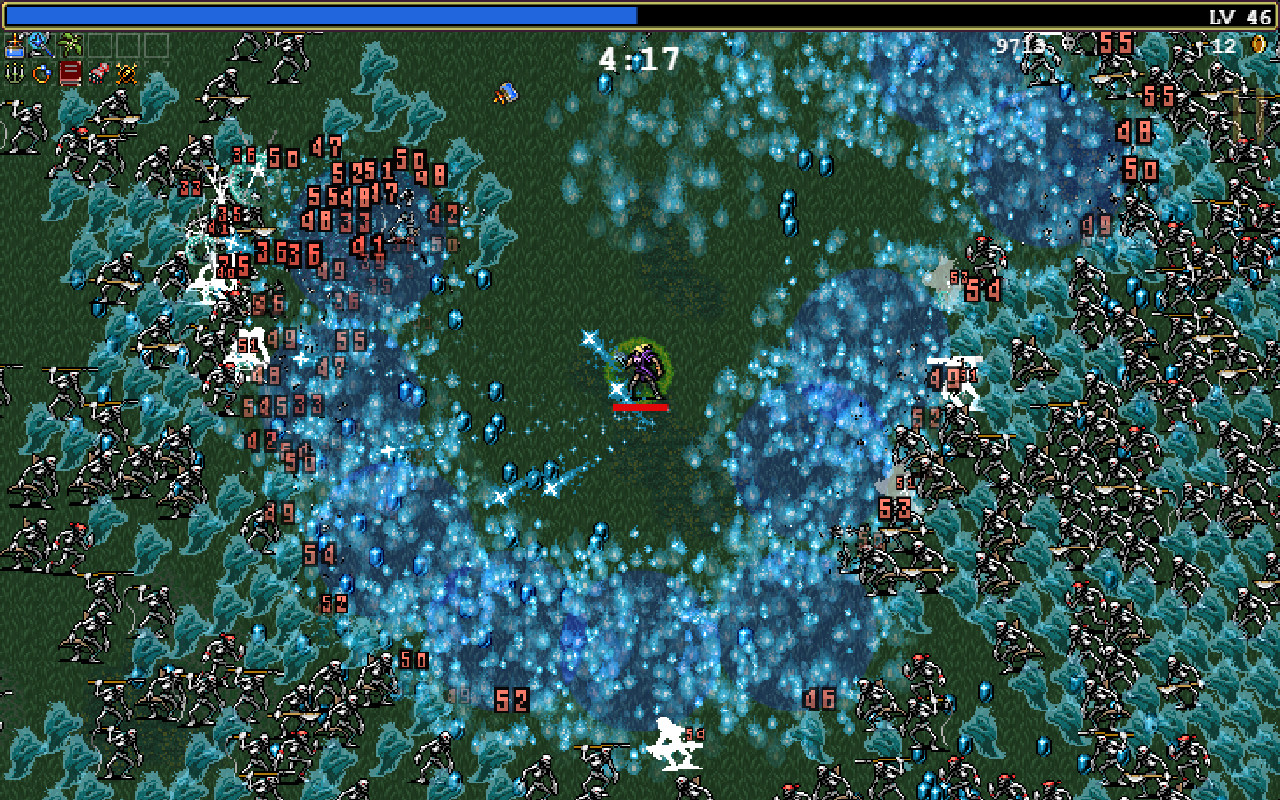
Vampire Survivors removes much of the button management. You steer your character while weapons attack automatically, then choose upgrades as the run develops. The distinction matters: your character does not move automatically, despite what the old version of this guide said.
Its official store description explains the permanent loop: collect gold, buy upgrades and help the next attempt. It also recommends refunding power-ups to try different upgrade paths. That gives a new player room to experiment without treating the first purchase as a permanent commitment.
The catch is the crowded screen and repeated survival loop. Simple controls do not guarantee that you will enjoy watching increasingly elaborate attacks fill the display. Choose it to learn how upgrades combine, rather than as a promise of a relaxed experience from the first run.
The base game was $4.99 in our US check. Optional DLC exists, but it is sensible to find out whether you enjoy the core loop before buying more of it.
Hades
Hades is the action recommendation because failure feeds systems outside the immediate run. Supergiant's official FAQ describes permanent progression and difficulty modifiers alongside the characters you return to between attempts.
God Mode is the important beginner option. It increases damage resistance and becomes more forgiving after deaths. It does not mean standing still while the game completes itself; you still need to learn movement, attacks and enemy patterns.
That makes Hades a useful choice when the combat appeals but repeated failure threatens to block the story. There is no need to treat an available assist as a moral examination. Use the settings that let you engage with the game.
The reservation is the pace. If reacting under pressure is the part you dislike, a turn-based recommendation is more useful than insisting that enough permanent upgrades will eventually make fast combat your favourite thing. Our Hades analysis discusses its relationship between story and repetition.
Hades on Steam had a regular and observed US price of $24.99 at the check.
Slay the Spire
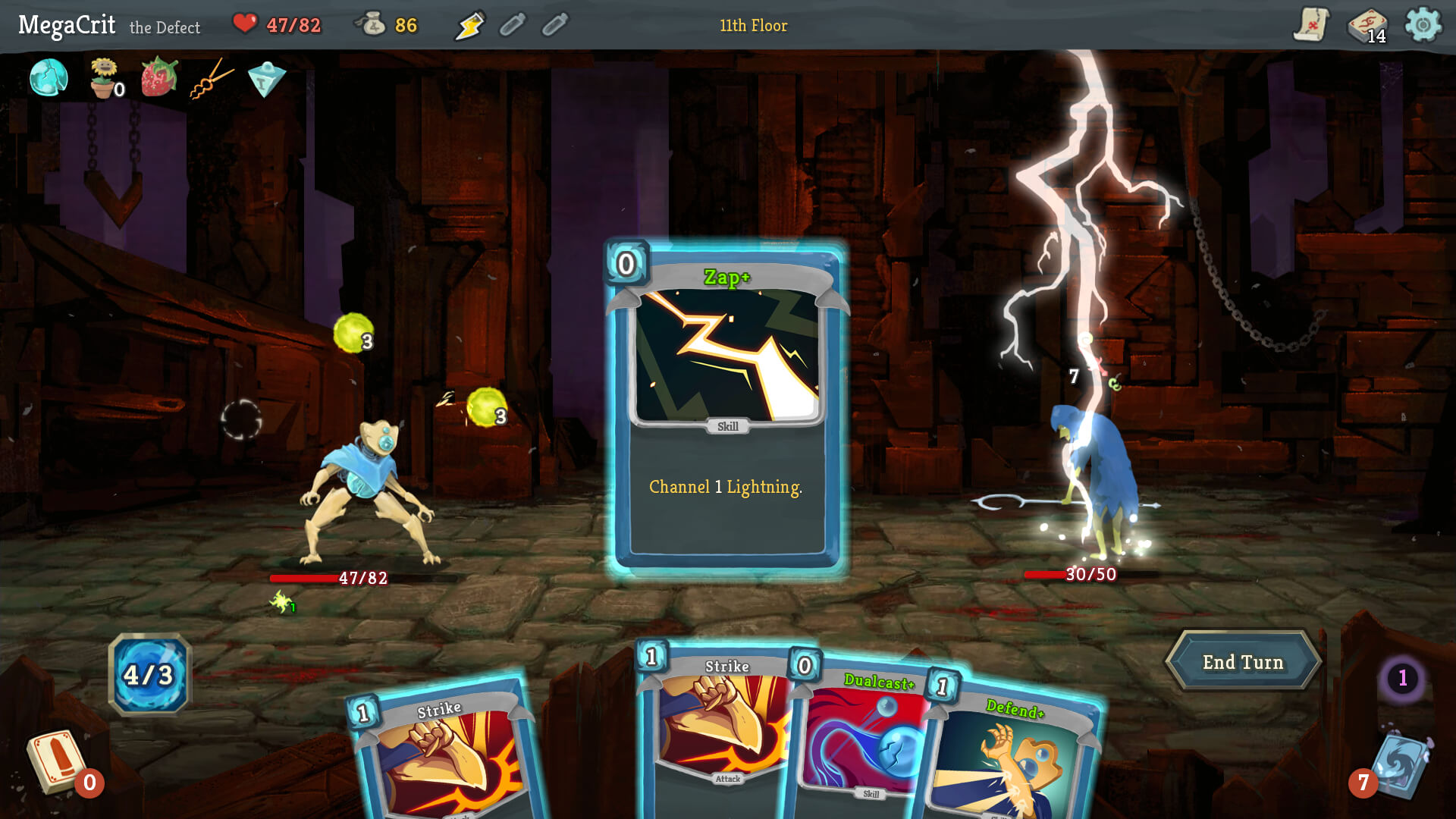
Slay the Spire gives you time to choose a card, inspect an enemy and consider the next turn. Its Steam page lists both play without timed input and Save Anytime. Those are useful features for someone who needs thinking time or expects interruptions.
The decisions are still demanding. A deck needs to work with the cards and relics you actually have, rather than the ideal combination you hoped would appear. Taking another card is a choice about the deck's future draws, not automatically an improvement.
Progression expands your options, but a failed deck does not come back intact on the next attempt. That is a different bargain from purchasing a permanent strength increase in Hades. Start with the ordinary climb before adding optional challenge modifiers; learning the interactions is enough work already.
The store also offers a Custom mode with run modifiers. Treat that as another way to explore the systems, rather than assuming every mode has the same progression rules. This guide concerns the original Slay the Spire, not its sequel.
Its regular US price was $24.99; the observed discount made it $6.24 on 26 October. Check the store before budgeting around that sale.
Monster Train
Monster Train adds position to deckbuilding. You defend three vertical battlefields, which means choosing a card also raises the question of where its effect or unit belongs.
The official description identifies five base-game clans, a primary and supporting clan choice, and clan levels that unlock additional cards. The old version's claim of twenty-five starting clan combinations was not a reliable explanation of that system and has been removed.
For a beginner, the useful point is that unlocks widen what you can build. They do not preserve the successful deck from the previous run. There is also a ladder of Covenant difficulty levels, so you have somewhere to go when the ordinary setup stops being enough.
The added spatial layer is the attraction and the cost. Choose it if placing units sounds more interesting than managing one character's cards; choose Slay the Spire if you would rather learn deck construction with fewer simultaneous boards to track.
Use the ordinary single-player mode for this comparison. The store separately describes Hell Rush as a timed competitive mode, which would defeat the purpose if your reason for choosing cards was to avoid time pressure. The original Monster Train was $24.99 at the check.
Hades II
Hades II reached version 1.0 on 25 September 2025, as confirmed by Supergiant's launch announcement. The earlier Early Access description and incomplete-story warning in this guide were wrong.
Its store describes permanent upgrades and the returning God Mode alongside its action systems. It is a valid starting point if this is the game you want, but it is not necessary to buy a sequel simply to begin learning the genre.
The first Hades remains our more focused starting recommendation for a new action player. That is an editorial preference about the amount you are taking on, not a claim that Hades II requires you to complete another game before it will work.
Choose the sequel when its setting and expanded systems are the attraction. Choose the first game when you want to learn the basic loop before adding another set of mechanics. Both still ask you to engage with repeated combat attempts; a high review score does not remove that requirement.
Hades II on Steam was $29.99 at the US check. The full release, rather than an old Early Access content estimate, is what this recommendation concerns.

Check stopping points before committing to a run
Three features are easy to confuse: pausing the action, saving persistent unlocks and resuming the exact run you were playing. Steam Cloud describes synchronisation of save files; it does not by itself establish the third feature.
Slay the Spire supplies the clearest publisher-labelled support in this source check, through its Save Anytime and untimed-input features. If interruptions are your main concern, that is a concrete reason to start there.
Supergiant's Hades II support guide discusses location-triggered saves and recovering saved progress. Read the in-game quit prompt and wait for saving to complete rather than assuming a pause menu or cloud icon makes every instant a safe exit.
We have not performed a current-build suspend-and-resume test across all five games. This guide therefore does not promise an identical mid-run exit behaviour for every entry. Likewise, run length changes with mode, familiarity and choices, so the comparison does not turn campaign-hour estimates into a guarantee that an attempt fits a short break.
The dated Steam check
| Game | Reviews | Positive share | Observed US price |
|---|---|---|---|
| Vampire Survivors | 266,781 | 98.3% | $4.99 |
| Hades | 310,373 | 98.0% | $24.99 |
| Slay the Spire | 219,758 | 97.5% | $6.24 |
| Monster Train | 22,999 | 95.8% | $24.99 |
| Hades II | 124,540 | 95.7% | $29.99 |
These are all-time, all-language, all-purchase-type aggregates with off-topic filtering enabled, collected on 26 October 2026. Exact observation times and regular prices are in the fixed source data. Review percentages describe the people who reviewed each game, not a controlled test of beginner accessibility.
Start with one game and one reason
Pick Vampire Survivors if the idea of an evolving build appeals but managing several attack buttons does not. Pick Hades if you want action and a story that gives repeated attempts context. Pick Slay the Spire if you want to stop, read and make a decision.
Monster Train and Hades II give you different extensions of those ideas. They are alternatives with additional systems, not compulsory steps on a ladder that every player must climb. There is no reason to buy all five to discover whether you like one.
Give the first choice a few attempts focused on understanding what happened. If you can identify why a run ended and want to try a different approach, the game is teaching you something useful. If you simply dislike its basic activity, changing games is more sensible than treating the review score as an obligation.
The label matters less than that distinction. These are modern run-based games commonly grouped as roguelikes and roguelites, with different amounts of persistent progression. The table explains the practical difference instead of pretending the terminology guarantees one design.
For a strict budget, compare the under-$15 guide and current Steam deals. For deeper genre exploration, return to the main roguelike recommendations. Buy the kind of challenge you want to return to, not the one you think you ought to tolerate.