Crimson Desert Is Game of the Year 2026. The Patches Sealed It.
Pearl Abyss launched their first single-player game to mixed reviews in March. Five million copies and six major patches later, Crimson Desert is the best open-world game of the year. Here's what changed.

TL;DR
- Genuine Game of the Year contender -- launched with real problems, fixed in six weeks, not years.
- Zero loading screens anywhere in the entire game world.
- 5 million copies sold in 26 days despite a rocky launch. Play the patched version.
Verdict: Buy it. $69.99 on Steam. Pearl Abyss's first single-player game. Open-world action-adventure across the continent of Pywel. 5 million copies sold in 26 days. Six major patches. Steam reviews climbed from Mixed to Very Positive. This is the best open-world game released in 2026 and it deserves to be in the Game of the Year conversation.
Crimson Desert launched on March 19, 2026. I played it at launch and came away impressed by the scale and combat, frustrated by the boss difficulty and the inventory system, and cautiously optimistic that Pearl Abyss would respond to the obvious problems. They did. In a manner that puts most AAA studios to shame.
The game that exists today, after patches 1.01 through 1.04, is a significantly better version of an already ambitious piece of work. This review reflects that version.
What Crimson Desert Is
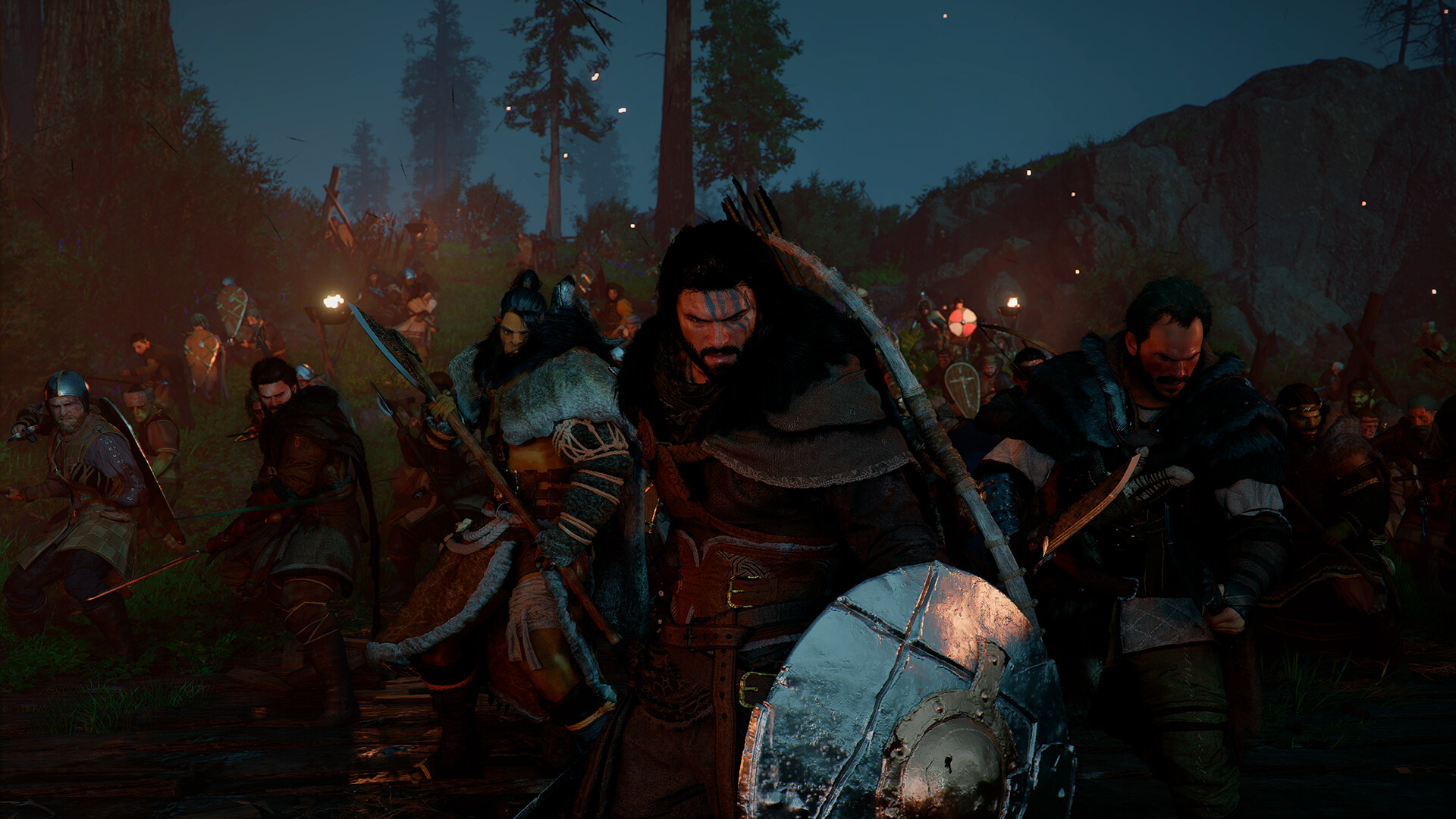
Pearl Abyss built Black Desert Online for over a decade. Crimson Desert is what happened when they took everything they learned about building massive, alive game worlds and applied it to a single-player experience with a narrative spine.
You play as Kliff, a mercenary leading the Greymane faction after a devastating ambush scatters his comrades. The story begins as a personal mission of reunion and revenge and expands into something larger involving rival empires, pirate clans, and the Abyss: a mysterious realm where a supernatural imbalance is threatening the continent. It's classic high-fantasy structure done with technical ambition that very few studios can match.
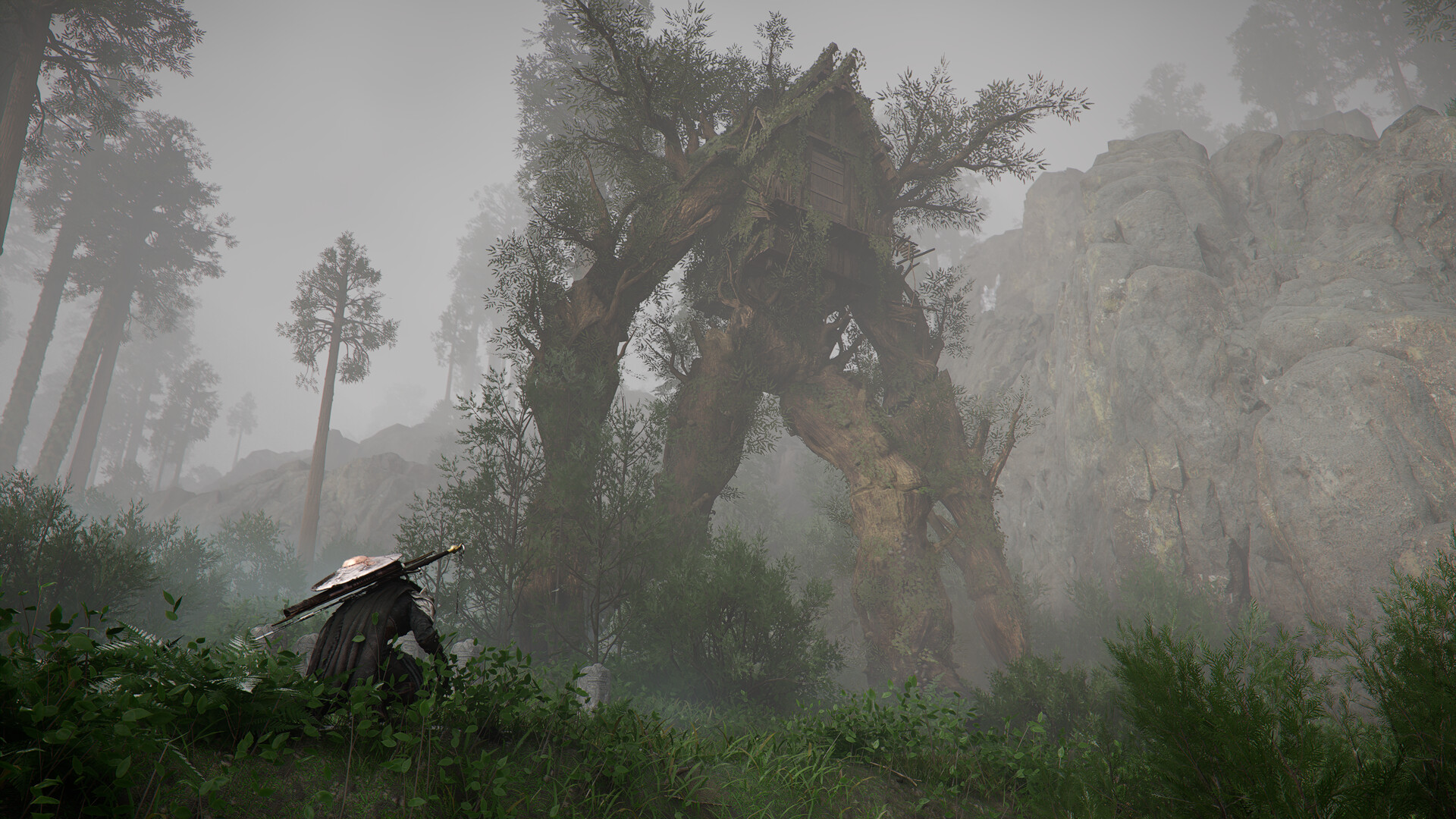
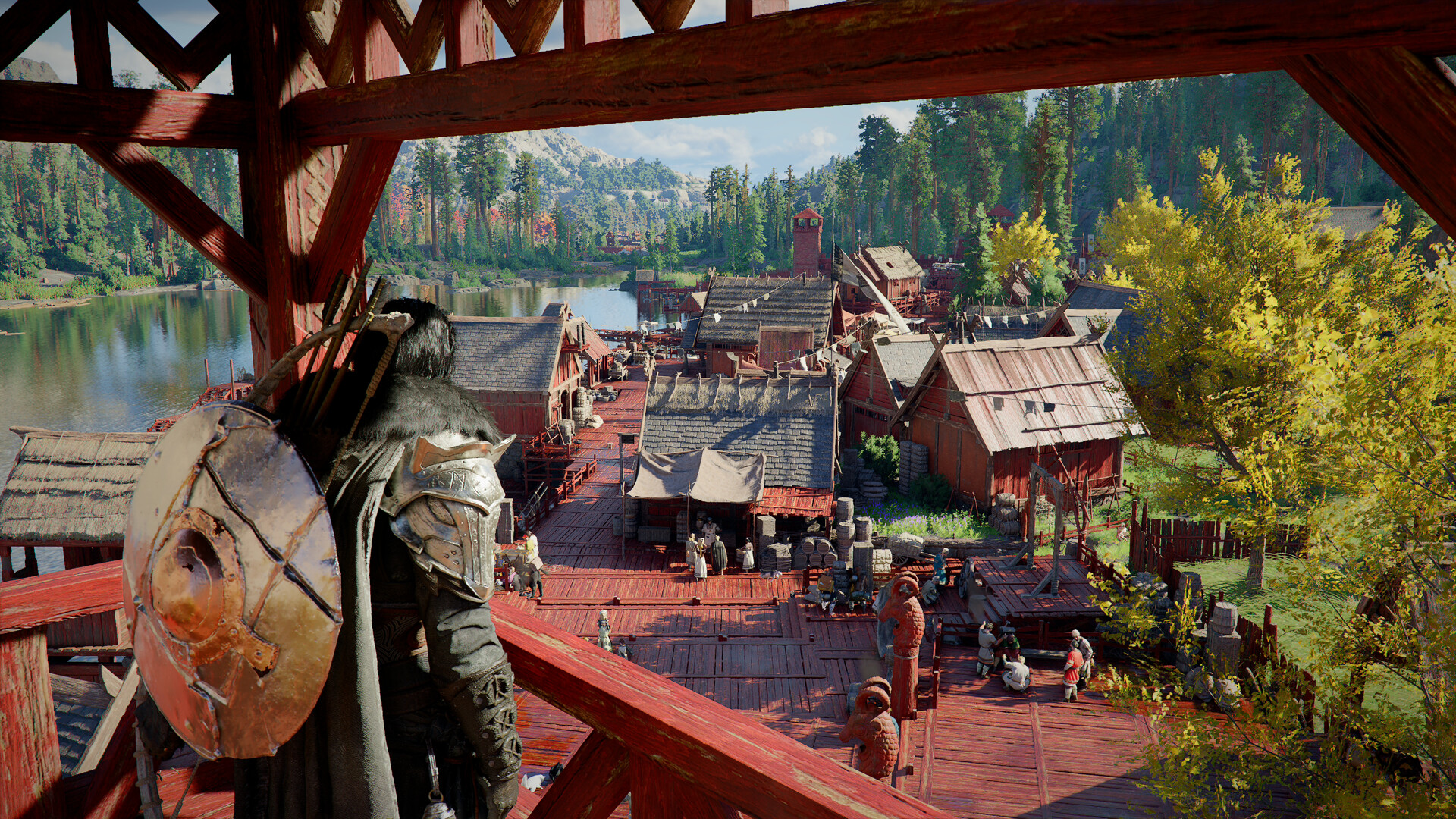
The world of Pywel is one of the most technically accomplished open-world environments in gaming history. Built on Pearl Abyss's proprietary BlackSpace Engine, it runs at native 4K/60fps with full ray-traced global illumination. No upscaling. There are no loading screens anywhere in the game. You ride from a mountain village into an underground dungeon and into a coastal city without a single transition. The scale is comparable to Red Dead Redemption 2's map, with a density of hand-crafted content that justifies every inch of it.
The combat is the other major achievement. Kliff fights through a fluid combo system built around parrying, dodging, environmental traversal, and weapon switching. You can fight on horseback. You can glide from clifftops. You unlock new characters with distinct abilities as the story progresses. The boss encounters are the highlight: massive, multi-phase fights that require understanding their patterns rather than tanking damage. They were too punishing at launch. They are not anymore.
The Launch and Why It Matters That They Fixed It
Crimson Desert launched to mixed reviews. I want to be honest about this because the GOTY argument only holds if you understand what was wrong and what Pearl Abyss did about it.
The initial problems were specific and real, and I want to be clear about them because this is a GOTY argument and you deserve the honest version. Boss difficulty was calibrated so aggressively that the parry windows on certain encounters felt unfair rather than challenging. The healing system required food items that ran out during fights, turning boss retries into 20-minute gathering errands. It was genuinely infuriating. Inventory was 240 slots with no storage, meaning you were constantly discarding items from a world that rewards you for picking everything up. Fast travel required solving Abyss Nexus puzzles first and couldn't be used while mounted or moving. The UI for controls was convoluted. Intel Arc GPU owners couldn't launch the game at all.
Pearl Abyss sold 2 million copies on day one. The reviews that came in were lukewarm. Their stock price dipped. A studio that had spent eight years and $133 million on its first single-player game was watching its launch wobble.
What they did next is the reason Crimson Desert is a GOTY contender.
Six Patches in Six Weeks
The patch notes for Crimson Desert read like a list of everything the community asked for, delivered in order of impact.
Patch 1.01 came within days. Fast travel improvements, boss lock-on fixes, combat responsiveness tweaks, new music. The message was clear: Pearl Abyss was reading the feedback and moving fast.
Patch 1.02 added private storage expandable to 1,000 slots through camp progression, mount visibility options, save system improvements, and a movement controls option for players who preferred the original input scheme.
Patch 1.03 fixed fast travel fundamentally. You can now teleport from any Abyss Nexus while mounted, flying, falling, swimming, or climbing walls. Previously undiscovered Nexuses now glow. New skills were added for all three playable characters. Intel Arc GPU support arrived.
Patch 1.04 (the biggest since launch at 37.2GB) added difficulty settings (Easy, Normal, and Hard), a complete inventory overhaul with category tabs and category-specific storage chests with 1,000 slots each, new bird and cat companion systems, 13 new tattoos, livestock vendors across Pywel, improvements to boss combat balance across the board, and dozens of additional bug fixes. Boss rematches were confirmed as coming in a future update.
Hotfixes 1.04.01 and 1.04.02 followed within two days, addressing bugs introduced by the major patch. A June 2026 content update is planned with expanded challenges and further system enhancements.
The result of all of this: Steam reviews went from Mixed at launch to Very Positive. Pearl Abyss gave all 1,323 of their employees a 5 million won bonus. The South Korean bloody prime minister personally celebrated the milestone. That is not a normal post-launch trajectory. The user score on Metacritic climbed to 8.7 and continues to rise. The game sold 5 million copies in 26 days despite the rocky launch. The post-patch word of mouth is driving new sales now.
What Is Actually Brilliant About It
The world is the main event. I've played open-world games for twenty years and I have not experienced anything like traversing Pywel without a loading screen. Riding from the coast into the mountains into the underground abyss realm into a walled city is a continuous experience. The geography has logic. The biomes have visual identity. The architecture draws from historical references with enough specificity that the world feels like it was designed rather than generated.
The life systems (fishing, hunting, mining, cooking, crafting, gathering) are lifted wholesale from Black Desert Online's depth and applied to a solo context. This is the "single-player MMO" description that keeps appearing in coverage, and it's accurate. The breadth of things you can choose to engage with is staggering. My Kliff spent forty minutes fishing in a river I found while getting lost looking for a dungeon. Not a single shit was given about the main quest during that time. That is either a bug in my priorities or exactly the point.
The companion system that emerged through patches: wolves and bears you can tame to fight alongside you, birds you befriend with the Sotdae of Bond feeding system, cats that insist on sitting on your shoulder. Together these give Pywel the feeling of a living ecosystem rather than a populated game world, which is a genuinely rare quality.
The boss fights, post-1.04, are now some of the best in recent memory. The multi-phase encounters with the major story bosses have a Fromsoftware-adjacent quality in their telegraphing and mechanical demands, without the punishing restart loops that made them genuinely miserable at launch. Hard mode restores that difficulty for players who want it. This is how difficulty settings should work: the base experience became accessible without gutting the ceiling for players who want the full challenge.
What Is Still Imperfect
The story is Crimson Desert's weakest element and that has not changed with any patch. Kliff is a serviceable protagonist but the writing gives him a functional backstory rather than a compelling one. The narrative structure works. The escalation from personal mission to continent-scale conflict is managed well. But the dialogue and character writing rarely achieve what the visual storytelling suggests they should. You will care about what happens. You will care less about how it's explained.
The pacing in the middle chapters has an uneven quality that hasn't fully resolved. Certain stretches of the mid-game feel stretched in ways that serve the world-building but not the narrative momentum. The game clocks in at 100 hours for a thorough playthrough, and around 50 of those hours are outstanding. The other 50 are variable in quality.
The UI, despite the inventory improvements, is still more complex than it needs to be. The camp management systems have layers that feel inherited from an MMO context and haven't been fully translated to single-player clarity. The 1.04 improvements helped substantially. There is more work to do.
Some boss encounters still have small arena sizes with "return to battle area" warnings that trigger awkwardly. This is on the known issues list and will presumably be addressed. It is genuinely jarring in an otherwise seamless world.
Why Game of the Year
Crimson Desert launched with problems. So did Cyberpunk 2077. The difference is that Pearl Abyss fixed theirs in weeks rather than years, and the foundation they were working with was already genuinely excellent rather than fundamentally compromised.
The game's developer paid all 1,323 of its employees a 5 million won bonus when it hit 5 million sales. The South Korean prime minister personally celebrated the achievement. Pearl Abyss CEO Heo Jin-young called it "a result the world is enthusiastic about." That is not corporate spin. That is a studio whose first single-player game launched to wobbling reviews and then pulled off one of the most impressive post-launch recoveries in gaming history, earning every unit sold on the other side.
What Crimson Desert represents, in the patched version, is a world-class open-world game built by a studio with no single-player pedigree, learning the form in public, fixing their mistakes at speed, and ending up with something that belongs in the company of The Witcher 3 and Red Dead Redemption 2 in terms of sheer ambition realised at scale.
It is not perfect. It never will be. The story will always be its weakness. But the world is extraordinary, the combat is exceptional post-patches, the exploration depth is unmatched, and the post-launch support demonstrated a commitment to the player experience that most AAA studios cannot match even when they try.
That is a Game of the Year argument. I'm making it.
Crimson Desert is available on PC (Steam and Epic), PS5, Xbox Series X/S, and macOS. $69.99. Play it on the patched version. This is not the same game it was at launch.
Buy on Steam | Pearl Abyss
Game at a glance
| Detail | Answer |
|---|---|
| Genre | Open-World Action-Adventure |
| Typical length | 60-100 hrs |
| Difficulty | Moderate |
| Play mode | Single player |
| Developer | Pearl Abyss |