Poppy Playtime Chapter 5 Sold 275,000 Copies in a Week. When Does This End?
Poppy Playtime Chapter 5 broke every record the franchise had set, hit number one on Steam, and ended on another cliffhanger. It's also 3-5 hours long and costs $20. With Chapter 6 already confirmed and a film adaptation in development, it's worth asking how many more of these we're actually going to get.

TL;DR
- 275,000 copies in a week, 52,866 peak concurrent players -- more than double Chapter 4's record.
- 3-5 hours of content for $20, ending on another cliffhanger, with Chapter 6 already confirmed.
- The actual question: how many more of these episodic drops does this franchise get before fatigue sets in?
Poppy Playtime Chapter 5 launched February 18, 2026. It sold 110,000 copies in its first three hours. 175,000 on day one. 275,000 by the end of the week. It hit number one on Steam's global top sellers chart and held it for over 24 hours. Peak concurrent players hit 52,866, more than double the record Chapter 4 set just over a year earlier.
By every commercial metric, Chapter 5 is the most successful entry in the Poppy Playtime franchise. Mob Entertainment celebrated. The fans celebrated. The gaming press wrote the numbers up dutifully, because that's what the gaming press does with record-breaking launches. Numbers go up, coverage follows. Nobody stops to ask whether the product behind the numbers is actually worth the numbers.
Nobody asked the obvious question: how many more of these are we actually going to sit through?
I've been playing horror games for a long time. I appreciate what Poppy Playtime built. But something about watching a franchise print money while refusing to give its audience a single satisfying conclusion genuinely pisses me off.
What Chapter 5 Actually Is
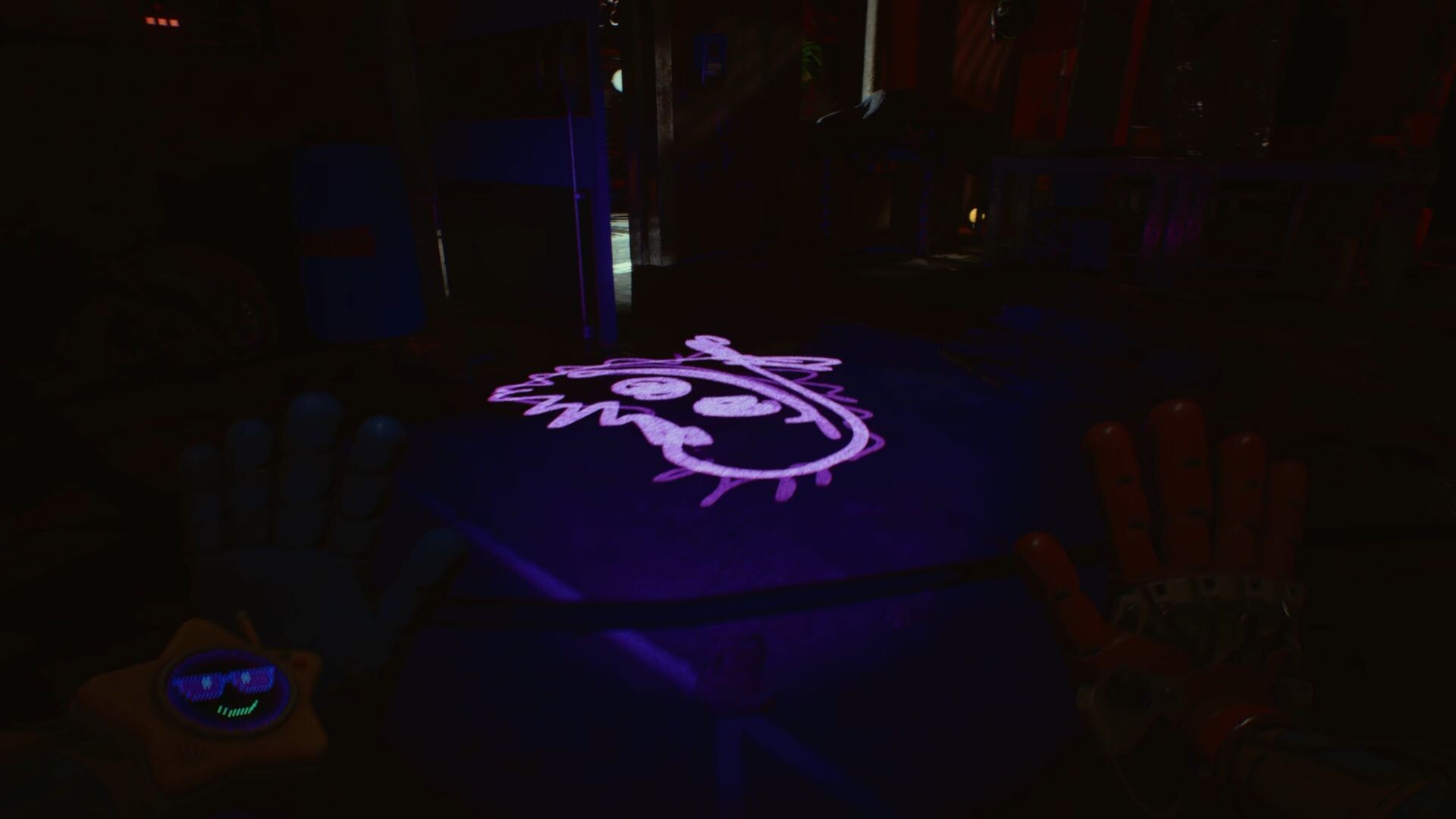
Chapter 5, subtitled "Broken Things", sends you deeper into the Playtime Co. factory, chased by Huggy Wuggy from the opening seconds, puzzle-solving your way through grimy corridors toward the Prototype, the villain the franchise has been building toward for four chapters. It runs 3-5 hours depending on how quickly you work through the puzzles. It ends on a cliffhanger. Chapter 6 has already been confirmed.
The formula is identical to every previous chapter. Opening chase sequence. Light puzzle solving. New companion characters who exist for one chapter. A single-use villain. A boss encounter. Another cliffhanger. Roll credits.
It costs $20. That brings the cumulative cost of the Poppy Playtime experience to $65 across five chapters. If Chapter 6 is priced the same, and there's no reason to think it won't be. We're looking at $85 to see this story to its conclusion. Assuming Chapter 6 actually is the conclusion, which Mob Entertainment has carefully not committed to.
For context: $85 gets you Elden Ring, Baldur's Gate 3, or Red Dead Redemption 2. Three of the greatest games ever made. That comparison is not flattering for Poppy Playtime, and I don't think it's unfair to make it. The complete Poppy Playtime experience offers somewhere between 15 and 25 hours of gameplay spread across five releases over five years.
The Franchise That Refuses to End
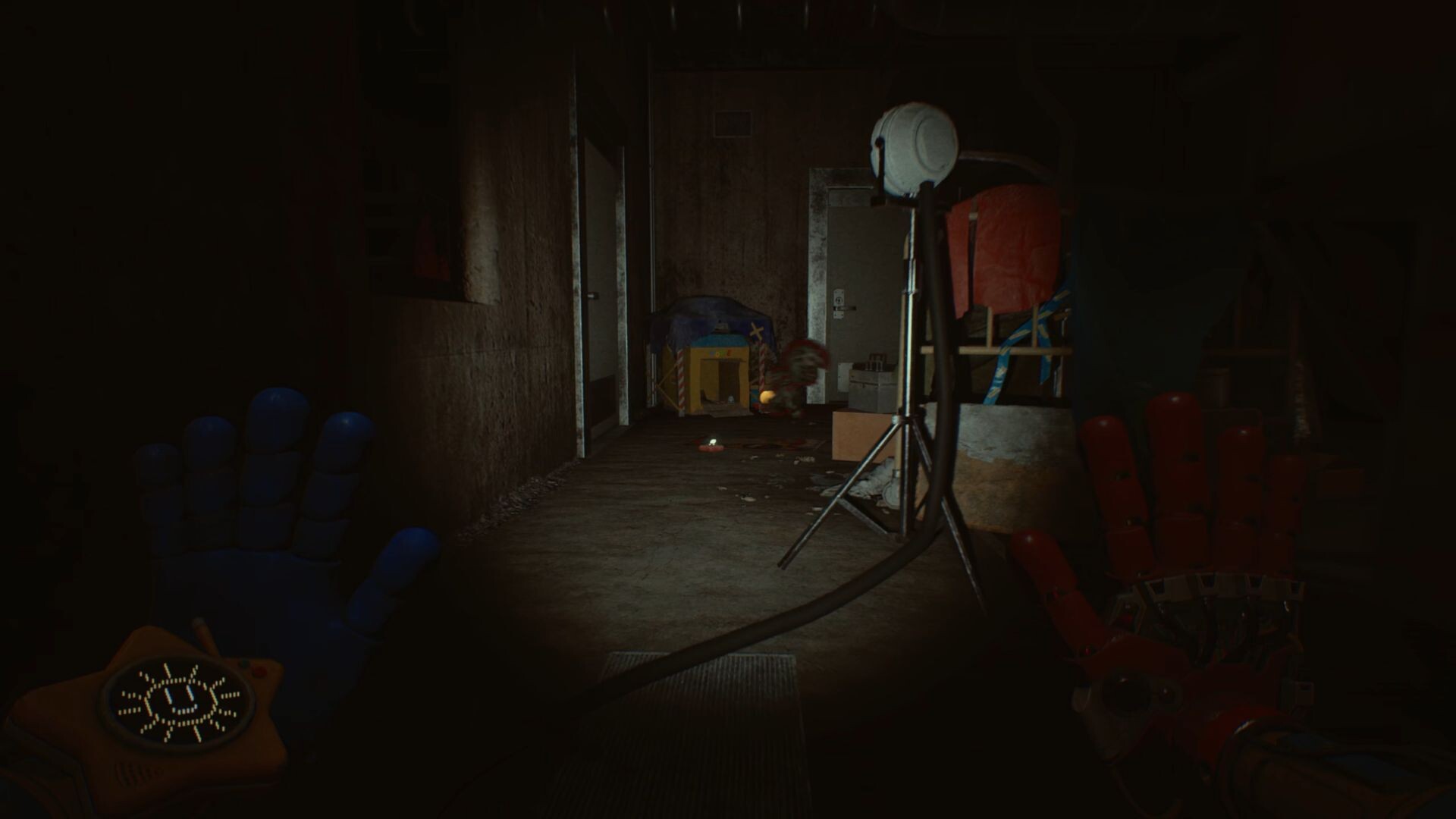
I want to be fair about what Mob Entertainment has built here, because the contemptuous dismissal of Poppy Playtime as "a kids game" misses something real. The franchise deserves better than knee-jerk condescension, and so does the criticism. The franchise launched in 2021 with a proof-of-concept first chapter that could be finished in under an hour. Chapter 2 represented a genuine leap forward. Chapter 3 pushed further still: more mini-games, actual worldbuilding, proper lore, longer runtime. By the time Chapter 3 landed, Poppy Playtime had genuinely earned the audience it was building.
Chapter 4 was the first one that started to feel like the seams were showing. Chapter 5, despite the record-breaking sales, is where I think the model becomes unsustainable.
The structural problem is that Poppy Playtime is telling one story in instalments that are too short to feel complete and too infrequent to maintain momentum. Each chapter ends with the main villain unresolved and a new hook dangled for the next one. Five chapters in, we still haven't had a satisfying conclusion to a single major story thread. The Prototype, built up as the franchise's ultimate villain across multiple entries, gets a boss encounter in Chapter 5 and then, you can probably guess, isn't actually defeated.
Mob Entertainment CEO Zach Belanger told Variety after the Chapter 5 launch that the studio considers Poppy Playtime "an evergreen IP, if managed correctly." The film adaptation is in development. The franchise is growing. There is clearly no intention to wrap this up any time soon.
That is a business decision, not a creative one. And it's worth naming it as such, because the gaming press has largely treated the "evergreen IP" framing as unremarkable rather than the implicit admission it actually is. "Evergreen" means it doesn't end. That's the plan, and dressing it up in investor language doesn't change what it is. Calling your franchise "evergreen" is a polite way of saying the story ends when the money stops, not when the narrative is finished. Which is bullshit when you've been selling people a story for five years. The story you've been following for five years is not a story with a planned conclusion. It's a content pipeline.
The Mascot Horror Problem
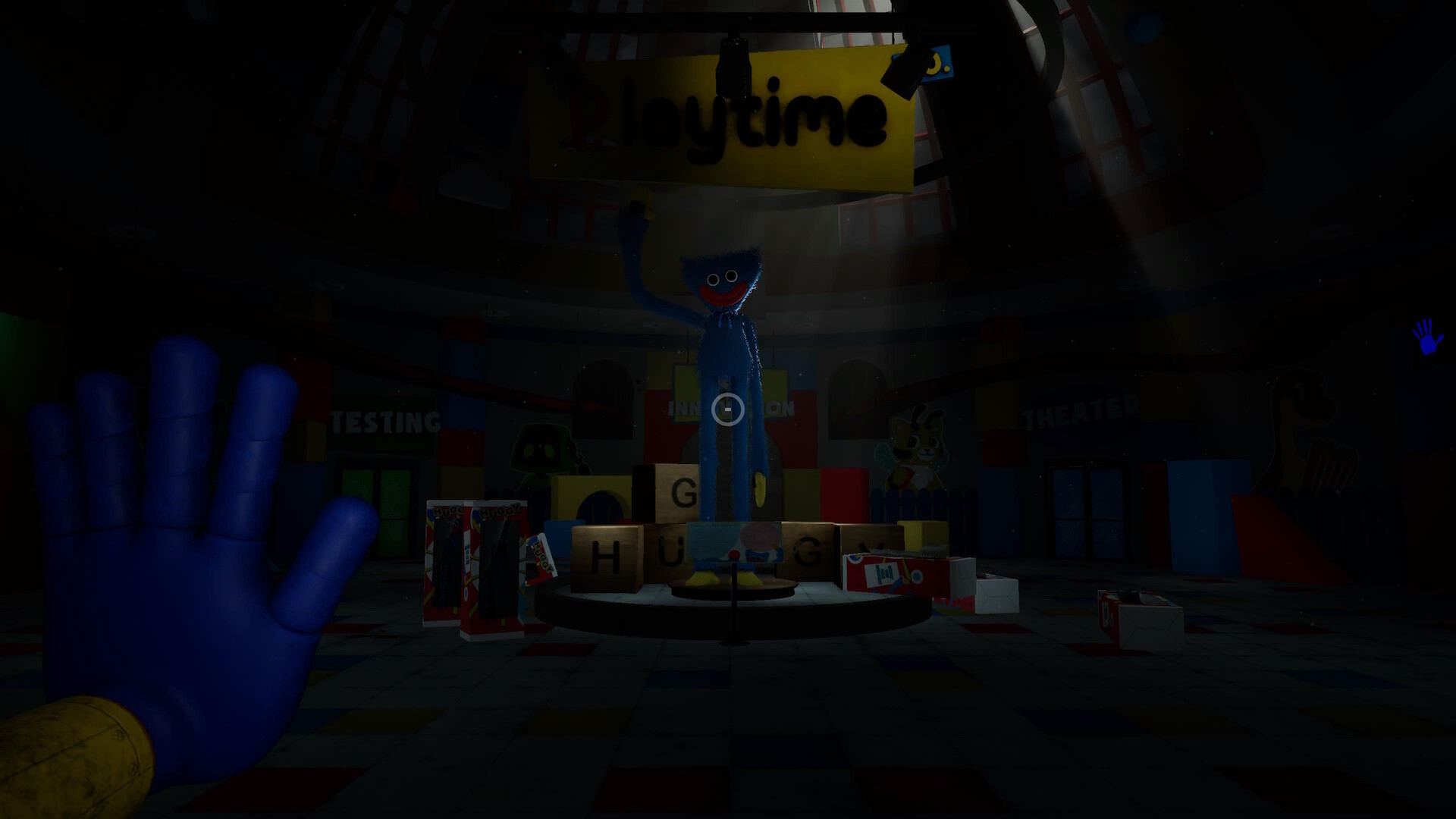
Poppy Playtime didn't just build a franchise. It launched a genre. The "mascot horror" wave that followed: corrupted children's entertainment, unsettling toys, cute aesthetics concealing genuine menace: it owes a significant debt to Huggy Wuggy. Five Nights at Freddy's pioneered some of this territory. FNAF's creator Scott Cawthon eventually handed the franchise off rather than churn out sequels indefinitely. That restraint seems increasingly rare. Poppy Playtime mainstreamed mascot horror for a new generation of players and a YouTube ecosystem that was hungry for exactly this kind of content, and Mob Entertainment has been feeding that hunger with impressive consistency.
The problem with being the genre-defining entry is that the genre moves on while you keep doing the same thing. MiSide landed in December 2024 with 132,000 reviews at 98% positive and showed what mascot-adjacent horror could do with genuine psychological depth. Mouthwashing demonstrated that a horror game can run under two hours and leave you genuinely disturbed for days. R.E.P.O. peaked at 271,000 concurrent players and proved co-op horror could be simultaneously terrifying and hilarious. These games are doing things that feel genuinely new, for prices that make the Poppy Playtime maths look embarrassing by comparison.
Chapter 5 of Poppy Playtime does not feel genuinely new. It feels like Chapter 3 with different wallpaper. The factory is still the factory. The GrabPack is still the GrabPack. The mascot-villain-of-the-week appears, terrorises you for twenty minutes, and disappears. The real villain lurks in the background. Another chapter is teased.
The 82% Steam rating, Very Positive but not the Overwhelmingly Positive the earlier chapters achieved, and it suggests even the fanbase is starting to register the repetition. The most honest review I read called Chapter 5 "just fine." Coming from a franchise that once felt genuinely exciting, "just fine" is a meaningful downgrade. It is not what you say about a game you've been waiting a year for and paid $20 to play. "Just fine" is what you say when you're too polite to say it was a bit of a rip-off.
The Money Question
Here's the thing that actually bothers me. Poppy Playtime is not a live service game. There are no microtransactions, no battle pass, no loot boxes. Mob Entertainment is a small independent studio that has built something genuinely popular from scratch without publisher backing. I respect that enormously.
But the episodic model they've chosen is doing something I find difficult to defend: charging $20 per chapter for 3-5 hours of content while refusing to resolve the central story. Chapter 5 was the chapter the marketing explicitly positioned as the confrontation with the Prototype, the villain five chapters of buildup, had been pointing toward. The confrontation happens. It doesn't resolve. Chapter 6 is coming.
At some point the relationship between what players are paying and what they're receiving has to be acknowledged. $65 for a story that isn't finished is not a reasonable proposition for a new player discovering the franchise today. And the implicit message, that the story will be resolved when Mob Entertainment decides it will be, on their timeline, at $20 a piece, is starting to test the goodwill the earlier chapters built.
The fans who have been there since 2021 are invested enough to keep buying, and I genuinely don't blame them. Sunk cost is a hell of a thing. But the calculation is getting harder to ignore. The record-breaking sales prove that. But the reviews that note "my kids walked away disappointed" and the critics asking "is this the last one?" suggest that the community is starting to calculate whether the next chapter is worth the wait and the price. That calculation is going to become harder to win the longer this goes on.
So Should You Play It?
If you've played the previous chapters and you're invested in the story: yes. Chapter 5 delivers on its specific promise. The production values are better than they've ever been. The voice acting is solid. The atmosphere is genuinely uncomfortable in places. If you want to know what happens next in the Poppy Playtime saga, this chapter moves it forward.
If you're coming in fresh or you've been waiting to see if this story actually wraps up before dropping $65 on it: don't. That's my honest advice. Wait it out. You'll save money and frustration. The complete edition, whenever Mob Entertainment deigns to release it, will be a better purchase than buying each chapter individually and sitting with an unresolved ending for a year between each one. Wait until the franchise concludes, buy the complete edition at whatever price they put it at, and play it over a weekend. The episodic drip-feed is not doing the story any favours and paying $65-plus to reach an unresolved ending is a bad deal.
Poppy Playtime is a good franchise that has earned its success, and I mean that. The contemptuous dismissal it gets from certain corners of gaming discourse is lazy and unearned. Chapter 5 is a perfectly competent entry in that franchise. But "perfectly competent" isn't the same as "worth the wait," and the question of how many more chapters we're going to get before this story has an actual ending deserves a straight answer that Mob Entertainment has been very careful not to give.
Chapter 6 is coming. Probably in about a year. I'll probably write about it when it does. I'll probably say the same things. Probably for $20. Probably with a cliffhanger.
If you're fine with that, genuinely great. But if you've been waiting since 2021 for this story to go somewhere meaningful rather than just deeper into the same bloody factory, Chapter 5 is not the answer you were waiting for.
Poppy Playtime on Steam -- Free to start | Chapter 5 on Steam -- $19.99