Darkwood Is the Most Underplayed Horror Game of the Last Decade
Acid Wizard Studio built the best top-down survival horror game ever made in 2017. It sold modestly, got decent reviews, and just about nobody talks about it. That needs to change.

TL;DR
- The best top-down survival horror game ever made, and one of the most underplayed of the last decade.
- Made by a three-person Polish team over roughly five years with no publisher pressure.
- $19.99. The night sections are some of the finest sequences in horror gaming.
Buy it. $14.99 on Steam. The best top-down survival horror game ever made, and one of the most underplayed games of the last decade.
I came to Darkwood late. I had seen it recommended in horror discussions for years before I actually played it, one of those titles that kept appearing in "what am I missing?" threads with enthusiastic responses from people who had clearly thought about the game seriously. When I finally played it, I put four hours in the first session and came out with my heart rate genuinely elevated. That is not a metaphor or a marketing phrase. It had been a while since a horror game had done that to me.
Darkwood was released in 2017 by Acid Wizard Studio, a three-person Polish team. It received an 84 on Metacritic, solid coverage from horror-specific outlets, and then faded from the cultural conversation. The horror landscape in 2017 was shaped by jump-scare games designed for YouTube reaction content. Darkwood was not that kind of horror game. That is the precise reason it was underplayed and the precise reason it deserves your time.
The Day and Night Framework
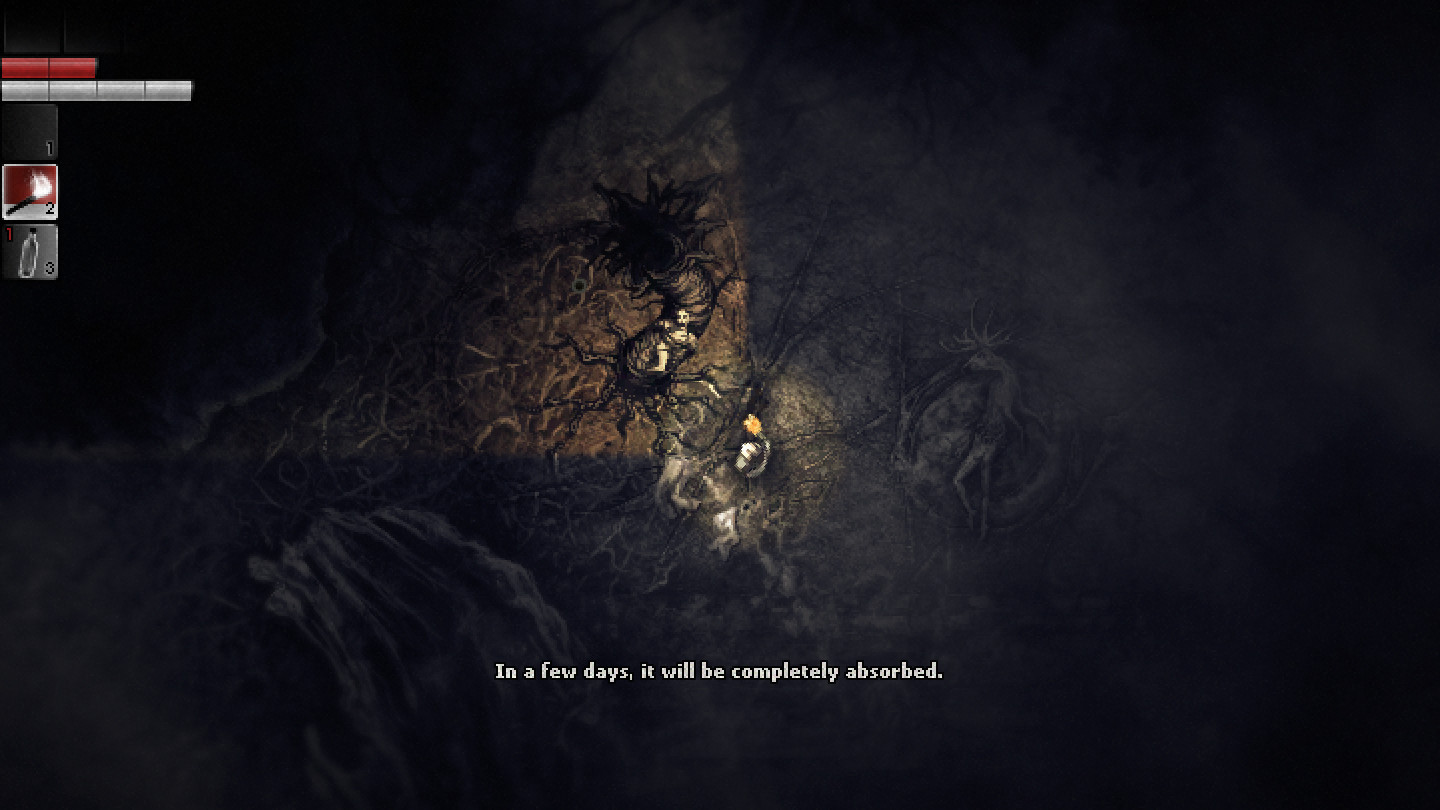
Darkwood is set in a corrupted forest in an unspecified Soviet-adjacent Eastern European country. You play as a Stranger who has crashed his motorcycle in the woods and cannot leave. The forest is wrong in ways that accumulate gradually. The people in it are wrong in different ways. Something happened here and the game is not going to tell you what cleanly.
The day and night cycle is one of the most effective structural frameworks in survival horror.
During the day you explore: gathering materials, finding notes and objects, encountering the few surviving inhabitants. The forest is dangerous but navigable if you are careful and paying attention. You can get through the day.
At night you return to your shelter, board up the windows and doors with planks you have gathered, arrange whatever traps or light sources you have crafted, and wait until dawn.
The night sections are some of the finest sequences in horror gaming. You cannot see beyond the radius of your lamp. The darkness beyond is absolute. Things knock on the boarded windows. Something tests the door. You hear movement outside that you cannot identify. You have planks to reinforce openings, a weapon you might need, and a choice about when to use either.
The terror is not produced by a scripted event. It comes from uncertainty and from darkness and from sound design that communicates presence without showing it. Every night is different because the AI governing what approaches your shelter is dynamic. Some nights are quiet. Others are not. The unpredictability preserves the fear across sessions in ways that scripted events cannot.
I have played the night sections many times and they have not become boring. The reason is that each one requires genuine attention to what is happening outside. You develop, over hours of play, a reading of the sound environment that tells you roughly what to expect. And then occasionally that reading is wrong. Something you did not predict is at the door. The game has you again.
The NPCs
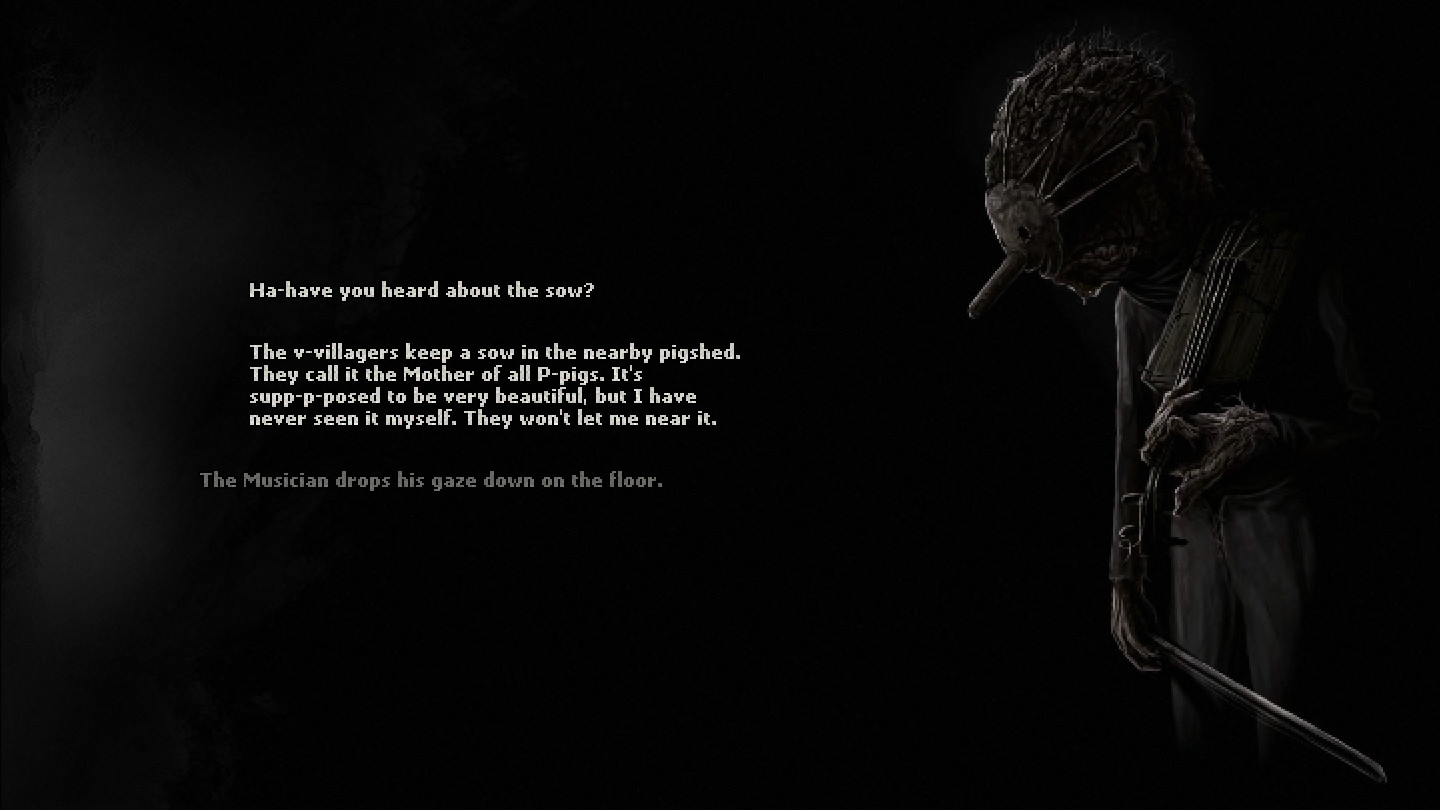
The survivors in Darkwood are some of the most unsettling characters in horror gaming. The Musician. The Wolfman. The Doctor. The Chicken Lady. Each is broken in a distinct way. Each wants something from you. None can be straightforwardly trusted.
The writing for these characters is spare in the most effective sense: it communicates their specific damage without explaining it. The Wolfman's animal register. The Musician's obsessive circularity. The Doctor's eerie competence beneath whatever has happened to him. Each voice is distinct and each implies a history you cannot fully access.
The moral choices the game puts in front of you through these characters are genuinely uncomfortable. Some decisions have no good outcome. Some have outcomes that are only clear in retrospect. The game does not grade your choices or signal how you should feel about the decision you just made. It trusts you to carry that weight yourself.
I made a decision in the Darkwood storyline that I thought I understood, that turned out to have consequences I should have anticipated from the information I had available, and that I still think about when the game comes up in conversation. The game produced that through systems and spare writing, without an authored emotional cue in sight. That is the quality of craft here.
What is also notable about the NPC writing is what it withholds. In most games, characters exist to give you information and move the plot forward. In Darkwood, characters exist as themselves, with their own preoccupations that do not centre on your presence or your goals. The Musician is not interested in what you need. The Wolfman has his own priorities. You are the stranger intruding on situations that were already in progress when you arrived. That is a fundamentally different relationship between player and world, and it makes the world feel genuinely inhabited rather than constructed for your convenience.
The Atmosphere Is Constructed With Intention
The colour palette is desaturated without being monochrome. The forest has its own specific look: sickly, wrong, not quite the colours things should be. Interiors have the visual quality of places that were maintained once and no longer are. Nothing looks healthy. The visual language communicates wrongness and decay without defaulting to the gothic aesthetic most horror games reach for.
The sound design treats ambient noise as information rather than as atmosphere. Over hours of play you learn what specific sounds mean in context. The game trains you to read the audio environment and then, occasionally, presents familiar sounds in new combinations that require a new interpretation. I was genuinely caught out by this several times. Each time the catch was the result of the game using its own established grammar against me rather than introducing something arbitrary. That distinction is important. Being surprised by your own misreading of established rules is satisfying in a way that being surprised by arbitrary novelty is not.
The near-silence that characterises the early morning sections, just before dawn, when the night's visitors have left, is used as deliberately as the noise. That specific quiet communicates something. The absence of threat after sustained threat has its own texture. Darkwood understands that what you do not hear is as meaningful as what you do.
What the Game Understands About Fear
Horror is most effective when the player understands what the rules are and the game breaks them selectively. Darkwood teaches you its rules slowly and consistently. Darkness means danger. Sound means something approaching. Boards on windows mean protection. The lamp means visibility but also limited battery.
You internalise these rules over the first few hours. You become competent at managing the night. You develop routines: how many boards to keep for which windows, where to position your lamp, when to risk going outside versus barricading and waiting. Competence reduces anxiety and builds confidence. This is deliberate.
Then the game breaks its own rules, specifically and selectively, in ways that your competence cannot entirely protect against. Something you did not know existed appears in a context where your established coping mechanisms do not fully apply. The confidence you built becomes liability: you are certain enough about how things work that the deviation lands harder than it would have if you had been uncertain all along.
This is the horror designer's real craft. Not creating something frightening from nothing, but establishing a stable grammar that the player learns to navigate, and then demonstrating that the grammar has exceptions. Darkwood does this better than almost any other horror game I have played. It is also worth naming what this approach requires from a developer: restraint. The temptation to front-load scares, to announce the horror early and loudly to hold attention, is understandable. Darkwood resists it entirely. The first chapter is almost quiet. That quiet is not absence of design. It is investment in everything that follows. A developer without confidence in the whole would not make that choice. The pacing is also worth noting. The early game is slow. Some players will find it too slow. The survival mechanics require time investment before the horror layer becomes dominant. I think this is correct. The investment in the survival loop, the routines you build, the familiarity with the shelter and its surroundings, is what makes the horror when it escalates feel like a violation of something real rather than a challenge in a game system.
The Setting Does Real Work
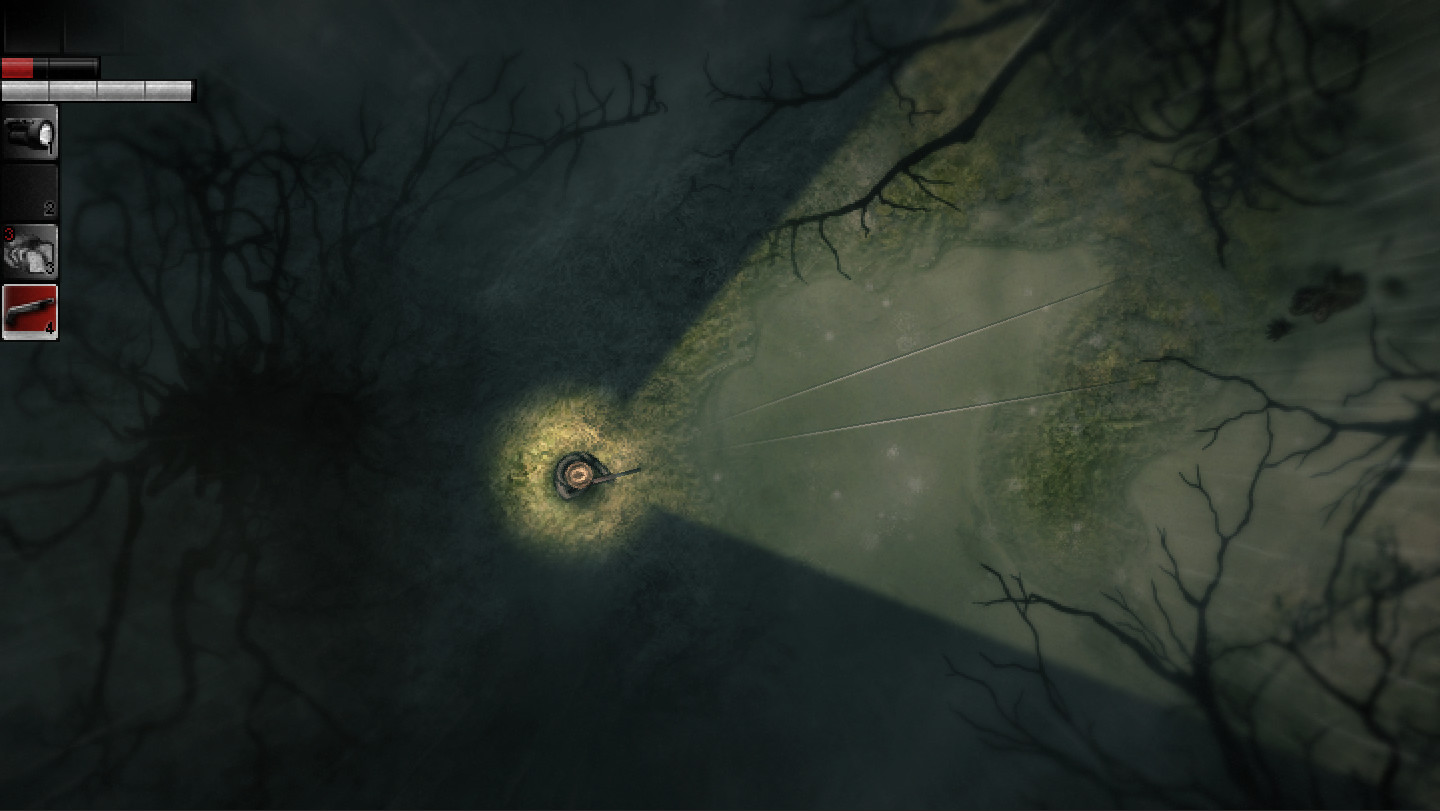
Horror is frequently set in familiar environments made strange: the comfortable house, the known town, the recognisable institution. Darkwood takes a different approach. The Soviet-adjacent Eastern European forest setting is specific and unusual, and the specificity matters.
The aesthetic carries associations that are recognisable to anyone familiar with the visual vocabulary: institutional decay, the particular quality of neglect in environments that were once maintained by systems that have since collapsed. These places were once ordered. Something disrupted that order. The disruption is legible in the environment in ways that a generic forest setting cannot replicate.
The folklore underpinning the horror is also culturally specific in ways that make it genuinely strange to a Western audience. The creatures and events do not map cleanly onto familiar horror tropes. They have their own internal logic that you piece together from fragments. That unfamiliarity is part of what makes the game feel genuinely alien rather than a rearrangement of conventional horror imagery you have encountered before in other forms.
Acid Wizard Studio made a game about a specific place with a specific cultural history. The three-person team spent five years on it. That commitment is visible in the final product in ways that cannot be faked and cannot be commissioned. You can feel, in the quality of the atmosphere and the NPC writing and the night sections, that the people who made it were not making something they expected to be popular. They were making something they needed to exist. Those two motivations produce different games, and you can usually tell which one you are playing within the first hour.
The Honest Difficulty Note
Darkwood can be frustrating in ways that feel unfair rather than instructive. The inventory management is punishing enough that early-game decisions about what to carry have consequences that are genuinely difficult to recover from. The save system requires finding specific resources, which means bad luck with resource spawns can compound in ways that feel arbitrary.
I got through the early sections on my second attempt, having learned from the first what the game actually requires. My advice: if you die in the early game and lose significant progress, resist the urge to quit. The game makes more sense on a second run because you carry knowledge forward that the game withholds until you encounter the situations that require it. The first three hours are the hardest and the least representative of what you are paying for. There is a specific point somewhere in the second chapter where the game's full quality becomes clear, and at that point you will understand why this article exists.
The bloody controls also took me longer to feel comfortable with than they should have. A top-down perspective with the Darkwood camera distance means spatial awareness requires real adjustment time. It clicks eventually. Know it takes adjustment before it clicks, and do not let the clunkiness of the first hour put you off something genuinely exceptional.
Why Darkwood Was Underplayed and Why It Matters That You Fix That
Darkwood is not a streamable game in the way the successful horror games of 2017 were. The horror is atmospheric and accumulative rather than reactive and shareable. The moments that make it exceptional cannot be clipped. They require context and patience to work, and the audience that discovered horror games through YouTube reaction content was not looking for patience.
Acid Wizard Studio released Darkwood on piracy platforms themselves before launch, with a note saying they would rather people pirate it and play it than not play it at all. They believed in what they had made and wanted it to reach people who could not afford it. That decision is consistent with everything else about how the game was made. It is the act of people who cared about being played more than they cared about the revenue implications of that caring.
At $14.99 in 2026, there is no longer any excuse. If you have played every game on your horror list and are looking for something that will do something genuinely different to you, Darkwood is the answer. I have recommended it to horror fans who came back afterwards with the specific tone of voice that means a game got to them. Every single one of them. That is not a coincidence. That is what happens when a game is made by people who understand fear at a structural level and had five years and no publisher to answer to. The game does not forget that horror is cumulative, and it does not rush you toward the parts it is proudest of. Both of those decisions cost something. Both of them are correct.
Darkwood is available on PC, PS4, Xbox, and Switch. $14.99. Play it with headphones. Dark room. Do not look at a map. Do not read a walkthrough. Find out what the trees are hiding the same way the game intends: in the dark, with limited information, paying close attention to sounds you cannot fully explain.
Buy on Steam | Acid Wizard Studio
Game at a glance
| Detail | Answer |
|---|---|
| Genre | Survival Horror |
| Typical length | 10-15 hrs |
| Difficulty | Hard |
| Play mode | Single player |
| Developer | Acid Wizard Studio |