Hollow Knight Is One of the Greatest Games Ever Made. Here's Why It Earns That.
Two developers, AU$57k, 40 hours of content. Hollow Knight is the definitive argument that constraints produce better games than budgets. Here is why.

TL;DR
- Three developers, AU$57,000 Kickstarter, one of the best games ever made at any budget.
- 40+ hours of content in the base game, expandable past 60 with the free Godmaster DLC.
- $14.99. Silksong released September 2025 -- the wait genuinely paid off.
Buy it. $14.99 on Steam. Three people. Four years. $57,000 from a Kickstarter. One of the best games ever made at any budget, from any studio, in any genre.
I have put over 80 hours into Hollow Knight. I have beaten every boss, including the absolute nightmare fuel that is Nightmare King Grimm. I have gotten lost in Deepnest for what felt like a geological epoch. I have died to the same Mantis Lord attack pattern forty times because I am a stubborn asshole who refuses to look up how to deal with it until I figure it out myself.
Team Cherry is three people based in Adelaide, Australia. Three. The game they made has more visual identity in a single area than most $200M AAA productions manage across their entire runtime. If that does not make you slightly pissed off about where those budgets are actually going, nothing will. Fucking ridiculous.
What Hollow Knight Actually Is
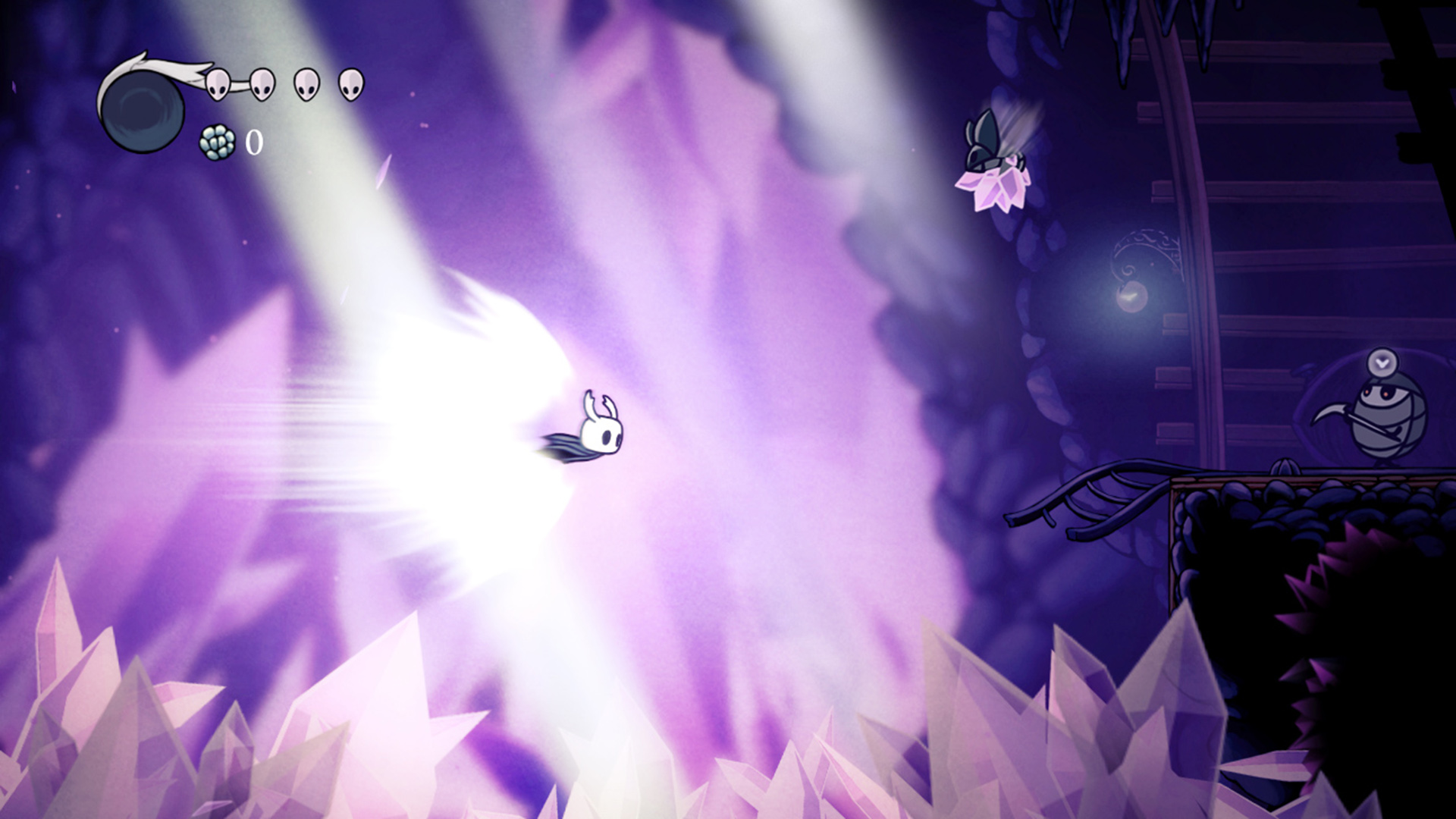
Hollow Knight is a Metroidvania. You play as a small, silent bug knight who descends into Hallownest, a ruined underground kingdom of insects that fell to a mysterious infection. The structure is classical: explore, find new abilities, use those abilities to open previously locked areas, fight bosses, go deeper.
That description undersells it roughly as much as describing The Wire as a show about police.
What distinguishes Hollow Knight from every other Metroidvania, including Super Metroid and Symphony of the Night and Ori and all of them, is the density and consistency of what it does with that structure. The map is enormous. The optional content is genuinely optional rather than padding dressed up as choice. A thorough first playthrough runs 40 to 60 hours. I did not feel a single wasted hour.
The world is Hallownest and Hallownest is real in the way very few game worlds manage. It has history, internal logic, distinct cultures and economies across its regions, and a specific catastrophic failure mode. You piece all of this together from item descriptions, from what NPCs choose not to say, from what is conspicuously absent in places where something should still be.
The lore community around this game has been active since 2017 and is still arguing about specific interpretations. That is the mark of a world with genuine depth. For $14.99 from three people, it is embarrassing how well this holds up.
The Combat Is Better Than It Has Any Right to Be
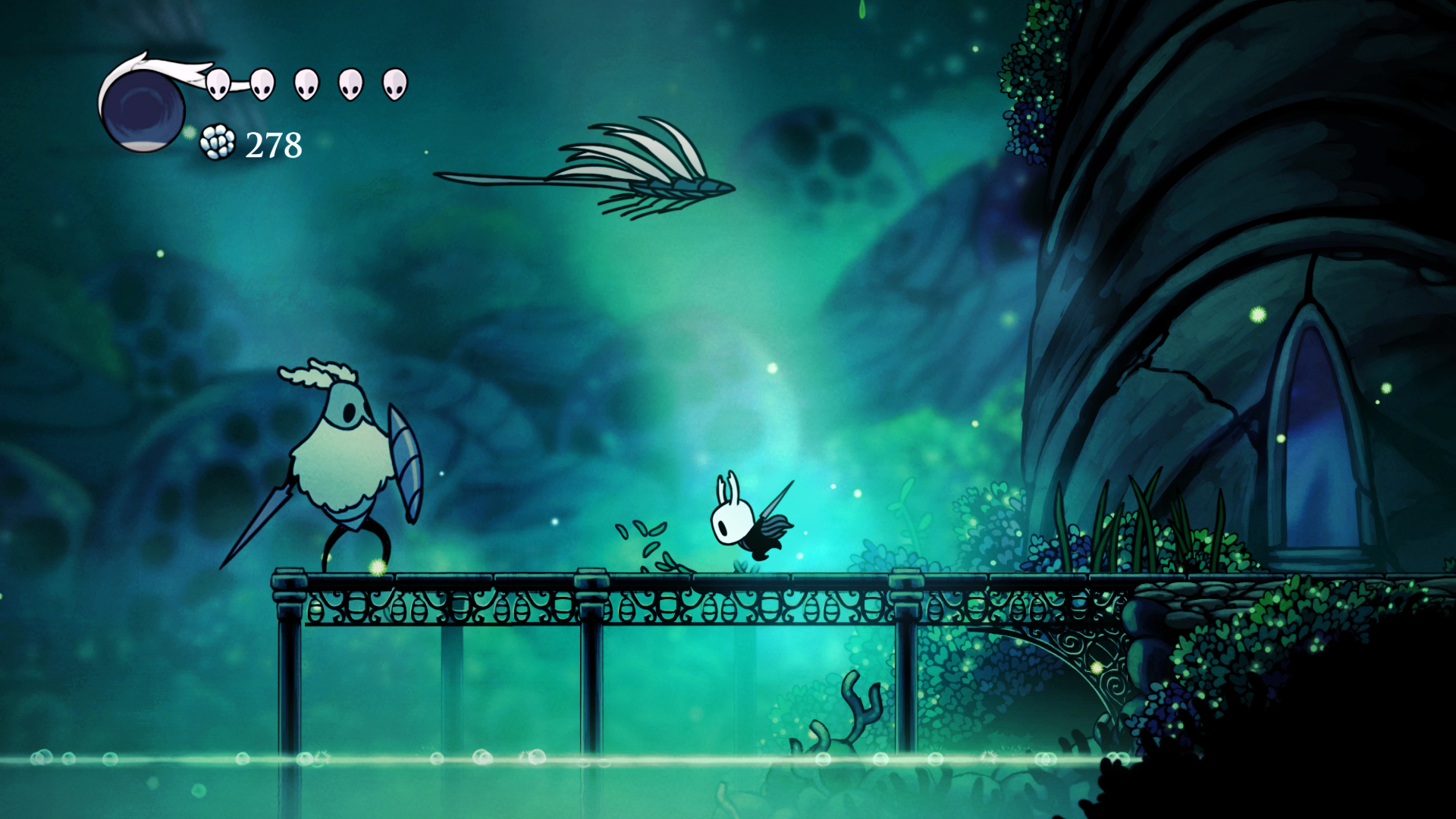
My honest take going in was that the combat would be competent. What I got was the best combat in the Metroidvania genre, and it is not particularly close.
The Knight's toolkit is minimal: a nail for striking, soul for spellcasting or healing (your call, with real trade-off consequences), and a dash. That is essentially it for the first several hours. What Team Cherry then does is design bosses that extract genuine complexity from those simple tools, rather than constantly adding new tools to compensate for shallow design.
The Mantis Lords fight is a good example. Optional, technically speaking, though good luck getting through the Village without doing it. Phase one is one lord. Phase two is three, with overlapping attack patterns that demand real spatial awareness. Your toolkit does not expand. The demand placed on your pattern recognition does. I died probably thirty times. Every death was legible. I always knew exactly what I had done wrong.
That legibility is rarer than it sounds. Unfair difficulty is a design failure. Legitimate difficulty that teaches you through failure is what makes games worth remembering.
| Boss | Area | Why It Matters |
|---|---|---|
| Hornet | Greenpath | Introduces the combat language, fights you as an equal |
| Mantis Lords | Mantis Village | First real skill check. Optional. Do it anyway. |
| Soul Master | City of Tears | Phase transition changes the encounter completely |
| Watcher Knights | Watcher's Spire | Multiple simultaneous opponents. A wall for many players. |
| Nightmare King Grimm | Grimm Troupe DLC | Hardest in the base game. One of the best boss fights I have played anywhere. |
| Pure Vessel | Godhome DLC | The lore payoff that recontextualises everything |
Hallownest as a World
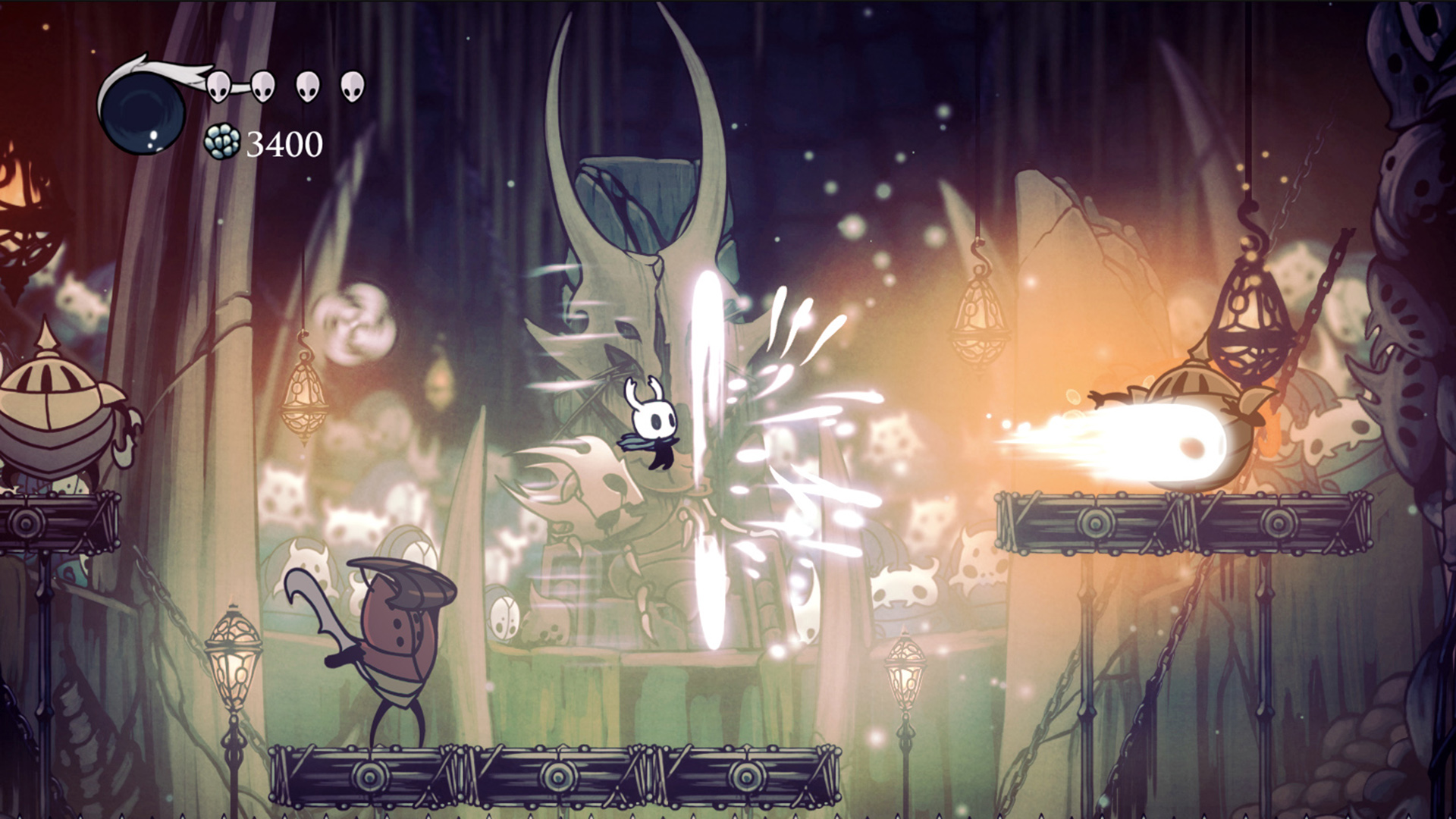
The test I use for whether a game world is real versus set dressing: does it have internal logic that exists independently of the player's presence in it?
Hallownest passes easily. The kingdom existed and functioned before you arrived. It had a religion, an economy, a social hierarchy, a royal family making decisions for reasons that made sense within their own framework, and a specific failure mode that followed from those decisions in ways you can trace if you pay attention.
The areas feel like different places rather than different biomes wearing different colour schemes. Greenpath is lush and alive and dangerous in an organic way. The City of Tears is a functioning urban ruin with rain that has apparently been falling for generations, which is quietly one of the more melancholy details I have encountered in gaming. Deepnest is deliberately, systematically horrible -- dark, claustrophobic, full of things that have been wrong for long enough that they have forgotten they were ever anything else.
I genuinely dislike spending time in Deepnest. That is a design achievement. The game made me feel something real about a place that does not exist.
William Pellen's hand-drawn art is what makes all of this work. Every room has been drawn. Every creature has a distinct silhouette. The visual consistency across an enormous world, maintained by a studio of three people, is something most large studios with dedicated art departments do not manage.
Christopher Larkin's Score Does Something Unusual
Most game soundtracks establish tone. Hollow Knight's soundtrack does something more specific: it tells you what each area means emotionally before the environment has had a chance to make the argument.
Greenpath's gentle arpeggios say this is beautiful and you are not safe. The City of Tears theme says this was grand and now it mourns itself continuously. Crystal Peak's industrial percussion says something was harvested here until whatever was doing the harvesting ran out of things to care about.
The boss defeat theme is the most thoughtful piece of video game scoring I know. When you beat a boss in most games, the music swells. Victory. Relief. Triumph. In Hollow Knight, a quiet, melancholy coda plays. It acknowledges the fight was hard without celebrating the outcome. The thing you just killed was not simply an obstacle. The score remembers that, even when the player is pumping their fist.
The full soundtrack is on Spotify and worth listening to independently of the game. I do not say that about many game soundtracks.
The Free DLC Is a Quiet Indictment of the Industry
After release, Team Cherry added four free DLC packs: Hidden Dreams, The Grimm Troupe, Lifeblood, and Godmaster.
The Grimm Troupe is a complete questline involving a travelling nightmare circus. Multiple new boss fights. A resolution with genuine narrative weight. It adds probably six hours of substantial content.
Godmaster adds the Pantheon system -- escalating boss gauntlets of increasing brutality -- and what functions as a true ending that recontextualises the main story's resolution. It adds dozens of hours for players who engage seriously.
Both free. From three people who could have charged for any of it and the market would have accepted that without complaint.
Meanwhile, publishers are charging $40 for DLC that contains a fraction of Godmaster's content. Ubisoft sells season passes. EA charges for weapon upgrade resources. Activision charges for colour palettes applied to guns. It is genuinely hard not to feel like you're getting fucking ripped off paying for any of it.
Team Cherry gave players the equivalent of two full expansion packs for nothing, because they are independent and not accountable to a quarterly earnings call. That is the explanation. Not unusual virtue. Just the absence of a shareholder who needs to see DLC revenue on a slide.
The Numbers, Since They Make the Point Better Than Anything
| Dev team | 3 people | 200-500 people |
| Dev cost | ~$57,000 | $80M-$200M |
| Launch price | $14.99 | $59.99-$69.99 |
| Post-launch DLC | Free | $15-40 per pack |
| Metacritic | 87 | 70-85 typical |
| Hours of quality content | 40-60+ | 20-40 |
| Copies sold | 5M+ | Varies widely |
They won't be. But for fuck's sake, they should be.
One Honest Criticism
The map system. You have to find and purchase a map of each area from Cornifer, a cartographer who camps somewhere in each zone. Until you find him, you are navigating blind. After you have the map, you still have to manually mark your own points of interest.
I understand the design logic. Disorientation is intentional. Getting lost in Hallownest is part of the experience. The lack of hand-holding is a feature.
But Deepnest specifically is where this tips from atmospheric into annoying. Deepnest has bad lighting, enemies that attack from off-screen, and a layout that branches in ways that force you to learn routes under active stress. Even knowing why the design made this call, I found it more frustrating than engaging by the third time I got properly lost. Crystal Peak felt like exploration. Deepnest felt, eventually, like punishment for not having memorised the map well enough.
That is one section across an enormous game. I mention it because giving you completely accurate expectations is more useful than presenting the game as perfect. It is not perfect. It is exceptional, which is a different and more interesting thing.
About Silksong
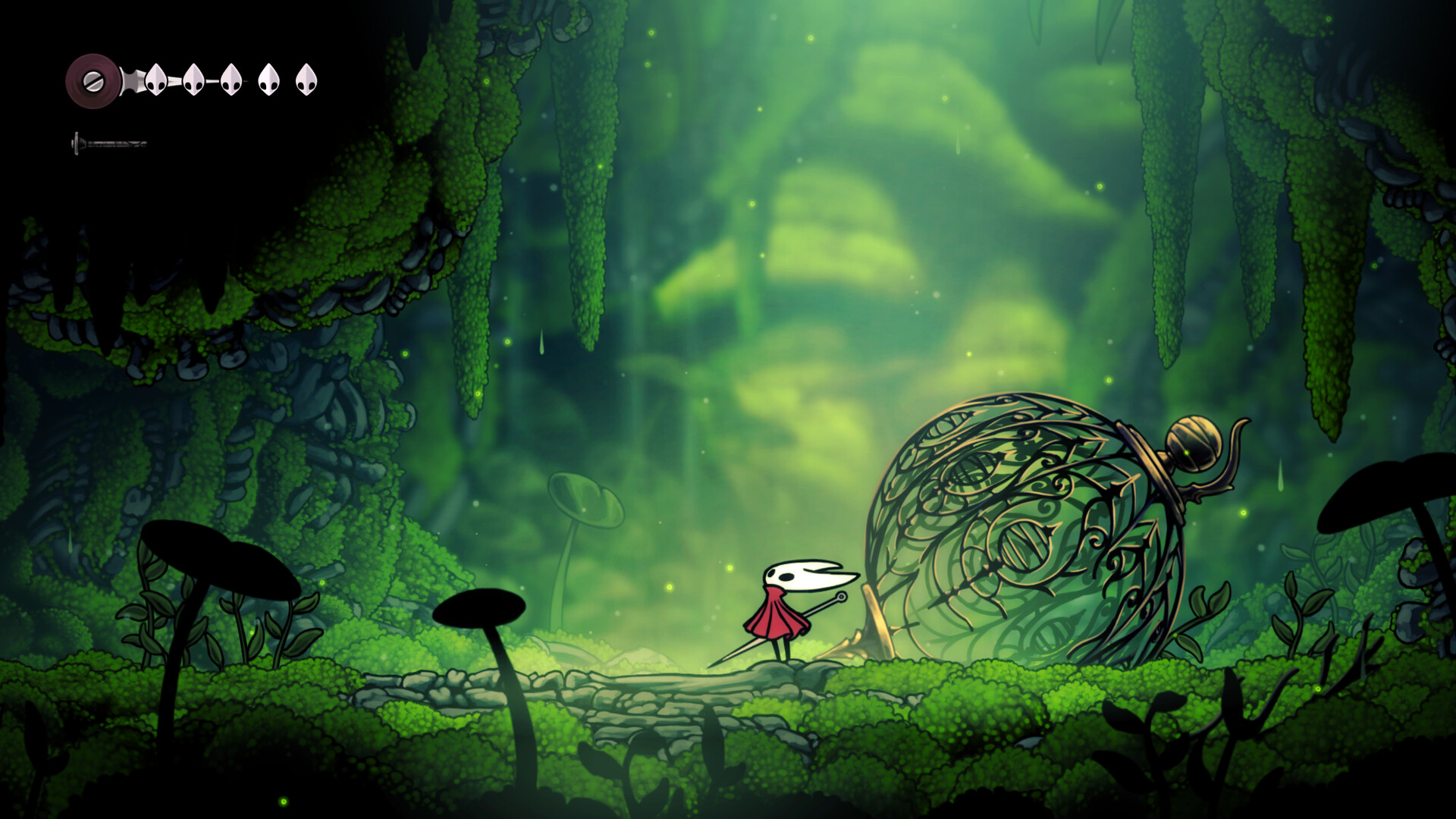
Hollow Knight: Silksong released September 4, 2025, seven years after it was announced. It is genuinely excellent: 89% Very Positive across 418,000-plus Steam reviews, a Metacritic score in the high 90s, and a first weekend so big it briefly took Steam itself down.
It landed lower than the original Hollow Knight's near-perfect score for a real reason, not a fluke: Team Cherry pushed the difficulty noticeably harder than the first game, and the initial backlash was loud enough that they shipped a balance patch adjusting the early bosses within the first couple of weeks. That is the honest criticism. It is also, once you are past the first act, still Team Cherry doing what they do best.
Hollow Knight: Silksong on Steam -- $19.99. Play the original first if you have not, then go straight in.
Hollow Knight is available on PC, Switch, PS4, and Xbox. $14.99. Play it. Get properly lost in Hallownest at least once. Beat the Mantis Lords without looking anything up. Sit with the boss defeat music for a moment before you move on.
Then go play Silksong. Both are worth your time.
Buy on Steam | Team Cherry | Silksong on Steam
Game at a glance
| Detail | Answer |
|---|---|
| Genre | Metroidvania |
| Typical length | 40-60 hrs |
| Difficulty | Hard |
| Play mode | Single player |
| Developer | Team Cherry |