Dead Space: How EA Killed a Franchise by Fixing What Wasn't Broken
Dead Space was a successful horror franchise. EA added co-op, microtransactions, and action set pieces. Sales declined. EA closed the studio. The IP sat unused for six years. This is the story of how publishers destroy their own franchises.

TL;DR
- The 2023 remake proves the original 2008 approach was right -- restores everything EA stripped for Dead Space 3.
- No mandatory co-op, no microtransactions -- deliberate rejections of Dead Space 3's failures.
- Visceral Games, who made it, no longer exists. EA closed the studio in 2017.
Dead Space sold approximately 2 million copies in 2008. For a new IP in a genre that was not commercially dominant, that was a genuine success. EA greenlit a sequel. Dead Space 2 improved on the original in nearly every way and sold approximately 4 million copies, double the first. The franchise was growing.
Dead Space 3 sold approximately 4 million copies in its first month. EA considered this a commercial disappointment. Visceral Games was closed four years later. The IP sat in EA's catalogue unused for six years.
Between Dead Space 2 and Dead Space 3, EA had added mandatory co-op multiplayer, introduced microtransactions for weapon upgrade components, shifted the narrative tone toward action spectacle, and made the game substantially less frightening. Then they expressed confusion about why it underperformed.
I have turned this sequence over in my mind many times and I still find it difficult to decide whether it is more baffling or more depressingly predictable. By this point in my years watching the games industry, I think the honest answer is: both, simultaneously.
What Made the Original Work
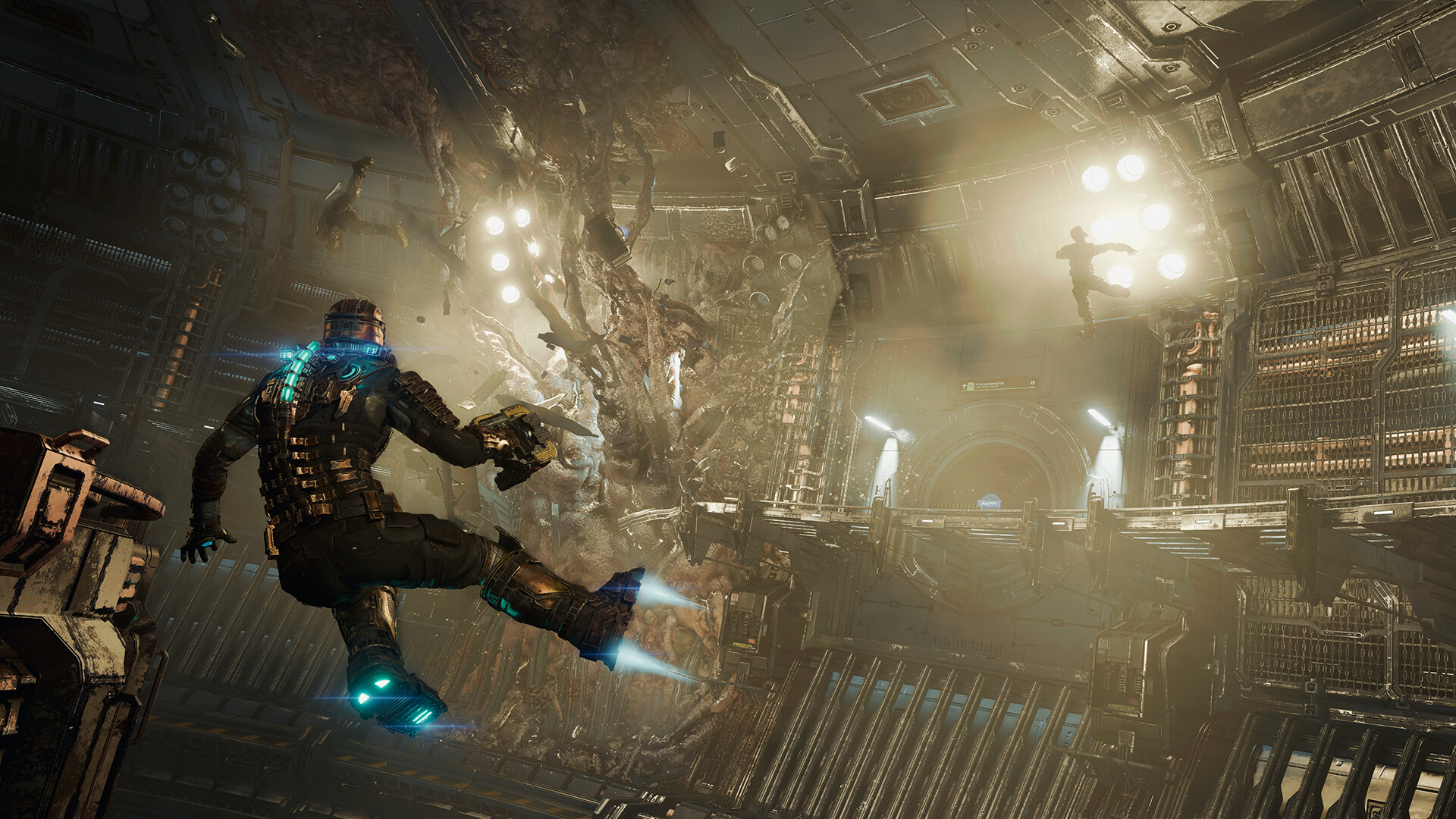
Dead Space worked because Visceral understood what survival horror actually requires and executed those requirements with craft across every system.
Resource scarcity is the engine of tension. Whether you have enough ammunition for the next encounter is a question that generates dread when you cannot answer it with certainty. Dead Space managed its resource economy carefully enough that the possibility of running out never fully resolved. You were always in the middle, always rationing, always making decisions under pressure that felt real because the scarcity was real.
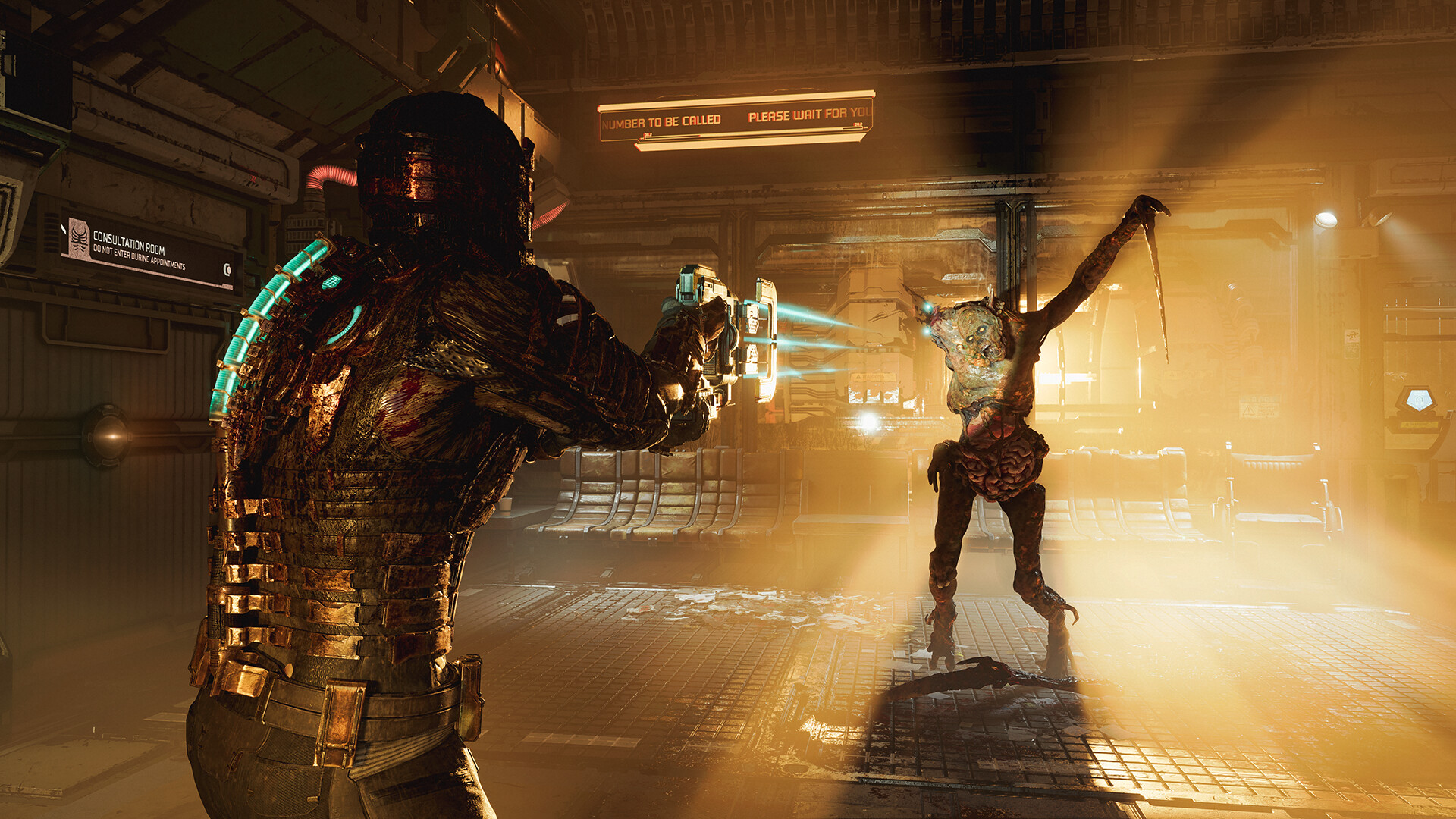
The dismemberment combat system is one of the most elegantly designed combat mechanics in the genre's history, and in the history of action games more broadly. Shooting a Necromorph in the torso does minimal damage. Cutting off limbs changes its attack patterns and approach vector, and eventually kills it. You are trained through play to engage differently with every encounter, and rewarded for applying that training. The system looks simple and is not.
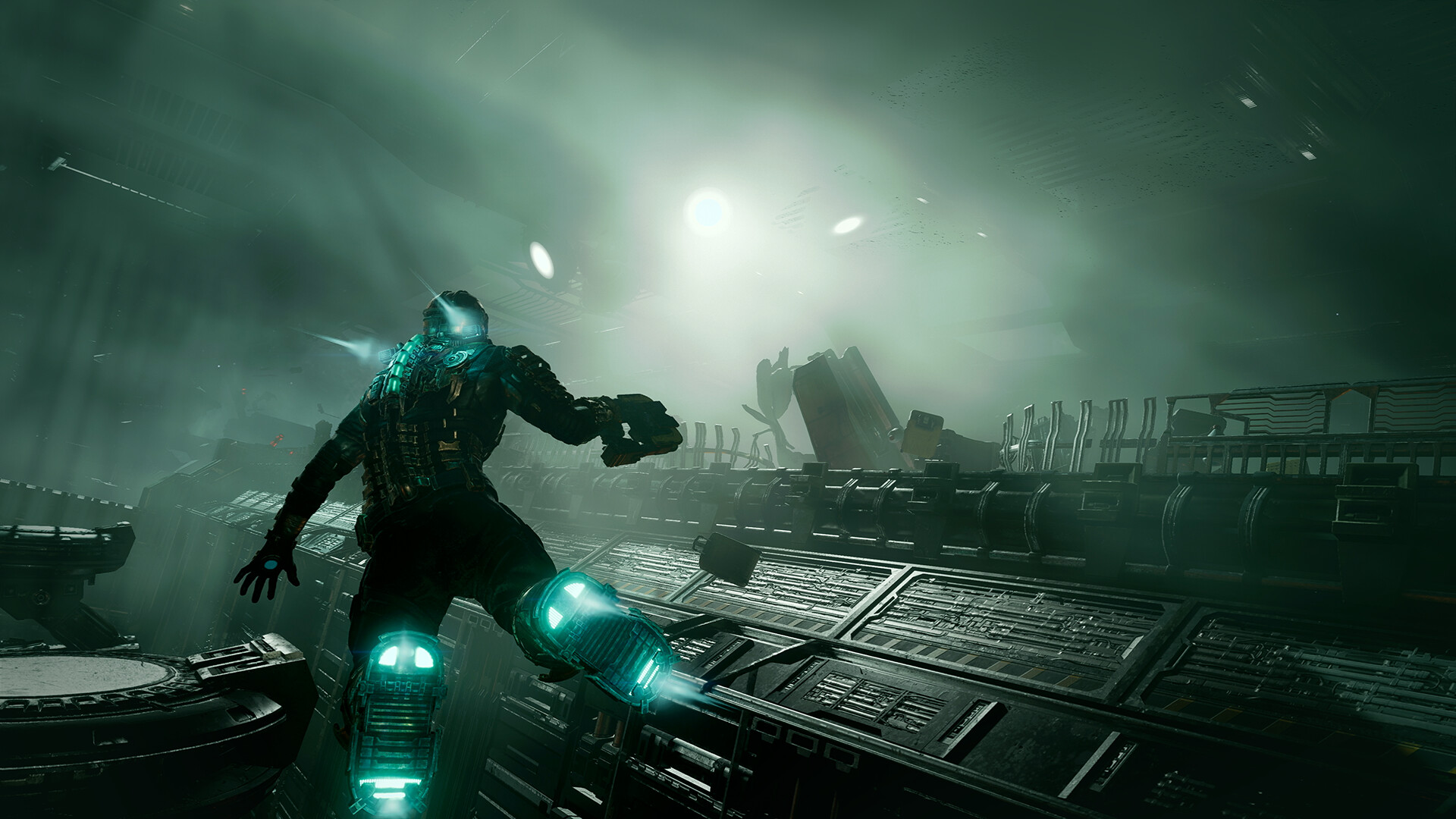
Isaac Clarke's isolation is the third load-bearing element. There is no partner to manage, no NPC following you, nothing to break the specific oppression of being alone in this place. The USG Ishimura exists independently of you and your presence changes nothing fundamental about what it is. Being an unwanted visitor in someone else's catastrophe is most of what makes the game work.
Dead Space 2 preserved all three elements while substantially improving the production values and environmental variety. The Sprawl is a different environment from the Ishimura in ways that expand the game's emotional range without abandoning the core. The new Necromorph types are more varied and require different tactical responses. The Isaac character develops in ways that are actually interesting. It worked because it built on what worked, which is the most straightforward possible lesson that the sequel proceeded to demonstrate before Dead Space 3 abandoned it entirely. The upgrade path from Dead Space 1 to Dead Space 2 is a model for how franchise development should work. Understand why the original succeeded. Identify which elements are load-bearing. Improve the supporting elements while preserving the core. Expand the scope without changing the fundamental promise. Dead Space 2 did this correctly. Dead Space 3 replaced the load-bearing elements with different load-bearing elements designed for a different kind of game.
The Changes That Killed It
For Dead Space 3, EA imposed three changes on Visceral's design. Each had a commercial justification. Together they destroyed the design logic that made Dead Space functional as horror.
Co-op multiplayer. Games with multiplayer modes have larger potential markets. They can be sold to groups of friends rather than just individuals. The commercial argument is solid. The design consequence is irrecoverable: you cannot be isolated with a co-op partner present. The emotional register shifts from individual dread to team coordination. These are incompatible experiences requiring incompatible design decisions. Dead Space without isolation is not Dead Space. It is a different game with Dead Space assets attached.
Microtransactions for weapon upgrade components. Standard commercial practice in 2013. Adds revenue. Also communicates to players that the resource scarcity the game depends on is purchasable. If scarcity can be bought away, it is no longer real. The entire tension system depends on players believing that limitation is genuine and consequential. The moment you can spend money to bypass the scarcity, the game's primary emotional mechanism is broken regardless of whether individual players actually use the option.
Tone toward action spectacle. Spectacle tests well with audiences in preview scenarios. Also dilutes the sustained quiet dread of the original's opening hours in ways that cannot be recovered once established. Action spectacle and survival horror occupy fundamentally different emotional registers. You can have one or the other. Trying to have both produces neither convincingly.
Dead Space 3 sold 4 million copies. EA's reported internal threshold was 5 million. The lesson drawn was not that co-op and monetisation had undermined a horror franchise. The lesson was that Visceral had not executed EA's vision adequately. I want to note how specific and perverse this logic is. The studio was blamed for failing to successfully execute a creative direction that was wrong from the start. The people who set the direction were not blamed for setting it.
What Survival Horror Actually Requires
This might seem like a detour, but I think it is worth being specific about why the original Dead Space design worked before explaining how it was broken, because the failure of Dead Space 3 was not immediately obvious to everyone who evaluated the commercial decisions in isolation.
Survival horror requires the player to feel genuinely vulnerable. Not just to understand intellectually that the protagonist is in danger, but to feel that danger personally in a way that produces real physiological response. The genre accomplishes this through a consistent set of design tools that have been understood since Resident Evil established the template in 1996.
Resource scarcity creates vulnerability because the player is always uncertain whether they have enough to survive the next encounter. Loneliness creates vulnerability because there is nobody to help you and no way to share the weight of what is happening. Limited combat effectiveness creates vulnerability because engagement always carries risk and avoidance is sometimes the correct option. Sound and darkness create vulnerability by limiting information.
Every one of these tools works through player uncertainty and powerlessness. The moment you add a second player, you have shared the uncertainty and reduced the powerlessness. The horror is a private experience and co-op makes it social. The moment you allow players to purchase weapon upgrades, you have confirmed that resource scarcity is optional. The horror depends on believing the scarcity is real and inescapable.
EA's mandates for Dead Space 3 did not introduce new problems to the formula. They removed the properties that made the formula work. There is a difference between failing to implement horror effectively and actively dismantling the mechanisms that produced horror in the previous entries. Dead Space 3 is the latter. The design changes were not additions to a horror game. They were subtractions from it.
I have read the arguments that defend the commercial rationale for each individual change and they are not wrong on their own terms. The problem is that survival horror games are one of the few genres where the commercial optimisation tools that generally increase market size actively destroy what makes the product distinctive. A bigger audience for a horror game that is no longer frightening is a bigger audience for a bad product. The franchise numbers demonstrate this. Dead Space 1: 2 million copies, critical success, franchise launched. Dead Space 2: 4 million copies, critical success, franchise growing. Dead Space 3: 4 million copies, critical disappointment, studio closed four years later. The audience expansion did not materialise. The audience that existed was given something worse than what they had paid for previously.
The Closure and the Remake
Visceral was redirected toward a Star Wars live service project. When that project was deemed incompatible with EA's strategic direction in 2017, the studio was closed. Hundreds of developers lost their jobs. The Star Wars project that caused the closure was never released.
The Dead Space IP spent six years unused in EA's catalogue. In 2022, EA announced a remake developed by EA Motive. It launched in January 2023 and reviewed at 89 on Metacritic.
I played the remake. It is excellent. It is also, in every significant creative decision, a repudiation of what EA imposed on Dead Space 3. No co-op. No weapon upgrade microtransactions. Resource scarcity is present and genuine. Isaac's isolation is maintained throughout. The dismemberment system is refined and expanded. The Ishimura is rebuilt with the same oppressive spatial logic that made the original work.
Every creative decision in the remake is an implicit acknowledgement that the changes imposed on Dead Space 3 were wrong. The studio that made those changes under duress from above was closed. The remake that proved the original approach correct is a critical and commercial success. The people who gave the directives that broke the franchise are still employed at EA.
I find this genuinely infuriating in a way that I think deserves plain language rather than neutral business framing. That is the pattern. It has been the pattern across Bullfrog, Westwood, Origin Systems, Pandemic, Maxis, and Visceral. It will be the pattern for whatever comes next.
Why the Remake Being Good Makes the Story Worse, Not Better
The rehabilitation narrative around the Dead Space remake is: EA learned, made it right, the franchise is back. I think this narrative is actively misleading and I want to say why.
EA Motive did excellent work. The remake is a genuine achievement. The people at EA Motive who built it deserve full credit for what they produced.
But the Dead Space remake being good does not change the following facts: Visceral Games, the studio that understood Dead Space because they created it, was closed. The people who built the original two games are not at EA. The specific institutional knowledge, the creative relationships, the understanding of why specific decisions worked and what the game fundamentally was, that knowledge dispersed across the industry when the studio closed. What EA Motive rebuilt is excellent. It is also a reconstruction, not a continuation. The people who would have made Dead Space 4, 5, and 6 are elsewhere.
The franchise being partially rehabilitated through a remake does not restore what was lost. It demonstrates that the original approach was correct while simultaneously proving that the correctness of the original approach was not sufficient to protect the studio that produced it. Those two facts in combination are the actual story of the Dead Space franchise.
The Pattern and What It Tells You
The Dead Space franchise demonstrates the publisher IP management model at its most legible. Studio develops IP with clear creative vision, commercial success follows. Publisher imposes mandates that override creative logic in service of broader commercial objectives. Game underperforms relative to targets set to justify mandate. Studio absorbs accountability for mandate execution failure. Studio is closed. IP sits unused. Remake is made faithfully by a different team and succeeds commercially. The implicit proof that the original vision was correct produces no accountability for the people who overrode it.
This model produces outcomes the publisher wants at every stage: commercial optimisation, risk distribution downward, accountability distribution downward, IP retention. The only people whose interests are not served are the developers whose creative work was overridden and the players who bought Dead Space 3 expecting it to be Dead Space.
The remake also demonstrates something specific about what we lose when franchise-defining studios are closed. EA Motive spent years rebuilding what Visceral built in order to produce a faithful recreation. That is years of developer time spent on reconstruction rather than on creation. The games that Visceral would have made in those six years do not exist because Visceral does not exist. No remake can restore that.
What players received in 2023 was the game that should have followed Dead Space 2, delivered in 2023 by a different team as a remake of Dead Space 1. This is not a criticism of EA Motive. They did the job they were given with genuine skill and the result is excellent. It is an observation about what the publishing model cost: a decade of franchise development traded for six years of nothing followed by a remake that vindicates everything the original studio was doing. The timeline lost is not just the studio. It is six to eight years of what the franchise could have become if the people who understood it had been left to develop it rather than being redirected toward live service mandates and Star Wars projects and eventually closure.
I find the business case for the Dead Space remake genuinely interesting for this reason. EA spent development resources on a remake of a game from 2008 because the franchise still had commercial value and they had killed the studio capable of developing it further. The remake is the most expensive possible demonstration that the studio should not have been closed. And the lesson, as always, will not be learned.
Dead Space (2023 Remake) is available on PC, PS5, and Xbox Series. $59.99. Play it. It is what survival horror looks like when the people making it are allowed to make it correctly.
Buy on Steam
Game at a glance
| Detail | Answer |
|---|---|
| Genre | Survival Horror |
| Typical length | 12-15 hrs |
| Difficulty | Moderate |
| Play mode | Single player |
| Developer | Motive |