Destiny 2 Is the Most Predatory Game Ever Made by a Studio That Used to Make Halo
Bungie built the FPS genre twice. Then they spent a decade building a slot machine. Destiny 2 is the most sophisticated psychological manipulation engine in gaming, disguised as a loot shooter.

TL;DR
- The gunplay is genuinely exceptional. The monetisation is the most sophisticated psychological manipulation engine in gaming. Both true at once.
- Free to play, but staying current costs $80-120+/year minimum -- often much more.
- Set a hard spending cap before you start, or don't play it at all.
Bungie made Marathon. They made Halo: Combat Evolved, Halo 2, and Halo 3. They invented the modern console FPS, established the template for console multiplayer that the entire industry has been copying for twenty years, and made games that defined what a generation of players understood the medium could be.
Then they spent roughly a decade building Destiny 2, which is the most sophisticated psychological manipulation engine I have encountered in a video game. Disguised, very effectively, as a genuinely excellent looter shooter.
I want to hold both of these statements simultaneously because they are both true. Destiny 2 has some of the best gunplay ever designed and it is engineered at a systems level to extract time and money from players in ways that serve Bungie's business model significantly more than they serve anyone holding a controller. These are not contradictory. They are complementary, and understanding both together is the only honest description of what the game is.
First: The Gunplay Is Exceptional
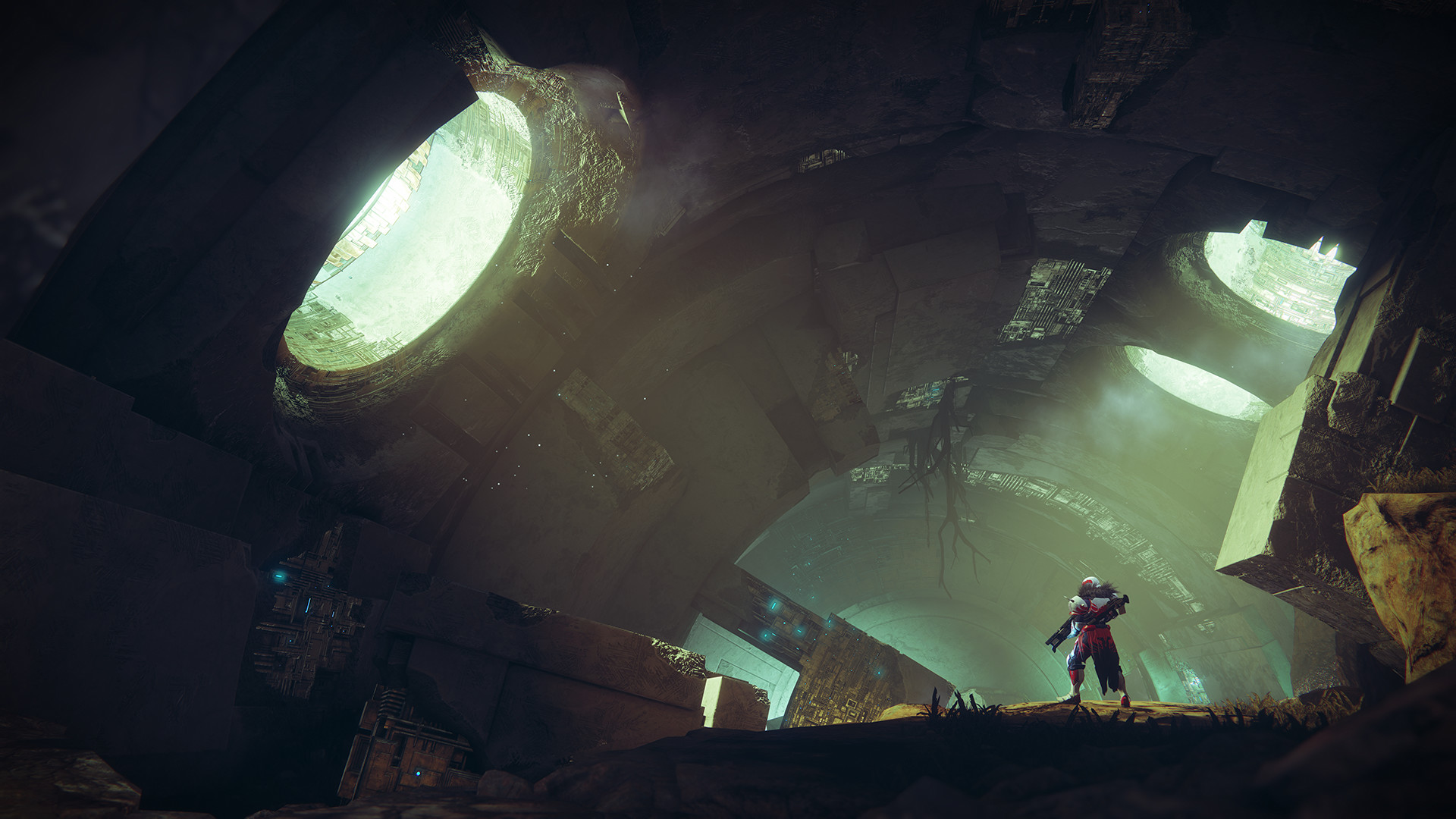
The engineers who made Halo feel the way Halo feels are still at Bungie making Destiny 2, and they have not lost the ability.
Every weapon in Destiny 2 has specific, intentional physical feedback that distinguishes it from every other weapon in the game. The difference between how a pulse rifle feels to fire versus a hand cannon versus an auto rifle is encoded in physics response, aim assist behaviour, reload animation timing, and damage output cadence. Guns in Destiny 2 feel like individual objects with individual identities, not stat blocks wearing different models.
I have spent time with specific weapons not because they were optimal for my build but because they were satisfying to fire. The Thorn hand cannon. The Wishender bow. Various raid-specific exotics. These weapons feel like something. The craft invested in them is real and I think it deserves acknowledgement even in an article that is substantially about what surrounds it.
This matters enormously for what follows because the manipulation works, in part, precisely because the thing you are being manipulated around is genuinely excellent. You are not being managed into spending money on something that does not give you pleasure. You are being managed into spending money on something that gives you real pleasure. That makes the manipulation more effective, more worth naming clearly, and harder for players to walk away from.
The raids are also worth naming here. Destiny 2 raid design is consistently the most sophisticated co-operative PvE content produced in any live service game. The encounter design in Vault of Glass, King's Fall, and Root of Nightmares requires genuine team coordination, role specialisation, and accumulated mechanical knowledge. These are genuinely great experiences. They are also locked behind content access requirements that have, at various points, required active subscription to remain in the rotation. The best content in the game is a reason to stay subscribed. That is not an accident.
The Monetisation Architecture
Destiny 2 is free to play. That is the entry hook and it is an effective one.
Staying current in 2026 involves: a seasonal pass at approximately $10 per quarter, an annual expansion at $40-50, dungeon access keys at $20 for specific high-difficulty content, Eververse cosmetic store items at $10-25 each, and various premium currency packages at different price points. A player who wants all current content and a competitive power level for all activities is looking at $80-120 per year minimum. Many spend significantly more. The players who spend significantly more are the ones who are most engaged, which is the same population that the game's psychological architecture is most specifically optimised to retain.
None of these individual purchases are illegitimate in isolation. Games cost money to make and maintain. Cosmetics are voluntary. Expansions add content. Seasonal passes fund ongoing development.
The issue is that every system in the game is engineered to create psychological pressure toward purchasing that operates below the threshold of conscious decision-making. This is not a side effect. It is deliberate design, imported from decades of research on behavioural psychology and applied with considerable sophistication. The people who built these systems are not ignorant of what they are doing. The research on variable reward schedules and time-limited availability and loss aversion is explicit and documented. They read it and they applied it.
The Variable Reward System

The specific psychological mechanism Destiny 2 uses most effectively is the variable reward schedule, which is the same mechanism that makes slot machines effective.
A fixed reward schedule is boring and quickly loses its pull: do action, receive reward, every time, predictably. A variable reward schedule is the opposite: do action, receive reward sometimes, unpredictably. Neuroscience research going back to B.F. Skinner in the 1950s established that variable reward schedules produce the most persistent engagement of any reward structure. The uncertainty about whether the reward will arrive this time is what drives continued engagement, not the reward itself.
Every loot drop in Destiny 2 is a variable reward. You run a Strike, you might get the weapon you want. You run the Nightfall, you might get the exotic. You complete the weekly bounties, you might get the armour piece that completes your build. Each of these activities is fun on its own terms and also functions as a pull on the lever of a slot machine. The fun and the manipulation are layered on top of each other, which is exactly what makes the system effective.
The craftable weapons system that Destiny 2 introduced to address player frustration with RNG demonstrates that Bungie understands the variable reward problem and has deliberately chosen to retain it for the most desirable items. Craft system: you farm specific materials and eventually get the weapon you want, predictably. Still applied to mid-tier content. The high-end exotics and raid weapons remain on variable drop tables. The most wanted items are precisely the ones kept behind the slot machine.
I am not angry about this in the way I am angry about some of the other things I have written about on this site. It is a sophisticated and effective business model applied to a genuinely excellent product. What I find worth naming is that the sophistication is specifically targeted at players who are most susceptible to it, and that the people most likely to spend significantly are the people least well-served by what they are spending on. The high spenders in live service games are disproportionately players with compulsive tendencies around collection and completion. The variable reward system is not accidentally effective for this group. It is designed to be. The people who can most afford to spend $400 a year on Destiny 2 are also the people least likely to be harmed by doing so. The design does not target that group. It targets the people who will spend $400 because the game is designed to make them feel like they need to.
The FOMO Machine

Destiny 2's most powerful manipulation tool is not the Eververse store. It is time.
The seasonal model creates expiring content. Narrative content from a given season is vaulted when that season ends. Weapons with specific meta-relevant perks become unavailable when their associated season closes. Activities disappear. Story beats that existed during a specific three-month window are permanently gone if you were not present.
This creates exactly the psychological state the industry calls FOMO, Fear Of Missing Out, which is not a natural feeling but a deliberately engineered one. The weekly reset amplifies it: new activities unlock on Tuesday, bounties refresh, pinnacle rewards become available and then reset. The design rewards returning on a schedule rather than playing when you want to. If you miss a week, you have objectively lost something that cannot be recovered. The game tells you this, implicitly, through every system.
This is casino and social media design language applied to a video game. Variable reward schedules. Daily check-in bonuses. Time-limited events that penalise absence. These features were not accidentally incorporated. They were deliberately imported from behavioural psychology research on engagement. Bungie's designers understand exactly what they are doing when they build these systems.
The Content Vault in 2020, where Bungie removed substantial content players had already paid for and later sold some of it back in Legacy collections, is the most visible expression of this philosophy. Players paid for content. The content was deleted. Some of it was resold. The player base absorbed this and continued engaging. That is a remarkable demonstration of how effective the engagement systems are at maintaining investment regardless of what the company does to the player's relationship with it.
What Bungie Was
Halo: Combat Evolved launched in 2001. You bought it. You had everything. No seasonal content. No content vault. No battle pass. No premium currency. No weekly reset. You paid money and received a complete game that did not ask you for anything else.
Halo 3 launched in 2007. Same model. The entire multiplayer, the entire campaign, all the maps, all included at purchase price. No additional spend required to remain current. No time pressure. No mechanism designed to make you feel like you were falling behind by not playing every week.
The engineers who made those games are still at Bungie making the gunplay for Destiny 2. The people writing the monetisation architecture are different from the people writing the weapon feel code. The commercial model that governs how the game is structured is not the same model that governed Halo, and the games that produced it were not made by people with the same incentives operating on them.
I find that genuinely depressing, and I will be honest about why. Not because it changes my assessment of what Destiny 2 is. It is what it is, and what it is I have described accurately above. But because I know what these people are capable of when the commercial model allows them to build a complete thing rather than a perpetual engagement engine. The Halo trilogy is one of the finest runs of consecutive game quality in the medium's history. Three games across six years, each building on the last, each expanding the universe without losing what made the original special. The people who made that are the same people who built the variable reward schedules and the content vault and the Eververse store. The gap between those two facts is the clearest illustration I know of what happens when the incentive structure changes around a creative organisation. Marathon is coming. It will be genuinely interesting to see which version of Bungie shows up to make it, and whether the Sony acquisition in 2022 produces conditions that allow something closer to what those people can actually do.
Play Destiny 2 if you want. Set a spending cap before you start and hold to it. Write the number on a Post-it and put it on your monitor if that helps. The game is genuinely good enough that the investment of time is worth it on its own terms. What I am saying is that the game is also specifically designed to erode the discipline you bring to the spending question, and knowing that going in is useful information. The gunplay is among the best in the medium. The raids are genuinely excellent. None of that makes the monetisation architecture anything other than what it is, which is a system built by people who know exactly how to make you spend money you did not plan to spend. Go in with your eyes open and a hard limit. Or play something else. Both are fine. I will not judge you for playing it and I will not judge you for avoiding it, but I will judge you for spending $400 a year on it and calling it a reasonable hobby expense without looking at what you are actually getting for the money.
Destiny 2 is free to play on Steam. The gunplay is exceptional. The raids are some of the best co-operative design available. Set a budget before you start and hold to it. Or play something else.
Play Free on Steam | Bungie
Game at a glance
| Detail | Answer |
|---|---|
| Genre | Looter Shooter |
| Typical length | Ongoing live service |
| Difficulty | Moderate |
| Play mode | Multiplayer |
| Developer | Bungie |