EA Just Killed Another Studio. Let's Talk About Why This Keeps Happening.
EA has a documented, decades-long pattern of acquiring beloved studios and closing them when the numbers don't work. This isn't incompetence. It's the model.

TL;DR
- Bullfrog, Westwood, Origin, Pandemic, Maxis, Visceral -- a documented, decades-long pattern, not incompetence.
- The model: acquire a beloved studio for what it built, extract the value, close it when the numbers don't work.
- The same structural logic is running right now at other studios under other publishers.
EA has closed another studio. There will be a statement about strategic restructuring and focusing on core priorities. The gaming press will cover it for 48 hours. The developers who lost their jobs will be referred to as "impacted employees."
I want to not move on from this one. Because I have been watching EA's studio closure record for years and the pattern is clear enough that treating each event as isolated is simply misleading. This is not a series of unfortunate business decisions. It is a model that has been running for thirty years, and calling it a model is more accurate than calling it a mistake.
The Full List
Let me go through the documented closures because the cumulative weight of the list makes the argument more effectively than any analysis:
Bullfrog Productions: Founded 1987, acquired by EA 1995, dissolved by 2004. Made Theme Park, Dungeon Keeper, Populous, Syndicate, and Magic Carpet. Peter Molyneux left during the acquisition period. The team dispersed. The IP remained.
Westwood Studios: Founded 1985, acquired 1998, closed 2003. Made Command and Conquer, one of the most successful real-time strategy franchises in history. EA continued operating the IP after closing the studio, producing entries that progressively deteriorated until rebooting the franchise as a mobile game.
Origin Systems: Founded 1983, acquired 1992, closed 2004. Made Ultima and Wing Commander. Richard Garriott, the company founder, left. The studio that effectively invented the modern CRPG and co-invented the modern MMO was closed while Ultima Online was still running.
Black Box Games: Acquired 2002, closed 2013. Had revived the Need for Speed franchise with Underground.
Pandemic Studios: Acquired 2007 alongside BioWare, closed just two years later in 2009. Made Mercenaries and Destroy All Humans. Closed before most acquisition earnouts would have vested.
Maxis Emeryville: Closed 2015. Made SimCity and The Sims. The 2013 SimCity launch required always-online DRM that caused server failures on day one. Maxis absorbed the accountability for decisions made above them.
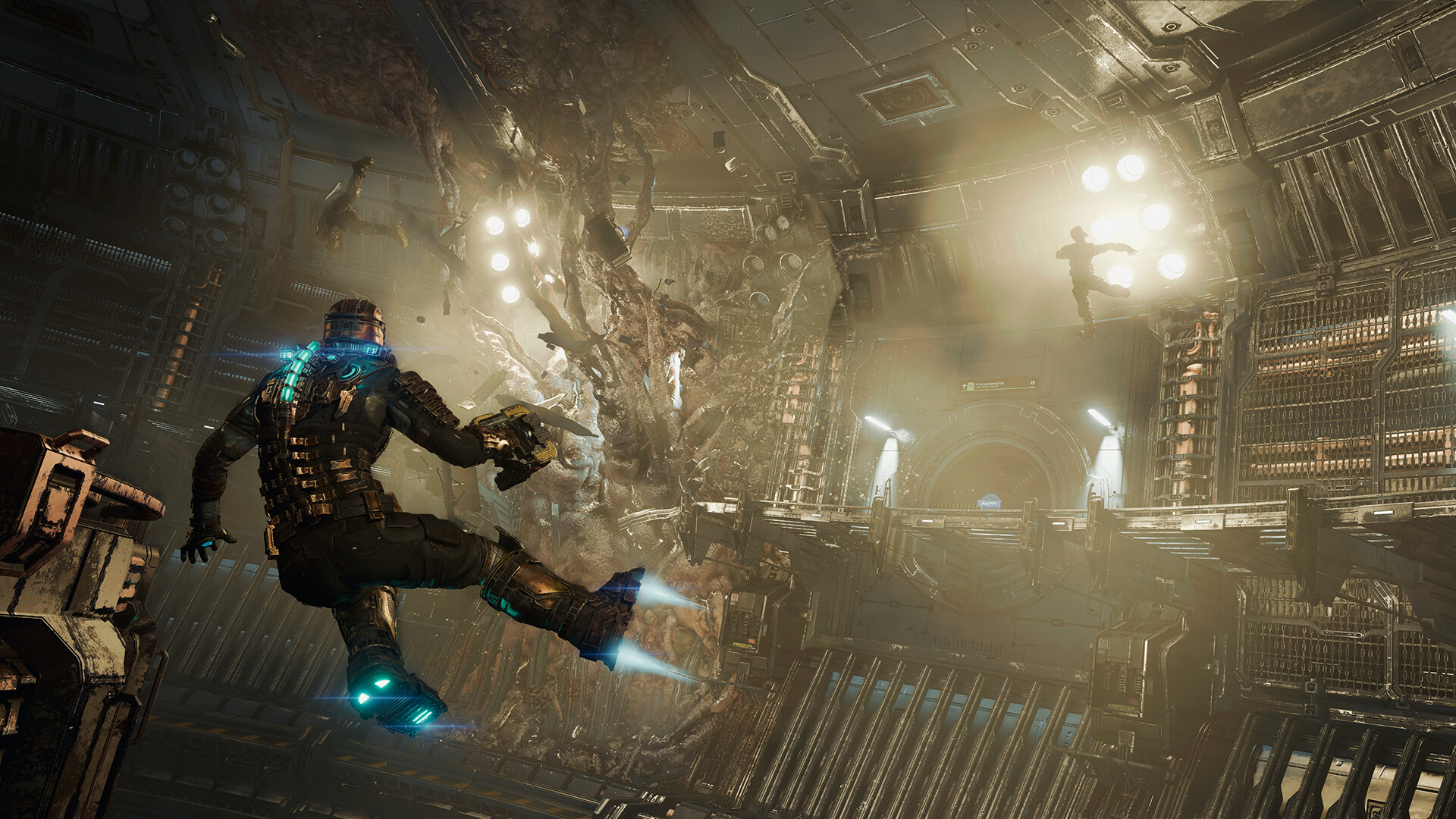
Visceral Games: Closed 2017 while working on a Star Wars project. Made Dead Space 1 and 2, two of the finest survival horror games released in the console generation they occupied.
In 2024, EA announced approximately 670 layoffs and cancelled multiple projects including a Respawn single-player title reportedly in advanced development.
This is not a complete list. I stopped because the pattern is established. Every studio on it was excellent when EA acquired it. None of them were excellent when they closed, because the conditions that produced the excellence were removed in the intervening years.
Why This Keeps Happening
The closures are the predictable output of a specific model, not a series of individual management failures. Understanding the model requires understanding what an acquisition actually consists of.
When EA acquires a studio, it acquires three things: the IP, the brand recognition, and the development talent. Of those three, only the IP is a permanent balance-sheet asset. Brand can be maintained without the original team. Development talent, once the acquisition purpose has been fulfilled, is a recurring cost that can be reduced when financial targets are missed.
This is not a moral assessment. It is a structural description of how publicly traded entertainment companies operate. The studio at the peak of its creative power is the acquisition target. The acquisition process begins degrading the conditions that produced that peak: new reporting structures, new mandates, new tools, targets set by people without game development experience. Output quality declines. Targets are missed. Costs are reduced.
I have watched this happen with enough specific studios that I find the "unfortunate business decision" framing genuinely inaccurate. It is a policy. The names change. The mechanism does not.
There is a specific financial logic worth naming explicitly. The acquisition price reflects the studio's value at peak creative output. The earnout structure typically rewards key personnel for staying for a defined period, after which their financial incentive to remain is significantly reduced. Many of the most creatively important people leave at or shortly after the earnout vests. The studio that remains has the infrastructure, the IP, and the headcount, but not the specific people who made the work worth acquiring. EA then attempts to produce output that matches the acquisition valuation using personnel who were not responsible for it. This predictably fails. The closure follows.
What Happens During the Acquisition Period
I want to be specific about the mechanism because "EA ruins studios" is a widely understood claim that is rarely examined precisely.
The acquisition happens because EA wants what the studio has made. The studio is at its creative peak. The people running EA's acquisitions are not stupid, and the studios they acquire are not accidental choices. They buy Visceral because of Dead Space. They buy BioWare because of Mass Effect and Dragon Age. They buy Respawn because of Titanfall. The acquisition price reflects genuine understanding of what the studio is worth.
What happens after acquisition is a product of the constraints that operating inside a publicly traded entertainment company imposes on any creative organisation. Quarterly reporting requires predictable revenue timelines. Game development has always been difficult to predict. The tension between these two facts produces most of what comes next.
New management structures arrive. The studio's creative leadership now reports into EA's organisational hierarchy rather than being the final authority. New tools are mandated, in EA's case usually Frostbite, an engine designed for shooters that most of their acquired studios were not making shooters with. New commercial targets are set based on the acquisition price and expected return on investment.
None of these individual things necessarily destroys a studio. Together, across a development cycle or two, they tend to change what the studio is capable of making. The creative people who were most integral to the original work, and who have the least tolerance for the new constraints, leave. The institutional knowledge that made the acquired work exceptional leaves with them. What remains is an organisation that can produce games with EA's resources and infrastructure but increasingly cannot produce the specific quality of work that justified the acquisition price.
I genuinely think most people inside EA who make these decisions believe they are improving the studios they acquire. They are not. They are extracting value from a creative ecosystem while systematically degrading the conditions that produced it.
The Visceral Case Study
Visceral is the most instructive closure because the chain of causation is unusually legible, and because the Dead Space remake in 2023 provides an explicit test of the hypothesis.
Dead Space launched in 2008, critically successful with solid commercial performance. Dead Space 2 improved on it and sold better. Both were made by a team with a clear creative vision for what survival horror on modern hardware should be.
For Dead Space 3, EA mandated co-op multiplayer and introduced weapon upgrade microtransactions. Co-op expanded the potential market. Microtransactions added revenue. Both decisions fundamentally undermined the design logic of a survival horror game: co-op breaks the isolation that creates dread, and purchasable resource abundance breaks the scarcity that creates tension. Dead Space 3 sold 4 million copies and was considered a commercial disappointment.
The lesson EA drew was that Visceral had failed to make EA's vision work. The studio was redirected to a Star Wars live service project. When that project was deemed incompatible with EA's strategy, Visceral was closed in 2017.
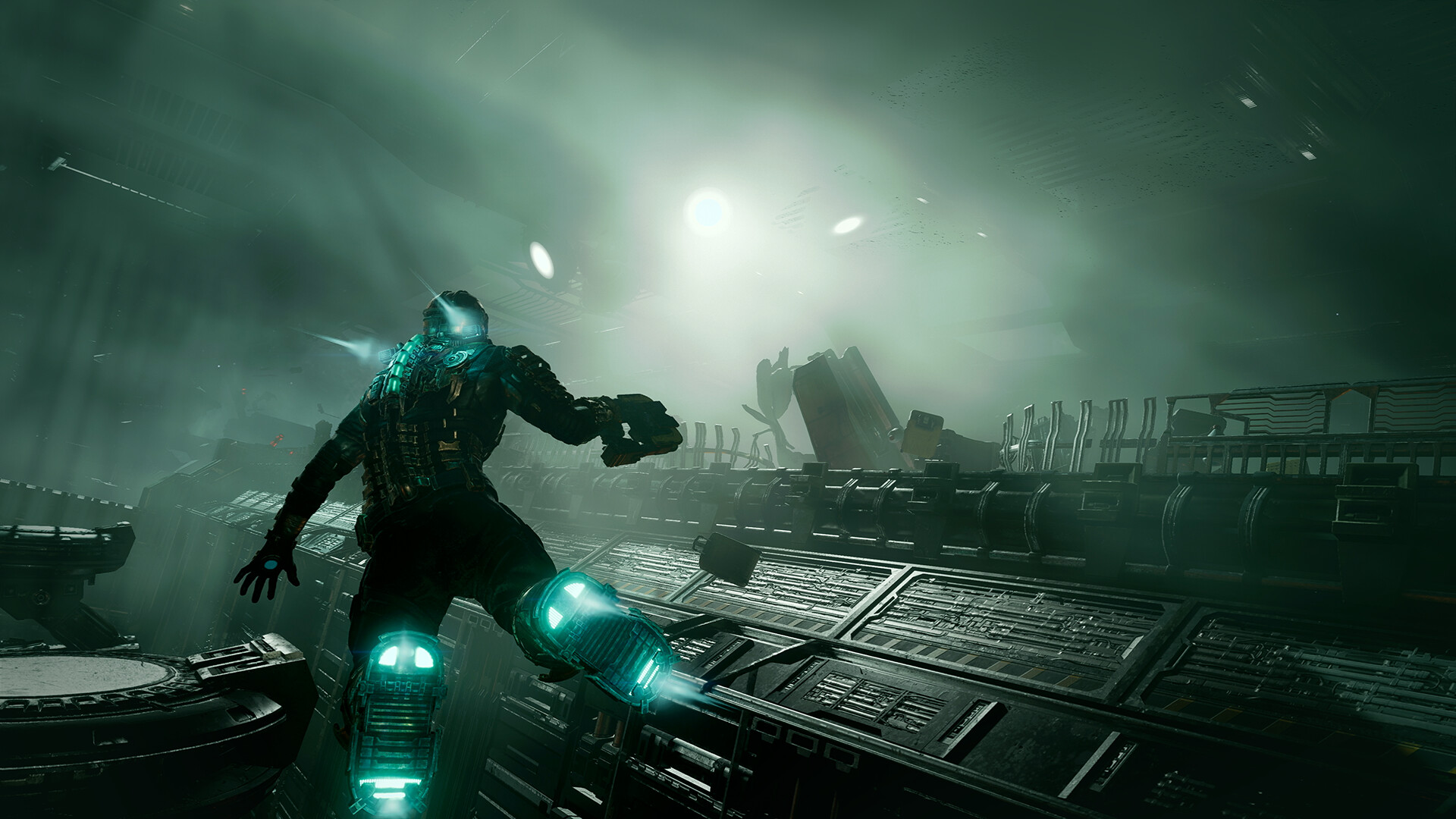
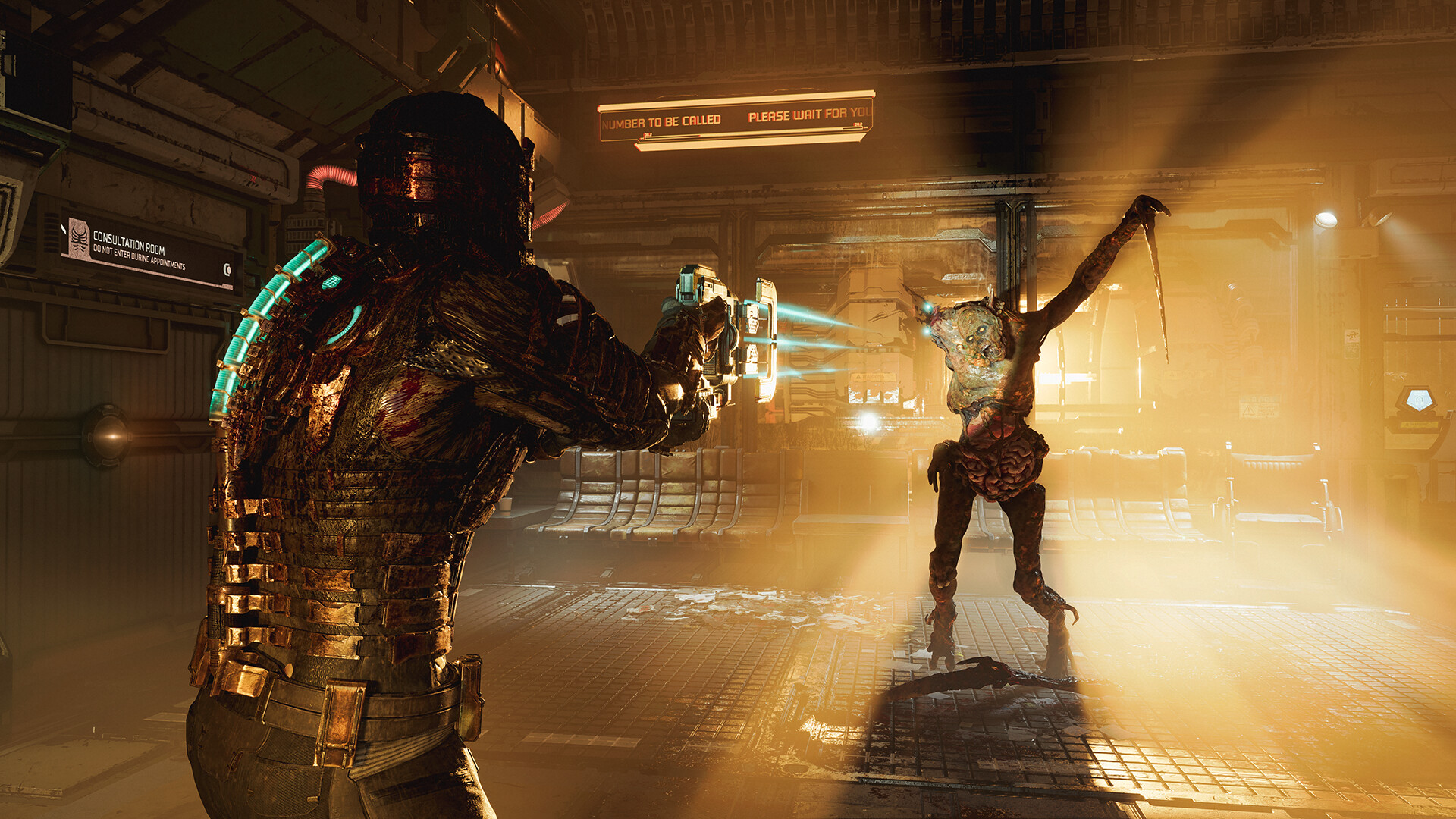
The Dead Space IP then sat unused in EA's catalogue for six years. The remake came from EA Motive, a different studio, launched in January 2023, and scored 89 on Metacritic. It had no co-op. No weapon upgrade microtransactions. It was faithful to Visceral's original design logic in every significant creative decision.
The implicit acknowledgement in that remake is that EA was wrong. The changes imposed on Dead Space 3 were the problem. The studio that made those changes under duress was closed. The people who gave the directives are still employed. The remake that proved the original approach correct is a commercial success.
That's the fucking model, and it has been running for thirty years. The pattern is not subtle. The pattern is documented. And it keeps happening because the incentive structure that produces it has not been changed by any of the consequences.
The Surviving Studios
The studios making the most interesting games today are disproportionately the ones not owned by large publishers. Team Cherry. Frictional Games. rose-engine. Red Hook Studios. Supergiant Games. None of them are EA acquisition targets because none of them generate commercial scale that justifies acquisition. That is both the protection and the commercial limitation.
The protection matters. When you own your studio and your IP, you cannot be closed because you missed a quarterly target. You make the game you are making on the timeline it requires, and if it is good you build the audience that sustains the next one. The downside is smaller upside: you cannot access the capital that lets you make games with $200M budgets.
For most of the games worth caring about, that tradeoff is correct. The budget ceiling that independence imposes is the same ceiling that forces the creative discipline that produces coherent games. Hollow Knight. Balatro. Hades. None of these needed or could have survived EA acquisition. Their excellence is structurally connected to the conditions under which they were made.
For players, spending money is the mechanism that preserves those conditions. An independent studio that sells enough copies makes another game. A publisher-owned studio that misses targets gets closed. Which outcome you contribute to depends entirely on where you spend.
The Krafton and Unknown Worlds situation is the most recent and most documented version of this pattern. A publisher saw a game on track to trigger a $250 million developer bonus, fabricated grounds to fire the founders, and lost in court. Unknown Worlds shipped Subnautica 2 in Early Access with their founders reinstated. The earnout is still being fought over. Buy the game and contribute to the outcome you want.
The Dead Space remake is excellent. Buy it. It is also a monument to a specific kind of waste: six years of an IP sitting unused because the studio that understood it had been closed. The cost of that waste was borne by the players who did not get more Dead Space, and by the developers who lost their jobs in 2017. Not by the people who made the decisions that produced the outcome.
I am genuinely angry about this, years after the fact, in a way I am not angry about most things in the games industry. Not because game studios are uniquely important in the grand scheme of things. Because the pattern is so clear and so documented and it keeps repeating. And every time it repeats, the response is the same cycle: shock, coverage for 48 hours, acceptance. Then the next one. The thing that would actually change the pattern is accountability that lands on the people who made the decisions. That has not happened once in thirty years of this.
Dead Space (2023 Remake) is available on PC, PS5, and Xbox Series. $59.99. EA Motive built something exceptional. Made without the people who built the franchise.
Buy on Steam