Fear & Hunger Is the Most Disturbing and Important Horror RPG Ever Made and Almost Nobody Has Played It
Miro Haverinen made a horror RPG in RPG Maker that goes to places no commercial game would be allowed to go. Fear & Hunger is not for everyone. It might be the most honest horror game ever made.

TL;DR
- One of the most significant horror games ever made -- made entirely in RPG Maker by one Finnish developer.
- Genuinely not for everyone. Read the content warnings before buying, not as a formality.
- $7.99. Not for the extremity -- for what it commits to showing that commercial studios structurally can't.
Content warning, and I mean this as genuine information rather than legal cover: Fear & Hunger contains sexual violence, body horror, torture, child death, and themes of religious extremism and sustained human degradation. These are not incidental. They are structurally present. If any of those are genuine limits for you, the game is not for you and there is nothing wrong with that.
For everyone else: $9.99 on Steam. Made by one Finnish developer, Miro Haverinen, in RPG Maker, a tool almost exclusively associated with student projects and amateur JRPG imitations. He used it to make something that no commercial studio could have shipped. One of the most significant horror games I have played.
I want to be careful about how I make that significance claim. I am not calling it significant because of its extremity. Content that is extreme for the sake of extremity produces nothing of value. I am calling it significant because it commits to showing something specific about human capacity for suffering and cruelty in ways that the commercial system structurally prevents. That commitment, executed with genuine craft and without apology, produces an experience that stays with you in ways most horror games do not.
What It Is
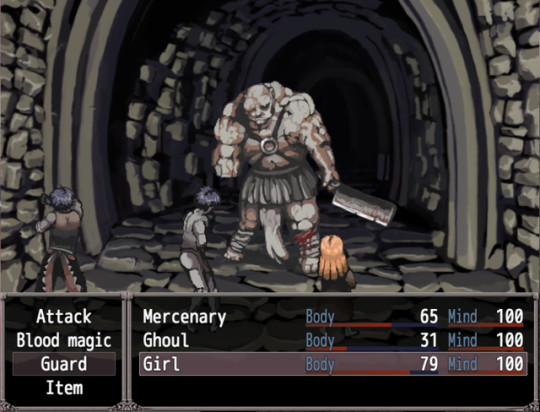
Fear & Hunger is a dungeon crawler set in an underground prison at the edge of the known world, constructed on a site of ancient evil. You choose one of four playable characters, each with distinct backgrounds and practical advantages within the dungeon, and you descend to find a prisoner and escape.
You will fail the first time. You will almost certainly fail the first several times. The game is punishing without apology: permadeath, very limited resources, enemies capable of killing you in a single encounter in the early floors, and a save system that requires finding and igniting specific candles at specific locations. Death is the primary teaching mechanism. Each death reveals something specific about the dungeon's rules and costs.
The combat is turn-based and requires spatial and tactical thinking. Enemies have limbs with distinct functions. Removing a limb changes what the enemy can do. Losing your own limbs changes what you can do for the remainder of that run. Lose an arm and two-handed weapons become inaccessible. Lose a leg and you crawl. The combat feels earned rather than abstracted, and the limb system creates a specific relationship with enemy encounters where the question is not just whether you win but what you have left after winning.
The world-building is delivered through environmental evidence. What the dungeon contains, what condition it is in, where things are in relation to each other, what remains of the people who were here before. This assembles the horror without explicit exposition. You piece together what this place was and what it was used for from fragments, which is the correct method for this kind of horror. Being told what happened would be less disturbing than having to conclude it yourself.
Why RPG Maker Was the Right Tool
The choice to build Fear & Hunger in RPG Maker is not a limitation Haverinen worked around. It is a creative decision that shapes what the game is.
RPG Maker produces a specific visual language: tiled environments, sprite-based characters, a top-down perspective associated with a particular kind of amateur game for thirty years. That visual language creates an initial expectation of something light and accessible. The gap between that expectation and what Fear & Hunger actually is lands with specific force. You are playing something that looks like a friendly JRPG and encountering the worst things the medium has ever depicted. The aesthetic dissonance is part of the horror.
There is also a practical dimension. RPG Maker is a tool one person can use alone to build a full game without a programming team. The decision to use it is the decision to have complete creative control over something that could actually be completed. Haverinen spent years building this game on his own. RPG Maker is what makes that possible. The result is a game where every creative decision is the product of a single consistent vision rather than a committee managing different priorities.
I have played AAA horror games made with $50M budgets and RPG Maker horror games made by one person in their spare time. The budget correlation with quality is essentially zero in this genre. What correlates with quality is the specificity of the creative vision and the freedom to execute it without compromise. Fear & Hunger has both, and the fact that it was made in a tool associated with bedroom developers is a useful reminder that the most important variable in a horror game is not the engine or the budget. It is whether the person making it had something specific to say and the conditions to say it without anyone telling them they could not.
Why It Goes to These Places
Every commercial horror game operates within constraints set by ratings boards, distribution platforms, and publishers managing reputational risk. Even the most ambitious commercial horror implies rather than shows. The terrible thing is suggested. The monster represents rather than depicts.
Fear & Hunger has none of these constraints. It was made by one person and sold directly. The things that happen in the dungeon are specific, purposeful, and world-building rather than gratuitous. The sexual violence is documentation of what this place was built for and what was sanctioned within it. The body horror is evidence of what serving the old gods requires. The child death is part of what the dungeon does and has always done.
This is purposeful darkness in the way that literary horror at its best is purposeful. It shows you something specific about human capacity for evil and suffering rather than gesturing at it from a safe distance with tasteful implication. The commercial system cannot produce this. It requires exactly the conditions that made Fear & Hunger possible: one person, no publisher, no content rating to maintain, no marketing team protecting the brand.
The horror genre in commercial games has spent thirty years getting safer, not more dangerous. The things that genuinely disturb readers of literary horror are almost entirely absent from the commercial game canon. Not because game developers cannot imagine them, but because the commercial infrastructure cannot support them. Fear & Hunger exists in the gap that structure leaves, and it is doing work in that gap that nothing with a publisher behind it can do. I find this both genuinely exciting and genuinely depressing, often simultaneously.
The Design Intelligence
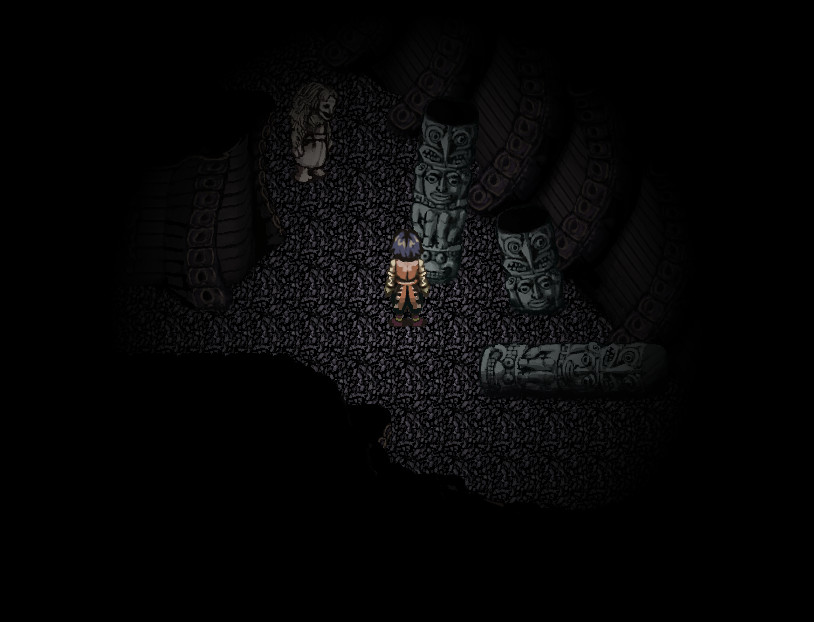
Fear & Hunger would not work if it were only its disturbing content. What makes it exceptional is that the design underneath that content is genuinely intelligent.
The four playable characters have distinct mechanical advantages that create different relationships with the dungeon. These are not statistical variations. They change the questions the game asks and the resources you have available to answer them. The mercenary has physical advantages that make early encounters more survivable. The scholar has knowledge advantages that open options other characters cannot access. Each character is a different lens through which the dungeon reveals itself.
The candle save system creates a tension around resource decisions that most horror games cannot replicate. Saving costs something. You are deciding whether the security of a save point is worth the candle you will expend to create it. That decision is meaningful in ways that autosave systems and frequent checkpoint systems cannot be. Every save is a statement about how much you trust your ability to survive what comes next.
The permadeath combined with the learning structure creates the specific engagement loop where failed runs are preparation rather than punishment. I died fifteen times before I completed a successful run. Each death taught me something specific about the dungeon's rules and rhythms. By the fifteenth attempt I understood Fearstead in ways that felt genuinely earned, because I had paid for each piece of knowledge with a specific failure that produced specific information.
The randomness in certain encounters is worth naming. Some boss encounters are determined by coin flip at game start. You can die on your first encounter with a boss through no strategic failure on your part. This is designed, not accidental. The dungeon does not care whether your death was your fault. That is the point.
What the Difficulty Is Actually Doing
Fear & Hunger is sometimes categorised as a difficult game. This is true but incomplete. The difficulty is not the point. It is the mechanism through which the game communicates what it is about.
The dungeon is a place where people come and do not leave. It has been operating for a long time. The remains of everyone who came before you are evidence of what the dungeon does to people given enough time. The difficulty is a systematic communication of that reality. You are not failing because you are bad at the game. You are failing because the dungeon is genuinely lethal and the people inside it have no reliable path to survival. The game is telling you the truth about the place you are in.
The difference between failing fifteen times and succeeding on the sixteenth attempt is not that you became good enough. It is that you accumulated enough specific knowledge about a place that is inherently hostile to survival to thread a specific path through it. The dungeon has not become easier. You have become more informed about where the specific traps are. That is a fundamentally different relationship between difficulty and meaning than most games establish, and it is one that produces an experience of the dungeon that feels earned in a way that no amount of skill improvement could produce.
The learning curve is worth dwelling on because it reveals something specific about what Fear & Hunger is trying to communicate. Most difficult games punish you for not having a skill and reward you for developing it. The game is asking you to get better at what the game is testing. Fear & Hunger is punishing you for not having knowledge and rewarding you for acquiring it. The game is asking you to understand the specific place you are in. That distinction makes the deaths feel like information rather than failure, which changes the emotional register of the experience entirely.
I also want to say something about the atmosphere that the difficulty creates. Being genuinely uncertain whether you will survive the next room, and understanding that the uncertainty is not something skill will resolve but only knowledge, creates a specific quality of dread that I have not encountered in any other game. You are not afraid of the monsters. You are afraid of what you do not know yet. That is a different and more honest version of horror than almost anything the commercial medium produces.
The randomness in boss encounters amplifies this specifically. When a boss encounter can be determined by coin flip before you enter, the dungeon is communicating that your fate in this place is not entirely within your control. You can be informed, prepared, skilled in every relevant way, and still die because the dungeon decided you would. That is an authentic thing to communicate about the environment the game depicts. Most games would remove this randomness to avoid frustrating players. Fear & Hunger kept it because removing it would be dishonest about what the dungeon is.
The Sequel

Fear & Hunger 2: Termina takes place in a 20th-century city during a festival of death and is more accessible by several measures: a larger character roster, a more structured narrative, improved production values, less extreme content. Still completely committed to Haverinen's creative vision.
If the original is too punishing to engage with, Termina is a reasonable starting point. Playing the original first gives you the context that makes Termina's references meaningful. But if you want the experience without the first game's specific difficulty, Termina works as an entry point. Both are doing something the commercial system cannot produce, and both deserve your attention if you are the kind of person for whom this article exists. There is a specific category of horror player who has been waiting for someone to make something like this without knowing that was what they were waiting for. Both Fear & Hunger games are for that person. I was that person before I knew the games existed.
Fear & Hunger is available on PC. $9.99. Read the content warnings before buying. Make an informed choice. For the people this is for, there is nothing else like it.
Buy on Steam | Fear & Hunger 2: Termina
Game at a glance
| Detail | Answer |
|---|---|
| Genre | Horror RPG |
| Typical length | 8-15 hrs |
| Difficulty | Hard |
| Play mode | Single player |
| Developer | Miro Haverinen |