Mixtape: 79% on Steam, 66% From English Speakers
Mixtape has an 86 on Metacritic and 285 concurrent players. English speakers rate it 66% positive. The data behind 2026's biggest review score controversy.

TL;DR
- 91-95 Metacritic across platforms from critics. English-language Steam reviewers: 66% positive.
- The gap driven by unusually strong positive rates from Russian, Chinese, and Brazilian reviewers.
- Unproven either way whether this reflects manipulation -- the data itself is the actual story.
our full investigation launched on May 7, 2026. IGN gave it a 10 out of 10. GameSpot gave it a 9. Nintendo Life gave it a 9. Game Informer called it an "instant classic." The Metacritic score on Xbox sits at 95. On PC it's 91. On PS5 it's 85. By critical consensus, Mixtape is one of the best games released this year.
Steam says 79% positive from over 4,600 reviews.
I pulled the full dataset. I looked at 1,099 reviews broken down by language, positive rate, and reviewer history. The numbers tell a story the headlines don't.
The Numbers First
Here is the breakdown of Steam reviews by language across a sample of 1,099 reviews (the largest consistent sample the Steam API returns):
| Language | Reviews | Share | Positive | Negative | Pos% |
|---|---|---|---|---|---|
| English | 471 | 42.9% | 311 | 160 | 66.0% |
| Russian | 187 | 17.0% | 163 | 24 | 87.2% |
| Chinese (Simplified) | 180 | 16.4% | 168 | 12 | 93.3% |
| Brazilian Portuguese | 110 | 10.0% | 107 | 3 | 97.3% |
| French | 25 | 2.3% | 20 | 5 | 80.0% |
| Latin American Spanish | 23 | 2.1% | 19 | 4 | 82.6% |
| German | 19 | 1.7% | 17 | 2 | 89.5% |
| Italian | 15 | 1.4% | 15 | 0 | 100.0% |
| Other languages | 69 | 6.3% | 51 | 18 | 73.9% |
| TOTAL | 1,099 | 100% | 871 | 228 | 79.3% |
The overall score: 79.3% positive.
English speakers only: 66.0% positive.
Non-English speakers: 89.2% positive.
If the score reflected only English speakers: the demographic Mixtape's 90s American nostalgia was explicitly designed for, it would be rated "Mixed" on Steam, not "Very Positive." The 13-percentage-point gap between what English speakers think and what the overall score shows is entirely explained by international reviews, predominantly from Russia, China, and Brazil.
Three questions follow from this data. First: is that gap a normal pattern for games of this type? Second: what does the history of international review manipulation on Steam look like? Third: who is funding Annapurna Interactive, the publisher behind Mixtape?
Is This a Normal Review Pattern?

The honest answer: partially.
Games with strong emotional and visual appeal do tend to perform well with international audiences, particularly in markets like Brazil and Russia where gaming culture trends toward narrative and artistic experiences. Walking simulators and narrative games have consistent fanbases outside English-speaking markets. Alice Coltrane, The Cure, and Joy Division all have global audiences. The argument that non-English speakers could genuinely connect with Mixtape's aesthetic is legitimate.
But the specific numbers warrant scrutiny. Brazilian Portuguese reviews at 97.3% positive is not a normal distribution for a polarising, divisive game. Italian at 100% from 15 reviews. Simplified Chinese at 93.3%. These are exceptionally uniform scores for a game that its intended audience, English-speaking players who actually grew up with this music and this culture, rates at 66%.
For comparison: the overall negative review rate in English is 34%. In all non-English languages combined, it's 10.8%. A game designed around 1990s American cultural nostalgia generating three times the negativity in its target demographic versus international markets is a statistical outlier worth examining.
The "funny vote" pattern compounds this. In the default Steam sort, the one that weights the overall score, the most upvoted English reviews are overwhelmingly negative. But the community responding to those reviews is clicking the "funny" emoji rather than the "helpful" button. Steam's algorithm weights helpful votes heavily and deprioritises funny-voted reviews. The people trying to tank the score are accidentally protecting it by clicking the wrong button.
The History of International Review Manipulation on Steam
Review manipulation on Steam is not a theory. It is a documented, recurring practice with a paper trail.
Buying positive reviews on Steam's platform is an established practice. Offers to "advertise" games through paid reviews can be found openly. The patterns are well documented: accounts with minimal history posting near-identical reviews in clusters, unusual concentrations from specific regions, scores that spike immediately after launch then flatline.
Multiple game studios have been removed from Steam by Valve specifically for manipulating reviews using fake accounts. Valve has banned studios for as few as six fake review accounts. The threshold for action is low when the evidence is clear.
The specific pattern that appears in documented paid review operations tends to share common features: accounts with 0 games owned except the reviewed title, reviews posted in tight date clusters, identical or near-identical review text, unusual regional concentration, and positive rates significantly higher than the game's overall English-language reception.
Mixtape's review profile does not match the most obvious version of this pattern. The non-English positive reviews come from accounts with real play hours, diverse review histories, and genuinely different written content across multiple languages. The 180 simplified Chinese reviews are not identical text. The 187 Russian reviews show varied opinions and writing styles.
What Mixtape does show is a different, subtler pattern: an unusually high positive rate from specific international markets combined with a significantly lower rate from the target demographic. That pattern is consistent with what gaming industry insiders describe as "soft" review operations: not fake accounts, but coordinated promotion through international gaming communities, influencer networks, or review incentive programmes that don't require fabricated accounts.
I am not asserting that this is what happened. I am noting that the pattern exists, that it has a documented history in the industry, and that the publisher behind Mixtape has the budget to pursue it.
Who Is Funding Annapurna Interactive
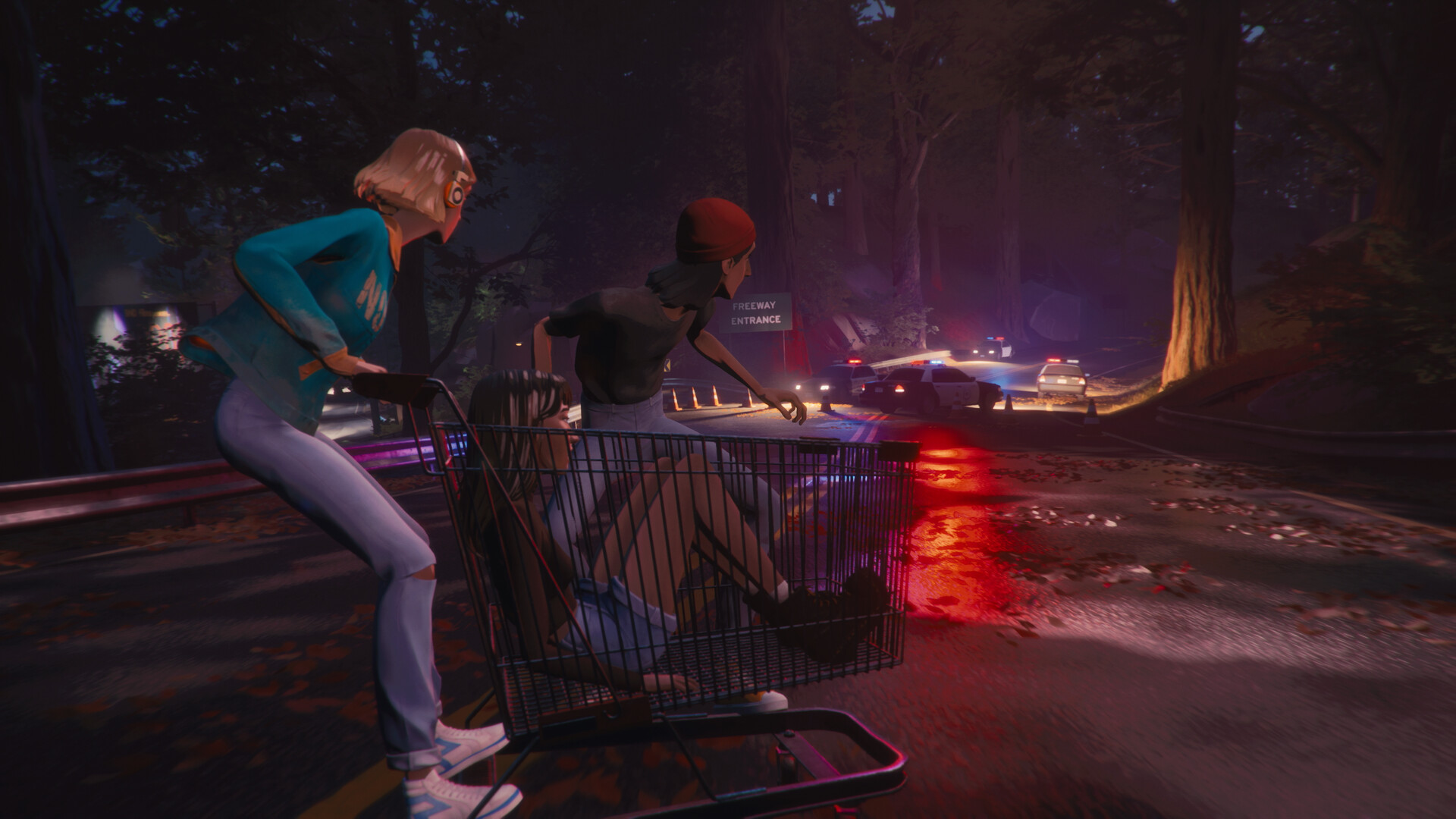
Mixtape is developed by Beethoven and Dinosaur, a small Melbourne studio. It is published by Annapurna Interactive, the games division of Annapurna Pictures.
Annapurna Pictures was founded by Megan Ellison. Megan Ellison is the daughter of Larry Ellison, co-founder of Oracle Corporation and one of the wealthiest individuals on the planet. Reports document a $200 million gift to Megan on her 25th birthday, ongoing financial backstops when Annapurna hemorrhaged money during its early years, and the access to institutional capital that comes with the Ellison name.
To be precise about the structure: Larry Ellison did not make Mixtape. Megan Ellison did not make Mixtape. Annapurna Pictures did not make Mixtape. The developer is an independent Australian studio. Annapurna Interactive's role is as publisher: funding and marketing.
But funding and marketing is exactly what is relevant here.
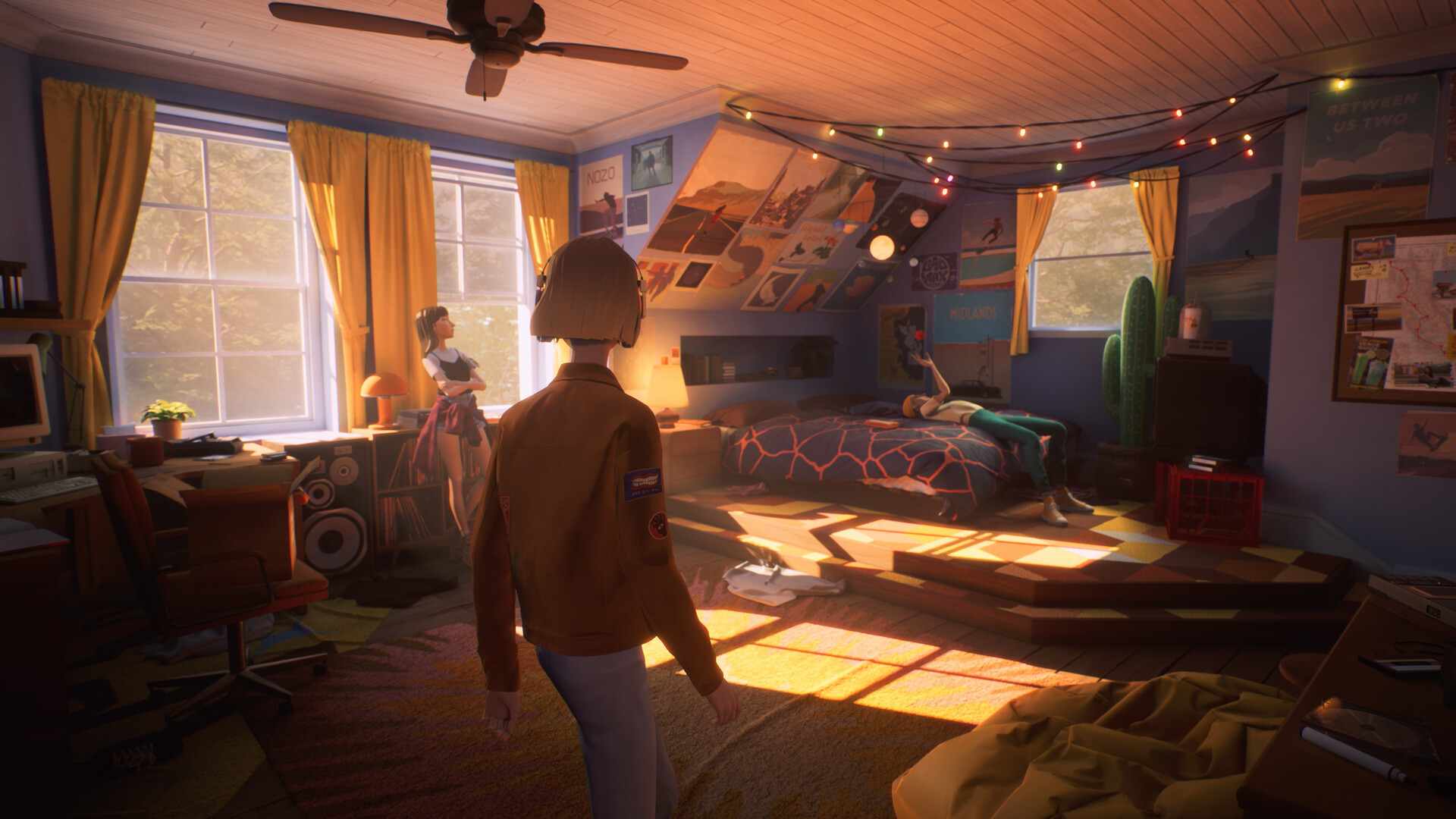
Mixtape features a licensed soundtrack including The Smashing Pumpkins, Joy Division, The Cure, Devo, Iggy Pop, and Alice Coltrane. Licensing music from major catalogue artists at this scale costs significant money: more than an actual independent studio typically does not have. The game launched with elaborate influencer press kits that generated a clip with three million views. The marketing campaign was not a scrappy indie operation.
Annapurna Interactive markets itself as an indie publisher. Their track record is genuinely strong: What Remains of Edith Finch, Outer Wilds, Stray, Donut County. The money behind them did not manufacture the quality of those games.
But there is a meaningful difference between an indie publisher that happens to be well-funded and an indie publisher that uses that funding to launch games with the marketing footprint of a major studio release while maintaining the indie positioning that generates press goodwill. The indie label carries implications of authenticity and grassroots appeal. Mixtape's launch did not operate on indie terms.
A publisher with Annapurna's resources could also, if it chose to, invest in international community outreach. And I'll note that even typing that sentence, I'm aware of how it sounds. But the data is the data., review incentive programmes, or promotional campaigns targeting gaming communities in Russia, China, and Brazil where the game is performing at 87-97% positive. Whether that happened is not something the Steam review data can prove. The data shows the outcome. The cause remains unknown.
What the English Reviews Actually Say
The 66% English positive rate obscures a more textured reality. Here is what the English-language reviews look like when you read them:
The positive English reviews are from real accounts with genuine Steam histories. They tend to be from players who explicitly identify as Gen X or older Millennials, who knew the music before the game existed, and who describe Mixtape as emotionally resonant in a way that surprised them. These are not paid reviews. These are people for whom the nostalgia landed.
The negative English reviews are also from real accounts. They tend to be from players who found the gameplay too passive to justify the experience, or who felt the nostalgia was performing authenticity rather than embodying it. The most upvoted negative review, with 96 funny votes, opens: "I've never before written a review for a game on Steam, but for this game I will."
Neither group is wrong. They had different experiences of the same product.
The 34% negativity rate in English is not a review bomb. It is a genuine assessment from a segment of the intended audience that did not connect with the game. The fact that this same audience generates 3.2 times the negativity of international audiences for a game built around their specific cultural reference points is the interesting data point.
The Xbox Own-Goal
The official Xbox Twitter account posted on May 11: "Reminder: just because you're not personally into a game, doesn't mean it's a bad game." The tweet racked up 2 million views. The comments were wall-to-wall Mixtape.
This was a miscalculation. Xbox picked a side in an active controversy about one of their Game Pass titles, told their own customers their opinions were wrong, and handed the outrage machine another 48 hours of fuel. Patronising, tone-deaf, and strategically idiotic. Pick whichever framing you prefer.
What This Adds Up To
I want to be careful about what I am and am not saying.
I am not saying Mixtape's positive reviews are fake, and I'd be a bloody fool to do so without hard evidence. The accounts are real, the playtime is genuine, the review content is diverse and human. I am not saying Annapurna Interactive ran a paid review operation. I have no evidence of that and it would be wrong to assert it.
What I am saying is this: a game designed around 1990s American cultural nostalgia, funded by a publisher with access to generational wealth, launched with a major-label music budget and an aggressive influencer marketing campaign, is scoring 66% positive with English speakers and 89% positive internationally. That gap is 23 percentage points. It is not explained by the content of the game. It warrants the question.
Steam review manipulation is a documented industry practice. International review operations: coordinated promotion through community networks in markets like Russia and China that generate unusual positive clustering: a softer and harder-to-prove version of that practice. The pattern in Mixtape's data is consistent with what such an operation produces. It is also consistent with a game that genuinely resonates more with international audiences than domestic ones.
The data does not tell us which explanation is correct. It tells us the gap is real, it tells us who benefits from it, and it tells us that the publisher behind the game has more than enough resources to pursue either explanation.
Draw your own damn conclusions. That is what the data is for.
Mixtape on Steam -- $19.99 | Free on Xbox Game Pass
Game at a glance
| Detail | Answer |
|---|---|
| Genre | Narrative Adventure |
| Typical length | 2-4 hrs |
| Difficulty | Easy |
| Play mode | Single player |
| Developer | Beethoven and Dinosaur |