Redfall: How Microsoft and Bethesda Took Arkane's Best Team and Made the Worst Game of 2023
Arkane Austin made Prey. One of the best immersive sims ever created. Then Microsoft told them to make a live service co-op shooter. The result was predictable to everyone except the people making the decision.

TL;DR
- Arkane Austin made Prey, one of the best immersive sims ever made. Microsoft told them to make a live-service co-op shooter instead.
- Redfall's failure was predictable to everyone except the people who made the decision.
- Arkane Austin was closed the following year. The studio's own history is the actual evidence.
I want to start with Prey because if you have not played it you might not fully understand why the Redfall story lands the way it does.
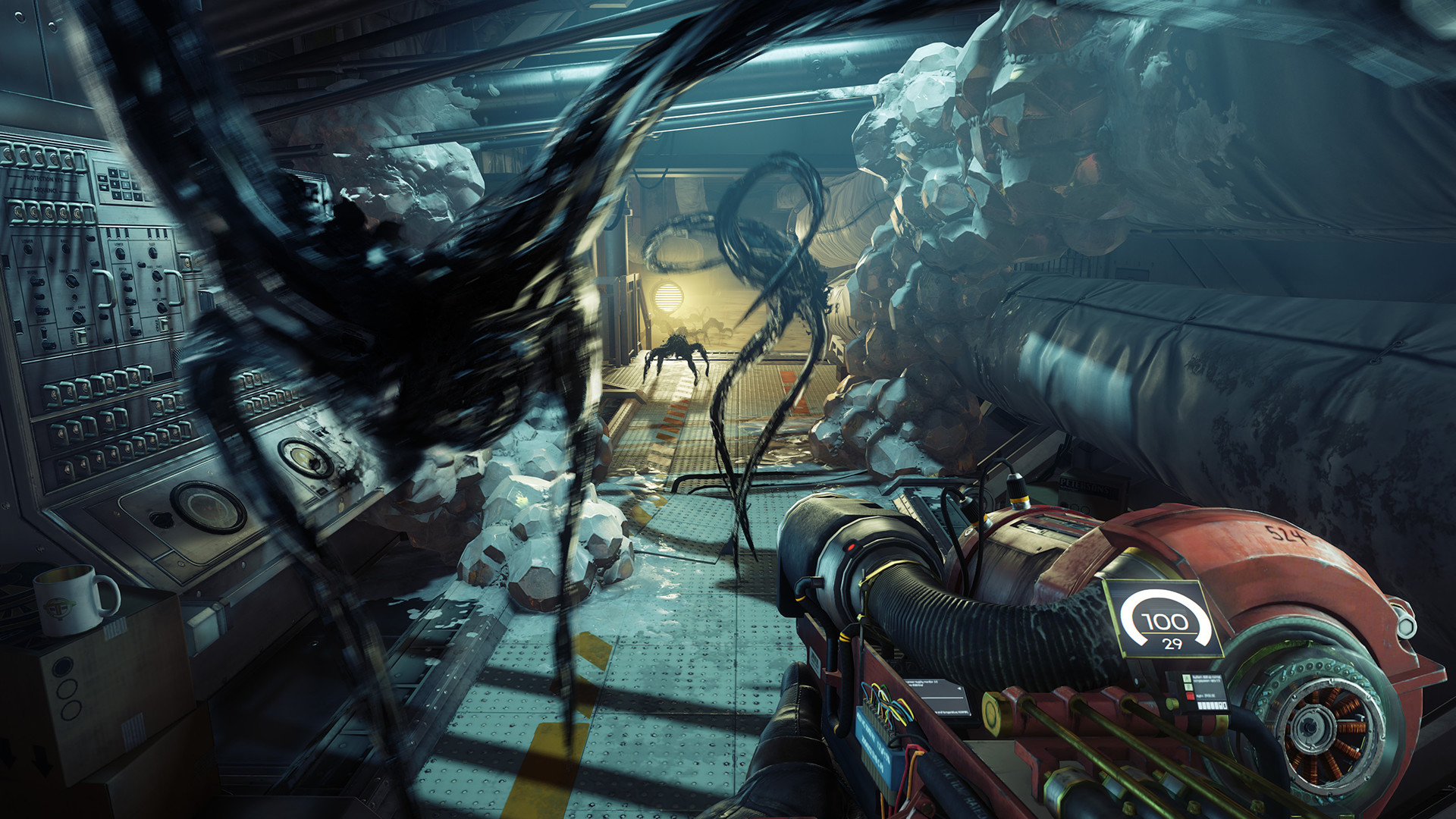
Prey is a first-person immersive sim set aboard Talos-I, a space station in 2032. Arkane Austin built Talos-I with the kind of internal spatial logic that most game environments never achieve: departments that relate to each other functionally, maintenance routes that connect facilities in ways that make physical sense, an architecture that communicates the history of a corporation's orbital research programme. The alien Typhon abilities you acquire interact with this environment in ways that create solutions nobody explicitly designed. The level design rewards attention paid to it.
I have replayed sections of Prey multiple times to try different approaches to the same encounter. The environment is interesting enough to sustain that. It reviewed at 82 on Metacritic in 2017, which is the score you get in a review system calibrated against games with twice the production budget. The people who have played it tend to call it one of the best games of the decade.
Arkane Austin made that game. Then Microsoft told them to make Redfall.
What Arkane Does
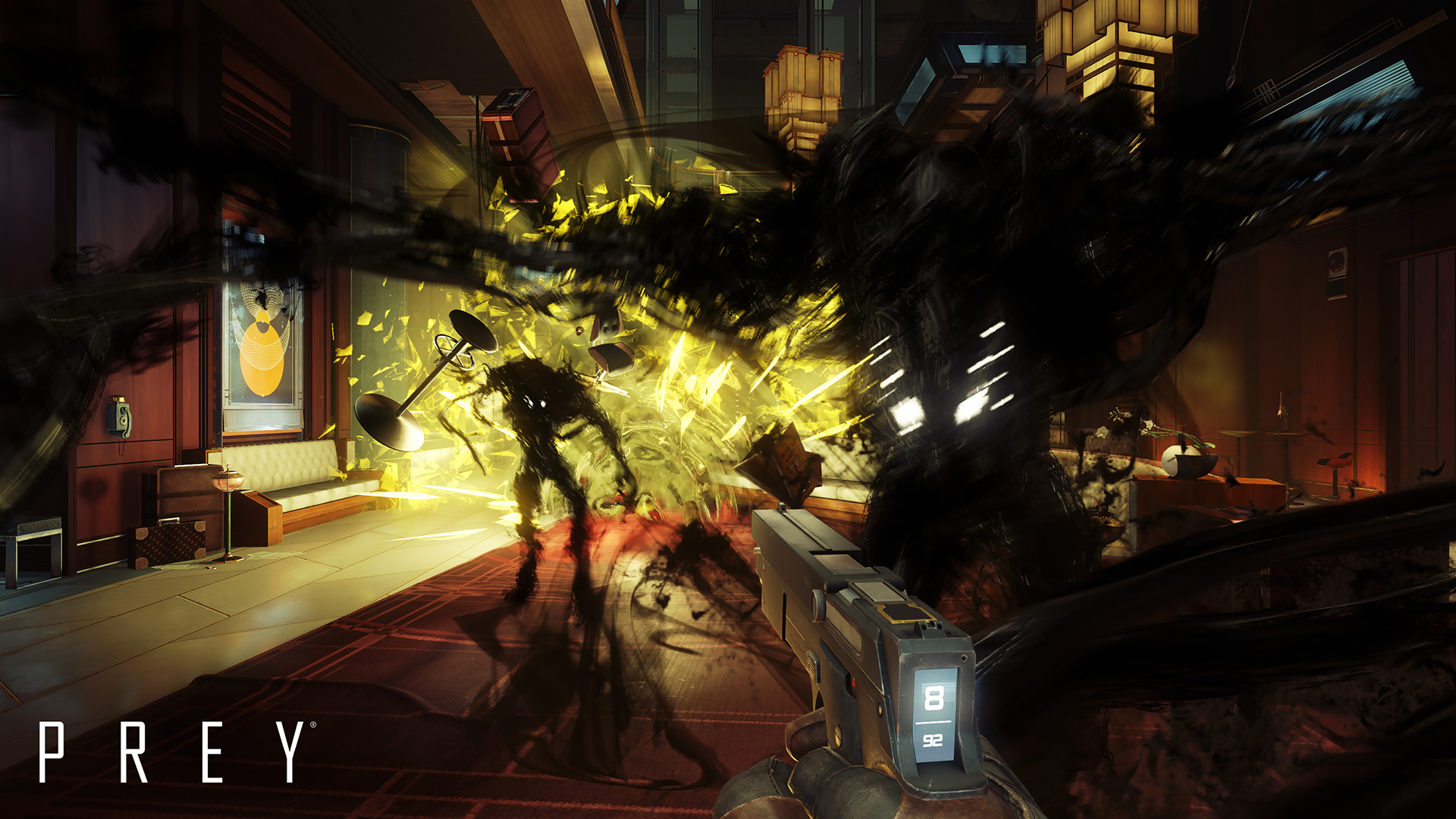
Arkane's creative identity is the immersive sim: a design philosophy, not just a genre label. Dishonored. Dishonored 2. Prey. Each game is built around environments with deep systemic logic, where multiple approaches to every problem exist, where player agency over method is fundamental rather than a feature. These games reward players who engage with their systems. They are not designed for players who want to be guided through a sequence of encounters.
The immersive sim is a demanding genre to work in and to market. The games that define it, Ultima Underworld, System Shock, Deus Ex, Thief, Dishonored, Prey, have all reviewed well and sold modestly relative to their critical standing. The audience is genuine and loyal and nowhere near the size of the Call of Duty audience. This is structural. The design philosophy that makes these games exceptional is the same design philosophy that limits their mass market appeal: they require engagement and attention in ways that games designed for passive play do not.
This approach consistently undersells relative to critical reception. The games are exceptional for a specific audience. That audience is not the Fortnite audience, and no amount of commercial redirection will change what the Arkane design philosophy produces or who it produces it for.
Live service and co-op are the commercial moves that promise to expand audience. Both are defensible commercial arguments on paper. Both are fundamentally incompatible with what Arkane does.
The immersive sim requires carefully authored systemic environments where individual player exploration reveals depth. Co-op multiplayer breaks this: the environment was not authored for two players to navigate simultaneously, and the presence of a co-op partner changes the emotional register from individual investigation to team coordination. These are not substitutable experiences. Live service requires loot tables and gear progression loops antithetical to Arkane's approach to player power: in Prey, you are powerful because of what you understand about the environment, not because your numbers are higher than the enemies' numbers.
Microsoft directed Arkane Austin to build a live service co-op open-world shooter about vampires in a Massachusetts town. The outcome was a game that was bad at being a live service co-op shooter and had abandoned every design principle that made Arkane worth paying attention to. I find this genuinely infuriating because the result was entirely predictable. Not in hindsight. At the time. Anyone who had played Prey and understood what made it work could have told you what this direction would produce before a single line of Redfall code was written.
What Launched
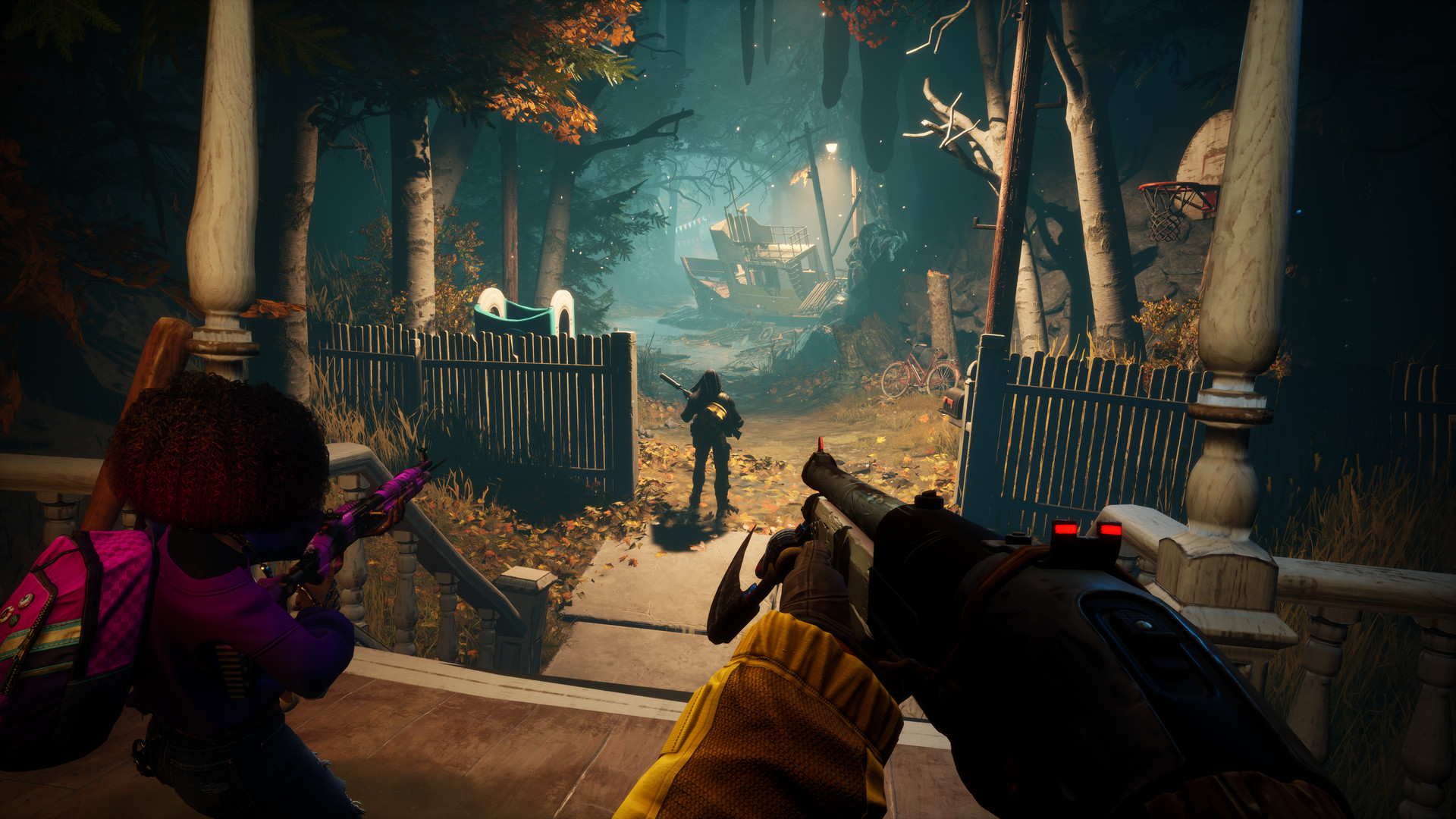
Redfall launched in May 2023 with a Metacritic score of 56. I played two hours at launch. The enemy AI stood still while I shot it from ten metres away in the opening area. The world had the visual vocabulary of a town under supernatural siege and the feel of an open world with enemies distributed through it without particular intelligence or purpose. The loot system offered weapon variations without meaningful tactical differentiation.
The 30fps cap on Xbox Series X, hardware sold specifically on the promise of 60fps gaming, was removed approximately a year after launch by patch. The damage to perception was permanent.
This is not a description of a game that tried to be Arkane and failed interestingly. It is a description of a game that had no clear identity: not a good immersive sim, not a good live service game, not a good co-op shooter. A product assembled from incompatible mandates by people who had been trained in one kind of game making and asked to make another.
The specific quality of Redfall's failure is worth examining because it is distinct from normal game failure. Bad games are usually bad at specific things in ways that reveal what the team was trying to do and where they fell short. Redfall is not bad in an interesting way. It is bad in the way that things are bad when nobody involved in making them was allowed to make the thing they were capable of making. The game reveals no coherent creative intention because there was no coherent creative intention to reveal. There was a mandate, there was a studio ill-suited to execute it, and there was the output of applying one to the other. The emptiness of the result is itself the evidence.
I have played games made under duress by studios redirected away from their strengths. The output has a specific quality: technically competent in some areas, fundamentally incoherent in its design logic, lacking the specific personality that comes from a team that cares about what they are making. Redfall has this quality throughout. The people who made it were not incapable. They were mismatched to the task so completely that capability was largely irrelevant.
The developers who made this game had made Prey three years earlier. The difference in output is entirely explained by the difference in direction. This is not a story about a team that ran out of ability. It is a story about what incompatible mandates produce when applied to a studio whose excellence is specific to conditions those mandates destroy.
The Broader Pattern
The Redfall situation is not unique to Arkane. It is the same story told about Visceral and Dead Space 3, about BioWare and Anthem, about Maxis and SimCity 2013. Publisher imposes mandate incompatible with studio's design identity. Game underperforms relative to expectations set by that mandate. Studio absorbs accountability for execution failure. Studio is closed or restructured.
The pattern repeats because the incentive structure that produces it has not been changed by any of the consequences. The people who set the mandates are not the people who lose their jobs when the mandates produce bad games. The people who executed the mandates under duress are.
What makes Arkane specifically worth mourning in this context is the specificity and rarity of what they were capable of. Immersive sims are extremely difficult to make well. The systemic depth that makes Prey feel genuinely alive required years of design work and a team that had accumulated specific expertise across multiple projects. Dishonored and Dishonored 2 built toward Prey. Prey demonstrated what that build-up produced. Redfall discarded it entirely and the studio was closed before it could rebuild.
The immersive sim lineage that runs through Looking Glass Studios and Ion Storm and Arkane is one of the most important in the medium's history and one of the most consistently undervalued commercially. Each time a studio in that lineage is redirected toward mass market appeal, it produces something worse and loses something that takes years to rebuild. In Arkane Austin's case, there is no rebuilding. The studio is closed. That specific accumulated knowledge is gone.
I think the industry should be more disturbed by this than it appears to be. Not because Arkane was uniquely important, though they were important. But because the mechanism that destroyed them is still operating and will destroy more things. The studios most capable of producing work that matters in ten years are the ones least well-served by the commercial model that currently determines what gets funded. That is a structural problem, not an unfortunate series of business decisions.
The specific thing that is lost when a studio like Arkane closes is not just the people, who will find other places to work, or the IP, which Microsoft still owns. It is the accumulated institutional knowledge about how to make a specific kind of game. Immersive sim design requires a particular relationship between level design, systems design, and player agency that takes years to develop within a team. Arkane had spent roughly fifteen years developing that relationship across four games. All of it is gone now. The next team that tries to make an immersive sim at that level of quality will spend years rediscovering what Arkane already knew.
The Closure
Microsoft closed Arkane Austin in May 2024, alongside Tango Gameworks, whose Hi-Fi Rush had scored 88 on Metacritic. Tango was not closed because Hi-Fi Rush was bad. It was closed because the subscription model had no mechanism for valuing a 12-hour single-player action game.
Arkane Austin was closed because Redfall was bad, partly a consequence of direction from Microsoft that the team were entirely unsuited to execute. The people who gave the direction that produced Redfall are still employed at Microsoft. The developers who executed that direction are not at that studio anymore.
I find the specific comparison between Prey and Redfall more instructive than any amount of general discussion about creative freedom. Same team, three years apart. One game is a genre classic. The other is a 56 Metacritic live service failure. The only variable is the creative direction applied from outside the studio.
There is a version of the Redfall story where Arkane Austin gets to make Prey 2. That game does not exist and will never exist. What exists instead is Redfall, and a closed studio, and a cancelled Arkane Austin sequel that was reportedly in early development before the closure. Three years of a team's work that will never be released. The people who made those decisions will not suffer any of the consequences of those decisions in proportion to what they cost.
I find that genuinely difficult to process without anger. Not at the outcome specifically. Studios close, games get cancelled, this is how the industry works. But at the mechanism: the complete disconnection between who makes the decisions and who pays for them. If the people who directed Arkane toward Redfall had any personal exposure to what it would cost them professionally if Redfall failed, those people might have made different decisions. They did not. So they did not.
Let studios make the games they are good at. This sounds obvious. The industry keeps learning it the hard way, through people losing jobs, through IP being wasted, through teams that were genuinely capable being directed toward projects they were genuinely unsuited for. The version of Arkane that made Prey is not going to be reconstituted by a new hire wave. The expertise was in the relationships between specific people who had worked together across multiple projects. Those relationships are gone. What remains is the brand name, the IP, and the institutional memory of whatever is left of Arkane Lyon, which is a different studio with a different history.
Prey is excellent. It costs $39.99 and is regularly on sale for under $10. Buy it directly. It is the correct tribute to what Arkane Austin was when allowed to be what they were, and it is the most concrete argument available for why that studio should have been left to keep making things in the same vein.
Prey is available on PC, PS4, and Xbox. $39.99, regularly under $10 on sale. One of the best games made in the last decade.
Buy Prey on Steam | Redfall on Steam if you want to see what happens when the wrong mandate meets the right team