SOMA Is the Scariest Sci-Fi Game Ever Made and Most People Missed It
Frictional Games followed Amnesia with something worse: a horror game that gets inside your head philosophically and never lets go. SOMA asks questions about consciousness that will haunt you long after the credits roll.

TL;DR
- More disturbing than scary -- a philosophical horror game about consciousness and identity, not monsters.
- The moment two-thirds through the game is one of the most affecting things in the medium.
- $26.99. Stays with you for days after the credits, not hours.
Buy it. $26.99 on Steam, regularly on sale for under $10. Do not look up what happens. The less you know going in, the better the experience works. If you have read a plot summary already, I am sorry. The setup being a surprise is load-bearing.
SOMA came out in 2015. Frictional Games had made Amnesia five years earlier and fundamentally changed what horror games could be. SOMA is what they made next. It is less immediately frightening than Amnesia. It is more disturbing in aggregate. I finished it, went to bed, lay awake for about an hour thinking about what had happened, and have returned to specific moments in my thinking many times since.
Amnesia terrifies you during play. SOMA terrifies you afterwards, at intervals, and keeps doing it.
The Setup You Should Know Going In
You are Simon Jarrett. In 2015, Simon was in a car accident that left him with a traumatic brain injury. A researcher offers him an experimental brain scan that might help his condition. He agrees.
You wake up in 2104 in a facility called Pathos-II, at the bottom of the Atlantic Ocean. Something has gone very wrong. The surface of the Earth has been destroyed by a comet impact. There is no rescue coming, because there is nowhere to be rescued to. The facility's AI systems are behaving in ways that suggest consciousness. The other entities you encounter are not quite what they appear to be.
The monsters are present but they are not the point. SOMA is primarily a walking horror game with light stealth sections. The real experience is in the environments, the documents and conversations you find, and the questions the game keeps asking about identity and consciousness that it refuses to answer for you.
What makes this setup work as horror rather than as science fiction is the emotional texture it creates around the philosophical questions. The consciousness questions in SOMA are not abstract. They happen to specific people you have come to understand through their personal effects and their communications with each other. When the game asks what it means to be the same person across time, it is not asking about a hypothetical. It is asking about someone you have developed a relationship with, in a situation where the answer has immediate consequences.
What the Game Is Actually About
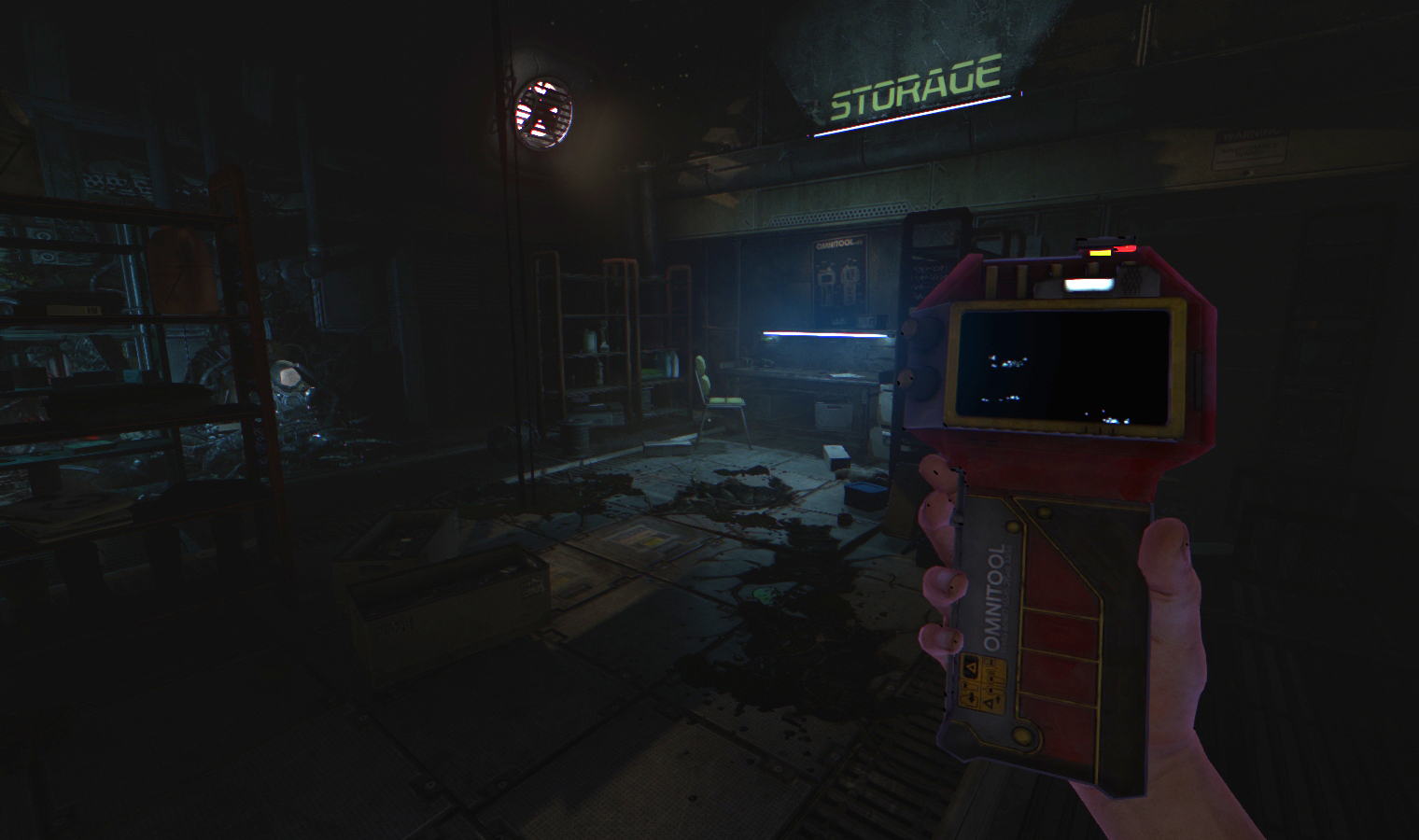
SOMA is a philosophical horror game, and it commits to this completely rather than using philosophy as window dressing.
The questions it raises are not new. They appear in Parfit's work on personal identity, in classic thought experiments about teleportation and copying and what makes a person the same person across time. What SOMA does that no lecture or thought experiment can do is place you inside these questions while they are happening. You do not just consider what it would mean for a perfect copy of a person to exist. You experience it happening to someone you have come to identify with, and you have to decide what it means in real time.
I am not going to describe the specific scenes that hit hardest. They need to arrive without foreknowledge to work as designed. What I can tell you is that SOMA contains at least two moments where I stopped playing and sat with what had just happened for several minutes. Not because anything had jumped out at me, but because the game had created a morally difficult situation and not resolved it. Just left it there. Waiting.
This is what horror games almost never do. They present something terrible and let the wrongness carry the emotional weight. SOMA presents situations where the wrongness is actively contested, where reasonable people could disagree about the correct response, and asks you to sit with that unresolved ambiguity indefinitely. Some of those moments are still unresolved for me, years after finishing the game.
The specific philosophical territory SOMA is working in is worth naming because it is not commonly explored in any medium. The question is not: what would you do to survive? The question is: what are you? If a perfect copy of your mind is created, are you both the same person? If the copy believes itself to be you, is it wrong? If the original continues to exist, does the copy's claim to your identity become weaker? These are questions without clean answers and SOMA does not pretend otherwise. What it does, brilliantly, is make you feel the weight of not having clean answers while inhabiting a body that depends on the answer mattering.
The game's treatment of consciousness is also worth noting for what it refuses to do. Many science fiction stories that engage with these questions eventually resolve them with a definitive position: consciousness is substrate-independent, or it is not; copying preserves identity, or it does not. SOMA declines to resolve the question. Different characters in the game hold different positions and the game does not editorially validate any of them. You are left to form your own position, and the experience of forming it under the specific conditions the game creates is the experience the game is designed to produce.
I have discussed SOMA with people who emerged from it with completely different conclusions about the specific situations it presents. Those disagreements are not evidence of bad writing. They are evidence that the writing was doing exactly what philosophical writing should do: presenting a genuinely contested question with enough care and specificity that reasonable people engage with it seriously and arrive at different places. That is an extremely rare quality in any medium.
Pathos-II as a Horror Environment
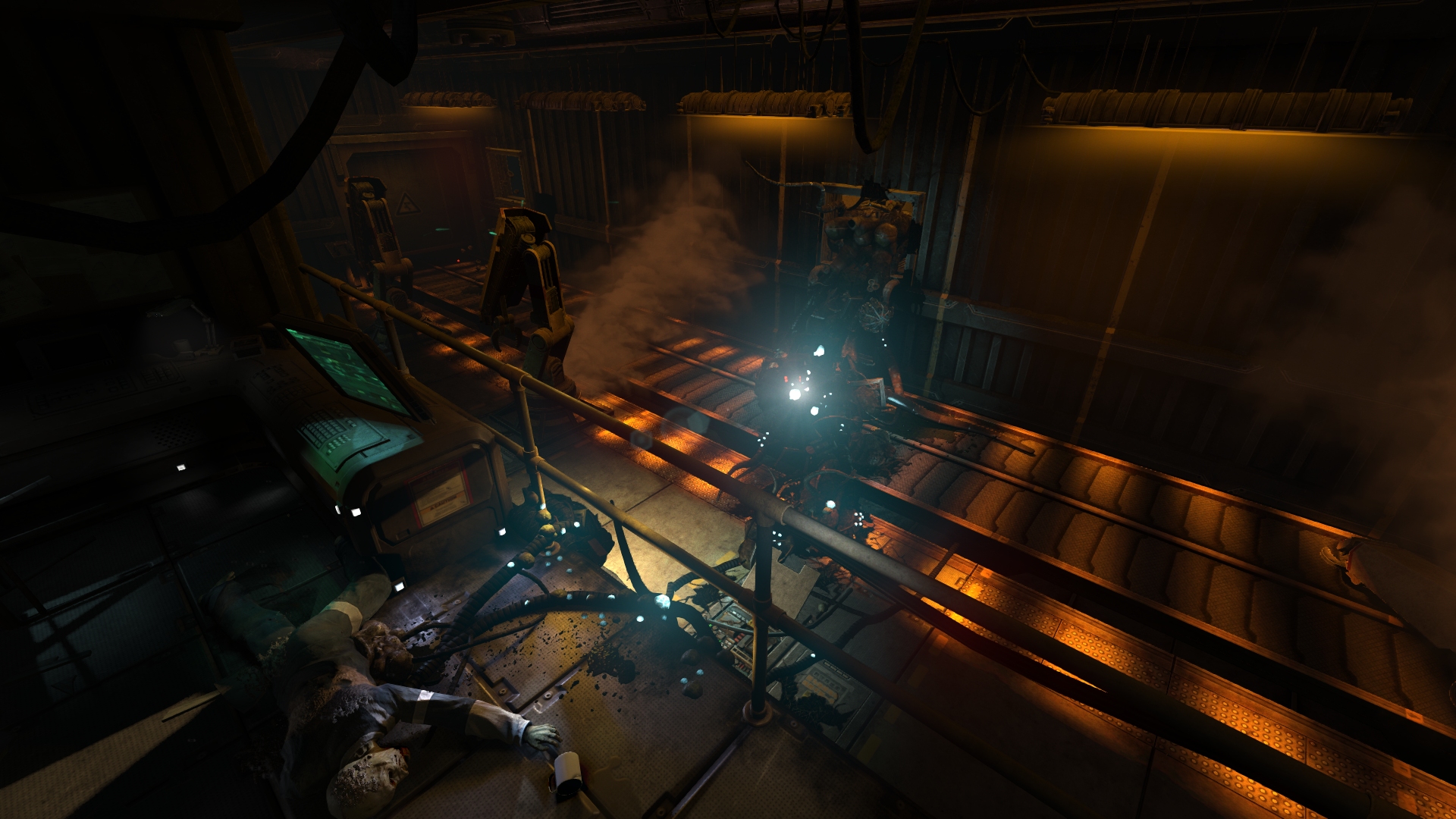
Frictional builds environments that tell you about the people who inhabited them before you arrived. Pathos-II is not a backdrop. It is a facility that had a history, a staff, a daily routine, before something went wrong. The personal effects in sleeping quarters, the notes between colleagues, the maintained and unmaintained sections of the facility tell you who these people were.
By the time the existential horror of the main story arrives, you have developed a relationship with this place because you understand its history. The horror of finding it in its current condition is proportional to how much of the original you were shown.
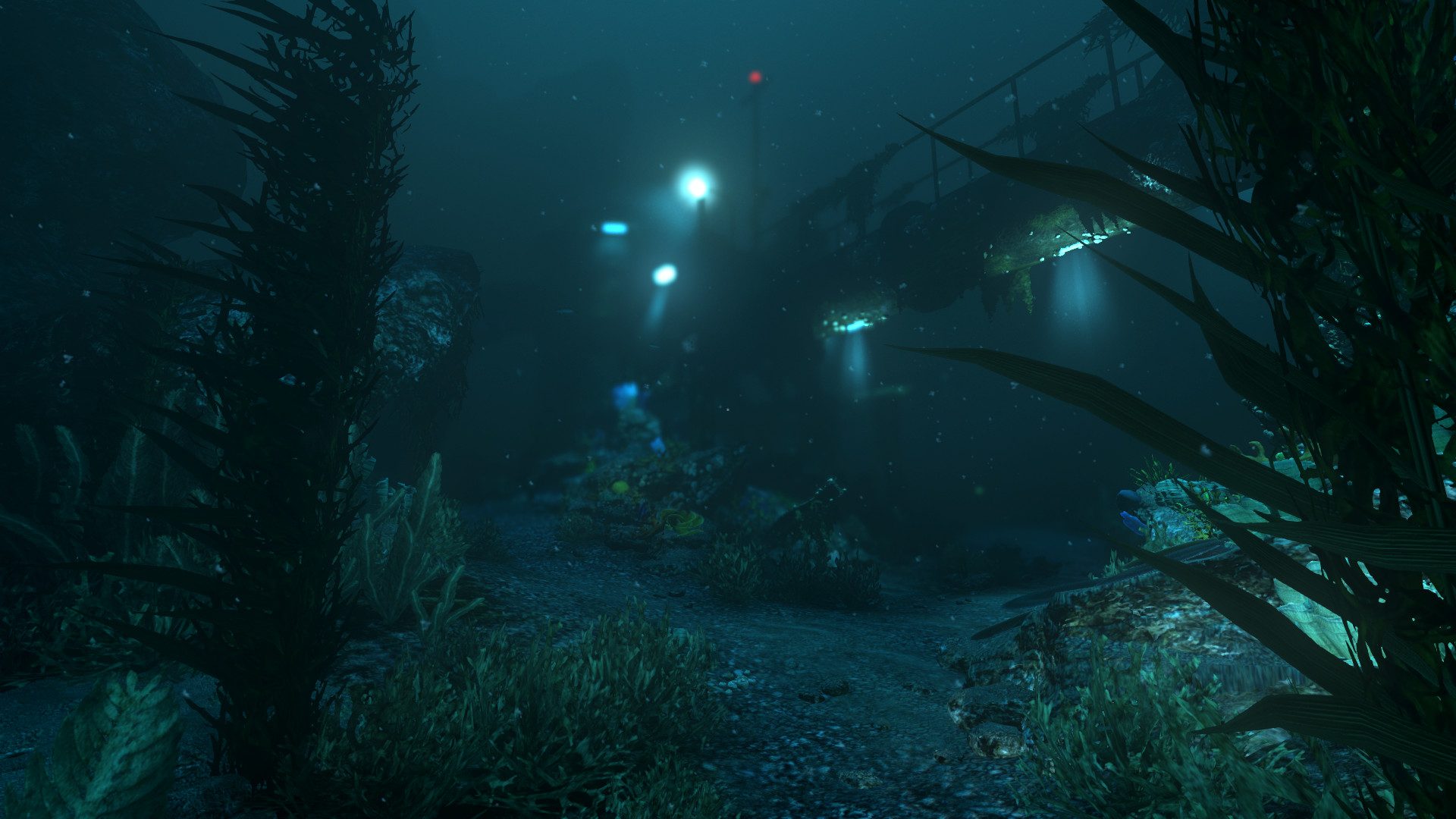
The deep-sea exterior sections, where you move through flooded corridors while structures groan under pressure that has been accumulating for a century, are a sustained exercise in oppressive dread. The acoustic design of a facility operating far beyond its design parameters is something Frictional got exactly right. Every sound communicates something about the physical reality of being this far below the surface for this long.
The isolation in SOMA is total in a different way from Amnesia. In Amnesia, you could potentially find your way out. In SOMA, there is nowhere to go. The surface is gone. You are kilometres below water in a facility designed for a crew that is dead. This absolute quality to the isolation works on you in ways that take time to accumulate. It is not a feeling that arrives in a single moment. It settles in across the hours of play, and by the time the game reaches its most affecting sections, the isolation has done its work on you without you noticing it was happening.
Frictional's decision to set the horror at the bottom of the ocean rather than in space is worth noting. Space horror is well-trodden territory. The deep ocean is not. The specific qualities of deep-sea isolation are different from the vacuum of space: the pressure, the darkness, the sounds of a structure under stress, the presence of water as both threat and barrier. These qualities are unfamiliar enough that the environment feels genuinely alien rather than like a variant of a known horror setting. Pathos-II feels like a place you have never been in any fiction, which is one of the most useful properties a horror environment can have.
What Frictional Gets Right About Horror
Most horror game studios understand that darkness, sudden sounds, and threatening creatures are the tools of the genre. Frictional understands something more specific: that the most effective horror creates a gap between what you know and what you need to know, and fills that gap with dread rather than information.
Every environment in SOMA is designed to communicate that something happened here, without telling you what. The documents you find fill in pieces. The state of the facility fills in more. But the full picture is never given cleanly. You assemble it from fragments, and the assembly process is itself a horror experience because each piece of understanding makes the overall situation clearer and worse.
This approach requires significant trust in the player. Most horror games do not trust players to tolerate extended ambiguity without a jump scare or a chase sequence to remind them that something bad is happening. SOMA goes entire sections without overt horror elements, relying on the accumulated weight of environmental evidence and philosophical dread to sustain the experience. I find this infuriating to watch other horror studios fail to replicate, because the technique is clear and the result, in SOMA's case, is undeniable.
Amnesia used the same approach and it defined the horror game landscape for years. SOMA used it for a different and arguably more demanding purpose, because the dread in SOMA is not about your physical safety. It is about your ontological status. You are not afraid of being killed. You are afraid of what you might already be.
This distinction is worth dwelling on because it represents a genuine extension of what horror games can do. Physical horror, the fear of pain and death, is the genre's default mode. It is effective and well-understood. Existential horror, the fear of what you are or are not, is much harder to produce in a medium where the player-character's body is the primary site of engagement. SOMA manages it by keeping the physical threats present but subordinate, and by establishing the philosophical questions early enough that they have time to settle into your thinking before they become urgent.
By the time SOMA asks its hardest questions, you have been in Pathos-II long enough to have developed opinions about the entities you have met. Those opinions turn out to be the payload. The game's philosophy lands hardest not in abstract discussion but in specific moments involving characters you have already decided how to feel about. The craft of the game is in the sequencing: ensuring that the investment comes before the test.
I want to also note the specific quality of the writing in the found documents. The people who worked at Pathos-II are not horror archetypes. They are scientists and engineers with specific professional preoccupations, personal relationships, and mundane concerns. The juxtaposition between their ordinary professional lives as documented in their notes and the extraordinary situation those notes were found in is one of the most effective tools the game uses. Understanding who these people were makes what happened to them land with weight that no amount of monster design could produce.
One Honest Criticism
The final act is somewhat anticlimactic relative to the extraordinary mid-game. SOMA's best moments are concentrated in its second third, and the ending, while thematically correct and honestly earned, lands with less impact than the sequences preceding it. You finish on a note that is right but not as powerful as what led to it.
This is a real limitation. It means the most affecting parts of the game are not the most recent things you experienced when the credits roll, which affects how the game sits in memory. Worth knowing before you go in.
The Safe Mode argument: SOMA has a mode that makes monsters passive rather than lethal. They detect and move toward you, creating tension, but cannot kill you. Whether this invalidates the experience is a debate I find unproductive. The monsters in SOMA are not the source of the horror. The philosophical situations are the source. Safe Mode does not have a setting for those. If monster sections are breaking your engagement with the story, use it. You will not miss what matters.
I want to close with something specific about why SOMA has stayed with me when most horror games have not. The game respects the intelligence of the player enough to present genuinely difficult questions without resolving them. It trusts that you can tolerate ambiguity, that you do not need a clean ending, that the unresolved situation is itself meaningful rather than a failure to provide closure. That trust is uncommon in any medium and extremely rare in games, which tend toward resolution because unresolved experiences are harder to market and harder to score.
The experiences that stay with you longest are disproportionately the ones that did not give you everything you needed to feel comfortable with them. SOMA is one of the best examples of that principle I have encountered in the medium. It is $26.99 and regularly under $10. The discomfort it produces is worth considerably more than that.
SOMA is available on PC and PS4. $26.99, regularly under $10 on sale. Do not look anything up before you play. It is worth it.
Buy on Steam | Frictional Games
Game at a glance
| Detail | Answer |
|---|---|
| Genre | Survival Horror |
| Typical length | 8-12 hrs |
| Difficulty | Easy |
| Play mode | Single player |
| Developer | Frictional Games |