Ubisoft's Slow Collapse: A Timeline of Every Bad Decision Since 2020
Every bad Ubisoft decision between 2020 and 2026 in order. Skull and Bones, NFTs, the open-world formula calcifying, an executive layer that kept growing.

TL;DR
- Ubisoft's share price fell over 80% from its 2021 peak by early 2025.
- Every bad decision, in order: Skull and Bones, NFTs, formula calcification, an executive layer that kept growing.
- The company that built Assassin's Creed and Far Cry destroyed most of its market value in four years.
Ubisoft's share price fell over 80% from its 2021 peak by early 2025. Let me frame that number: the company that built Assassin's Creed, Far Cry, and Rainbow Six, franchises that dominated open-world gaming for two decades, destroyed most of its market value in four years.
I have been following Ubisoft as a case study in AAA dysfunction since approximately 2020 because the events documented here are not bad luck. They are a sequence of specific decisions, each made visible because Ubisoft is a publicly traded company whose communications are on record. What happened to Ubisoft is the AAA crisis in slow motion, documented in quarterly earnings calls and press releases and product launches that failed in ways that were entirely predictable.
2020: The Harassment Scandal Removes the Creative Core
In mid-2020, a wave of sexual misconduct allegations against Ubisoft employees became public through social media accounts and subsequent press coverage. The allegations implicated figures at multiple organisational levels including Serge Hascoet, the chief creative officer who had been with the company since 1994 and served as the primary creative authority on Ubisoft's major IP for nearly thirty years, and Cecile Cornet, the chief people officer.
Both resigned. Multiple other senior figures departed in the following months.
I include this not as a standalone moral observation but as essential context for what followed. Hascoet's departure under these circumstances, and the subsequent departures of other senior creative figures, created a creative vacuum at exactly the moment the company needed to respond to changing market conditions with clear direction.
Between 2020 and 2023, a significant number of experienced creative figures left across Ubisoft's European studio network. The people who had built the franchises, who understood why they worked, what the player relationship was, what the games were trying to be, were no longer there. What remained was the production infrastructure, the tools, the IP catalogue, and the headcount. Without the creative direction that had animated those resources, the output started to show it.
The specific mechanism here is worth naming. Creative output in games is not a resource that can be replaced through hiring at scale. The understanding of what a franchise is, what it is trying to accomplish, how the mechanics serve the tone, is held in the relationships between specific people who have worked together over years. When those people leave simultaneously, that understanding leaves with them. What you are left with is a very capable team that no longer fully understands what they are building or why it worked before.
This is a problem that money cannot solve. Ubisoft did not respond to the loss of creative leadership by reducing scope and focusing the remaining talent on things they understood well. They responded by maintaining or expanding scope while the creative understanding that had justified that scope was no longer in the building. The games that followed had the surface features of Ubisoft games without the underlying design coherence, because the design coherence had walked out the door along with the people who had created it.
The Assassin's Creed Mirage moment is instructive here. Mirage was made with significantly reduced scope and received the best reviews the franchise had seen in years. The lesson was available. The response was to announce a return to large open-world scale for the next major entry. Either the lesson was not understood, or it was understood and overridden by production commitments that could not be changed. Either way, the result demonstrates that the mechanism described above is still operating.
December 2021: The NFT Launch That Nobody Wanted
In December 2021, Ubisoft launched Ubisoft Quartz, a system allowing players to acquire NFT cosmetic items for Ghost Recon: Breakpoint. The announcement video received 96% dislikes before YouTube removed the public dislike count. Ubisoft employees who saw the project internally reportedly communicated that it was a mistake. Leadership launched it regardless.
This demonstrated something more specific than a failed commercial initiative. It demonstrated a leadership whose calibration about what players wanted had become unreliable. The distance between what Ubisoft believed the audience wanted and what the audience actually wanted had grown large enough to produce a major public initiative that was immediately and comprehensively rejected.
I find the internal resistance interesting as a data point. The people closest to the product, the developers, understood it was wrong. That understanding did not change the outcome. The structure of the organisation did not allow it to. That is a specific and serious organisational problem.
The NFT initiative also demonstrated something about Ubisoft's strategic intelligence at the executive level. The blockchain gaming trend that seemed credible to some investors in 2021 was already visibly unpopular with actual players by the time Ubisoft Quartz launched. The initiative was not ahead of its time. It was behind the curve of player sentiment by at least six months and positioned as innovation. The ability to read the room on something this visible is a basic requirement for a creative consumer products company. Ubisoft's leadership failed it.
What makes the NFT moment particularly significant in the timeline is that it came immediately after the misconduct-related leadership departures. The company had just lost the people most capable of interpreting what players wanted, and the first major strategic initiative under the reconstituted leadership was one that players comprehensively rejected. The causal connection between losing creative leadership and launching commercially tone-deaf initiatives is not subtle.
January 2024: "Quadruple-A"
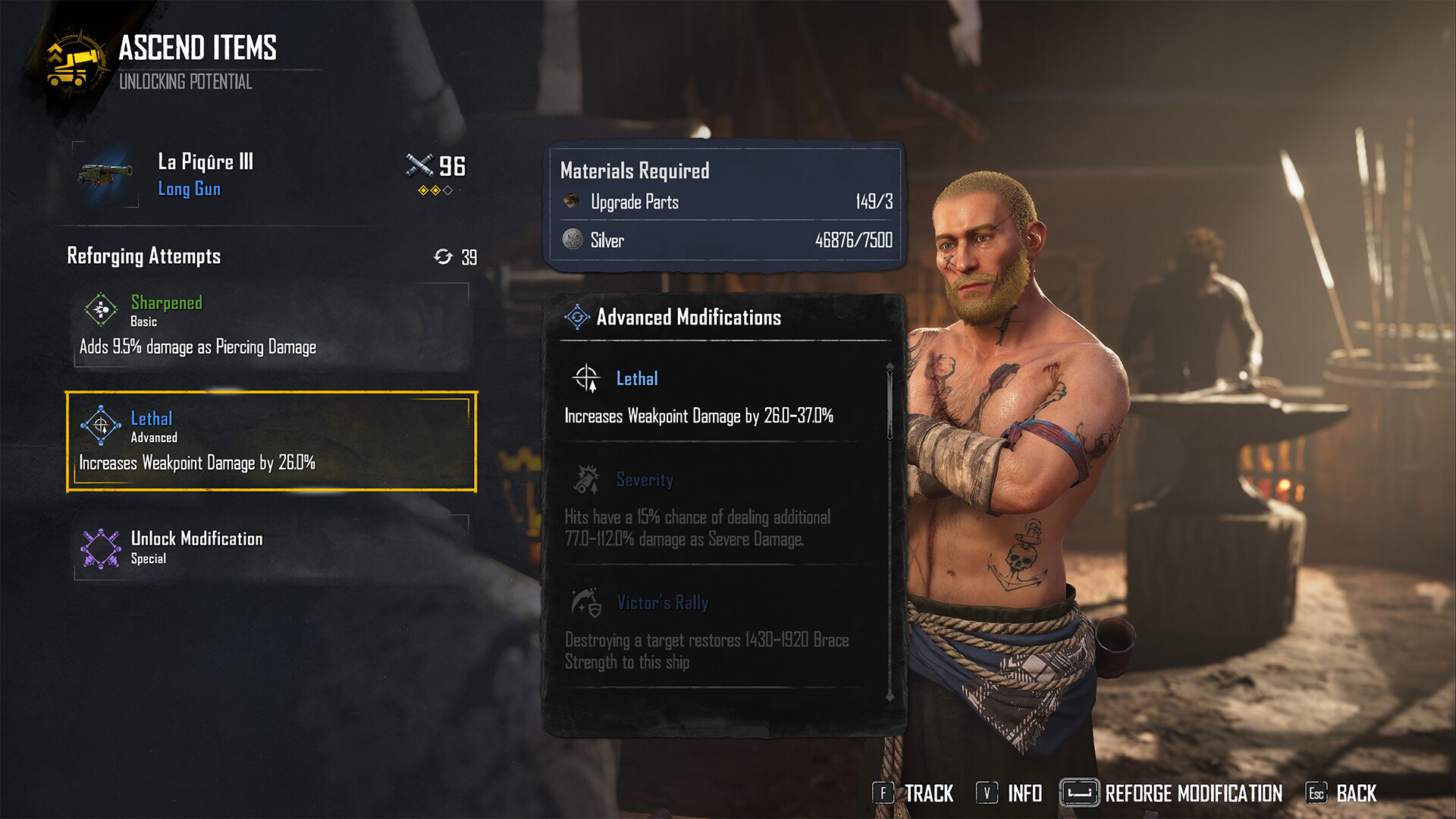
Skull and Bones had been in development since 2013. By January 2024, it had consumed somewhere between $650M and $850M. In a pre-launch interview, CEO Yves Guillemot described it as "quadruple-A," a term he invented to represent that the game had cost more than standard AAA to produce.
The term became a meme within hours. Not because the gaming press wanted to embarrass Guillemot, but because it was the most accurate single illustration of how disconnected Ubisoft's leadership had become from how their products were perceived. The implicit argument, that spending more money means making something better, was visibly wrong, and the audience knew it immediately.
When an executive describes a product using a self-invented superlative as a value proposition, it usually means they understand on some level that the product cannot carry the argument on its merits. The superlative is doing the work the game cannot do. That is an infuriating thing to watch happen to a company that once had Black Flag and Brotherhood in its catalogue.
February 2024 to End of Year: Collapse
Skull and Bones launched to a Metacritic score of 63. Sales in the first six weeks were approximately 1 million copies against a break-even estimate of 4-5 million. The naval combat, the only mechanic seven years and $750M had to develop, was described by reviewers as functional.
Functional after seven years is a catastrophic result. I played several hours at launch and can confirm the assessment. Ships move. Cannons fire. Nothing in the game achieves the level of craft that Black Flag's naval sections achieved in 2013, at a fraction of the budget, as a feature of a game whose primary focus was elsewhere.
XDefiant launched in May 2024 as Ubisoft's free-to-play competitive shooter. Initial numbers were reasonable. Retention collapsed. In December 2024, Ubisoft shut down XDefiant's servers and closed the responsible studios, affecting approximately 277 employees. This was the third major Ubisoft live service product to fail in two years. The strategy was not revised between failures. The same approach produced the same result three times.
I find the repetition specifically worth noting because it tells you something about the decision-making structure. A single live service failure can be attributed to execution problems. Two can be attributed to bad luck or market timing. Three consecutive failures, each using the same basic approach, cannot be attributed to anything except the strategy itself being wrong for this company. Ubisoft's leadership either could not see this pattern or could not act on seeing it. Either represents a failure of organisational governance that no individual personnel change addresses.
What the Company That Made Black Flag Lost

I have played Assassin's Creed II, Brotherhood, Black Flag, Origins, and Mirage. The quality variance across that list is significant and the direction of the variance is clear: the games made with smaller scopes and more focused creative direction are better than the games made with larger scopes under more commercial pressure.
Mirage, the smallest and most focused Assassin's Creed in years, received better reviews than any entry since Origins. The audience responded to focused design. Ubisoft's response was to announce a massive open-world entry as the next mainline AC title.
The people who made Black Flag are mostly gone. The IP exists. The production infrastructure exists. The franchises exist. The thing that made those games worth the franchise, the specific creative decisions by specific people who deeply understood what they were building, is largely absent. What you get instead is a very large, very expensive recreation of the form without the animating spirit.
That is not a business failure. It is a creative one, and no amount of budget will fix it. Ubisoft's path back, if it exists, runs through creative decisions, not production scale. The evidence suggests the people in positions to make those decisions do not fully understand this yet.
There is a version of Ubisoft that exists in the counterfactual where the 2020 departures were handled differently, where the creative vacuum was recognised and addressed with coherent direction rather than maintained scale. That version of the company might have made Assassin's Creed Mirage-scale games consistently rather than occasionally. It might have recognised that the live service strategy was not suited to Ubisoft's creative strengths and pivoted before three consecutive failures.
That company does not exist. The company that exists is one where institutional knowledge was disrupted at the worst possible moment, where the response to disruption was to maintain the scale that the disrupted knowledge had justified, and where the output of that combination has been a sequence of products that range from mediocre to catastrophic.
I have been watching this unfold for five years and I genuinely do not find it satisfying in the way that AAA failure coverage sometimes implies it should be. The developers at the end of this chain did not make the decisions that produced it. The developers who lost their jobs in the XDefiant studio closures made reasonable career decisions, worked on products they were assigned to, and paid for decisions made several levels above them. The executives who made those decisions are largely still at the company or departed with comfortable settlements. That is the usual distribution of consequence in this industry and it is not one I find acceptable to treat as simply the natural order of things.
Ubisoft built something real over thirty years. Black Flag is genuinely great. Assassin's Creed II is genuinely great. Far Cry 3 is genuinely great. The people and structures that produced those games are largely gone. What exists now is a very large organisation operating their legacy without the creative engine that produced it. Whether that organisation can find its way back to making things worth caring about remains to be seen. The recent record suggests not. That is a genuinely depressing conclusion about a studio that once knew how to make great games.
Skull and Bones is available on PC and consoles. $69.99. I would play Assassin's Creed IV: Black Flag instead. Better in every way, made thirteen years ago, $29.99.
View on Steam | Play Black Flag instead