Why AAA Gaming Is in Crisis (And Why That's Good for Everyone Else)
EA, Ubisoft, and Microsoft have closed 30+ studios since 2020. Why AAA gaming is collapsing — and why that is good news for the rest of the industry.

TL;DR
- EA, Ubisoft, and Microsoft have closed 30+ studios since 2020.
- The crisis isn't slow decline -- it's already broken, and marketing spend can't paper over it anymore.
- The argument: AAA's collapse is directly correlated with indie gaming's best decade ever.
AAA gaming is broken. Not slowly deteriorating, not showing early warning signs. Actually broken, right now, in ways that publishers are finding increasingly impossible to paper over with marketing spend and review embargoes.
I have been watching this happen for about five years and the pace has accelerated dramatically. Studios closing, games shipping in states that would have been unacceptable a decade ago, budgets hitting numbers that make no commercial sense. And the people who built this situation are the same ones explaining to shareholders why the solution is to double down on the strategies that produced it.
Here is what is actually happening, why it happened, and why, counterintuitively, I think the collapse of the AAA model is good news for anyone who actually cares about games.
The Budget Problem Has Become Structural
Publishers are now spending $400M-$500M to launch a single game, then expressing genuine shock when 5 million copies sold is classified as a commercial disappointment. Let me do that maths plainly: 5 million copies at $70 gross is $350M before platform cuts, retailer margins, and refunds. Net revenue on those sales is probably around $175-200M. A game that sells 5 million copies and gets called a flop is not a story about the market. It is a story about a cost structure that has completely decoupled from commercial reality.
The budget inflation did not arrive suddenly. It built across twenty years in compounding stages. The HD generation in the mid-2000s roughly doubled per-project production costs because rendering teams, texture work, and motion capture all became substantially more expensive. The open-world shift in the 2010s doubled them again. A 60-hour open world requires orders of magnitude more authored content than a linear 10-hour game, and the ratio never comes out even. Then live service models added permanent ongoing operational costs on top of production costs. Each individual transition was defensible in isolation. The cumulative weight destroyed the mathematics.
And here is the part that does not get said enough: the people making these budget decisions are not personally exposed to the downside. When a $400M game fails commercially, the developers who made it lose their jobs. The executives who approved the budget rarely do. The incentive structure is broken at the top and the consequences land at the bottom. I find it genuinely hard to look at the pattern of layoffs across 2023 and 2024, thousands of developers across EA, Microsoft, PlayStation Studios, and Embracer Group, and not notice that the redundancy announcements never seem to name the people who set the budgets.
Concord: The Number That Defines the Era
Concord is the example I keep returning to because it distils everything wrong with the current model into a single data point that is almost impossible to argue with.
Firewalk Studios spent eight years and reportedly over $400M building a hero shooter published by Sony. At peak concurrent players on Steam the week of launch: approximately 700. Not 700,000. Seven hundred. Two weeks after launch Sony shut down the servers and closed Firewalk Studios entirely.
Four hundred million dollars. Eight years of work. Seven hundred people playing it at peak.
Concord was entering a market Overwatch and Valorant had already won. It launched at a premium price point in a genre where free-to-play is the expectation. The character designs failed to connect in ways that were being discussed openly in the lead-up to release. These were not hidden insights requiring hindsight to understand. They were visible to anyone who looked at the competitive landscape for an afternoon before committing to an eight-year, $400M development cycle.
Someone at Sony's executive level decided to proceed anyway. Hundreds of developers who had nothing to do with that decision lost their jobs two weeks after launch. I have read a lot of charitable interpretations of the Concord situation and I think they are all wrong. There is no framing of this sequence of events that results in the right people bearing the consequences.
What makes Concord useful as an analytical reference point is its clarity. Most commercial failures involve ambiguous causation. A game is bad for several overlapping reasons: wrong genre, weak execution, poor timing. Concord strips the ambiguity. The execution was reportedly competent. The market timing was clear before anyone spent the money. The decisions were made anyway. This is not a cautionary tale about game development being difficult. It is a cautionary tale about organisations becoming unable to stop projects even when the evidence is pointing at them.
Microsoft: When Good Games Are Not Enough
I think the Microsoft studio closures of 2024 are actually more instructive than Concord because they reveal a different failure mode: a model that destroys good work, not just bad.
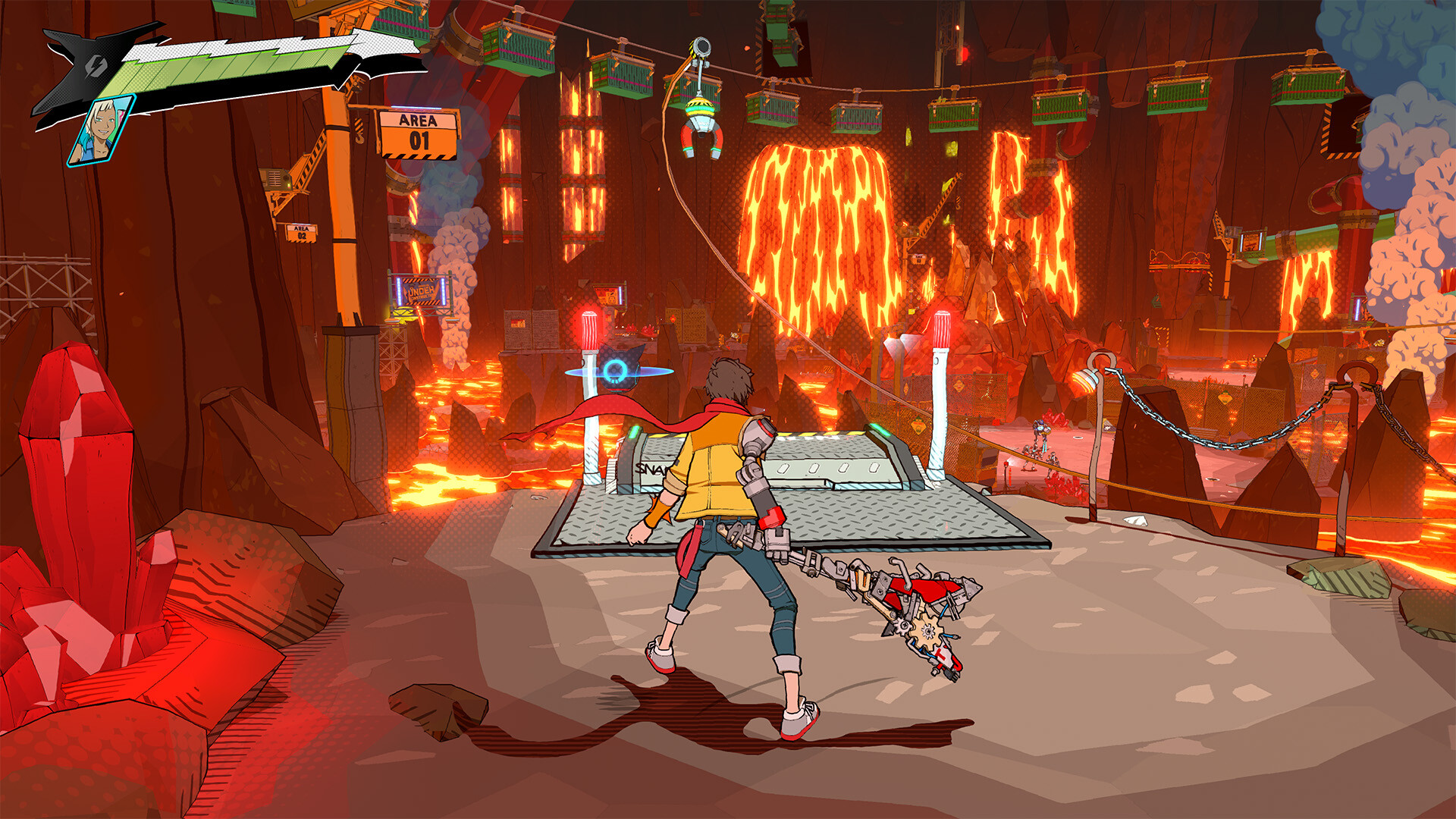
Tango Gameworks made Hi-Fi Rush in January 2023. It scored 88 on Metacritic. It won Game of the Year at multiple ceremonies. Xbox executives praised it specifically and publicly as the kind of creative achievement they wanted Xbox to be associated with. Microsoft closed Tango Gameworks in May 2024, eight months after the last award was handed out.
In the same week they closed Tango, they closed Arkane Austin. Arkane Austin had made Redfall, which scored 56 on Metacritic, launched with a 30fps cap on hardware sold on the promise of 60fps, and had AI that stood still while being shot. Redfall was a genuine failure by any measure. Hi-Fi Rush was a genuine success by every measure. Both studios were closed in the same week.
That symmetry is the clearest statement I know about what the subscription model values. Hi-Fi Rush is a 12-15 hour finite single-player game. It does not generate ongoing daily engagement. It does not drive new Game Pass subscriptions. It launched as a surprise drop so there was no pre-release window during which people might subscribe to access it. By the metrics that matter to Game Pass economics, an excellent 12-hour action game is indistinguishable from a failed one.
This is a genuinely shit model for the kinds of games the medium is capable of producing at its best, and I do not think that point has been made clearly enough in the coverage of these closures.
The Pattern Is Not Accidental
When I look at the full picture across multiple publishers in 2023-2024: EA's 670-person layoff, Embracer Group's implosion after their $2B deal fell through, Ubisoft's Skull and Bones disaster, Microsoft's studio closures, the Concord shutdown. What I see is not a series of unconnected business failures. What I see is a single structural problem expressing itself through different organisations at roughly the same time.
The structural problem is that AAA production costs scaled to a level requiring blockbuster commercial performance on every single release, simultaneously with a market that can only produce one or two blockbusters per year across the entire industry. The gap between the cost required and the commercial ceiling available is now too large to paper over.
Every individual publisher's response, more layoffs, more cancellations, more focus on "core franchises", is rational from the perspective of each organisation and collectively catastrophic for the breadth of what gets made. Assassin's Creed. Call of Duty. Grand Theft Auto. FIFA. Minecraft. These franchises have guaranteed audiences and predictable commercial returns. They are what the current cost structure can actually sustain. Everything outside that narrow category is being defunded. Not because there is no audience for it, but because the people making financial decisions cannot trust the size of that audience relative to the investment required.
The consequence is a AAA landscape that is converging on a handful of franchises and losing everything else. Immersive sims. Mid-budget narrative games. Single-player action games with no multiplayer mode. All of these either fail to get greenlit or get redirected toward live service models they are fundamentally unsuited for. See Redfall, see Anthem, see Skull and Bones. They fail commercially because of it.
Why This Is Good News
I want to be clear about one thing before making the good news case: none of this is good news for the individual developers who are losing their jobs. The human cost of these decisions lands on people who had no part in making them, and I am not going to minimise that for the sake of a neat analytical argument.
For players, the longer-term story is different.
When large studios close, developers do not disappear from the industry. Many of them form new studios. The people who leave AAA are often the most experienced: senior developers who have accumulated enough savings and reputation to absorb the risk of independence. The studios they form are free from the requirements that made the AAA model fail: no live service mandates, no market research approval for every creative decision, no requirement to reach blockbuster commercial thresholds to justify the investment.
The games worth playing have been disproportionately made outside the blockbuster system for several years running. Balatro, made by one person in spare time, won Game of the Year over every major AAA release in its year. Hollow Knight, made by three people on a $57,000 Kickstarter, is regularly cited among the best games of the decade. Hades, Disco Elysium, Signalis, Darkwood. All exceptional, all made at a fraction of AAA budgets, all free from the creative constraints that AAA budgets impose. These games exist because small teams were allowed to have a specific thing to say and the conditions to say it.
The AAA crisis is redistributing creative talent toward the part of the market that has been consistently producing better work. That redistribution is already underway. The indie games section of Steam in 2026 is not a consolation category. It is where most of the interesting things are happening.
Put your money there. Buy something from an independent developer this week. Buy it directly, not through a subscription service. The purchase signal matters more than the engagement number.
The most recent and clearest example of why this matters: Krafton saw Subnautica 2 was on track to trigger a $250 million developer bonus, fabricated grounds to fire the founders of Unknown Worlds, and lost in court. The founders were reinstated. The game shipped. The earnout is still being contested. Buying it in Early Access is one of the cleanest ways to vote with your wallet in the history of the games industry.
The numbers already show this happening. In 2024, more than half of the games that reviewed above 85 on Metacritic were made by teams of under 50 people. The most-played new games on Steam that were not live service titles were predominantly indie releases. The audience for good games exists and is spending money. It is spending it increasingly on games made outside the system that has spent three years demonstrating it cannot produce them reliably.
Hi-Fi Rush is available on PC and Xbox. $29.99. Made by the studio Microsoft closed eight months after praising it publicly. Buy it directly rather than through Game Pass.
Buy Hi-Fi Rush on Steam