Sony Keeps Replacing Male Leads With Women and Wondering Why the Numbers Drop
The God of War Faye spinoff rumour isn't the issue. The issue is a pattern Sony keeps repeating: take a beloved male character, sideline him, and act surprised when gamers notice. Here's the track record.

TL;DR
- Female protagonists aren't the issue -- Aloy, Ellie, Lara Croft all prove that argument is a strawman.
- The actual pattern: Sony replacing established male leads with new characters, then treating backlash as proof of bravery.
- The rumour in question: a God of War spinoff starring Faye, Kratos' dead wife, over the character with 20 years and 10 games of history.
Let me be clear about something before I get into this, because this topic has a tendency to attract people arguing in bad faith on both sides.
Female protagonists are not the problem. Lara Croft rebuilt Tomb Raider into one of gaming's most durable franchises. Aloy in Horizon Zero Dawn was a genuinely great character in a genuinely great game. Ellie in The Last of Us is one of the best-written characters in the medium. Bayonetta exists. Samus Aran has been carrying Metroid for 40 years. Control's Jesse Faden is outstanding. Nobody credible is arguing that female protagonists don't work. That's the strawman. Stop building it.
What does not work, consistently, is taking a beloved established male character out of his own franchise and replacing him with someone else. Then pointing at the new character being female as evidence you've done something brave, when the actual gamble is the replacement itself. The gender is not the issue. The replacement is. And there's a meaningful difference between those two things that some people are apparently determined to ignore. It's not subtle. Gamers are not stupid, and they see through this shit. And Sony, in particular, keeps running this play, watching the numbers wobble, and apparently failing to learn a damn thing from it.
The latest rumour doing the rounds: a new God of War spinoff with Faye as the lead. Kratos' dead wife. The character who exists in the games almost entirely as a motivation device for the character who is actually in them.
This should worry you. Here's why.
Twenty Years of Kratos
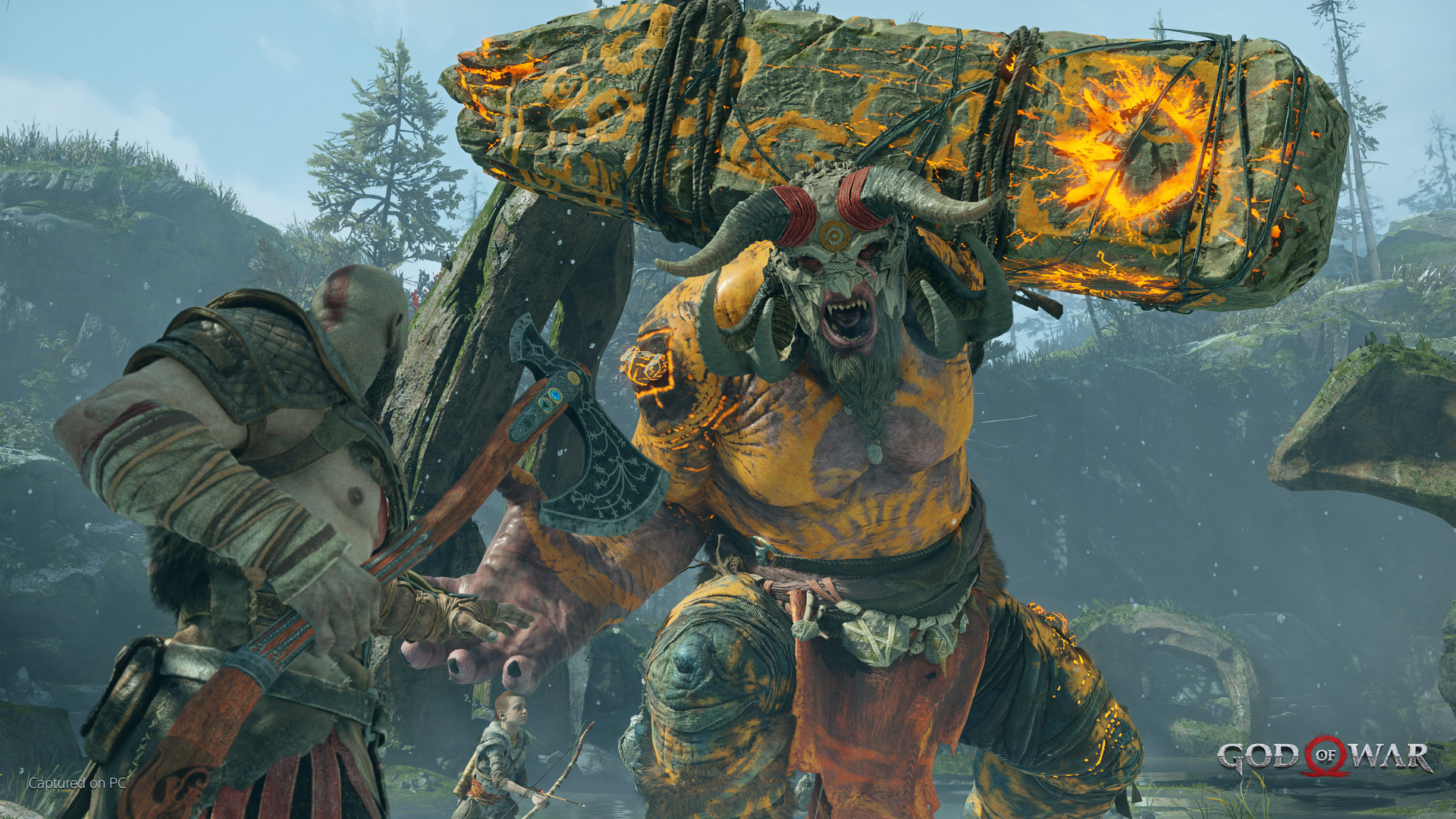
God of War launched in 2005. Kratos has been the protagonist of every mainline entry in the franchise since. Ten games. Twenty years. He is one of the most recognisable characters in the history of the medium, with a character arc that ranks alongside the best in any storytelling format: the furious, broken god who destroyed everything he loved learning, in his second act, to be a father.
The 2018 reboot is arguably the best game Sony Santa Monica has ever made. It works because of Kratos and Atreus, specifically because of the dynamic between them. The gruff, traumatised man learning to love his son and be loved back. Ragnarok continued that arc to a genuinely moving conclusion. At the end of Ragnarok, Kratos has, for the first time in twenty years of games, made peace with who he is. He has earned his rest. The story feels complete.
That completion creates a problem. If Kratos is at peace, where does the next game go? Sony Santa Monica appears to have answered that question by going in a different direction entirely: a spinoff, set before the Norse saga, starring Faye. Kratos' wife. The woman who died before the 2018 game begins and whose death sets the story in motion.
This choice deserves scrutiny. Not because Faye is female. Because Faye, as we know her, barely exists.
The Faye Problem Specifically
In the Norse God of War games, Faye appears in flashbacks. She's described, referenced, and mourned. Kratos speaks of her with restraint and grief. Atreus searches for her, in a way, through the whole journey. She is narratively important precisely because she is absent. Her death is the engine that drives two games.
Giving her her own game requires building her from essentially nothing. We know she was a Jötunn warrior, that she could fight, that she was capable of deceiving Norse gods about her true nature for years. That's the entire character inventory. Her personality, her relationships, her sense of humour, her contradictions. None of it exists on screen. She is, at this point, a collection of narrative facts rather than a person.
That is a solvable problem. Good writers build characters from scratch all the time. But it means the team making this game needs to create Faye essentially whole-cloth while simultaneously carrying the weight of a franchise that has one of the most beloved protagonists in gaming history. That is an extraordinarily difficult creative challenge, and it requires extraordinary creative confidence to attempt.
The track record of Sony-adjacent studios attempting this kind of move does not inspire confidence.
Ghost of Yotei: The Honest Case Study
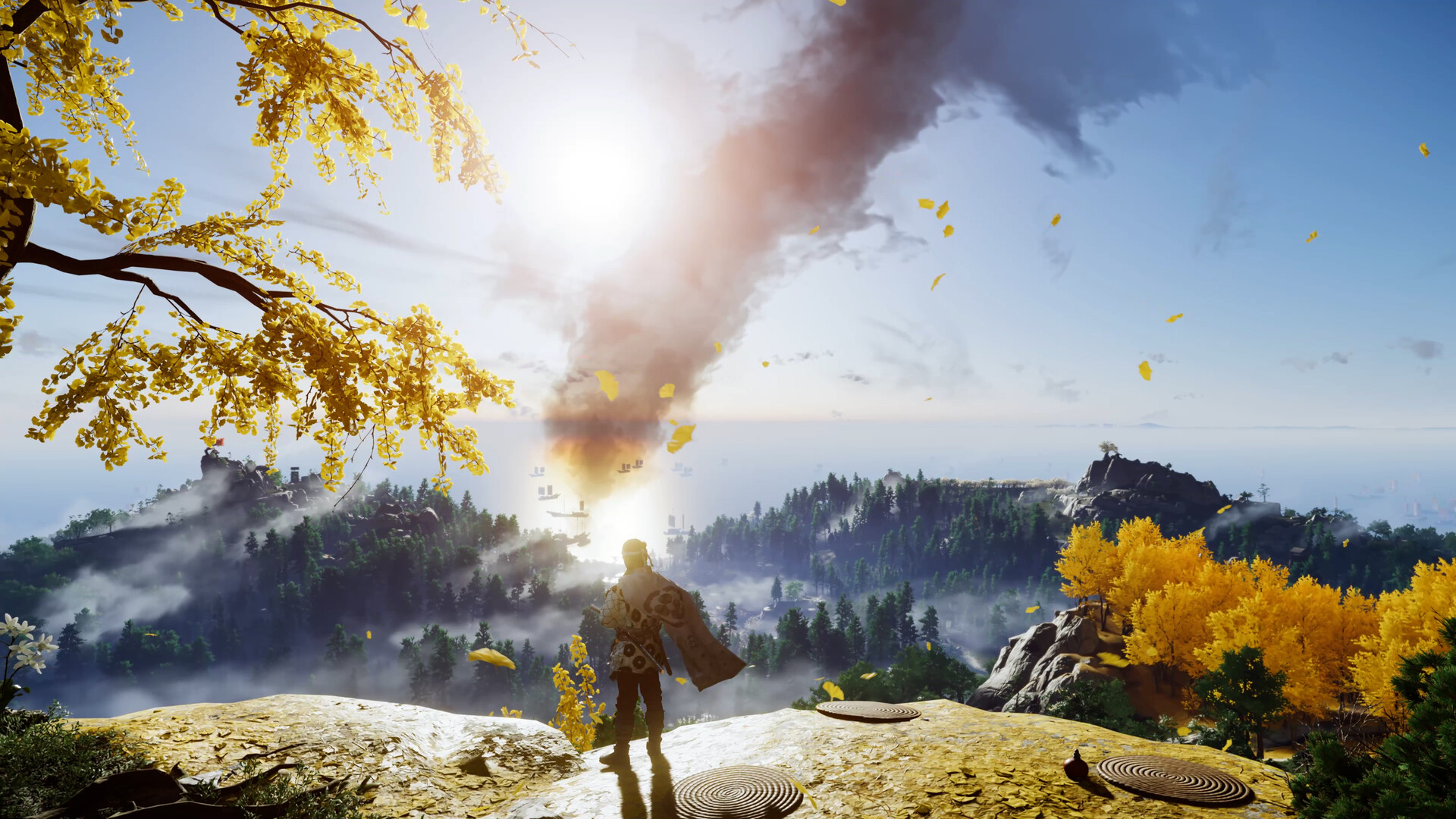
Ghost of Yotei is the most recent example and the most instructive one, because it did not fail. That's the nuance that matters.
Ghost of Yotei reviewed better than Ghost of Tsushima. Metacritic 87 versus 83. Ghost of Yotei's Atsu, played by Erika Ishii, was nominated for BAFTA's Performer in a Leading Role. The game was Sony's best-selling PS5 title of 2025. By most objective measures, it was a success.
And yet.
Ghost of Tsushima sold 3.8 million copies in its first month. Ghost of Yotei sold 3.3 million in the same window. That's 16% fewer units, for a sequel to a game that had built a passionate fanbase and was starting with far more name recognition than the original had. Sequels are supposed to grow. This one shrank. Sony's own CFO made carefully worded comments about the comparison. A former Sony executive called the numbers "disappointing for a sequel." Sony and Sucker Punch notably did not post the celebratory "X million sold!" announcements they would typically make for a first-party success of this magnitude.
Was Ghost of Yotei's lower performance purely about replacing Jin with Atsu? Almost certainly not. The controversy around a Sucker Punch developer's social media post in the lead-up to launch generated organised boycott calls that probably cost some sales. The game released into a crowded 2025 calendar. Jin's story was genuinely beloved in a way that created unusually high attachment to the specific character.
But here's the thing. When you make the creative decision to replace a beloved protagonist, you inherit all of those complications. You don't get to list them as external factors after the fact. If you change the character and the numbers drop, the character change is part of the story, whether or not it's the whole story.
Ghost of Yotei was a good game. It still sold less than the game it followed. That is the honest account.
Horizon: The Longer Arc
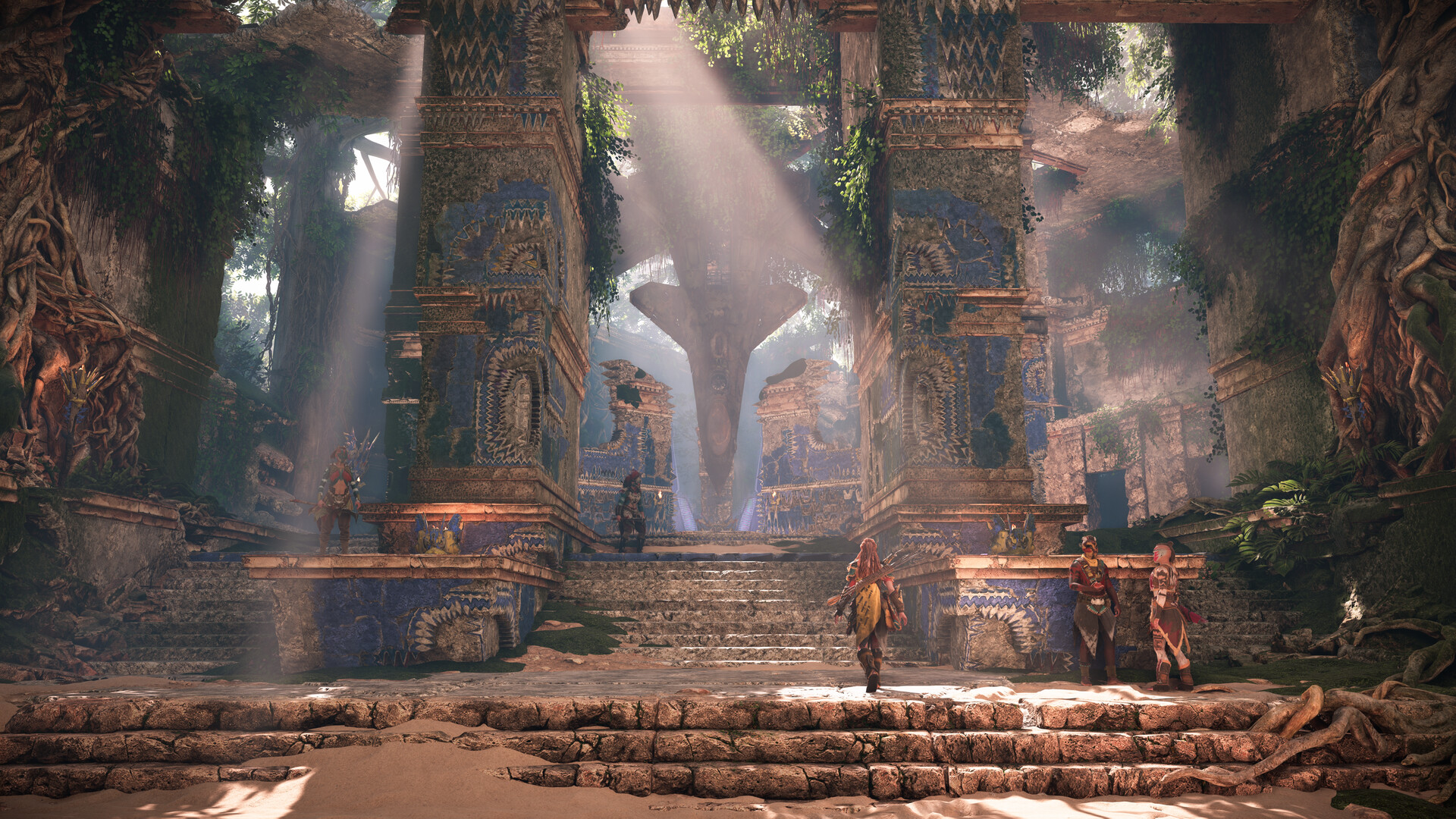
Horizon Zero Dawn is a better example of female protagonist done right than people remember. Aloy in 2017 was a compelling, consistent character in a world that felt genuinely original. The game sold over 24 million copies lifetime. By most measures a massive success for an original IP.
Horizon Forbidden West came out in 2022. It is technically superior to Zero Dawn in almost every system: the combat, the traversal, the machine variety, the visual fidelity. It sold 8 million lifetime. Roughly a third of what Zero Dawn achieved. Former Sony Worldwide Studios president Shuhei Yoshida went on record saying the sales numbers left him "surprised," given the built-in fanbase from the first game.
The critical complaint that followed Aloy into Forbidden West was not that she was female. It was that something had shifted in how she was written. The curious, self-reliant outsider of the first game had become, in the second, preachy and certain and less interesting to spend time with. The character's likeability dipped. The conversation around Horizon went quiet within a week of Forbidden West's release in a way it never had around Zero Dawn, and it hasn't really recovered. The series went from cultural phenomenon to franchise-that-exists-if-you-like-that-sort-of-thing.
Sony greenlit a third game. Nobody has talked about it much since. That is not what healthy franchise momentum looks like.
What Actually Works
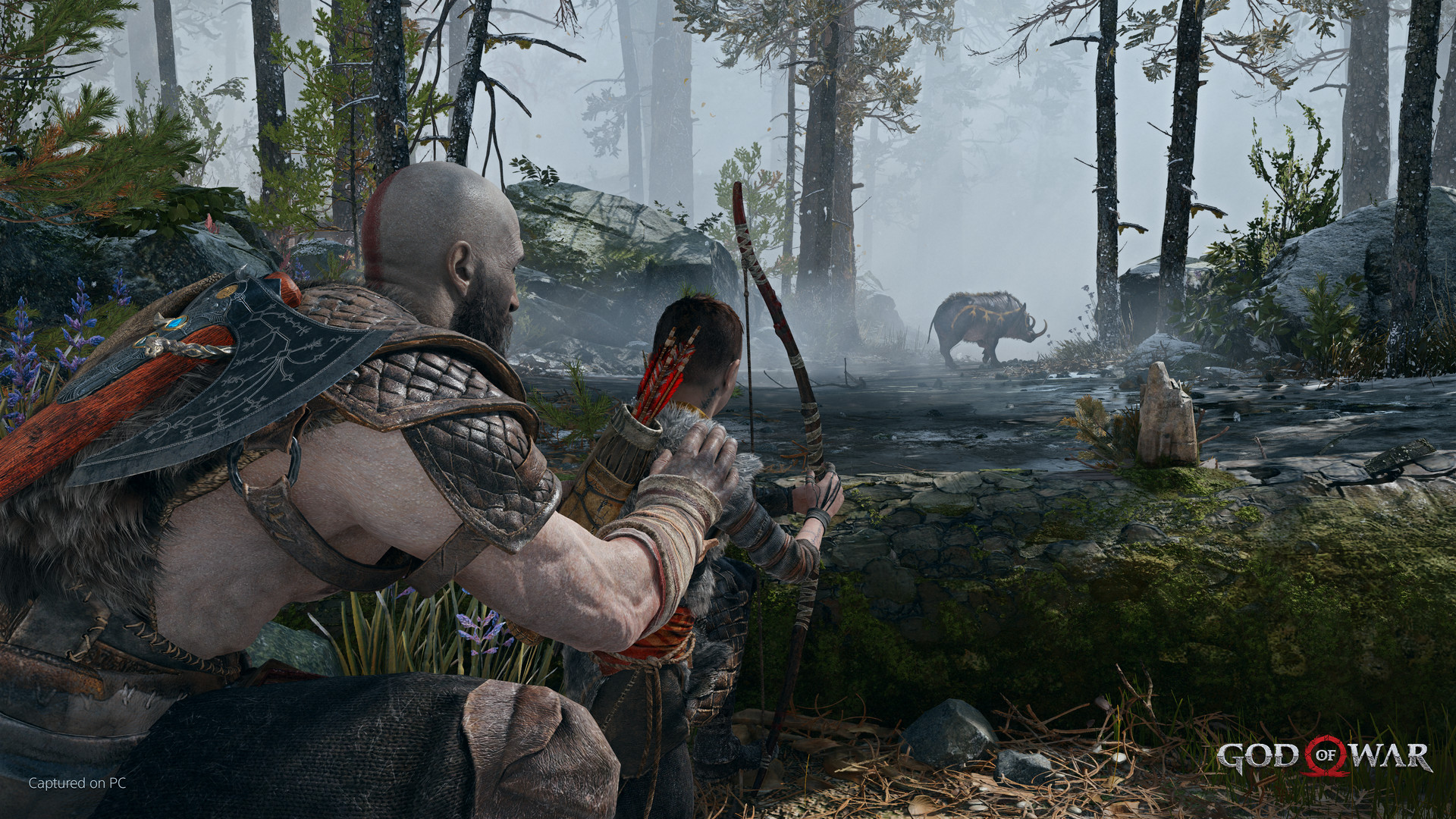
The games that have made female protagonists work without controversy share a common quality: the character was built for the role from the ground up, without anyone being displaced.
Aloy in Zero Dawn was not replacing a beloved male character. She was the first protagonist of a new franchise. Lara Croft's reboot worked because it was a reboot. A complete reimagining where the question of what came before was intentionally set aside. Ellie's sections of The Last of Us worked because they existed alongside Joel's, not instead of them. Jesse Faden in Control worked because Control was Jesse Faden's game from conception; nobody had a prior attachment to a different protagonist in that world.
The pattern that does not work is the other one. Take a franchise built around a specific male character. Remove that character. Insert a different character, typically female, into the vacancy. Watch the fanbase try to engage with someone they have no established reason to care about, in a world they associate entirely with someone else.
God of War with Faye as the lead is not a female protagonist story. It is a replacement story. The fact that the replacement is female is incidental to why it's a risk. Replace Kratos with a new male character and the reaction would be almost identical. The audience is attached to Kratos. Not to maleness. To Kratos specifically, built over twenty years and ten games, with one of the most complete character arcs in gaming.
The Pattern Sony Needs to Understand
What pisses me off about this is not that Sony makes bold creative decisions. Bold creative decisions are how you get the 2018 God of War, which was itself a radical departure from the franchise's previous tone and structure. Cory Barlog made Kratos a father and completely changed the game's pace and camera and emotional register. Nobody complained about that because the character was still there and the change made him more, not less.
The pattern that needs to stop is the one where "bold creative decision" becomes shorthand for "we replaced the character who built the franchise." Ghost of Yotei was a good game that underperformed. Horizon Forbidden West was a technically impressive game that lost the cultural conversation. The God of War Faye spinoff is, based on the leaks, a prequel built around a character we know almost nothing about, made by a different creative team (reportedly Cory Barlog's independent project at Sony Santa Monica), trading on a franchise name that means Kratos.
It may be brilliant. Cory Barlog has earned enormous trust. The reported gameplay direction (faster, more DMC-style action) sounds genuinely interesting. East Asian mythologies combined with Mayan elements is a wilder swing than anything the franchise has attempted.
But none of that creative ambition addresses the core question. Who is Faye? Not what we know about her from the Norse games. Who is she? What does she want beyond survival? What makes her funny, or infuriating, or worth following for twenty hours? The answer, right now, is that Sony Santa Monica will have to build that entirely from scratch, in a franchise whose audience has two decades of emotional investment in a different person.
That is not impossible. It is genuinely hard, and the stakes are higher than people are admitting. And Sony's track record of doing that kind of hard thing successfully is not encouraging.
What I Actually Want
For the record: I want this game to be great. I want Faye to be a genuinely compelling character who earns her place in the franchise rather than inheriting it. I want the East Asian mythology angle to open up the world in ways the Norse games couldn't. I want Cory Barlog to prove that the creative instinct that made the 2018 game work can be applied to someone entirely new.
I am just not going to pretend, in the meantime, that Sony has a clean record on this kind of move. They don't. The numbers don't lie, the conversation around their franchises doesn't lie, and the pattern is clear enough to name.
Build new bloody characters for new games. If you want to tell Faye's story, tell it. Build it like Zero Dawn built Aloy, with the understanding that you're starting from zero and that the audience has no reason to care yet. Don't lean on the God of War name if what you're making isn't recognisably a God of War experience. And above all, don't be surprised if the numbers look different when Kratos isn't in it.
He's been the reason people showed up for twenty years. That's not a conspiracy. That's just what happens when you build a great character and audiences fall in love with him.
The God of War Faye spinoff is unconfirmed as of this writing. It's still in the leak and rumour stage, with Jason Schreier and NateTheHate2 providing the most credible signals that something exists. An official reveal was rumoured for April 2026 and hasn't materialised yet. When Sony announces it officially, the argument above either stands or needs updating. For now, the pattern is documented.
God of War (2018) on Steam -- $29.99 | God of War Ragnarok on Steam -- $59.99