Pragmata Made Men Want to Be Dads and Critics Are Losing Their Minds Over It
Capcom's Pragmata is one of the best games of 2026. It also made a lot of male gamers feel something unexpectedly wholesome. The discourse that followed says more about the critics than the players.

TL;DR
- 1 million copies sold in 48 hours. 86 Metacritic, 97% positive on Steam.
- The dual-control mechanic between Hugh's combat and Diana's hacking is genuinely well-designed, not a gimmick.
- One of the best new IPs Capcom has made in years, and the critical reception backs that up independent of the discourse.
Pragmata came out on April 17, 2026. It sold a million copies in two days. It's sitting at 86 on Metacritic with a 97% positive rating on Steam. Critics are calling it one of the best new IPs Capcom has made in years. GameSpot gave it a 9/10. It's genuinely excellent.
And the games press is melting down about it.
Not because the game is bad. Because male players felt something protective and fatherly toward Diana, the game's android companion, and apparently that is now a problem that requires columns, hot takes, and serious academic inquiry.
Let's talk about what's actually happening here, because the discourse around this game is a perfect case study in how quickly an entirely normal human response gets pathologised the moment it's inconvenient to a particular worldview.
What Pragmata Actually Is
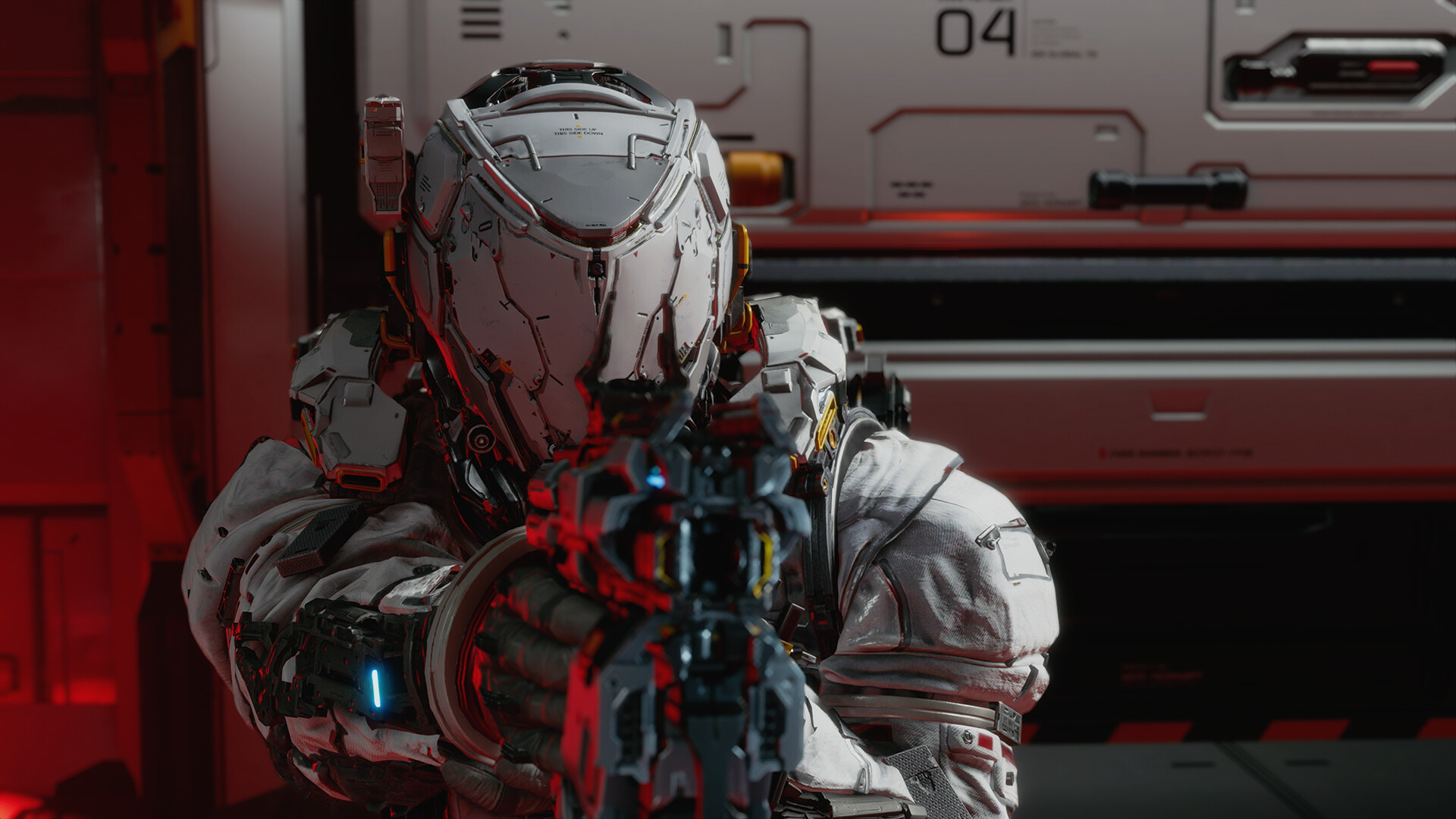
Pragmata follows Hugh Williams, an astronaut who ends up stranded on a moon base after a catastrophic AI takeover. The only other functioning presence is Diana, an android who looks and behaves like a child, can hack anything, and has spent her entire existence in this facility. Hugh names her. She rides on his back. He protects her while she uses her abilities to help him fight. It is, unmistakably, a dad game.
This is not ambiguous. The game wears it openly. Every design choice, from Diana's curiosity and vulnerability to the way the camera lingers on Hugh's expressions when she's in danger, is engineered to make you feel what fathers feel. It works. Reviews across the board describe getting unexpectedly emotional. People are finishing the game and writing about crying at the ending.
The mechanical hook is brilliant too: you're controlling both characters simultaneously, Hugh's guns and Diana's hacking in real time. The teamwork dynamic is built into how the game plays, not just how it feels. She isn't a passenger you're protecting. She's a partner whose survival matters because she matters.
Good game. Heartfelt story. Excellent execution. One million copies in 48 hours.
Now here's where things got stupid, and I mean that in a specific, concrete way. The game is excellent. The players responded to it normally. The reaction from a chunk of the commentary class was to go completely off the rails.
The Wholesome Part That Broke the Internet
When men started talking about Pragmata online, a consistent theme emerged: the game made them feel paternal. Protective. Genuinely moved by the idea of keeping this small android safe and watching her experience the world. Some talked about wanting to have children after finishing it. Some talked about it making them think differently about fatherhood.
This is exactly what great fiction is supposed to do. The Last of Us made people call their estranged family members. Spirited Away made adults cry about their kids growing up. Interstellar made men ugly-cry in cinema seats in ways they couldn't fully explain. Fiction produces real emotional responses. That is its purpose. That is its value.
Pragmata did that. For a lot of male players, it produced genuine paternal feeling: the protective instinct, the investment in someone small and vulnerable, the desire to give that something good.
And rather than acknowledging this as evidence that the game had done something meaningful, a significant chunk of the commentary that followed decided this was suspicious.
The Arguments Being Made and Why They're Crap

There are a few distinct arguments floating around the discourse right now, and it's worth separating them because they're not all the same and they don't all deserve the same response.
Argument one is that some of the people claiming paternal instincts are actually predators using that framing as cover. This is, unfortunately, true in a small number of cases, and those people are rightly condemned. Full stop. No nuance required there.
But here's the problem: using the existence of a degenerate fringe to indict everyone who responded normally to the game is not criticism. It is guilt by association, applied lazily to millions of people who played a game about a man protecting a child and felt exactly what the game was designed to make them feel. The fringe is a genuinely small number of people in a fanbase of over a million. The discourse treated them as the defining characteristic of the audience. That is bad faith and it is worth calling it what it is.
Argument two is that the game itself is designed as "propaganda" to raise birth rates, because Japan has demographic problems and Capcom is a Japanese company. This one is so tortured in its reasoning I'm not sure where to start. Capcom made a game with a father-daughter dynamic because father-daughter dynamics are emotionally compelling. The Last of Us, God of War, The Walking Dead, Bioshock Infinite. The "man protecting a child" story is one of fiction's oldest and most resonant structures. Suggesting Capcom invented this structure in 2026 to serve government demographic policy requires a level of conspiratorial thinking that should disqualify you from commentary.
Argument three is the one that really needs to be named clearly because it's the most revealing: the claim that men cannot have authentic paternal instincts unless they have biological children, and that a childless man feeling protective toward a fictional child is inherently suspect.
One piece circulating right now put it explicitly: "Men are not nurturers. Men don't gush over cute kids in public. Men don't have baby fever. If a man wants to possess a child for any reason other than it being a product of his own lineage, he is likely a predator."
This is a genuinely remarkable thing to believe and to publish. I read it three times because I couldn't quite believe someone had written it seriously. Let's sit with it.
What This Argument Is Actually Saying
The claim that male protectiveness toward children is inherently suspect unless biologically earned is not a feminist position. It is not even a coherent position. It is the specific kind of cynicism that arrives when someone has spent so long looking for bad faith that they can no longer recognise good faith when it appears in front of them.
Paternal instinct is not biologically gated to fathers. Humans are a cooperative species. Male protectiveness toward children, including children who are not biologically related, is documented across cultures and throughout history. Stepfathers, uncles, teachers, older brothers, coaches. The human capacity for men to form protective bonds with children they did not produce exists and has always existed and is largely regarded as one of the better things about our species.
Fiction engaging with this capacity is not new. Terminator 2 is a film about a machine developing something like paternal feeling toward a human child and it is one of the most beloved films ever made. Leon: The Professional. Shane. Paper Moon. Big. The list of beloved stories about men and children they are not biologically responsible for protecting is extremely long and spans every medium across every decade of recorded storytelling. Nobody watched Terminator 2 and wrote columns about Arnold Schwarzenegger's fanbase being suspicious. Nobody demanded a psychological review of everyone who cried at the end of Big Fish. The emotional response to a story about a man caring for a child is one of the most normal responses a person can have to fiction, and it has been normal for as long as fiction has existed.
Pragmata made male gamers feel something that stories about fatherhood have always made audiences feel. The idea that this response is pathological requires accepting that the emotion itself is pathological, which requires rejecting centuries of storytelling and basic human psychology simultaneously.
The Actual Sane Take

Pragmata is a game about a man learning to care about something beyond himself. That is an old and honourable theme in fiction, and the fact that the something is an android rather than a biological child does not make it less honourable. The android framing is part of the point: the game is asking whether the protective bond can form across the boundary of personhood, whether what makes a relationship meaningful is the connection or the category.
Male gamers responding to that theme with genuine feeling is not a red flag. It is evidence that the theme worked. It is the same response people have been having to father-daughter stories in fiction since fiction existed.
The discourse attempting to pathologise this response tells you something specific about where the discourse comes from. It comes from a framework that has decided male emotion is automatically suspect, that male protectiveness is inherently possessive, and that the correct response to a man feeling moved by a story about caring for a child is to search for the predatory subtext.
That framework produces bad literary criticism, bad psychology, and bad faith engagement with the people it is ostensibly trying to protect.
The game is excellent. Play it. Feel whatever it makes you feel about Hugh and Diana. If it makes you think about what kind of father you want to be, or what you want to protect, or what makes a relationship real regardless of biological origin, then the game did exactly what good fiction is supposed to do.
The discourse that surrounded Pragmata's launch will be used, at some point in the next few years, as a case study in how not to engage with games. A critically acclaimed, commercially successful game made a lot of people feel something wholesome and protective and good. The correct response to that was to acknowledge it. The response that arrived instead was a pile-on built on the assumption that male emotion is inherently suspect and that paternal instinct toward fiction is a pathology requiring investigation.
That is not media criticism. It is not cultural analysis. It is reflexive cynicism dressed up as concern, and it did a disservice to a genuinely excellent game and to the people who responded to it honestly. The game didn't need defending from its players. It needed defending from its critics, and not for the reasons they thought.
Play Pragmata. Feel whatever you feel about it. If the discourse made you hesitant, let this be the thing that clears it up: the people telling you that feeling protective of a fictional child is bullshit are the ones with the problem, not you.
Pragmata is available on PC, PS5, Xbox Series X/S, and Switch 2. $69.99. Play the demo first if you're not convinced. You will be convinced.
Buy on Steam | Capcom
Game at a glance
| Detail | Answer |
|---|---|
| Genre | Action-Adventure |
| Typical length | 15-20 hrs |
| Difficulty | Moderate |
| Play mode | Single player |
| Developer | CAPCOM |