Balatro Is the Best Game of 2024 and It Was Made by One Person. Think About That.
One developer, 2.5 years, expected ten sales. Balatro sold 5 million. Why solo-dev constraints produce better games than hundred-person studio budgets.

TL;DR
- One developer, 2.5 years, LocalThunk expected roughly ten sales. Balatro sold 5 million copies.
- Same year Sony spent $400M+ on Concord, a hero shooter shut down two weeks after launch.
- $14.99. Game of the Year 2024. The argument for constraint over budget.
In 2024, one person made one of the best games ever created, in their spare time, for $14.99. In the same year, Sony spent somewhere north of $400M on a hero shooter that was shut down two weeks after launch. I have been thinking about these two facts existing simultaneously since I first encountered them and I still cannot make them feel normal.
Balatro is a poker-themed deck-building roguelike made by a developer who goes by LocalThunk. It holds a 97 on Metacritic from critics. It holds a 97 from users. Those two scores agreeing at that level almost never happens. It won Game of the Year from outlets that rarely agree on anything. It has sold millions of copies. It was made by one person in their spare time and costs $14.99.
Concord had eight years, roughly $400M, and a full studio. Seven hundred concurrent players at peak. Shut down in two weeks. I cannot stop thinking about the contrast.
What Balatro Is and Why the Design Is Genuinely Innovative
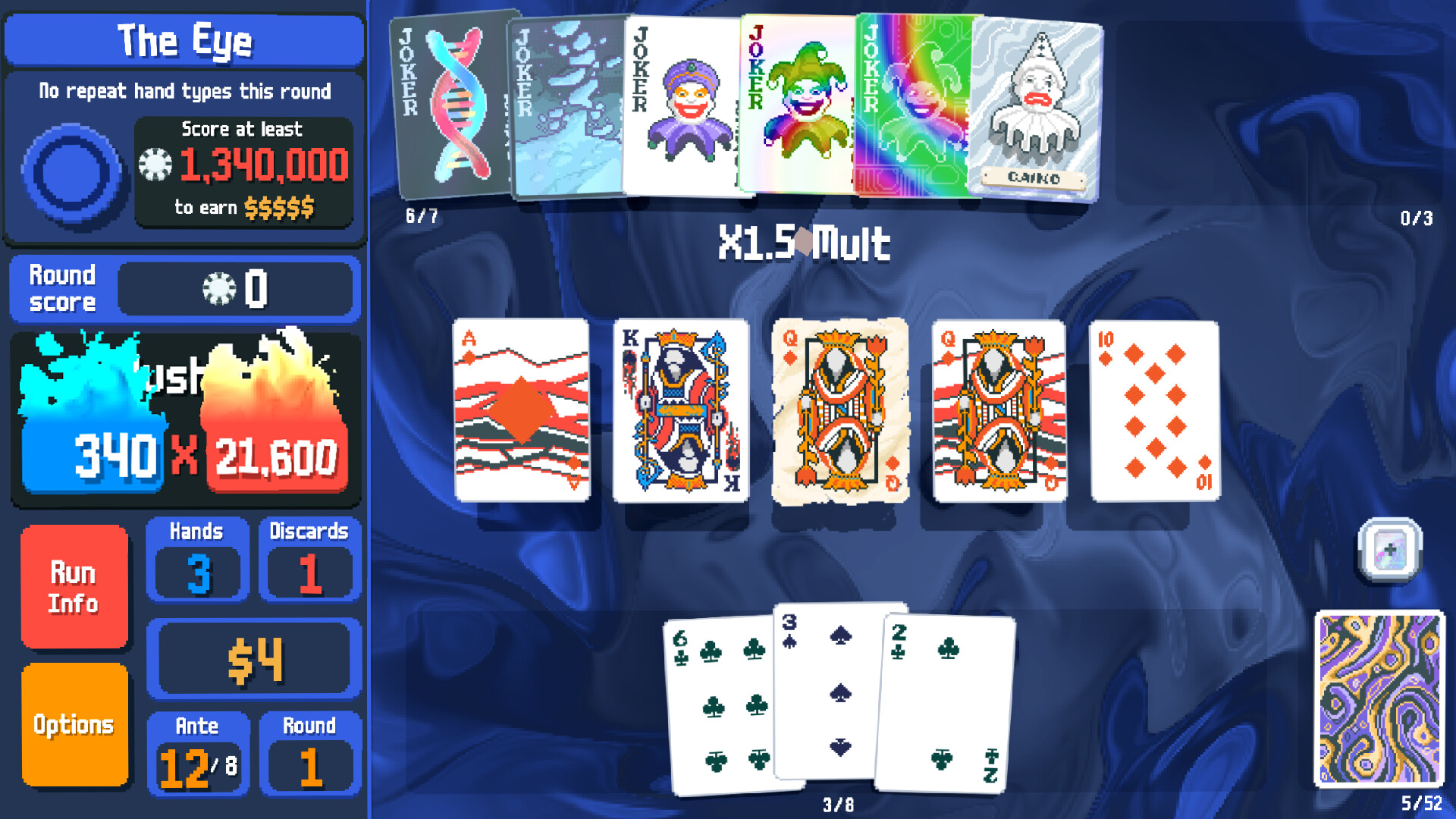
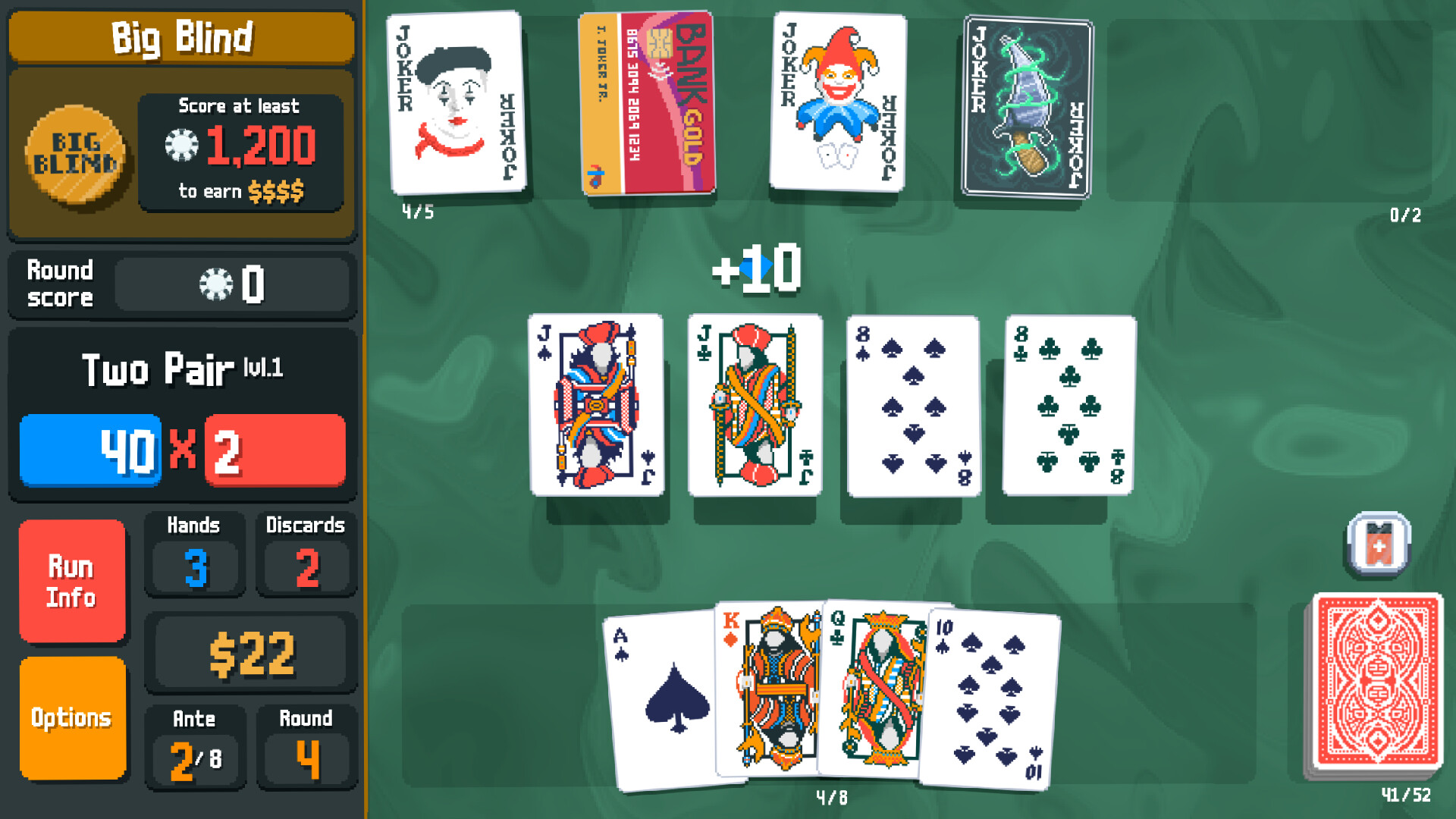
Balatro starts simply and legibly. You play poker hands against escalating score targets. Pair, two pair, straight, flush: standard poker hierarchy that most players already understand. You need to reach a chip threshold to advance through a series of antes. The rules are communicated within the first thirty seconds.
Then the modifier system arrives and the whole thing opens up.
Each run provides jokers, tarot cards, spectral cards, planet cards, and vouchers. Jokers are persistent passive effects that stack with each other in interactions that start small and become, by the late game, genuinely mathematical. A basic flush normally scores 35 chips. With the right joker configuration, that same flush scores 35 million. The moment when modifier interactions click, when you suddenly understand what is possible with the current combination, is one of the best feelings I have had playing a game in years.
I have looked up from Balatro at 2am on work nights more times than I care to admit. I know one more run is always a lie when I tell it to myself. I do it anyway. The one-more-run pull is among the strongest I have encountered anywhere in the roguelite genre.
The design insight that makes this genuinely innovative is specific: using poker hand rankings as the mechanical core was brilliant because they are a familiar hierarchy most players already know without needing to be taught. Balatro then modifies that hierarchy in ways that feel surprising precisely because they are subverting something you thought you already understood. In standard poker, flushes beat pairs. In Balatro, with the right joker configuration, a pair might be the most powerful hand in your run. The game constantly recontextualises familiar information, which keeps runs feeling novel for hundreds of hours.
The Concord Number
| Developer | 1 person, spare time | ~150 person studio, 8 years |
| Budget | Negligible | ~$400M |
| Price | $14.99 | $39.99 |
| Peak concurrent players | Millions | ~700 |
| Metacritic | 97 | 62 |
| Current status | Still selling strongly | Shut down 2 weeks post-launch |
This is not proof that budgets do not matter. Resources enable things small teams cannot do. But it is definitive proof that budget is not the primary variable in whether a game is good. A game is good because someone had a specific, clear vision for what it needed to be and the freedom to build toward that vision without interference from a publisher, a P&L, a market research process, or a live service mandate.
Balatro had all of that. Concord had a full studio, a publisher, eight years, and $400M. It did not have the thing that made the difference.
Why One Person Makes Better Games Than a Studio
This is the part I want to spend some time on because it is usually skipped in favour of the Concord comparison, which is more satisfying as a rhetorical point.
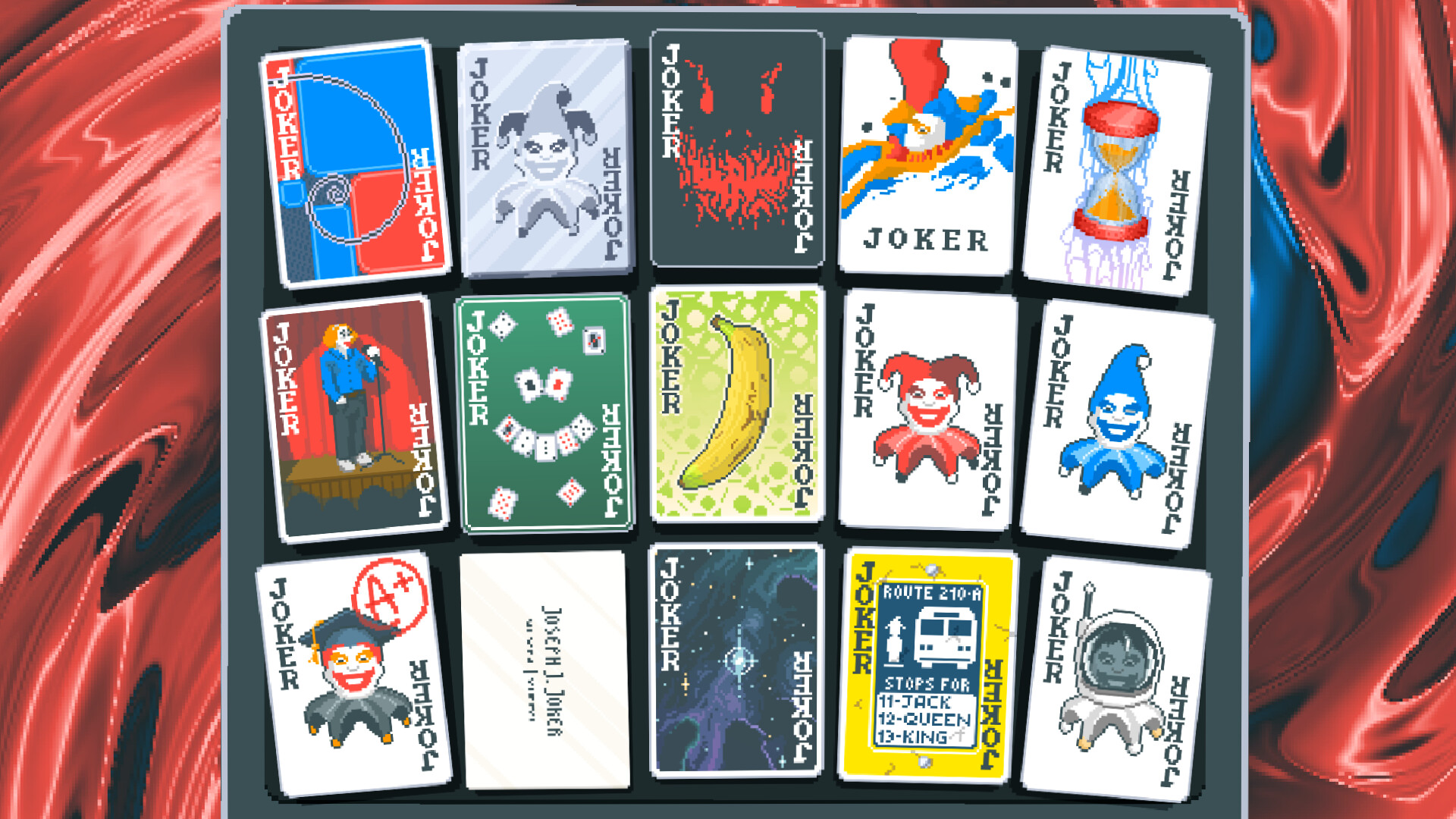
When one person builds a game, every system serves every other system. LocalThunk built the visual design, the sound design, the mechanical systems, the progression structure, and the difficulty curve. They are all the product of the same mind making decisions with full awareness of every other decision. The joker that produces a specific visual effect is made by the person who coded the scoring system and designed the late-game difficulty. There is no version of this game where the art team designed something that the game systems team then had to work around.
Compare this to how large games are made: art teams, engineering teams, design teams, narrative teams, QA, marketing, all of whom have partial visibility into the decisions being made elsewhere and limited ability to influence them. The result is games that feel assembled rather than designed. The components work. They do not always feel like they were built to work together.
Balatro feels designed in the specific sense that everything in it feels like it belongs together. The visual aesthetic, the music, the pacing of modifier discovery, the way the difficulty curve rewards pattern recognition. None of this happened by committee. It happened because one person made all of it and knew, at all times, what it needed to be.
That is what you cannot buy with $400M. You can buy a bigger team and a longer schedule and more marketing. You cannot buy the coherence that comes from a single person building a single thing over time.
There is a related point about the creative constraints that independence removes. When you are making a game with no publisher, no investors, and no marketing team to satisfy, you are free to make the game that you genuinely want to play. LocalThunk made a poker-based roguelite because they found the combination interesting and wanted to see how far it could go. There was no pitch meeting where someone asked whether the poker framing would test well with focus groups. There was no product manager asking whether the late-game difficulty curve would drive negative Steam reviews. There was one person, one idea, and years of iteration toward the thing they were trying to make.
That process produces specific outcomes. It produces games that feel like they have an author rather than a committee. Balatro has a point of view. Every element of it is in service of the same idea: that the gap between a simple poker hand and a absurdly complex modifier stack should feel earned and surprising simultaneously. That is a creative argument, not a product specification. It exists in the game because the person who made it cared about it existing there.
You can commission a game with better graphics, larger scope, and a bigger marketing budget. You cannot commission the specific quality that comes from one person caring enough about a single idea to spend years making it exactly right. The industry has not fully processed what that means for how it should be structured, and Balatro is the clearest available evidence that it should start.
One Honest Criticism
Balatro does not have a smooth difficulty curve in the conventional sense, and I think this is worth naming honestly.
The early antes are forgiving while you build your joker configuration. The mid-game difficulty spike can feel severe when a run's synergies have not clicked by a certain point. You find yourself facing score targets that seem unreachable without a specific joker combination that simply has not appeared. Some runs feel lost to variance before you have had meaningful agency over the outcome.
I find this engaging rather than frustrating because the roguelite structure makes failed runs into learning. Each one teaches you something about what was missing: a joker that would have solved the score deficit, a planet card that would have boosted the hand type I was leaning on. The failure is informative rather than punishing because the information it provides is immediately actionable in the next run. But I understand why some players find the variance arbitrary rather than instructive. It is the most common legitimate criticism in the negative reviews and I think it is a fair one. The game does occasionally hand you a run that was probably lost before you had a meaningful chance to save it.
It is still one of the best games ever made. The criticism does not change that. It is just worth knowing before you start, and worth not blaming yourself for runs that were probably gone before you had a chance to save them. The game is honest about this if you pay attention: the seed is fixed at run start, which means every outcome you reach was always going to happen given the choices available. Whether that framing is comforting or infuriating depends entirely on your relationship with randomness.
What the Industry Will Do With This Information
The gaming industry noticed Balatro's success. The response has been predictable: a wave of games attempting to copy its surface features. Poker mechanics. Joker-style modifier systems. The visual language of its card table aesthetic.
This will not work. The surface features are visible and copyable. They are not the source of the experience.
Balatro succeeded because LocalThunk had a specific idea, committed to it over years without anyone telling them the poker framing was too niche or the visual design too simple, and iterated until every element felt right. You cannot replicate that by adding joker mechanics to your existing product. You cannot commission it. You cannot spec it. You can only make it by being one person with a specific thing to say and the conditions to say it without interference.
That is the thing you cannot manufacture with eight years and $400M. It is annoying that so much of the industry seems to have concluded the lesson of Balatro is "copy the poker framing."
Buy it. $14.99. It is one of the best games ever made. The next time a $400M announcement appears, remember what one person built in their spare time.
Why Balatro Keeps Working
Most games that generate the kind of engagement Balatro generates do so through content: new levels, new characters, new story. Balatro generates it through system depth. The runs do not get longer or more varied because the game keeps adding content. They get more interesting because the player's understanding of the systems deepens.
This distinction matters because it tells you something about the kind of replayability Balatro has. It is not designed to keep you engaged by showing you something new. It is designed to reward you for understanding what you have already seen more completely. That is an unusual kind of depth in the games market and it is significantly rarer than the content-driven engagement that live service games pursue.
The specific design achievement worth naming is that Balatro's complexity is emergent rather than designed. The individual rules are simple enough to be explained in five minutes. The interactions between those rules produce situations that even experienced players encounter with genuine surprise. That emergence is the product of careful systemic design rather than of enormous content production, and it produces a game that remains interesting across hundreds of hours because the player is still discovering combinations rather than waiting for the game to show them something new.
LocalThunk is now a studio rather than a solo developer. The games that follow Balatro will be produced under different conditions from the ones that produced it. Whether those conditions preserve what made Balatro exceptional is an open question. The specific creative circumstances of a solo developer working on a passion project without commercial pressure are difficult to replicate intentionally. What is replicable is the design principle: simple rules, deep emergence, enough systemic variety that the interesting interactions are still being discovered years after launch.
Balatro demonstrated that there is a substantial market for a certain kind of mathematically elegant game that respects the player's intelligence and does not hold their hand. The commercial response was clear enough that it will influence what gets made and what gets funded in the next few years. Whether the influence produces more games like Balatro or more games that try to look like Balatro without the underlying systemic depth will determine how valuable the precedent actually was.
Buy it. Play it until you understand why you keep playing it. That understanding is itself worth something.
Balatro is available on PC, Switch, PS4/5, and Xbox. $14.99. Buy it tonight.
Buy on Steam | LocalThunk
The game design community has spent considerable time since Balatro's release trying to identify which specific design decisions account for its hold on players, and the honest answer is that the combination is more important than any individual element. The poker hand structure provides a familiar vocabulary that allows players to immediately understand what they are trying to do. The joker system provides the strategic depth that makes the execution non-trivial. The run structure provides enough variety that no two games feel identical while keeping the core loop consistent enough to develop genuine skill over time.
None of those elements is novel in isolation. Poker hands have been used in games before. Joker-style modifiers are common in roguelite design. Run-based structure with persistent unlocks is established vocabulary. What LocalThunk did was identify the combination that produces the specific kind of engagement Balatro produces, and then execute that combination with enough craft that the result felt inevitable rather than assembled.
That is genuinely rare. Most games that combine existing elements produce something that feels like a combination rather than a unified experience. Balatro does not feel like poker plus roguelite plus card game. It feels like Balatro. That unity of experience is the craft achievement, and it is worth more than the sum of its parts.
One practical recommendation: play Balatro at a difficulty level where you fail regularly in the early game. The learning curve is the experience. Players who use information from the community to skip the learning curve tend to find the game less engaging than players who discover the systems through play. Failure teaches you what Balatro is actually asking of you. That knowledge, earned through experience rather than read about, is what produces the engagement.
Game at a glance
| Detail | Answer |
|---|---|
| Genre | Roguelike Deckbuilder |
| Typical length | 10-20 hrs |
| Difficulty | Moderate |
| Play mode | Single player |
| Developer | LocalThunk |