EA Killed BioWare. They Just Did It Slowly.
EA shut down BioWare on October 21, 2026 and cancelled Mass Effect 5. But this was not a sudden decision. The numbers have been telling this story since 2017.

TL;DR
- EA officially shut down BioWare on October 21, 2026, cutting around 400 jobs and cancelling Mass Effect 5.
- Dragon Age: The Veilguard peaked at 89,418 concurrent Steam players, a BioWare record, but still missed EA's financial targets and sits at Mixed reviews at around 69% positive.
- Mass Effect Legendary Edition previously held the BioWare Steam record with 59,817 concurrent players, at 91% positive. The gap between those two numbers is the story.
- Anthem shipped in 2019, sold around 5 million copies, and had its servers shut down in January 2026. The studio never recovered from it.
- The Mass Effect trilogy is still there. Mass Effect Legendary Edition is $59.99 on Steam and has 91% positive reviews. Play it.
89,418 people were playing Dragon Age: The Veilguard at the same time on November 3, 2024. It was a BioWare Steam record, beating Mass Effect Legendary Edition's 59,817 concurrent players from 2021. EA described it as their biggest single-player launch on Steam ever. Fourteen months later, EA shut BioWare down.
That is the thing worth sitting with. The Veilguard was not a disaster in the way Anthem was a disaster. It broke records. It got to almost 90,000 concurrent players on Steam. And it still was not enough.
What EA Said, and What It Means
On October 21, 2026, BioWare posted to their social media accounts: "BioWare is closing, and early development on the next Mass Effect project is ending."
EA's internal communication, seen by Bloomberg, framed it as a resource allocation decision. The company is redirecting investment toward sports titles, Apex Legends, Battlefield, and new licensed games in the Star Wars and Iron Man properties. BioWare and Mass Effect 5 did not make the cut. Around 400 EA employees lost their jobs in the same announcement, roughly 3% of the company, with approximately 50 of those coming from BioWare directly.
BioWare was founded in Edmonton, Alberta in 1995. EA acquired them in 2007 for around $860 million. Thirty-one years of operation. Baldur's Gate. Neverwinter Nights. Knights of the Old Republic. Jade Empire. Mass Effect 1, 2, 3. Dragon Age: Origins, Dragon Age II, Dragon Age: Inquisition. A studio that defined a genre and shaped what people believed a single-player RPG could be.
And then the decline. And then the end.
The Numbers That Tell the Story
The Steam data is a useful lens for reading BioWare's last decade.
Dragon Age: The Veilguard peaked at 89,418 concurrent players on November 3, 2024. It is the best single-player EA launch on Steam, full stop. And its current review status is Mixed, sitting at around 69% positive across roughly 45,000 reviews. That is a game that broke every BioWare Steam record and still could not earn better than a divided reception from its own audience.
Mass Effect Legendary Edition peaked at 59,817 concurrent players in May 2021. It was the previous BioWare Steam record, held for over three years. The Legendary Edition sits at 91% positive reviews across more than 50,000 Steam opinions. Nearly the same peak player counts, wildly different reactions.
The gap between 91% and 69% is a characterisation of what happened inside the studio between 2021 and 2024. The Legendary Edition was BioWare's greatest hits at a time when people remembered exactly what BioWare was capable of. The Veilguard was a new BioWare game at a time when people were no longer sure what that meant.
I have been thinking about those two numbers since the closure was announced, and I find it difficult to read them as anything other than the whole story in two data points.
Andromeda: The First Warning
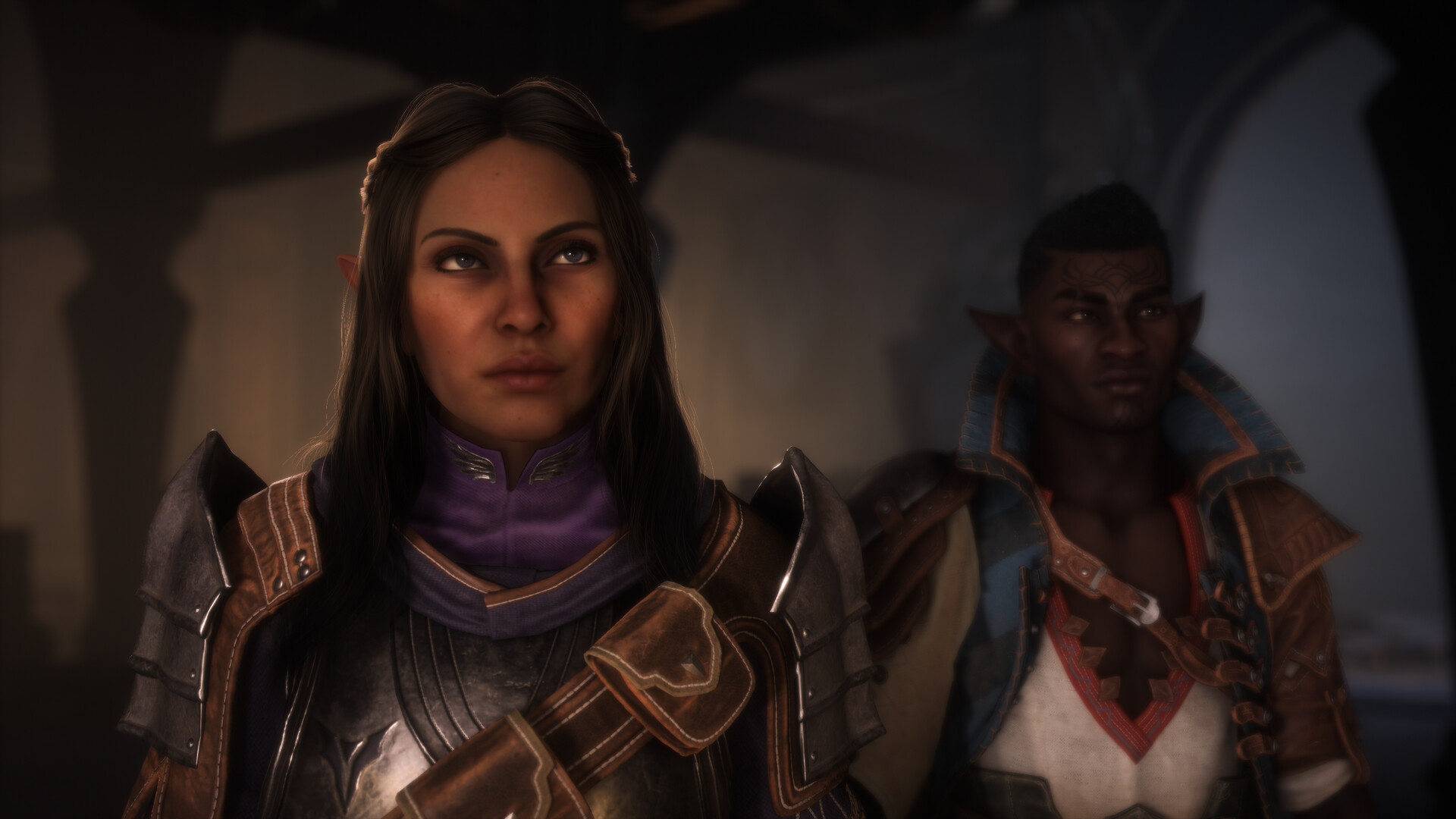
Before Anthem, before The Veilguard, there was Mass Effect: Andromeda. It launched in March 2017 and became infamous almost immediately, but not in the way a game wants to be famous. Broken facial animations spread across the internet within days. A companion's line, "my face is tired," became a meme before many players had finished the second act.
EA projected strong first-week sales. Andromeda underperformed those targets. The real damage followed: all planned single-player DLC was cancelled, including a story arc about the missing Quarian Ark that players had been expecting. BioWare Montreal, the studio that led development, was absorbed into EA Motive. The creative team was dispersed.
The cancellation of the DLC was described at the time as a defining moment, an admission that something had gone badly wrong. Casey Hudson called it a moment for BioWare to refocus. That refocus became Anthem. You know how that ended.
Anthem: The Actual Inflection Point
If Andromeda was the warning, Anthem was the collapse.
Anthem launched in February 2019 after years of troubled development. It was a live-service looter shooter built by a studio whose entire identity was in crafting rich, choice-driven RPG worlds where your decisions had consequences and your companions had lives. It sold around five million copies. That sounds healthy until you understand that EA had projected significantly higher, the player base collapsed almost immediately post-launch, and EA spent most of 2019 publicly committed to fixing it while visibly not knowing how.
In July 2021, EA announced that Anthem Next, the major overhaul that was supposed to save it, was cancelled. The whole project was shelved. EA kept the servers running for another four years through inertia, and then shut them down in January 2026. What remained of Anthem in its final weeks was a skeleton crew of players saying goodbye to a game that had never become what it was supposed to be.
Anthem was a shit show from launch to shutdown, and it cost BioWare something more important than sales numbers. It cost them time, goodwill, and most of the creative leads who had built the studio's reputation. Casey Hudson left. Mark Darrah left. Mac Walters left. The architects of Mass Effect and Dragon Age walked out the door while the studio was in crisis, and the institutional knowledge of what made BioWare games work went with them.
By the time Dragon Age: The Veilguard shipped in 2024, the team building it was largely different from the team that had built the games people were measuring it against. That is not a criticism of the people who stayed or who joined. It is a structural reality about what studios lose when they lose their creative leadership in the middle of a crisis.
A long-form investigation into Anthem's development, published by Jason Schreier at Kotaku in 2019, described a studio in genuine disarray: years of undefined direction, a creative vision that nobody could articulate, and a development process that produced the game's actual content in a panicked sprint near the end with nowhere near enough time. The article was five years old by the time the servers shut down, and it still reads like the most accurate explanation of what happened to BioWare after 2017.
The Veilguard Was Not Enough
Dragon Age: The Veilguard is a complicated game to write about in this context, because it is not bad.
Its launch numbers were the best BioWare had ever achieved on Steam. Reviews called it solid, sometimes good, occasionally better than that. Its Mixed score on Steam reflects a fanbase divided on how much the game felt like a Dragon Age game, not a uniform verdict that it was broken. The 69% positive figure contains a lot of people who finished it and liked it, alongside people who felt it was not what they had hoped for from the franchise.
But it missed EA's financial targets. That is the fact that matters here. Breaking BioWare's Steam record was not the same as meeting EA's expectations for a major franchise release from a studio that had already cost them heavily through Anthem's failure.
The Budget That Broke the Math
EA never confirmed Dragon Age: The Veilguard's development cost. Community and analyst estimates put the figure at $150 to $250 million for production, with marketing adding another $50 to $70 million on top. Call it $200 million as a conservative floor.
EA reported approximately 1.5 million players in the first two months. That number includes EA Play Pro subscribers who accessed the game through their subscription, not just people who bought it outright, so actual unit sales were lower. EA's own statement was that the game missed targets by "nearly 50 percent," implying an expected sales figure closer to three million units.
The math is brutal. At a $70 retail price, EA nets roughly $35 per copy after platform fees. At 1.5 million units, that is around $52 million in gross revenue against a $200 million investment. Dragon Age: Origins had moved 3.2 million copies in its first three months. Inquisition sold more than 12 million over its lifetime. The Veilguard was the lowest-performing mainline Dragon Age entry, at a moment when production costs had multiplied many times over.
The Score Nobody Believed
The clearest signal that something had gone wrong came before the game even shipped.
The official reveal trailer accumulated approximately 140,000 dislikes against 29,000 likes on YouTube. Five dislikes for every like, six months before release, from the exact audience the game needed to reach. The comments were overwhelmingly negative. Fans compared the visual direction to Fortnite and Overwatch. In a post-trailer poll of over a thousand readers by Push Square, 63% said the reveal "sucked."
When the game launched, the gap between professional critics and actual players became one of the most striking splits in recent gaming history. Dragon Age: The Veilguard scored 83 out of 100 on Metacritic from professional reviewers. The user score on the same platform landed at 3.8 out of 10. That is not a disagreement. That is critics and the game's own audience describing two entirely different products.
Critics and the core Dragon Age audience had different priorities. Critics praised the presentation. Players who came through Dragon Age: Origins noted the tactical depth was gone, the companion system was simplified, and the narrative choices felt lighter than the franchise had ever offered. The in-game scene where a companion corrects the player for misgendering Taash is an example of what people meant when they said the studio's priorities had shifted. That scene exists to guide the player through pronoun etiquette. It does not develop a character. It does not advance the story. It addresses the audience directly on a social issue, inside a cutscene, in a fantasy RPG.
Here is where the argument matters, and where it is easy to get wrong. The problem with Dragon Age: The Veilguard is not that it has a non-binary character. Baldur's Gate 3 won Game of the Year in 2023. Critics have described it as the most openly queer AAA game ever released, with diverse companions, fluid romance options, and representation woven through its entire cast. It also has a Metacritic score in the mid-90s and an audience score to match. Larian Studios did not set out to make a game about representation. They set out to make the best RPG ever built, and the representation worked because the foundation did.
The Veilguard did not fail commercially because it had Taash. It failed because a significant part of its audience felt the messaging had become louder than the craft. Players are not hostile to representation. They are hostile to being lectured inside a game they paid to play. The five-to-one dislike ratio on the reveal trailer told you what was coming. By the time the reviews landed, both the 83 from critics and the 3.8 from players were exactly what you would have predicted.
Mass Effect 5 Was Already a Ghost
I want to be honest about Mass Effect 5, because I think the closure announcement risks obscuring something important: Mass Effect 5 was not really a game yet.
Development had been in early stages for some time. It had not been shown publicly in any meaningful form. The creative team who would have been best positioned to make it had largely already left. What EA cancelled on October 21 was a project that existed primarily as internal planning documents and the residual hopes of a studio that knew it needed a major hit to justify its continued existence.
That does not make the cancellation hurt less. It does not mean Mass Effect 5 would have been bad. But it is worth being clear that the announcement was not: "here is a nearly-finished Mass Effect sequel, and we are shelving it." It was: "here is an early-development project that we cannot afford to resource through to completion."
The hope would have been that a new Mass Effect, whatever form it took, could have done for the franchise what the Legendary Edition did for it in 2021: remind a wide audience what was there, what was possible, what a BioWare game at its best felt like. That is not going to happen now.
What EA Is Building Instead
EA's direction from here is not ambiguous.
Sports titles. Apex Legends. Battlefield. Star Wars. Iron Man. These are all live-service-adjacent or franchise-adjacent properties. The common thread is predictable recurring revenue and established audiences who already have a routine around the product. EA is not building for the kind of player who spends sixty hours making choices in a Dragon Age game and cares about what those choices mean to the story. They are building for the player who opens the same game every day, plays their daily challenges, and makes occasional small purchases.
That is not a moral judgment. It is a business strategy, and for EA's shareholders it almost certainly makes more sense than funding a studio built around fifty-hour single-player RPGs with multiple endings. The studio structure for that kind of game, the iteration time, the writing and world-building overhead, it does not fit cleanly into a portfolio optimised for live service retention.
It is fucking depressing to say it in those terms, but it is accurate. EA is not making a mistake by this metric. They are making a choice, and the choice has been visible in their resource allocation for years. The announcement on October 21 just made it impossible to deny.
Thirty-One Years
BioWare made games about choice and consequence. About companions whose survival was not guaranteed. About stories that took seriously the idea that what you did in the game world reflected something about who you were as a player. Baldur's Gate. Neverwinter Nights. Knights of the Old Republic. Jade Empire. The Mass Effect trilogy. Dragon Age: Origins. Those games built the vocabulary for a genre, and that genre shaped what a generation of players believed single-player games could be.
The studio closed on October 21, 2026, thirty-one years after it was founded. EA acquired it in 2007 and spent the following two decades making decisions that turned one of the most creatively distinctive studios in games into something that could not survive one franchise miss. The acquisition price was around $860 million. For context, Anthem alone consumed years of the studio's output and produced a game that no longer exists. The accounting on this particular purchase did not work out for anyone.
If you have not played the original Mass Effect trilogy and you want to understand what people are grieving today, Mass Effect Legendary Edition is $59.99 on Steam. The complete trilogy, remastered, with almost all the DLC included. 91% positive reviews across well over 50,000 Steam opinions. It is the best preserved record of what BioWare was when it was most itself.
The studio is gone. The games are still there.

Sources and correction
EA announced the closure and portfolio changes in Building EA's Next Chapter, published on 21 October 2026.
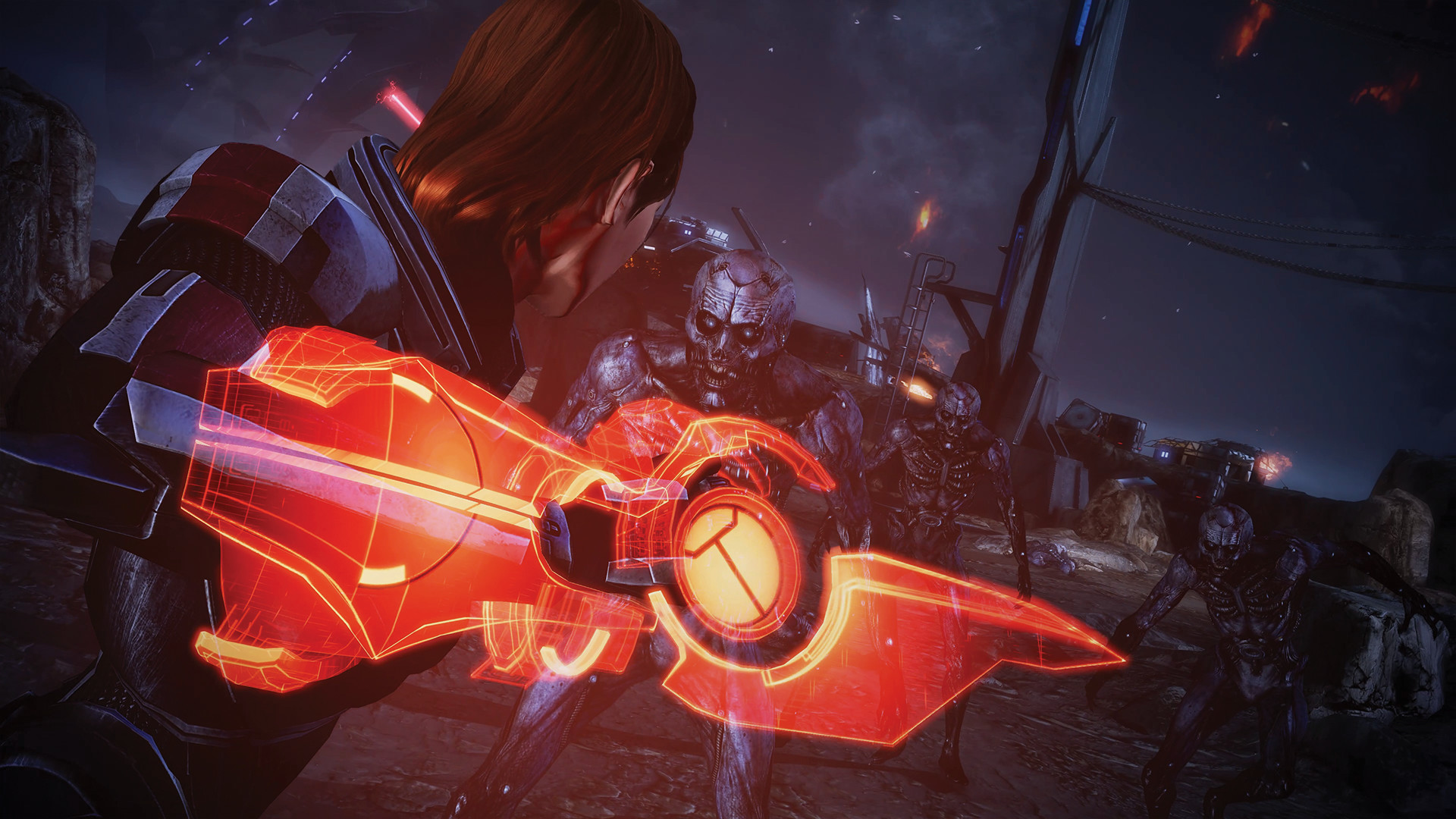
Corrected 26 October 2026: an image previously labelled Anthem showed Battlefield 3. It has been replaced with a correctly identified Mass Effect Legendary Edition publisher screenshot.