19 Horror Picks Under $10: What Our Steam Data Shows
A dated sample of 50 horror-related games reveals 19 paid picks below $10. We separate discounts, regular prices and the limits of review percentages.

TL;DR
- 19 of 48 priced games in the fixed sample cost less than $10 on 26 October.
- 11 of those under-$10 games were discounted at collection time.
- This first observation establishes a baseline, not historical lows or price trends.
A budget filter can change your shortlist more than a ranking does. In our first dated observation of 50 horror-related games, 19 paid games cost less than $10 on the US Steam store. 11 of those were discounted at the time.
That last distinction matters. A game temporarily below $10 is a different buying proposition from one whose regular price is already below the limit. We have separated the two so you can see which opportunities depend on timing.
This is a cross-section of GamerEmpire's existing recommendations, collected on 26 October 2026. It is not a claim to have found every cheap horror game, and it does not establish historical lows. The underlying observations are available as JSON.
The under-$10 paid games in our sample
The threshold is strictly less than $10, using the observed current price in integer US cents. Free downloads are excluded from this table because zero entry price can describe very different amounts of accessible content.
| Game | Regular price | Observed price | Discount | All-time reviews | Positive share |
|---|---|---|---|---|---|
| Amnesia: The Dark Descent | $19.99 | $3.99 | 80% | 35,880 | 94.6% |
| Amnesia: The Bunker | $24.99 | $4.99 | 80% | 12,874 | 93.3% |
| Five Nights at Freddy's | $4.99 | $4.99 | 0% | 59,712 | 93.8% |
| Amnesia: Rebirth | $29.99 | $5.99 | 80% | 9,405 | 77.1% |
| Mundaun | $19.99 | $5.99 | 70% | 1,528 | 93.3% |
| SOMA | $29.99 | $5.99 | 80% | 53,456 | 95.8% |
| Mouthwashing | $12.99 | $7.79 | 40% | 39,247 | 95.2% |
| Content Warning | $7.99 | $7.99 | 0% | 164,146 | 93.8% |
| Dead by Daylight | $19.99 | $7.99 | 60% | 941,773 | 78.2% |
| Fear & Hunger | $7.99 | $7.99 | 0% | 23,104 | 94.1% |
| Iron Lung | $7.99 | $7.99 | 0% | 11,375 | 91.8% |
| Resident Evil 7 Biohazard | $19.99 | $7.99 | 60% | 128,952 | 95.3% |
| Still Wakes the Deep | $34.99 | $8.74 | 75% | 13,541 | 87.4% |
| Little Nightmares II | $29.99 | $9.89 | 67% | 59,064 | 92.9% |
| F.E.A.R. | $9.99 | $9.99 | 0% | 19,738 | 93.7% |
| Lethal Company | $9.99 | $9.99 | 0% | 511,540 | 96.9% |
| R.E.P.O. | $9.99 | $9.99 | 0% | 430,380 | 96.0% |
| Resident Evil 4 | $39.99 | $9.99 | 75% | 285,034 | 97.4% |
| The Backrooms 1998 - Found Footage Survival Horror Game | $9.99 | $9.99 | 0% | 841 | 83.4% |
The sample contained 48 games with a USD price and 2 free-download listings. Of the paid games, 8 had a regular price below $10. The larger observed shortlist therefore reflects current discounts as well as permanently cheaper entries.
Prices were collected around 03:30 UTC on 26 October. Steam's Scream event had not started at that point, so these observations should not be described as its opening discounts. Use the sale tracker to check the event schedule and more recent prices.
A small price can hide very different commitments
Amnesia: The Dark Descent was $3.99 in this snapshot, down from $19.99. Amnesia: The Bunker was $4.99, down from $24.99. Both bring vulnerability into the centre of their horror, but the newer game's compact setting and resource pressure are a different proposition from the older game's castle exploration.
A discount percentage alone cannot tell you which to buy. If you want to start with the design that made Frictional's reputation, use our Amnesia analysis. If you prefer the Bunker's setting and structure, spending an extra dollar in this snapshot may be the more relevant decision.
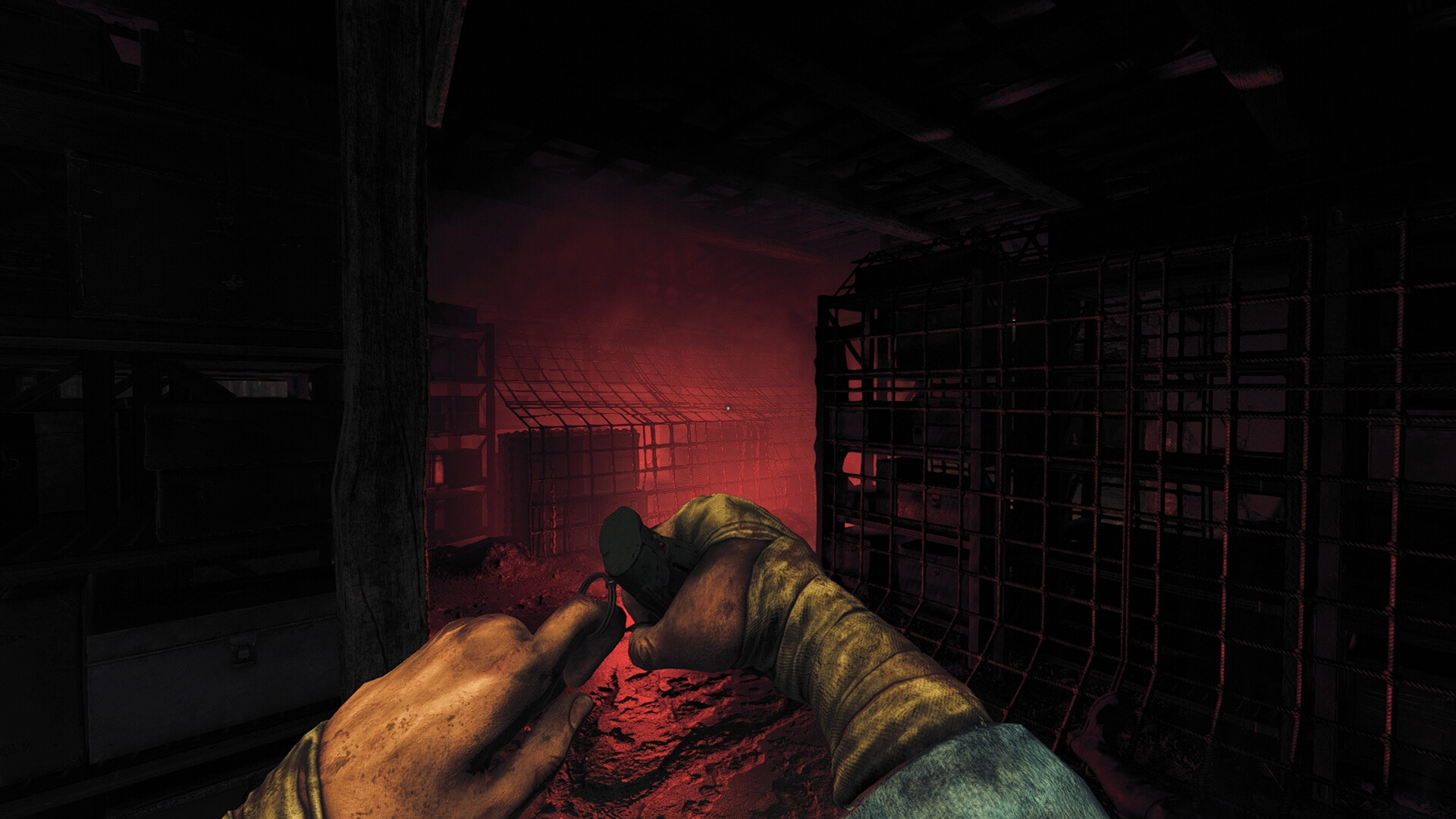
SOMA and Mundaun both appeared at $5.99. SOMA's recorded regular price was $29.99; Mundaun's was $19.99. The larger percentage reduction on SOMA does not make it automatically more suitable: its philosophical science-fiction story and Mundaun's hand-drawn folk horror appeal for different reasons.
The data is useful because it brings the purchase options into view. The editorial work is deciding what kind of fear, pace and setting you actually want. Our main horror guide gives those decisions a broader context.
Review percentages need a denominator
The table includes both the positive share and the number of reviews. A percentage without its denominator hides how much evidence sits behind it. It also encourages a precision that a purchasing decision rarely deserves.
Mundaun had 1,528 reviews in this observation, with 93.3% positive. Resident Evil 4 had 285,034, with 97.4% positive. Those figures describe different bodies of feedback; neither tells you that the two games are interchangeable or that every reader will prefer the one with the higher percentage.

These are all-time, all-language aggregates covering the selected purchase types, with off-topic review activity filtered according to the API query. They are not English-only opinions, a recent-patch verdict or the same statistic as the storefront's default recent-review panel.
A change between future snapshots would deserve investigation, but it would not prove that a patch caused the change. Review deletions, moderation, audience changes and different accumulation rates can also affect the totals. We retain the query definition alongside the numbers so later comparisons can use the same basis.
Cheap solo games and cheap group games are different budgets
R.E.P.O. and Lethal Company each cost $9.99 in the snapshot. Both qualify for a single-copy under-$10 filter. Neither gives four new players access for $9.99 total.
Content Warning and Dead by Daylight each appeared at $7.99, but the required group structure and optional spending differ. Dead by Daylight's price was discounted; Content Warning's matched its recorded regular price.
The four-player cost comparison does the multiplication and explains the party-size caveats. It is a useful companion to this table because the cheapest copy can still produce the wrong purchase for a group.
For solo buyers, there is a different caution. Fear & Hunger and Iron Lung were both $7.99, but one price cannot express their differences in length, complexity, subject matter or tolerance for frustration. Read the individual recommendation before using price as a deciding factor.
Why free downloads sit outside the comparison
Two listings in this 50-game cohort returned a free-download status without a USD price: Doki Doki Literature Club and Poppy Playtime. We did not turn missing price objects into $0 paid-game rows.
The distinction protects against a common error in broad free-games lists. Free entry does not necessarily mean every chapter, expansion or mode is included. The store page needs a content-access check, separately from the numeric price field.
Our free Steam games guide separates a free base offering from optional purchases and paid follow-on content. That editorial classification is something an API response alone cannot responsibly replace.
A first observation is the beginning of history
This collection gives us a dated baseline. It cannot show how long these discounts have lasted, whether a game has ever been cheaper, or whether the current price is unusual for the time of year.
Later observations will make some comparisons possible. For example, we can count how often a game appears below the same threshold within our recorded period, or compare its price at two collection times. Those claims must stay bounded by the days we actually observed; missing days cannot be filled with invented prices.
That is why the original data file remains unchanged. Publishing only a latest-price file would erase the evidence behind this article as soon as the next collection ran.
Methods and limits
The fixed cohort contains 50 games drawn from GamerEmpire's existing horror coverage. It combines the 34 games in the earlier main guide, six co-op selections and ten additional selections from the previous indie guide. The cohort file records the app identities and inclusion rules.
We requested US store details and all-time review aggregates using Steam's public interfaces. Each store and review result has its own observation time. A failed request is recorded as unavailable rather than silently interpreted as zero, and incomplete collections do not replace the latest complete published dataset.
The current-price threshold uses the base app's final USD price. It does not compare bundles, other retailers, subscription access, regional exchange rates or checkout taxes. A rounded positive share is calculated from the retained positive and total review counts.
This is research and commentary, not a fresh playthrough of 50 games. The methods page and fixed source snapshot explain how to reproduce the arithmetic. For an actual purchase, use the recommendation to choose a game and its official store page to confirm the current terms.