Hades Is Not a Roguelike and Calling It One Misses What Makes It Special
Hades is the most acclaimed roguelike of the last decade. It is also not really a roguelike in any meaningful sense. The distinction matters because it explains why nothing else can replicate what Supergiant built.

TL;DR
- The most acclaimed 'roguelike' of the decade isn't really a roguelike -- it's a narrative game using run-based structure as delivery.
- The distinction matters: it explains why nothing else has replicated what Supergiant actually built.
- This mislabeling has had real negative consequences for what the genre that followed it tried to copy.
I have a specific and persistent frustration with how Hades is described in gaming discourse. The description is wrong. It is wrong in a way that has had real negative consequences for the genre that followed it.
Hades is universally categorised as a roguelike. Steam lists it in the roguelike section. Every review describes it as one. It won Game of the Year partly on the strength of being described as the best roguelike ever made. In the years since, dozens of studios have announced games "inspired by Hades" in the roguelike genre.
Hades is not a roguelike. It is a narrative game that uses roguelite mechanics as a delivery system for story. This sounds like a pedantic distinction. It is not. It is the key to understanding why Hades is exceptional, why none of its imitators have produced anything close to the same experience, and what would actually be required to follow it.
What Roguelikes Actually Require
The original Rogue from 1980, the game that gave the genre its name, had procedurally generated levels, permadeath, turn-based gameplay, and essentially no narrative. Each run was self-contained. You lived or died. The game had no persistent memory of what came before.
"Roguelite" emerged to describe games borrowing some of these properties, primarily procedural generation and run-based structure, without the complete specification. Hades is a roguelite by this definition: runs are procedurally arranged, death returns you to start, power-ups are randomised.
But even calling it a roguelite fundamentally misrepresents what the game is. The roguelite mechanics are not the experience. They are the delivery mechanism for an experience that is something else entirely.
What Hades Actually Is
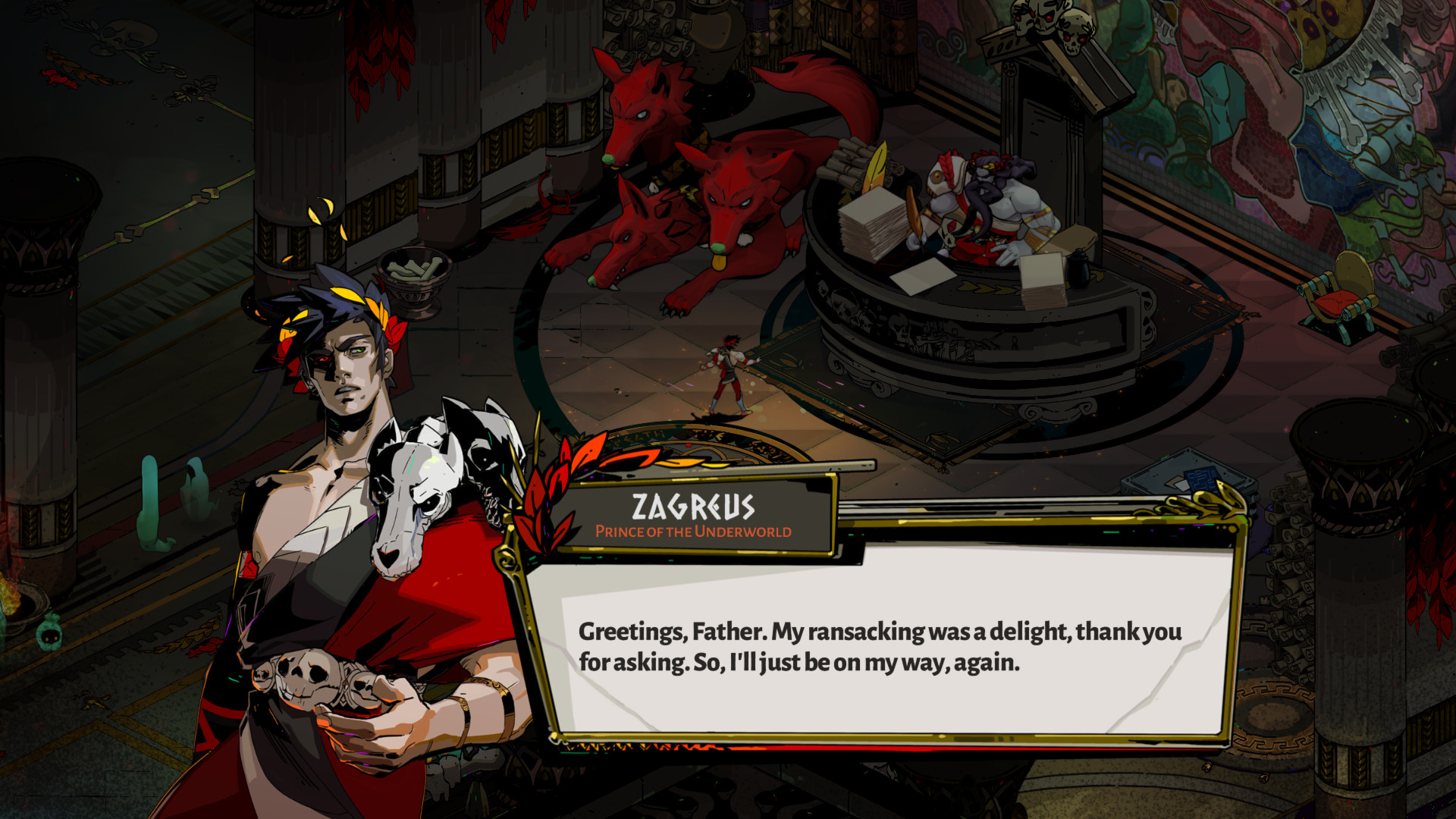
Hades is a story. It has a beginning, a development, and an ending. It has major narrative beats that unlock through specific runs. It has character relationships that develop incrementally across many sessions. It has information that is withheld and then revealed according to a structure. The narrative architecture is that of a novel, not a game designed around infinite replayability.
Every time you die, you return to the House of Hades and conversations happen. Characters respond to where you are in the story. Zagreus's relationships with Nyx, Achilles, Hypnos, and Thanatos develop in ways that require many returns to fully experience. The narrative system is built on the explicit expectation that players will fail repeatedly, because failure is the primary mechanism through which story is delivered.
This is a fundamental structural inversion of the traditional roguelite. In Slay the Spire or Dead Cells, failure ends the run and you start fresh. The run is the experience: it is complete in itself. There is no persistent memory of previous runs in the narrative.
In Hades, the run is a vehicle. The destination is the story. Failing is not just acceptable: it is architecturally required. You cannot reach all the story content without failing many times. The design assumes and depends on failure as its story delivery mechanism.
That is not a roguelike. That is a narrative game using run-based structure as its storytelling engine.
Why the Mislabelling Actually Matters
I want to be clear that this is not an argument about genre taxonomy for its own sake. The mislabelling has produced specific and measurable harm to the genre.
When Hades was called a roguelike and won Game of the Year, every studio working on narrative games and every studio working on roguelites looked at the commercial result and drew the same conclusion: there is a market for narrative roguelites. Both groups then announced narrative roguelites. What they produced, almost without exception, were either narrative games with badly bolted-on roguelite mechanics, or roguelites with poorly-integrated narrative that did not justify the structural choice.
Neither produced what Hades produced, because what Hades produced is a narrative game. The roguelite mechanics are in service of the story. The story is not in service of the roguelite mechanics. Studios that built toward the roguelite first and integrated narrative afterward got this backwards and their games reflect it.
The correct lesson from Hades's success was: there is a market for a story game that uses death-and-return as a narrative mechanism rather than as a gameplay challenge. That is a lesson about narrative structure, not about game genre. It would have sent studios toward investing in writing rather than toward investing in procedural systems with dialogue slapped on top. The mislabelling sent them toward the wrong investment. The results speak for themselves.
I find this genuinely infuriating because the games that would have been made with the correct lesson would have been more interesting than what was actually made. The roguelite genre got flooded with dialogue systems. The narrative game genre did not get flooded with experiments in run-based storytelling. Both are worse off for it.
What would a genuine successor to Hades look like? Not a game that looks like Hades mechanically, but a game that understood what Hades was doing structurally. It would be a game where the run-based structure serves a specific narrative purpose that could not be achieved by a conventional linear structure. The deaths would communicate something about the story rather than simply being the cost of learning the game. The characters would have genuine interiority rather than being dialogue systems dressed up as people.
I have not played that game yet. I do not think it has been made. The games marketed as successors to Hades have all, to varying degrees, produced the roguelite first and the narrative second, and the results confirm that the narrative cannot carry the weight the structure requires when it has not been built as the primary purpose of the design.
The lesson the industry needed to draw was about narrative games. The lesson it drew was about roguelites. That is a failure of genre criticism with real creative consequences, and understanding it correctly is how the next genuinely exceptional game in this space gets made.
The Writing Is the Product
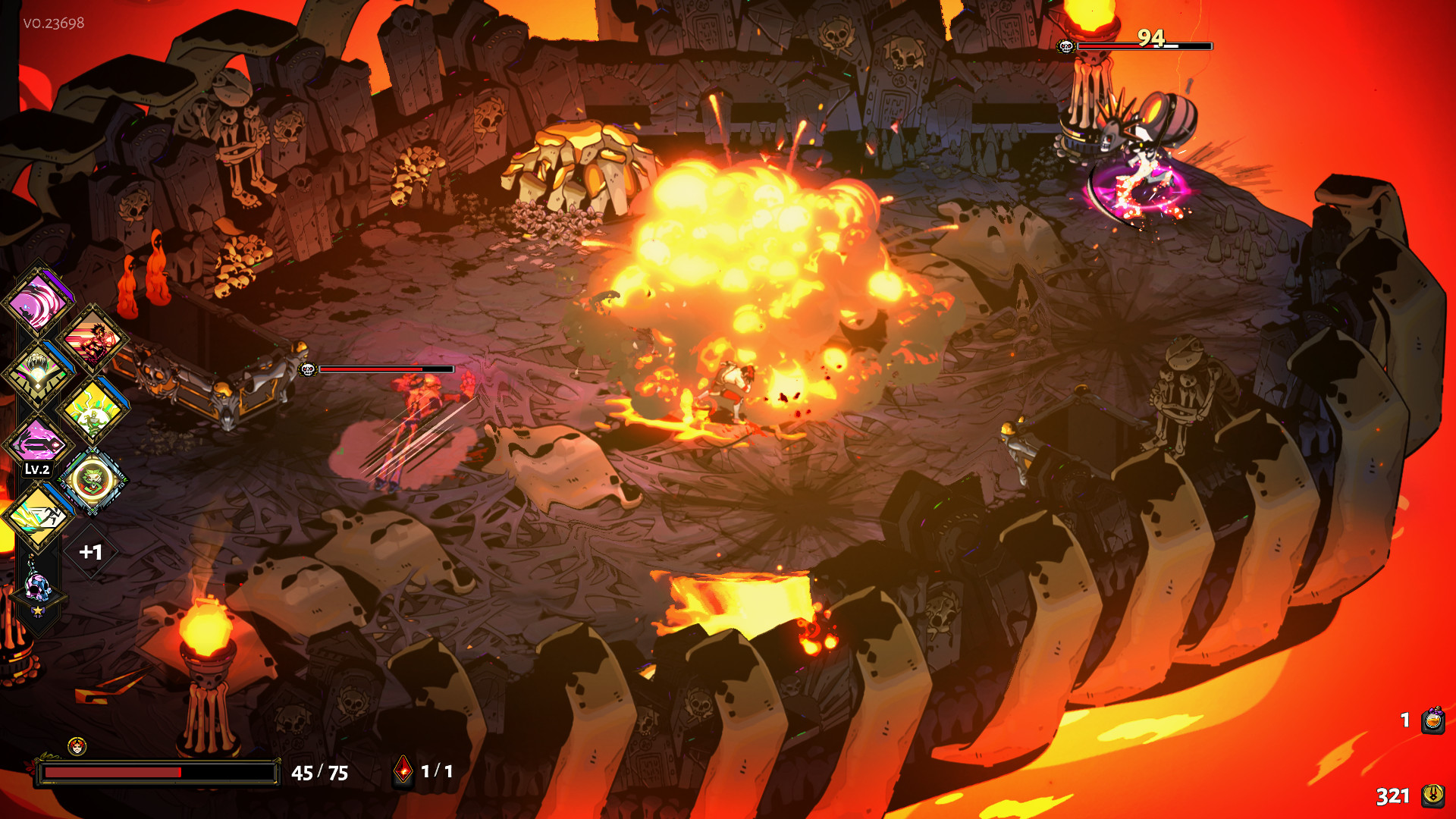
Every studio that looked at Hades's commercial success and decided to make a "narrative roguelite" has misidentified what they are trying to replicate.
The surface features are visible: conversations between runs, relationship mechanics that develop over time, NPCs that acknowledge deaths and run counts. Dozens of games have implemented all of these since 2020. None have produced the Hades experience.
The reason is that the surface features are not the source of the experience. Supergiant Games wrote tens of thousands of unique lines of dialogue for Hades. Every character has responses calibrated to your current story position, what happened in your last run, your total run count, what choices you made in previous conversations, and what you are currently attempting to do. Players were still discovering unique voice lines two years after the game launched.
This is not a mechanic. It is a writing commitment that required years of work and only pays off if the writing is exceptional enough to sustain player interest across 50 to 100 runs. Supergiant's writing is that good. Almost nobody else's writing is at the scale required.
The studios that added dialogue between runs without Supergiant's writing depth or worldbuilding found the mechanic did not deliver. Because the mechanic does not deliver the experience. The writing does. The mechanic is the delivery system.
The specific craft here is worth naming. Supergiant wrote Hades as an ensemble story. Every character in the House of Hades has their own arc, their own opinions about Zagreus's attempt to escape, their own relationship with the broader mythological context. Achilles's relationship with Patroclus is a throughline. Thanatos has genuine opinions about what Zagreus is doing. The characters feel like they exist independently of the player's needs. That quality cannot be manufactured with a dialogue system. It requires the writing to actually be about the characters.
The other craft element that is almost never discussed: Supergiant managed the pacing of narrative delivery across approximately 50-100 runs per player. That is an unusual writing challenge. The information has to be interesting on the twentieth run as well as the fifth. Characters cannot become repetitive before the player has finished the story. The run count at which major revelations arrive has to be calibrated against typical player behaviour. This requires a kind of writing project management that has almost no precedent in the medium, and executing it well requires not just good writing but good structural thinking about when information lands and how players progress through content.
Supergiant got this right. Most of the games that followed did not even attempt to engage with it, because they were not thinking about narrative game design. They were thinking about roguelite systems with dialogue bolted on. The difference is everything.
One Honest Criticism
Hades is not a perfect game. I want to say that clearly because the praise that attaches to it can feel totalising.
The mid-game difficulty plateau, the period after you understand the boon system but before your builds are reliably clicking, can feel unrewarding. Some runs feel lost to variance before you have had meaningful agency over the outcome: the boons you needed simply did not appear, and you knew by the second chamber that the run was over.
I have had sessions in Hades where I failed five runs in a row in ways that felt externally imposed rather than instructive. The one-more-run compulsion pulled me back anyway, which is its own testament to how well the game is designed. But the legitimate complaint that the game can feel unfair exists and deserves acknowledgement.
Hades II
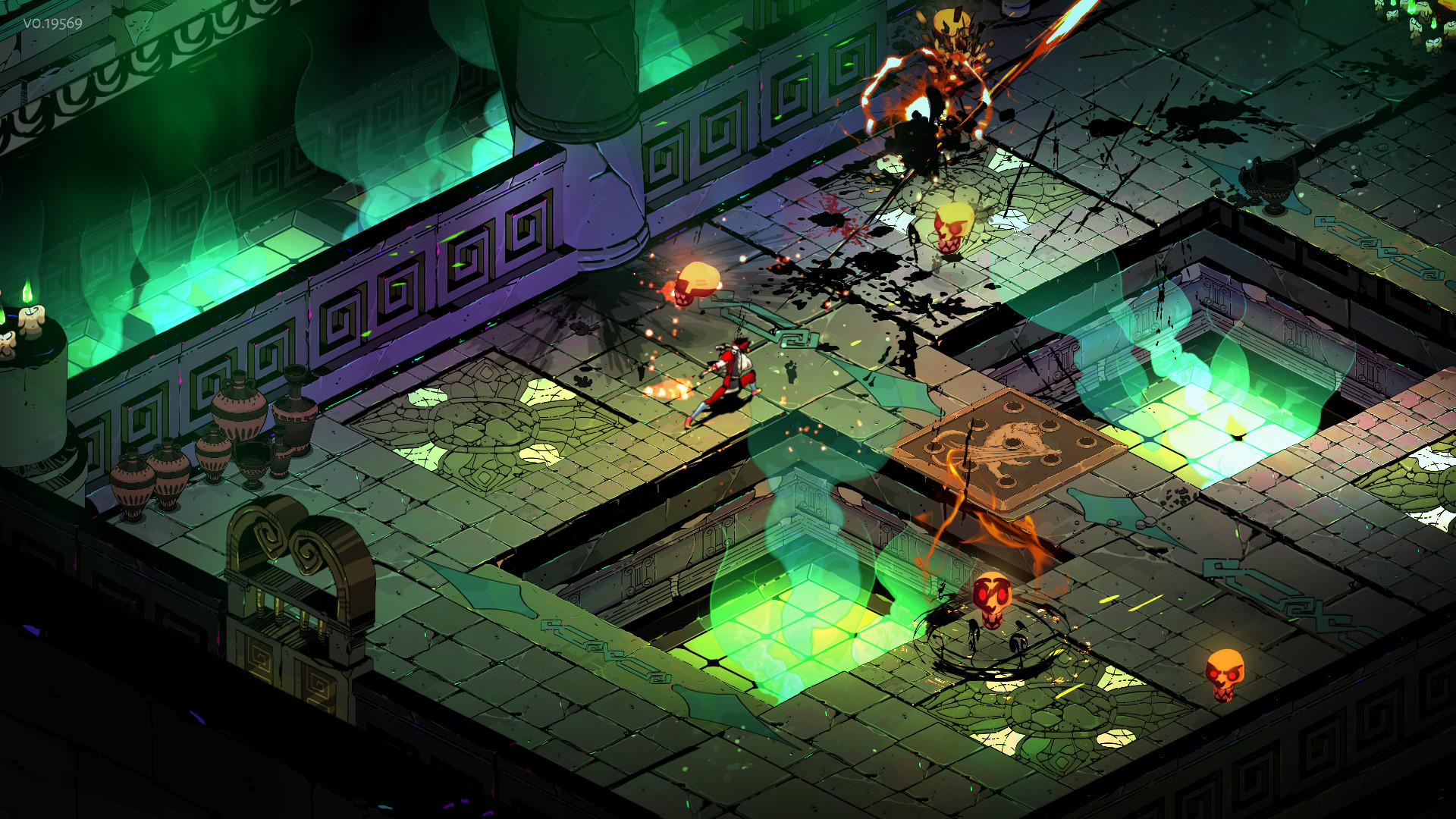
Hades II is in Early Access and already, demonstrably, better than most finished games. New protagonist. Expanded combat systems. New setting. The same fundamental design philosophy, a narrative game using run-based structure as its delivery mechanism, applied with everything Supergiant learned from the original.
Supergiant did not look at the labels the industry applied to Hades and try to optimise for those. They made another story game using the structural approach they knew worked. That is what following your own work looks like, and it is noticeably different from what the imitators did. The imitators looked at Hades and saw a roguelite with dialogue systems. Supergiant looked at Hades and saw a narrative game that worked, and made another narrative game. The difference between those two readings is the difference between everything that has been released as a Hades successor and what a genuine successor would actually look like.
The games that will genuinely follow Hades in the meaningful sense will be story games that use run-based structure as a storytelling tool. Not roguelites that added dialogue between runs and called it narrative integration. The distinction matters. The results of getting it wrong are visible in five years of games that almost captured what Supergiant built and consistently failed to understand why.
Hades is available on PC, Switch, PS4/5, and Xbox. $24.99. The best narrative game of the last decade that everyone calls a roguelike. Play it. Play Hades II while you wait for its full release. They are the same kind of game.
Buy on Steam | Hades II Early Access | Supergiant Games
Game at a glance
| Detail | Answer |
|---|---|
| Genre | Roguelike |
| Typical length | 20-90 hrs |
| Difficulty | Moderate |
| Play mode | Single player |
| Developer | Supergiant Games |