How Mixtape Got a 10/10 With Only 285 Players - It's not even a game!
IGN gave Mixtape a 10/10. 285 people were playing it three weeks later. Press kit nobody disclosed, the review mechanism, and the Ellison connection.

TL;DR
- IGN gave Mixtape a perfect 10/10 -- an outlet that awards that score fewer than 15 times a decade.
- Three weeks later, 285 people were actually playing it.
- The investigation: the press kit, the review mechanism, and the Annapurna/Ellison funding connection nobody disclosed.
On May 7, 2026, Mixtape launched to what looked like a standing ovation. IGN, a publication that awards a perfect score to fewer than fifteen games per decade, called it "a musical delight from start to finish" and gave it a 10 out of 10. Metacritic aggregated 36 critics and found zero negative reviews. The score settled at 86. On Steam, the first week of purchase-verified reviews landed at 88.7% positive.
By every conventional measure, this was a triumphant launch.
Three weeks later, 285 people were playing it. I checked the number twice.
Not 285,000. Not 2,850. Two hundred and eighty-five concurrent players, representing an 87% collapse from the launch peak of 2,245. That number sits next to an IGN 10/10. Next to zero negative reviews from 36 professional critics. Next to a press campaign that sent physical merchandise to journalists without a single disclosure in any major positive review. Next to a publisher owned by one of the wealthiest families in American media history, a family that now controls the social platform that amplified the game's viral marketing campaign, the broadcast infrastructure that shapes mainstream cultural taste, and a pending bid for one of the largest entertainment conglomerates on the planet.
The 285 is the truth. Everything else in this article is the machine that produced the scores in front of it.
Part One: What the Data Actually Shows
The Score Gap
Mixtape holds an 86 on Metacritic. Strong score. The 36 critics who contributed produced zero negative reviews. The lowest scores in the set are mid-70s. By the metrics gaming media uses to establish quality, this game arrived certified.
The Metacritic user score is 6.3 from 848 ratings. Of those, 51% positive, 15% mixed, 33% outright negative.
That is a 35-point gap between professional critics and users, one of the widest divides for any 2026 release.
// CHART 1 - CRITIC VS USER SCORE GAP
Before anyone reaches for "review bombing" as the explanation, look at that chart. Expedition 33 had everything going against it as a culture war target: French developer, diverse cast, emotional narrative, Game Pass release. It has a 9.5 user score from 24,500+ verified ratings, 94% positive, 3% negative.
When a game is genuinely great, the scores converge. The Mixtape gap is not noise.
The Steam Data Is More Complicated Than Either Side Admits
Steam requires purchase. Every review on Mixtape's page comes from someone who spent money or played through Game Pass. Metacritic user scores require no ownership whatsoever. These are not equivalent measurements.
With that distinction in place: 6,828 purchase-verified Steam reviews at 88.6% positive overall. That is a legitimately strong number. The people defending the game are right to point at it.
But the aggregate hides what the trajectory reveals.
// CHART 2 - ENGLISH STEAM SCORE BY WEEK
The game gets worse reviews as more people play it. The enthusiast wave reviewed at 88.7%. The broader audience arriving in Week 3 reviewed at 77.3%. At that trajectory, Mixtape is heading for "Mostly Positive" territory, propped above it only by the Week 1 volume from exactly the audience the IGN 10/10 selected.
Americans vs Everyone Else
From geographic analysis of 214 located English-language reviewers:
// CHART 3 - STEAM APPROVAL BY COUNTRY (ENGLISH REVIEWERS)
A 21-point gap between US and UK players within the same language, same platform. This is not review bombing. Mixtape is a game about growing up in 1990s small-town California, made by an Australian team in Melbourne, filtered through Annapurna's prestige indie aesthetic. British players, for whom this is romantic fantasy rather than contested lived experience, rate it 96.6% positive. American players, the audience the game explicitly addresses, rate it 75.9%.
The Australians made a version of American teenage life that lands better with people who never lived it.
The CCU Collapse and the Anomalous Review Ratio
Peak concurrent players at launch: 2,245. Current: 285. An 87% drop in under three weeks.
The review-to-CCU ratio is where this gets forensically interesting.
// CHART 4 - REVIEW-TO-PEAK-CCU RATIO COMPARISON
Nearly three reviews for every person playing at peak. That ratio is the statistical fingerprint of a specific mechanism. Understanding the mechanism is what the next section is for.
Part Two: How the Machine Works
The data above describes outcomes. This section describes the process. Each step is supported by independent research, platform documentation, and direct historical precedent. None of it requires active corruption. It requires only the absence of mechanisms designed to prevent it.
Step One: The Critic Score Drives the Purchase Decision
Games scoring 90 or above on Metacritic sell, on average, nearly 800,000 copies on Steam. Games scoring 80-90 sell approximately 250,000. At a $20 price point, that gap is the difference between a game that defines a studio and a game that closes one.
An 86 with a 10/10 from IGN does not just drive sales. It drives a specific sale from a specific buyer. The person who scrolls through Game Pass, sees "10/10 IGN" and boots it within 48 hours. The streamer who covers what is safe and validated. The casual player who trusts that the industry's largest review outlet does not give perfect scores carelessly.
The score is a permission structure. It tells buyers: this has been approved. When that structure is built on a system with gaps in its disclosure requirements, the buyers acting on it are making decisions with incomplete information.
Step Two: The Score Controls Steam's Algorithm
The critic score's impact does not end at the purchase. It shapes every downstream element of how a game is surfaced.
Steam uses review scores as a primary ranking signal. "Very Positive" games appear earlier in search results, land in curated feature lists, populate the "More Like This" panel on other games' store pages, and get priority consideration during seasonal sales. "Mixed" games are almost never picked for Steam features. The consequence: the critic score at launch starts a flywheel. Good score drives visibility drives purchases drives reviews maintains score drives more visibility. The IGN 10/10 is the key that starts the engine.
Step Three: Early Buyers Review at Higher Positive Rates, By Design
The people who buy a game in Week 1 following a 10/10 are not a neutral sample. They are enthusiasts. Early adopters. People who trusted the score enough to act immediately.
A peer-reviewed study in the Journal of Business Research found that Metacritic scores are positively associated with post-purchase playtime. People who bought because of strong critic scores engage with the game more generously. This is not dishonesty. It is selection bias: if you trusted the score enough to buy Day 1, you are already predisposed to find value in what you paid for. The critics selected the audience. The audience selected the reviews.
Step Four: The Review Ratio Is the Fingerprint
Mixtape's 2.9 review-to-CCU ratio is the shape of that first wave. A large enthusiast cohort bought a four-hour game, played it in one sitting, and reviewed it before the broader audience arrived.
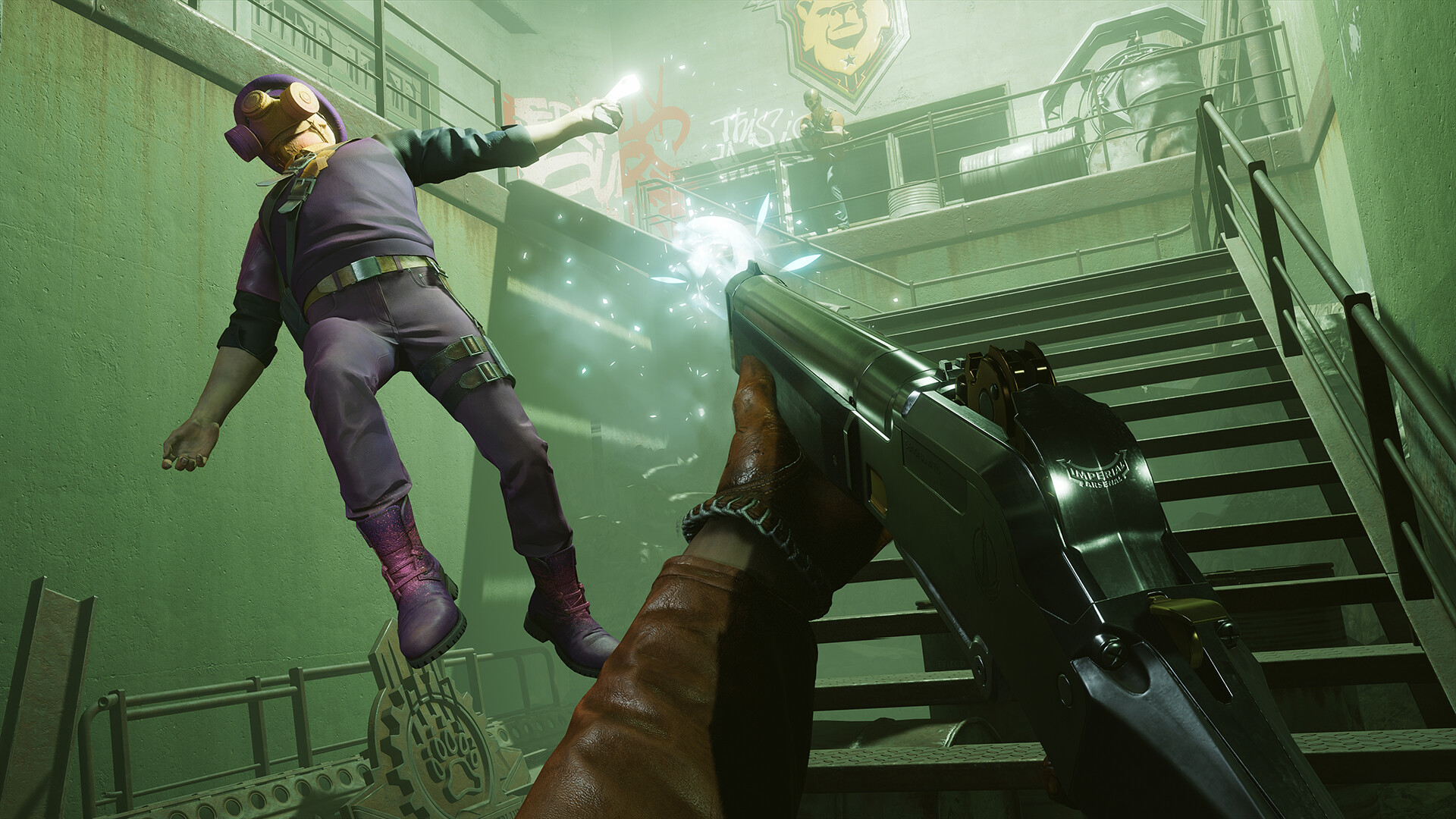
Deathloop is the documented prior example. It launched in 2021 with an 88 Metacritic score and strong early Steam reviews. The player score eventually collapsed to 5.0 as the audience broadened. Daily active players dropped from over 20,000 at launch to under 2,000 within weeks. The critic score got people in the door. It could not make them stay. Mixtape's launch week is Deathloop in miniature. Same fingerprint. Same mechanism. Same result.
Step Five: The One Number That Cannot Be Manufactured
285 concurrent players.
Concurrent counts cannot be submitted by people who have not played. They cannot be bombed down or enthusiast-boosted. They are the answer to one question: how many people, right now, chose to open Mixtape instead of anything else available to them?
The entire apparatus, the critic score, the press kit, the TikTok campaign, the Annapurna brand halo, the IGN 10/10, the Steam algorithmic placement, the enthusiast review spike, exists to drive a launch. And it worked. The machine did exactly what machines do.
What it cannot build is the thing that actually matters.
Part Three: The Press Kit Problem
What Annapurna Sent
Before a single review published, Annapurna sent physical packages to both press and influencers. Inside: KOSS Porta-Pro headphones at approximately $60 retail.

Not random swag. The exact item Stacey Rockford wears throughout the entire four-hour runtime. Central to the visual identity, the marketing imagery, the thematic premise. The reviewer who opens their package and puts on these headphones before they play is not a neutral observer. They have been invited into the protagonist's experience in a way that nobody who simply bought the game on Steam ever was.
This is sophisticated experiential marketing. It is also a material gift that the FTC's own guidance requires to be disclosed.
Almost nobody disclosed it.
One Outlet Mentioned It. In a Negative Review.
Of the major outlets reviewing Mixtape, exactly one mentioned the press kit.
Niche Gamer, in a negative review: "The 'reviewer gift pack' that Annapurna Interactive sent out to reviewers and influencers contained a replica of the headphones that Stacey wears: the KOSS Porta-Pro headphones." The mention was sarcastic. The score was low.
IGN: 10/10. No mention of receiving physical merchandise. GameSpot: 9/10. Nothing. GamesRadar. Game Informer. Every major positive review: complete silence. You can verify this yourself. Search any of the major positive reviews for "KOSS" or "headphones" or "press kit." You will find Niche Gamer and nothing else.
The Kotaku Article
Shortly after launch, Kotaku published a standalone piece headlined "Mixtape: Rock Out With the Same Headphones as Stacy Rockford for Less Than a Pair of AirPods." The article recommends readers buy KOSS Porta-Pro headphones to play Mixtape. It includes purchase links. It does not mention that Annapurna sent those exact headphones to press and influencers as part of the pre-launch review campaign.
A publication that received a gifted product subsequently published an article recommending readers spend money on that product without disclosing the prior relationship. The disclosure the FTC requires from a 22-year-old TikTok influencer posting about a $60 product is apparently not required from a major games publication doing exactly the same thing in a different format. That is a genuinely fucked-up standard to operate on, and I'm tired of pretending otherwise.
The History and the One Precedent
Physical press kit gifting has a long history in gaming. EA sent journalists a Godfather II press kit in 2009 containing, among other items, actual brass knuckles, which are illegal in several US states. Capcom produced a Resident Evil 6 Japan-exclusive set including a leather jacket at approximately $730, sent to some press. The practice is standard. What is also standard, apparently, is not disclosing it.
There is exactly one instance of meaningful regulatory action against undisclosed gaming PR. In 2016, Warner Bros. settled FTC charges over Middle Earth: Shadow of Mordor, having paid influencers including PewDiePie thousands of dollars to post positive content without adequate disclosure. Under the settlement, Warner Bros. was barred from misrepresenting sponsored content as independent opinion.
The Mixtape situation differs in one way: the FTC action targeted cash payments. Annapurna sent merchandise. That creates a regulatory grey zone the games journalism industry has learned to operate comfortably within.
Kotaku Australia's public ethics policy: "staff may accept gifts, we only do so without guaranteeing coverage." No disclosure requirement. No mention of what happens when you write enthusiastically about the product you received. That is the gap. It is not hidden. It is policy.
Part Four: The Annapurna Halo
Genuine Classics Built the Conditions
Nothing in this article should be read as dismissing Annapurna Interactive's real achievements.

I never got around to playing Outer Wilds. It has been on the list for six years. What I can tell you is that 95% positive from 73,000 Steam reviews is not a manufactured number, and the BAFTA for Best Game in 2019 was not handed out by people who received headphones in the post. What Remains of Edith Finch won the same award in 2017. Stray and Cocoon earned every score they received. These games built the halo honestly, through the quality of the work. The problem is not that the halo exists. The problem is what it does to games that have not earned it.
The Pattern Predates Mixtape
Twelve Minutes launched in 2021 with a 79 Metacritic score and a 6.6 user score: 46% positive users, 34% outright negative. The Artful Escape was directed by Johnny Galvatron, the same director as Mixtape. Also published by Annapurna. Also received strong critical reviews. Also had mixed user reception.
Critics trained by a decade of genuine classics extend generosity to weaker Annapurna entries without recalibrating. Natural consequence of consistent quality. Structural problem when the quality stops being consistent and the generosity doesn't.
The Mass Resignation Nobody Remembered
In September 2024, every member of Annapurna Interactive's 25-person staff resigned simultaneously.
The resignation followed failed negotiations to spin the games division off as an independent company. Megan Ellison refused. The people who built the press relationships, curated the BAFTA-winning slate, and maintained the brand identity that made "if it's published by Annapurna it's a guaranteed banger" feel credible: all of them left. Simultaneously. Eighteen months before Mixtape launched.
The new team, led by Hector Sanchez from Epic Games, managed the Mixtape press campaign and sent the headphones. It is a competent team with a different history. What it does not have is the decade of genuine relationship-building that the previous team accumulated.
The institutional knowledge walked out the door in September 2024. The critical goodwill it built did not follow.
Zero Negative Reviews Is Specific, Not Universal
Concord attracted enormous culture war attention and got a 65 Metacritic with 88% of reviews mixed or negative. Critics were honest. Suicide Squad: Kill the Justice League got a 60 with 11% negative critic reviews. Critics were honest there too.
The zero negative reviews pattern is not a feature of politically controversial games. It is a feature of a specific category of prestige release with enough accumulated cultural capital that critics approach them as art objects requiring generosity rather than consumer products requiring honesty.
Dragon Age: The Veilguard launched in 2024 with an 84 Metacritic and zero negative critic reviews at launch. Commercial disappointment. Contributed to BioWare's eventual restructuring. Mixtape: 86, zero negative from 36 critics, 285 concurrent players.
The pattern is specific. The specificity is the story.
Part Five: The Ellison Dimension
This section raises structural questions about media ownership. Every ownership and financial fact below is confirmed from public sources. Where direct causal claims cannot be supported by evidence, they are not made.
Who Is Actually Behind Annapurna
Megan Ellison founded Annapurna Pictures in 2011 and launched Annapurna Interactive in 2016. Her father Larry Ellison co-founded Oracle Corporation and is, as of May 2026, the sixth-richest person on earth at approximately $201 billion. In September 2025, following Oracle's stock surge on AI contracts, he briefly became the world's richest person at a peak of approximately $400 billion.
He is not a passive backer. In 2018, when Annapurna Pictures nearly went bankrupt after overexpanding into distribution, Larry Ellison stepped in and recapitalised it. Without that intervention, Annapurna Interactive as it exists today does not exist. The games, the BAFTAs, the brand, the halo: all of it sits on a financial foundation provided by the man who built Oracle.
The Family Media Empire
// CHART 5 - THE ELLISON MEDIA EMPIRE (MAY 2026)
Larry Ellison, through Oracle, leads the consortium that controls TikTok's US operations following ByteDance's mandated divestiture. David Ellison, Larry's son, is Chairman and CEO of New Paramount, the merged Skydance and Paramount Global entity that owns CBS News, MTV, Comedy Central, BET, Nickelodeon, and Paramount+. Megan Ellison, Larry's daughter, runs Annapurna Pictures and Annapurna Interactive.
The same family that funds the publisher of Mixtape also controls the social platform that hosted Mixtape's 3-million-view pre-launch influencer campaign, the broadcast infrastructure that shapes mainstream cultural taste, and potentially, if the Warner Bros. Discovery bid succeeds, the parent company of HBO and CNN.
This is not conspiracy theory. It is a documented ownership structure. It is also a concentration of media power with no real precedent in recent American history outside the Murdoch family's holdings, and it is going almost entirely undiscussed in gaming media.
The Structural Conflict Nobody Is Naming
The standard review disclosure reads: "A review copy was provided by the publisher." What does not appear in any review, anywhere, is an acknowledgment that the publisher's parent company is owned by the daughter of the man who now controls TikTok's algorithm in the US, whose son controls CBS News, and who personally bailed out the operation when it nearly collapsed.
This is not an accusation of editorial manipulation. There is no evidence Larry Ellison has ever called a gaming publication to influence coverage. The question is structural: should readers know, when reading an IGN review of an Annapurna game, that IGN operates in a media ecosystem increasingly shaped by the same family that owns the publisher being reviewed?
Is the name Ellison, attached to TikTok, Paramount, and $200 billion, actually weightless in the rooms where coverage decisions are made?
These are legitimate press ethics questions. I have been watching gaming media cover this story for three weeks. They are being asked by precisely nobody.
The TikTok Question
Mixtape's pre-launch influencer campaign generated approximately 3 million views on TikTok. No major conventional advertising. TikTok was the campaign. TikTok's US operations are now controlled by a consortium that includes Oracle, the company Larry Ellison leads.
Did Mixtape's TikTok campaign receive algorithmic assistance a publisher without Ellison family connections would not have received? I cannot answer that. The algorithm is a black box. No documents have confirmed or denied preferential treatment.
What I can say is that the question is legitimate. A publisher connected to the controlling entity of a social platform using that platform as its primary marketing channel is a potential conflict of interest that deserves scrutiny. The complete absence of that scrutiny in coverage of Mixtape's viral moment is worth documenting.
What the Headphones Don't Tell You
The KOSS Porta-Pro headphones are worth $60. That is the visible gift. It is also the least significant part of this story.
The invisible gifting is this: Annapurna Interactive arrives in every press room carrying ten years of genuine critical goodwill, two BAFTAs, a catalogue that made critics want to be the person who spotted the next Outer Wilds, and the gravitational pull of a family name attached to hundreds of billions in media infrastructure. A family that can licence The Smashing Pumpkins and Joy Division and Iggy Pop for a $20 game. A family that can run a 3-million-view TikTok campaign without appearing to try hard.
The headphones are a footnote. The name is the mechanism.
Part Six: What This Adds Up To
This Is Not a Corruption Story
No evidence suggests any critic was paid to give Mixtape a positive review. No evidence suggests IGN's 10/10 was anything other than the sincere opinion of its author. No evidence suggests Larry Ellison contacted any gaming publication. No evidence suggests Annapurna required positive reviews in exchange for press kits.
What the evidence shows is a system. Physical gifts sent to journalists without disclosure requirements. A decade of genuine quality creating brand goodwill that extends to weaker entries without recalibration. A staff exodus that should have prompted re-evaluation but passed without notice. A score mechanism that amplifies early enthusiast sentiment into an aggregate that obscures the broader audience's reaction. A parent company with expanding control over the platforms that distribute discussion of its games.
None of those systems require active corruption. They require only the absence of the mechanisms that would prevent it. And those mechanisms, across the landscape of games journalism, do not exist.
The Gaps, Written Down
No disclosure requirements for physical gifts in games journalism, despite FTC guidance that gifted products require disclosure.
No mechanism for flagging publisher-parent company relationships when a conglomerate with expanding media holdings also owns the game being reviewed.
No correction signal when critical unanimity collides with measured player reality. The 86 Metacritic will not update to reflect 77.3% Week 3 Steam approval or 285 concurrent players. The score that drove the launch remains permanently on the record.
No industry body with authority to enforce even the spirit of disclosure standards. Self-regulation, across the entire landscape, produced near-universal silence on a $60 gift and zero acknowledgment of one of the most significant media ownership situations in the industry's history.
A review tier system that weights the launch-week enthusiast spike above the sustained reality of who keeps playing. The algorithm treated 88.7% Week 1 as the truth, which is bollocks when you know how that number was built.
Each gap is individually manageable. Together they form the machine.
The Score That Actually Matters
Here is the full picture:
IGN: 10/10. Metacritic critic aggregate: 86, zero negative from 36 critics. Week 1 Steam: 88.7% positive from 2,514 reviews. Week 3 Steam: 77.3% positive from 154 reviews. US player Steam approval: 75.9%. Peak concurrent players: 2,245. Current concurrent players: 285.
285 concurrent players cannot be manufactured. They cannot be review-bombed out of existence or enthusiast-boosted into relevance. They are the answer to one question: given everything available to play right now, how many people chose Mixtape?
The machine drove the launch. It could not drive what comes after.
The Question the Industry Needs to Answer

If the review ecosystem cannot produce honest signal on a $20, four-hour narrative game from a publisher whose entire staff resigned eighteen months ago, backed by a family with one of the largest media footprints in America, what else is it failing to tell us?
Mixtape is not a scandal. It is a stress test. And the stress test revealed that the load-bearing walls of games criticism, the transparency requirements, the disclosure standards, the mechanisms for separating genuine enthusiasm from manufactured consensus, are not there.
They were never built.
The machine runs in their absence. It will run again on the next game, from the next prestige publisher, with the next press kit and the next platform amplification campaign and the next empty consensus that evaporates into 285 concurrent players three weeks after launch.
The question is whether anyone in gaming media will build the walls before it does.
GamerEmpire received no review copy, press kit, or merchandise from Annapurna Interactive for this article. We paid for our copy. Our earlier data breakdown of Mixtape's review scores is here.
Data: Steam review data collected via the Steam API May 7-25, 2026. Geographic profile data from manual sampling of 400 English-language reviewer profiles, 214 with visible location data. Metacritic data collected May 25, 2026. CCU data from SteamDB.
Mixtape on Steam -- $19.99 | Free on Xbox Game Pass