The Witcher 3 Is Overrated. There, I Said It.
The Witcher 3 is not the greatest RPG ever made. It is a very good open world game buried under 100 hours of filler, a mediocre combat system, and a fanbase that will not hear a word against it.

TL;DR
- Not the greatest RPG ever made, whatever critical consensus settled on. Outstanding writing, genuinely mediocre combat.
- Velen alone has 37 map markers, most structurally identical bandit camps -- extending runtime, not rewarding exploration.
- Both DLC expansions are widely regarded as better than the base game. Buy the Complete Edition.
Before I say what I am about to say, let me establish the credentials from which I am saying it: I have played The Witcher 3 twice through. Both DLC expansions, twice. I have read four of Andrzej Sapkowski's novels. I have accumulated somewhere over 200 hours in the game across both playthroughs and the substantial amount of time I spent playing Gwent specifically because I have a particular kind of brain damage.
The Witcher 3 is not the greatest RPG ever made. It is a great game with outstanding writing in specific areas, two genuinely exceptional DLC expansions, and one of the most mediocre combat systems in any critically acclaimed RPG of the last twenty years.
The gaming press collectively decided in 2015 that criticising The Witcher 3 was bad form, and that collective decision has calcified into a situation where expressing reservations about the game is treated in some communities as a character flaw rather than a legitimate critical position. This is intellectually dishonest, it does not serve the game, and it does not serve honest assessment of what the medium can produce.
So: honest assessment.
The Combat Is Genuinely Bad
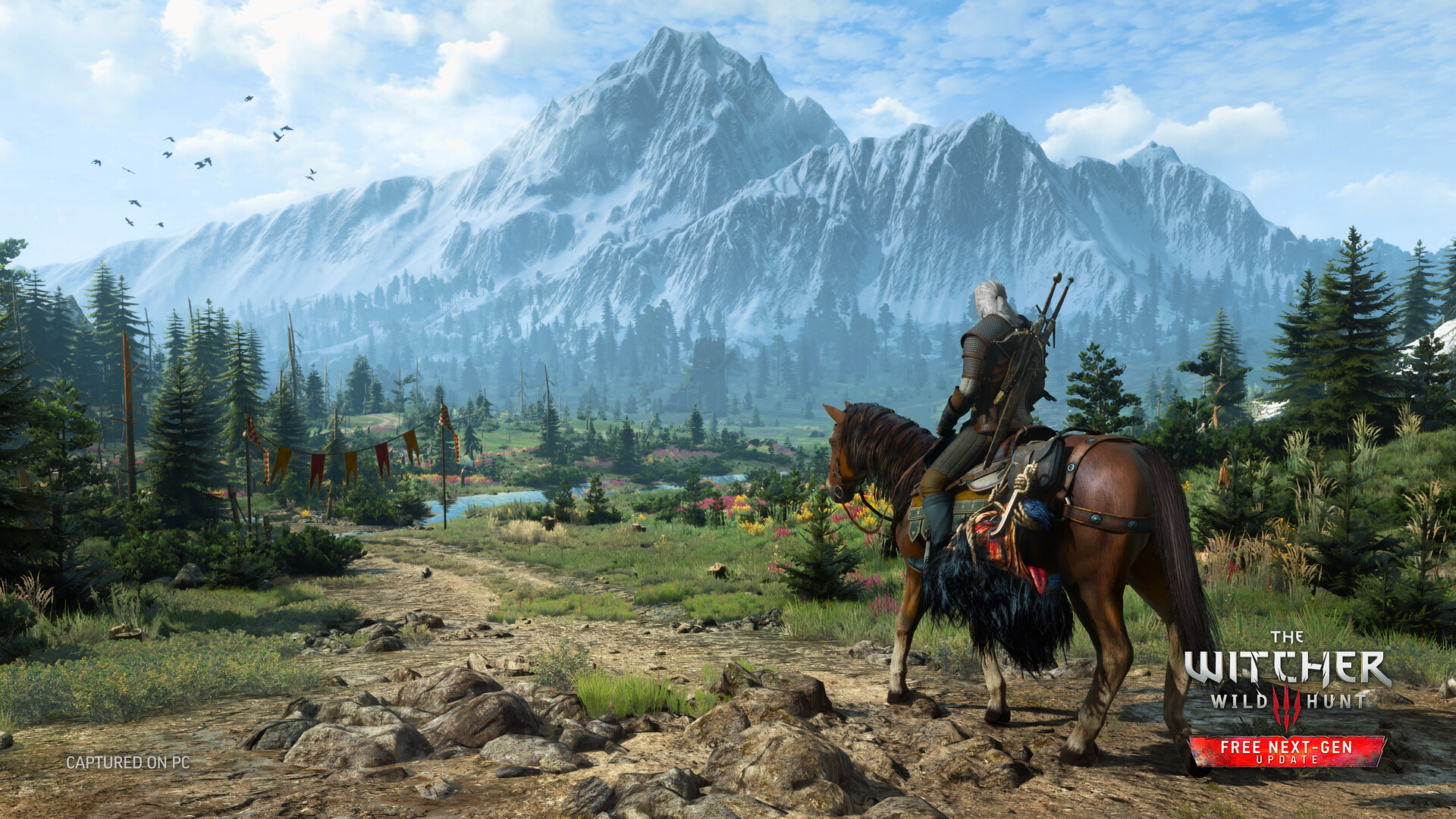
Geralt fights like a man who has been told what a sword is but has never held one in earnest. The roll-dodge-attack loop is functional in the sense that it allows you to complete the game without dying excessively. It is not satisfying in any of the ways that action combat in RPGs can be satisfying.
The fundamental problem is that combat provides essentially no tactical variety after the first few hours. You roll away. You strike with a fast or strong attack. You roll away again. You cast Quen if you are taking hits. You occasionally use Igni on a flammable enemy. This loop repeats across the entire runtime, for every enemy type, with minimal meaningful variation.
I have now experienced the Bloody Baron questline twice. It is one of the best quest sequences I have encountered in any game, genuinely affecting, morally complicated, narratively intelligent. It contains a substantial amount of combat. None of that combat is part of why it is good. The combat is the thing you get through between conversations.
For comparison: Dragon Age: Origins, from a broadly similar era in RPG development, has combat that rewards party composition, tactical positioning, and ability synergy in ways The Witcher 3 never approaches. Origins' combat is one of the reasons I remember the game. The Witcher 3's combat is not a reason I remember anything. This is a meaningful distinction. The combat in a 200-hour game shapes the majority of the play time. If that combat is boring, a substantial portion of the experience is boring, regardless of how good the writing is.
The DLC does partially address this. Blood and Wine introduces a mutation system that adds meaningful combat variety for the first time in the game's runtime. The fact that the most interesting version of the combat arrived in paid DLC years after release is either a design evolution story or something more cynical, depending on your disposition. I note it without fully resolving which.
The counterargument I most frequently hear from Witcher 3 defenders is that the combat serves the character. Geralt is a Witcher, a professional monster hunter with specific tools for specific monsters, and the combat being workmanlike rather than spectacular reflects that professional reality. I take this seriously as a creative intention and I do not fully buy it as a justification. The game asks you to perform this workmanlike combat for approximately 200 hours. At that volume, "it reflects character identity" stops being a sufficient answer for why the combat is not interesting to execute. Character consistency and engaging game mechanics are not mutually exclusive. The Witcher 3 settled for one and called it the other.
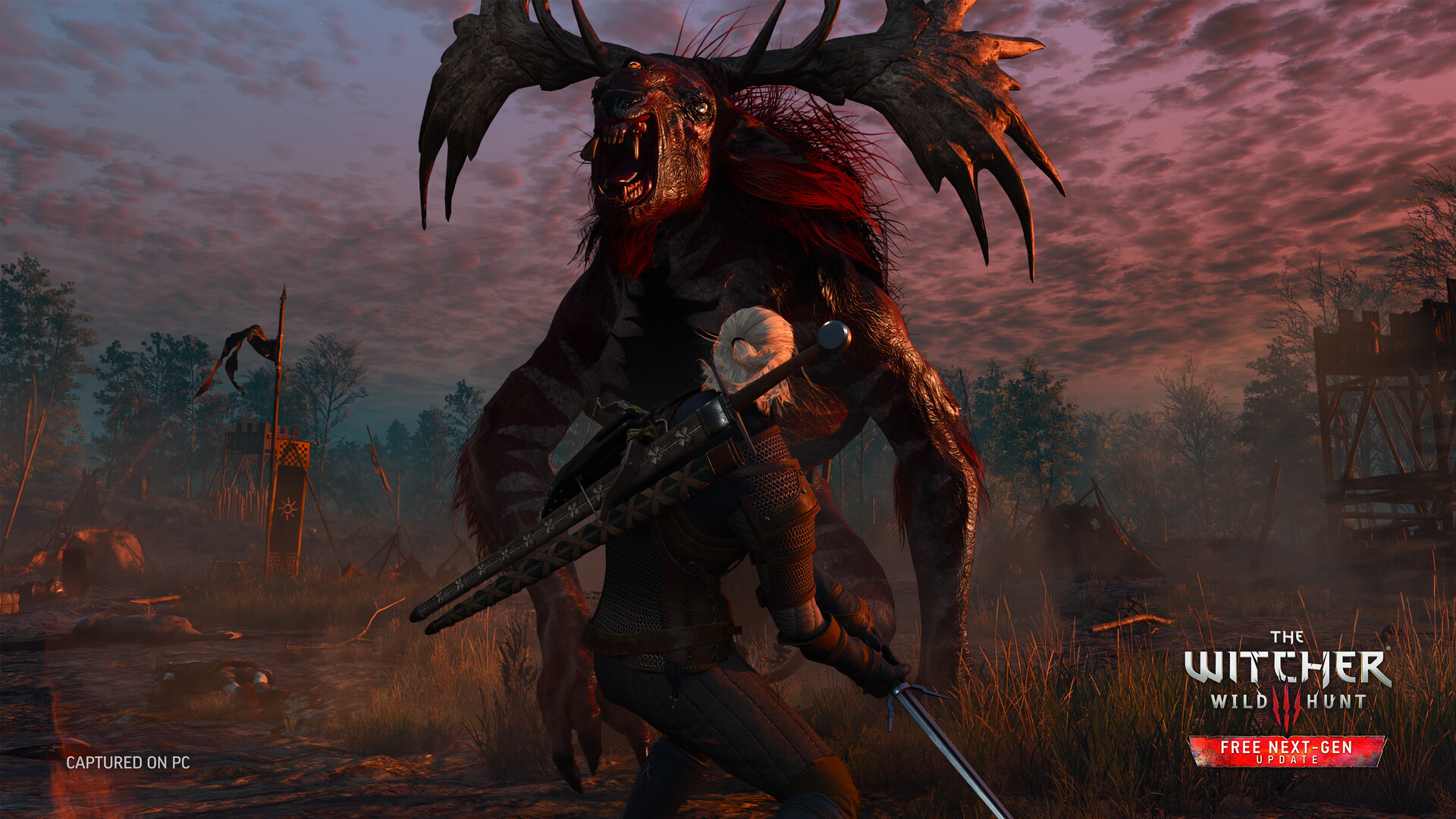
What the game does instead of engaging combat is delegate the interest to its encounter design. Many fights in The Witcher 3 are memorable because of their narrative framing or their environmental context rather than because the combat itself was satisfying. The Crones are memorable because of who they are and what they represent. The fight is not the reason. This is a different and legitimate kind of game design, but it means the game is using its writing to compensate for its mechanics rather than having both work together.
The Open World Is Mostly Clearing Exercises
The quest structure of The Witcher 3 is exceptional. The main storyline, the secondary quests connected to it, the companion quests: these are what the critical reputation is built on and that reputation is deserved. The Bloody Baron. The Ladies of the Wood. The Brothers in Arms network of quests. What happens in Novigrad. These sequences represent the game at its best and the game at its best is genuinely great.
The open world surrounding these quests is a different proposition. Velen alone has 37 question marks. The majority of them resolve to bandit camps, abandoned sites, or monster nests that are structurally identical regardless of where on the map they appear. They exist to fill the runtime to a commercially viable number and to give players something to do between the excellent content.
I have spent hours clearing question marks in The Witcher 3 across two playthroughs. I remember almost none of those hours. I remember the Bloody Baron with specific, vivid detail. I remember what happens at Crookback Bog. I remember Keira Metz's questline. I remember essentially nothing about clearing question marks in Velen, because clearing question marks in Velen is not interesting. It is content that exists to extend a game that would be tighter and better at 80 hours than it is at 120.
The distinction I would draw is between games that use open worlds to create places that feel genuinely inhabited, where exploration reveals things worth encountering, and games that use open worlds as a delivery mechanism for scale. The Witcher 3 is the second kind wearing the costume of the first. The Bloody Baron region feels inhabited. The dozens of bandit camps between questlines do not. Separating the game's actual quality from its scale requires acknowledging this honestly rather than treating scale as intrinsically valuable.
The specific counterargument here is that the question marks are optional and nobody forces you to clear them. This is true and somewhat beside the point. The question marks communicate the scale of the world and create an implicit expectation that the world repays exploration. When a significant portion of that exploration resolves to content that is effectively the same across the entire map, the world feels less alive even when you are not explicitly clearing it. The existence of thirty-seven Velen question marks shapes the experience of the region even for players who consciously avoid them, because it shapes what the game communicates the region contains.
The games that have followed The Witcher 3's critical template of "enormous detailed open world with strong writing" have mostly learned the wrong lessons. They learned scale. They did not learn that scale without selectivity produces a diluted experience. The Witcher 3's legacy in this specific area is partly responsible for a generation of open world games that are very large and not particularly interesting to be in.
The DLC Is Genuinely Exceptional
Hearts of Stone is the best content in the entire Witcher 3 package. Gaunter O'Dimm is the best character CDPR has ever written. The quest structure is tighter because it does not contain forty question marks. The narrative takes risks the base game is too conservative to take. It is genuinely great work, and if the base game had been designed with the same focus as Hearts of Stone, it would be harder to criticise.
Blood and Wine is also excellent. Toussaint is one of the most distinctive game environments built, a deliberate visual and tonal contrast to Novigrad and Velen that feels earned rather than arbitrary. The mutation system adds depth to the combat that the base game conspicuously lacked. The personal story it tells is more intimate and affecting than most of the main questline.
If you have played the main game without the DLC, you have played the weaker version of The Witcher 3. The Complete Edition at $39.99 includes both expansions and is substantially better value than the base game alone.
The Goodwill Problem
The Witcher 3 generated substantial goodwill for CD Projekt Red, built on free post-launch content, direct player communication, and positioning as the studio that genuinely loved its audience. That goodwill had material consequences.
In December 2020, when Cyberpunk 2077 launched in a broken state on base consoles, the response from a significant portion of the community was "I trust CDPR to fix it." That trust came almost entirely from The Witcher 3's legacy. It was deployed to manage accountability for a product that was deliberately sold to millions of customers in a state CDPR knew was broken.
The Witcher 3 is not responsible for the Cyberpunk launch. I am not making that argument. I am making a more specific argument: the cultural capital the game built was instrumentalised in service of limiting the consequences of something that should have had more severe consequences. That is worth noting in a complete accounting of what the game's legacy produced.
The honest position is this: The Witcher 3 is a great game with two exceptional DLC expansions, mediocre combat, an inflated runtime, and a fanbase whose defensiveness about the game is itself evidence of how beloved it is. All of those things are simultaneously true. The collective refusal to acknowledge the criticism does not make the criticism wrong. It just makes the conversation less interesting than the game deserves.
The game I am most grateful to The Witcher 3 for producing is Hearts of Stone, which is what the whole thing would have been if the main game had been made with the same focus and the same willingness to take narrative risks. The base game is good. Hearts of Stone is exceptional. The difference between those two quality levels is scope, and the willingness to constrain scope in service of coherence.
If you are going to play The Witcher 3, play it for the Bloody Baron, for Keira Metz, for what happens in Novigrad, and for both expansions. Play it with realistic expectations about how interesting the combat and the question marks are going to be. You will have a better time for knowing what you are getting, and you will appreciate what is genuinely great about the game more clearly for not expecting everything to be at the same level.
It is $39.99 for the Complete Edition. Buy it. Just do not let anyone tell you the combat is good.
The Witcher 3: Wild Hunt Complete Edition is available on PC, PS5, Xbox Series, and Switch. $39.99, includes both DLC. Worth buying. Go in with accurate expectations about the combat and the open world.
Buy on Steam | CD Projekt Red
Game at a glance
| Detail | Answer |
|---|---|
| Genre | Action RPG |
| Typical length | 50-200 hrs |
| Difficulty | Moderate |
| Play mode | Single player |
| Developer | CD Projekt Red |