Supermassive Put Diversity Over Story. The Numbers Had a Response.
Up to 75 more jobs cut. The director went on record calling the diverse cast a deliberate value, not an incidental one. The game landed Mixed on Steam and barely cracked 3,000 concurrent players. Here's the full timeline.

TL;DR
- Third layoff round in 30 months -- up to 75 more cut from only 172 staff at end of 2025.
- The CEO hired specifically to prevent this shipped the game, then quit 48 days after launch.
- Until Dawn 2 is being made by Sony's own studio, Firesprite, not Supermassive.
- Director Will Doyle framed the diverse casting as a deliberate priority on the record. Steam's Mixed rating answered back.
Supermassive Games announced up to 75 layoffs on August 11. That's the third round in under three years. Add up February 2024 (90 people), July 2025 (roughly 36 people), and this one, and you're looking at over 200 people cut from a studio that had 172 employees left to cut from at the end of last year. Do the maths on that and the current round alone could take out close to half of whoever was still standing.
Here's the part that actually made me angry enough to write this. The executive brought in specifically to stabilise Supermassive, with an explicit mandate to rebuild leadership and ship the next game, delivered exactly that: he shipped the game. Then he quit, seven weeks later, and left the studio without a CEO. The layoffs happened five weeks after that. He wasn't around for any of it. For fuck's sake.
The Studio That Made Until Dawn
Supermassive Games was founded in Guildford in 2008 by brothers Pete and Joe Samuels. For most of the first decade, it worked almost exclusively with Sony, including DLC for Media Molecule's LittleBigPlanet, small-scale work that kept the lights on without building much of a public identity. Then in 2015 it made Until Dawn, a butterfly-effect slasher horror game where every choice you made could get a character killed permanently, and it landed at exactly the right moment: PlayStation wanted a system-seller with genuine horror credentials, and Supermassive delivered one that critics and players both actually liked. It became the studio's defining work and the commercial foundation for everything that followed. The Dark Pictures Anthology launched in 2019 as a recurring series built on the same choice-driven formula, spinning out Man of Medan, Little Hope, House of Ashes, and The Devil in Me across four entries in three years. The Quarry followed in 2022 as a spiritual successor to Until Dawn itself, with a genuinely stacked celebrity cast. None of these were flawless games. All of them found real audiences, and by the early 2020s Supermassive had a legitimate claim to being one of the only studios doing cinematic branching horror at any consistent scale.
In March 2021, Danish media group Nordisk Film bought a 30.7% stake through its Nordisk Games division. By July 2022, Nordisk Games owned the whole thing, and Supermassive went from an independent studio with fifteen years of creative control to a wholly owned subsidiary of a Danish media conglomerate's gaming arm. At the time of the transition, reporting put the studio's headcount at around 300 people, the largest it had ever been. That number matters, because it's the real baseline for measuring what's happened since. Every layoff round from here gets discussed in isolation by most outlets covering it. Stack them against that 300 figure and the studio has already lost well over half its people, and this third round isn't finished yet.
Eighteen months later, in January 2024, Pete and Joe Samuels both left. Pete's statement cited health grounds, and there's no reason to doubt that. What matters for this story is who replaced him: Robert Henrysson, previously chairman and CEO of Avalanche Studios, joining as a Nordisk Games partner turned Supermassive chief executive. His mandate, reported explicitly at the time, was to rebuild the studio's leadership team and deliver Directive 8020 to market. That was the job. Stabilise the studio, ship the game.
What "Stabilise" Actually Meant
Henrysson led Supermassive through two rounds of layoffs before Directive 8020 ever reached a customer. The first came in February 2024, about 90 people, weeks into his tenure. The second came in July 2025, roughly 36 more, alongside a decision to delay the game from October 2025 to May 2026 "for performance adjustments." That's corporate speak for "it wasn't ready and everyone involved knew it," and I'd rather they just said that.
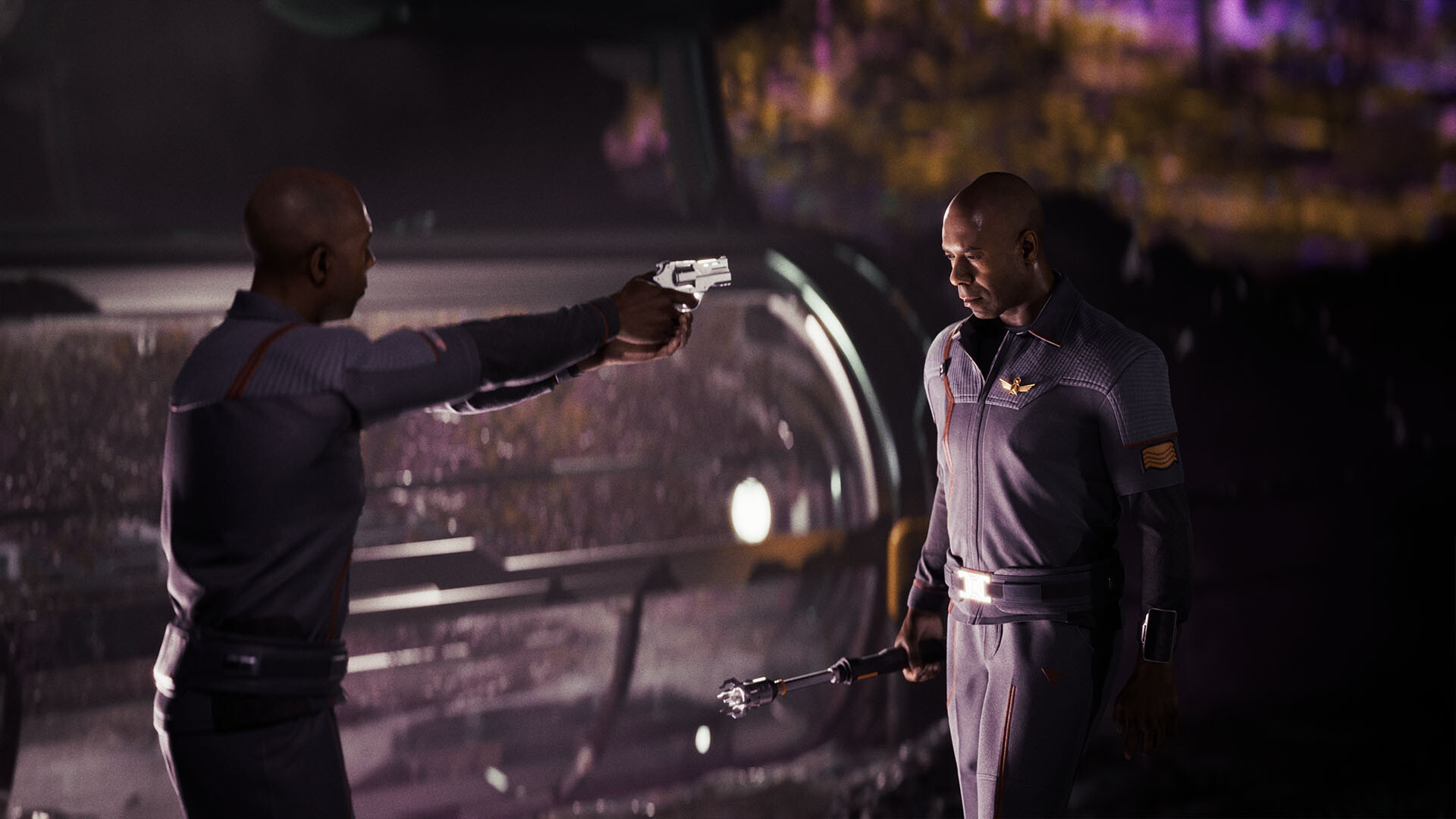
Directive 8020 finally launched on May 12, 2026, as the first entry in the Dark Pictures Anthology to leave horror's usual haunted houses and isolated cabins behind for science fiction. You're aboard the colony ship Cassiopeia after it crashes on Tau Ceti f, twelve light years from a dying Earth, and the threat isn't a masked killer or a ghost. It's the possibility that anyone on your crew might already be compromised. The John Carpenter's The Thing influence is not subtle, and for a studio that had made variations on the same haunted-location formula since 2015, it was a legitimately ambitious swing.
Reviews were genuinely decent. PC Gamer gave it 85%, calling it "one giant leap for sci-fi body horror." Nordisk's own statement praised it for earning "the strongest critical reception in the series to date." I want to sit on that claim for a second, because it's the kind of thing that sounds true until you check it against what's actually happening on the platform where people are playing the game right now. As of this week, Directive 8020 sits at 2,203 Steam reviews, 1,378 positive against 825 negative. That's 62.5%. Steam's own system classifies that as Mixed. Not "strongest critical reception in the series." Mixed.
Commercially, the picture is worse than mixed. SteamDB shows Directive 8020 peaking at 3,072 concurrent players on launch day, a genuinely small number for a game that had two rounds of layoffs and eighteen months of delay behind it, and it fell to a few hundred within weeks. Console sales aren't captured in that number and could tell a different story. Nobody's published one.
The Executive Who Delivered the Mandate and Left Anyway
Robert Henrysson announced he was stepping down on June 29, 2026, forty-eight days after Directive 8020 shipped. He didn't just leave Supermassive. He left Nordisk Games entirely, the parent company he'd joined as a partner back in August 2022. No successor was named. None has been named since. For the first time since the studio's founders departed in early 2024, Supermassive had no chief executive at all.
Read his own farewell message and there's no hint of crisis in it. He talks about guiding the studio through "intense industry change," about establishing "a culture of consistent quality," about handing things over at the right moment. Bollocks, most of that, and not because he's lying exactly, just because it's the sanitised version of a much blunter sequence of events. He was hired with an explicit brief to stop the bleeding and ship the game. He shipped the game. The bleeding didn't stop. He left before round three, and the studio he left behind had nobody in the building whose job it was to answer for what happened next.
I'm not accusing anyone of planning it this way. I am saying the incentive structure here is obvious once you see it laid out. Deliver the milestone that justifies your hire, exit before the next round of consequences lands, let the studio's remaining staff absorb what comes after. Whether that's a strategy or just how it happened, the effect on the 75 people who lost their jobs three weeks ago is identical either way.
Meanwhile, Someone Else Is Making Until Dawn 2

In June 2026, a sequel to Until Dawn was confirmed. Supermassive Games is not making it. Firesprite, one of Sony's own internal studios, is.
Sit with that for a second next to everything above. The IP that made Supermassive matter, the game that got them acquired in the first place, is now being developed by the studio that owns the platform they used to build their reputation on, while the studio that actually created it cuts its own headcount roughly in half. This is not a new pattern. It is the exact structural logic I wrote about with EA's history of studio closures: a publisher acquires a studio for the value of what it made, extracts that value, and the studio that made it becomes disposable once the extraction is complete. EA did it to Visceral and kept making Dead Space without them. Nordisk hasn't closed Supermassive yet. But watching Sony's own team build the sequel to the studio's signature game while the original team gets gutted is the same mechanism running one step earlier in the process.
They Made the Cast the Pitch. The Story Didn't Back It Up.
There's a distinction I want to be precise about before I get into this, because it's the actual point, not a caveat tacked on to cover myself. A Black lead, a gay character, a diverse crew: none of that is the problem, none of it needs defending, and if it comes out of the story naturally I couldn't care less about the demographics of who's on screen. What I have a problem with is when a studio frames the casting itself as the statement. Asked by Deadline about the backend conversations behind casting Lashana Lynch as the lead, Creative Director Will Doyle said this: "Diversity is absolutely important to us. We primarily wanted to tell a story... so we came at it as a story first. Diversity is important and like, if we're living in a world where we can't have a female Black lead, I don't want to live there." Give him the "story first" part, genuinely, that's the right instinct. But finish the sentence and he's still telling you the casting is a stance he's taking about the world he wants to live in, not a character choice that served the plot. That's the part that's the problem. Not the character on screen. The press quote about what the character is supposed to prove.
The backlash that followed wasn't some fringe pocket of the internet either, whatever the polite version of this story pretends. It showed up as sustained Steam forum threads still running weeks after launch. It showed up as a dedicated "wokeness" scoring site rating the game 6/10 on the metric. It showed up as YouTube videos with titles like "Woke Directive 8020 FLOPS." None of that is proof the game failed because of the casting specifically, and I'm not going to pretend the causation is that clean, because plenty of the same reviews also call the characters bland and the plot a derivative mashup of The Thing and Alien, which are complaints that have nothing to do with anyone's identity. Both things can be true. The writing wasn't strong enough to carry what leadership decided to make the headline, and leadership decided to make it the headline.
That's the actual bullshit. Not the character. The agenda talking louder than the craft. Whatever the intended order of operations, when a director's own quote about the game centres on what the casting is supposed to say about the world rather than what the story is supposed to say about the characters, that's what the audience hears, and Steam's Mixed rating is the audience answering back.
Supermassive isn't an isolated case either. Sony shut down Concord and closed Firewalk Studios within two weeks of launch in 2024, another project where the discourse around the cast overshadowed a mediocre hero shooter that had bigger problems than its politics. The pattern isn't "any game with a diverse cast fails." Plenty of genuinely great, genuinely diverse games do fine, Hades and Baldur's Gate 3 among them, because the story earned the characters instead of the other way round. The pattern is specifically studios leading with the message instead of the game, and getting the market's verdict for it.
Nobody Knows Who's Left, Including Supermassive
As of this week, Supermassive still has no named CEO. Nordisk Games hasn't given a timeline for appointing one, hasn't said what's next for the studio's project slate, and hasn't confirmed what Supermassive is actually working on now that Directive 8020 is out the door and its lead executive is gone. The redundancy consultation process for this round of cuts is still ongoing, which means the final headcount isn't even settled yet. What's confirmed is the shape of the last thirty months: three rounds of layoffs, two CEOs gone, one ambitious game that didn't land the way leadership said it did, and a flagship franchise now being developed somewhere else. Whatever comes next for the people still there is being decided by a parent company that hasn't bothered to say who's making that decision.
What Happens to Studios That Stay Independent
The studios making the most interesting horror right now are, disproportionately, the ones nobody can do this to. SOMA came from Frictional Games, independently owned, no acquisition to answer to. SIGNALIS came from rose-engine, two people, six years, zero layoffs to announce because there was never a headcount to cut in the first place. Darkwood came from a three-person Polish team that released the game on piracy sites themselves rather than let people go without it. None of them can access a $50 million dev budget. None of them can be told by a Danish media conglomerate's finance team that the survival horror mechanics need to become co-op. None of them are three rounds of layoffs deep into a slow wind-down while somebody else builds the sequel to their best game.
That trade-off, smaller budgets in exchange for nobody above you deciding your studio's fitness for another quarter, is looking like the better deal every year this pattern keeps repeating. Supermassive made Until Dawn, one of the genuinely important horror games of the last decade, and the ownership structure that followed its success is now the thing dismantling the team that built it.
The 75 people affected by this round deserve better than a statement about sustainability. So did the 90 in 2024 and the 36 in 2025. Nordisk Games bought a studio for what it had built, and three years later that studio is roughly half the size it used to be while a different company makes the sequel to its best-known game. Call that whatever corporate euphemism you want. I'm calling it what it actually is: a slow-motion version of the exact bullshit that killed Visceral, just spread out enough that nobody outside the games press notices the pattern until it's already this far along.
Directive 8020 is available now on PC, PS5, and Xbox Series. $49.99. Currently Mixed on Steam, whatever the press release says.
Buy on Steam