The 50 Best Horror Games on Steam: The Definitive Guide
Every horror subgenre, ranked and reviewed. Survival horror, psychological horror, co-op horror, cult indie classics, and everything currently worth your time on Steam. 50 games, verified data, honest criticism, updated as the genre moves.

TL;DR
- 50 games, every major horror subgenre covered, survival horror, psychological horror, co-op horror, cult indie classics, current releases.
- Top pick overall: Amnesia: The Dark Descent, still the benchmark, sixteen years on, for what makes horror actually work.
- This is the pillar. Every game listed here links to its own full FAQ page with verified live Steam data, and gets updated as the genre changes, not left to go stale.
- Ranked by how much each game stays with you, not by how scared you are in the first thirty minutes.
Steam has thousands of horror games. Most of them are not worth your time. This is the fifty that are.
I've built narrower horror lists before on this site: the best on Steam right now, the best co-op picks, the best psychological horror, the best under fifteen bucks. This is the one that ties all of it together: every subgenre, ranked against each other honestly, with the actual data behind each pick rather than vibes. Every single entry links out to its own full page with live Steam pricing and review data, so nothing here goes stale the way most "best of" lists do the moment they're published.
A note on the ranking, same rule I've used before: this is ordered by how much a game stays with you, not by how scared you are in the first thirty minutes. Some of these will make your palms sweat on first contact. Others will surface in your memory unpredictably for weeks. The ones near the top do the second thing.
This gets updated as the genre moves. A new release worth including, an entry that's aged out, a Steam delisting: it happens here, not in a new article next year.
1. Amnesia: The Dark Descent
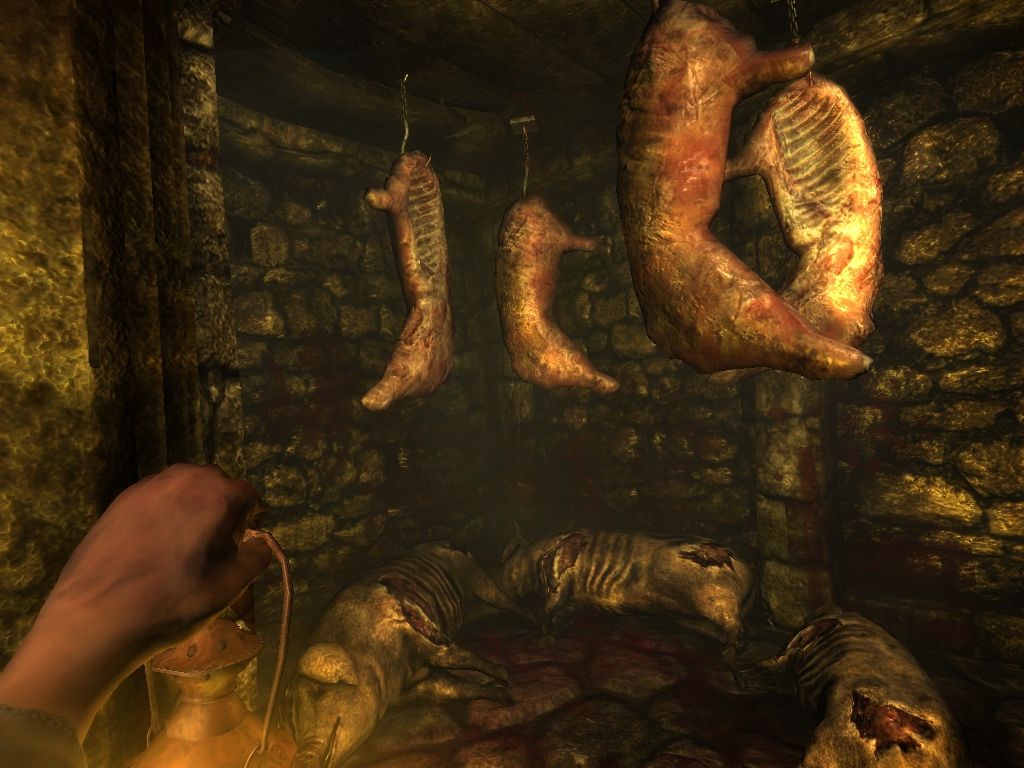
Still the benchmark. Sixteen years old and nothing has matched it. No weapons, a sanity meter that punishes you for looking directly at the things hunting you, and a castle that remains one of the best horror environments ever built. Frictional Games understood something most horror developers still haven't caught up to: vulnerability is more frightening than any monster design could ever be. You cannot fight back. You can only run, hide, and manage your own unraveling psychology as a resource alongside your actual survival.
The sanity mechanic is the whole thesis of the game distilled into one system. Stay in darkness too long, or stare too directly at a monster, and your grip on reality degrades along with your ability to navigate. It sounds like a gimmick described that way. In practice it's the most elegant piece of horror game design ever shipped, and every game on the back half of this list owes it something whether the developers admit it or not. Frictional never revisited the sequel-baiting title of "Dark Descent" with a numbered follow-up, and honestly, they didn't need to. What they built once was complete on arrival.
2. SOMA
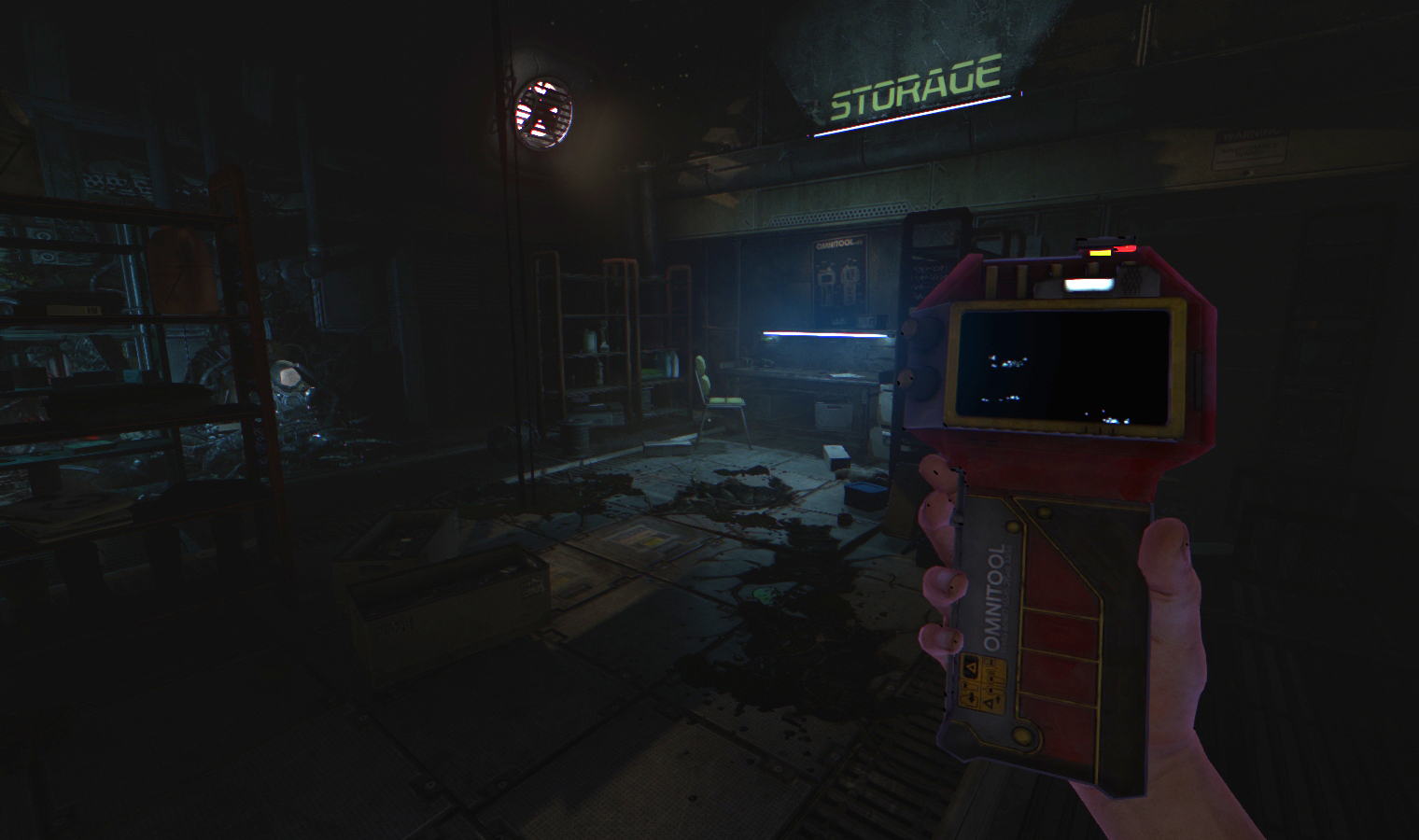
More disturbing than scary, which is exactly why it sits this high. SOMA is a philosophical horror game set at the bottom of the Atlantic in 2104 that asks genuinely unanswerable questions about consciousness and identity, and refuses to let you off the hook by answering them for you. I finished it, went to bed, and lay awake for the better part of an hour turning specific scenes over. That has not stopped happening in the years since.
Frictional built this on the same helpless, weapon-free foundation as Amnesia, but pointed the dread somewhere more existential. There's a moment about two-thirds through that recontextualises everything before it, and I'm not going to spoil it. Play it blind.
A Safe Mode exists that removes enemy danger entirely, which is worth knowing if the story is what draws you and the survival tension isn't. It doesn't make the experience lesser, just differently focused, and the story alone is worth the price of admission either way.
3. SIGNALIS
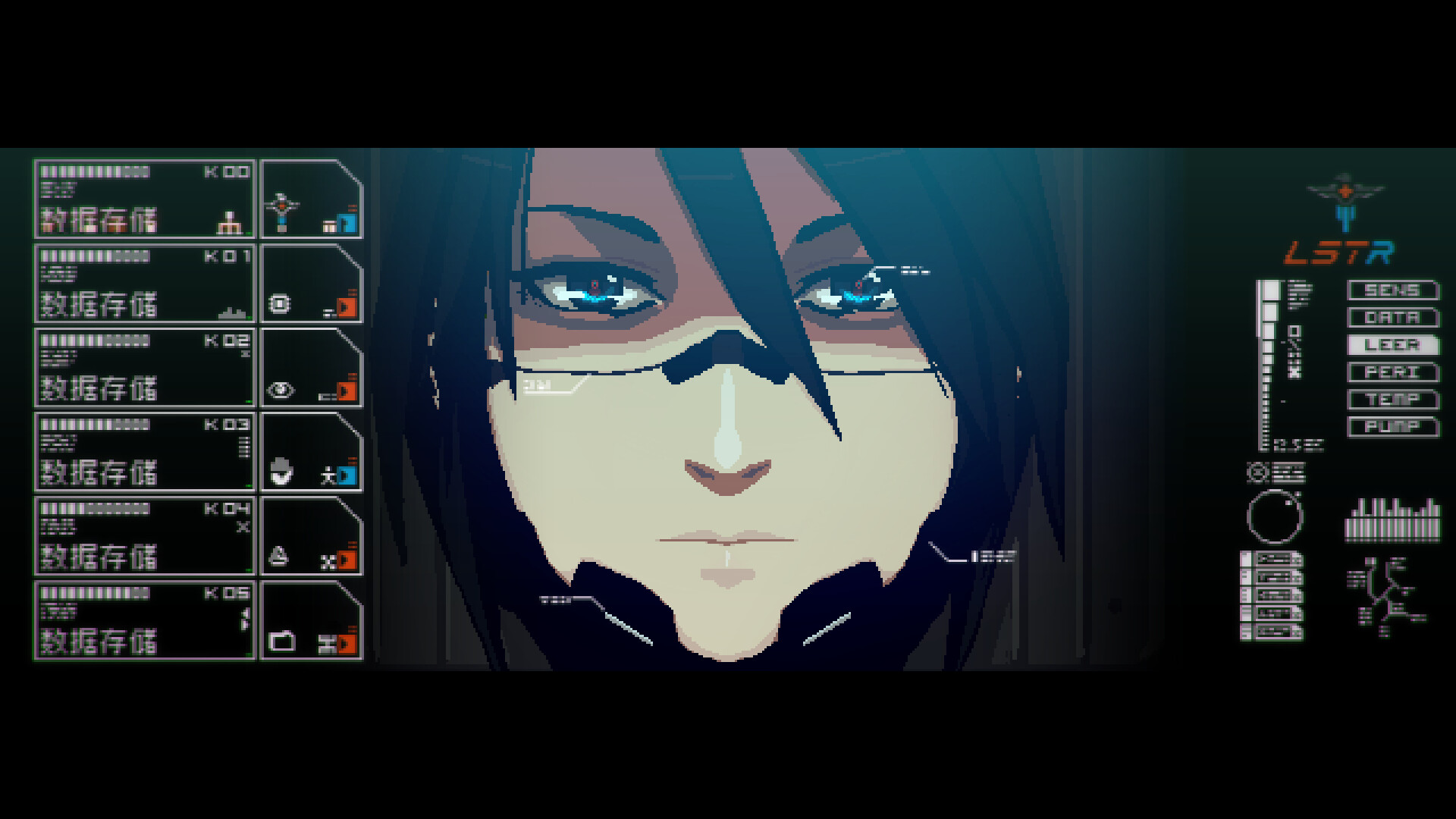
Two people. Six years. The best survival horror game released in the last decade, full stop. SIGNALIS is mechanically faithful to late-90s Resident Evil, narratively indebted to Evangelion and Solaris, and atmospherically unlike anything else on this entire list. rose-engine built something Capcom's much larger RE Engine team hasn't matched in terms of pure, sustained dread.
The non-linear reveal of what protagonist Elster actually is, what happened to Ariane, and what the facility has done to reality itself, is constructed with a level of care that rewards a second playthrough almost as much as the first. The endings don't resolve cleanly, and that's correct. This is a game built to surface in your memory unpredictably for months, not to hand you closure and move on.
The pixel-art presentation does a lot of quiet work here too, evoking PS1-era survival horror without ever feeling like a nostalgia exercise. It reads as a genuine aesthetic choice, not a budget constraint dressed up as style.
4. Resident Evil 2
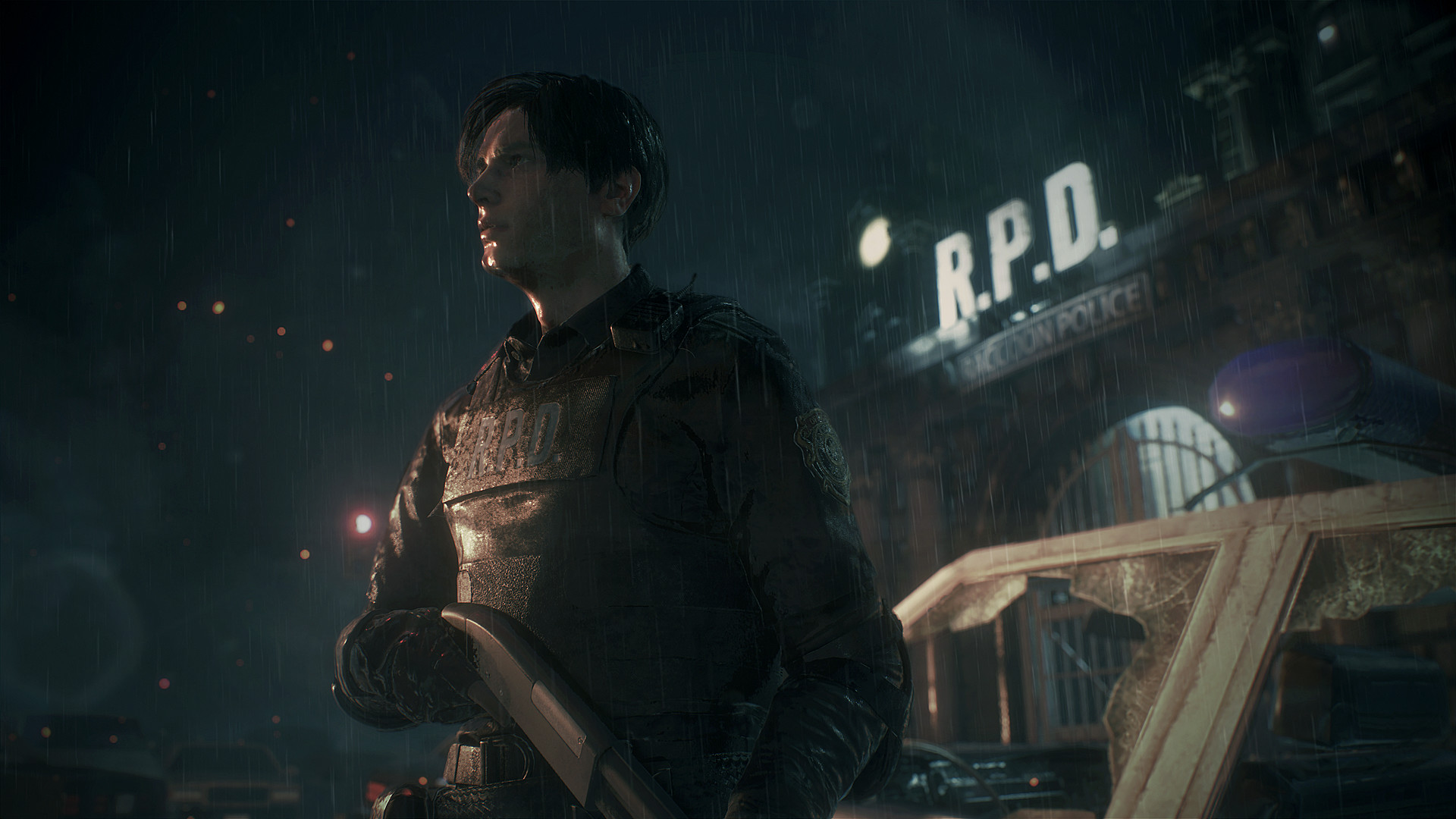
The remake that proved you could rebuild a beloved classic from the ground up without losing what made it work. Leon and Claire's original attempts to escape a zombie-filled Raccoon City are here in full, every monster, every set piece, every story beat longtime fans remember, rebuilt with today's horror sensibilities: indulgent gore, tight gunplay, genuinely clever puzzles, and level design that rewards learning the map as much as learning the monsters.
Two full campaigns, each meaningfully distinct rather than a reskin, with an A-scenario/B-scenario structure that gives the whole thing real replay value beyond a single playthrough. Mr. X's relentless pursuit sections are the best example of sustained, unkillable-threat tension in the entire survival horror genre.
Mr. X's relentless pursuit sections deserve their own mention as the best example of sustained, unkillable-threat tension anywhere in survival horror. You can't out-damage him, only out-think him, and that changes how every room gets approached.
5. Resident Evil 4
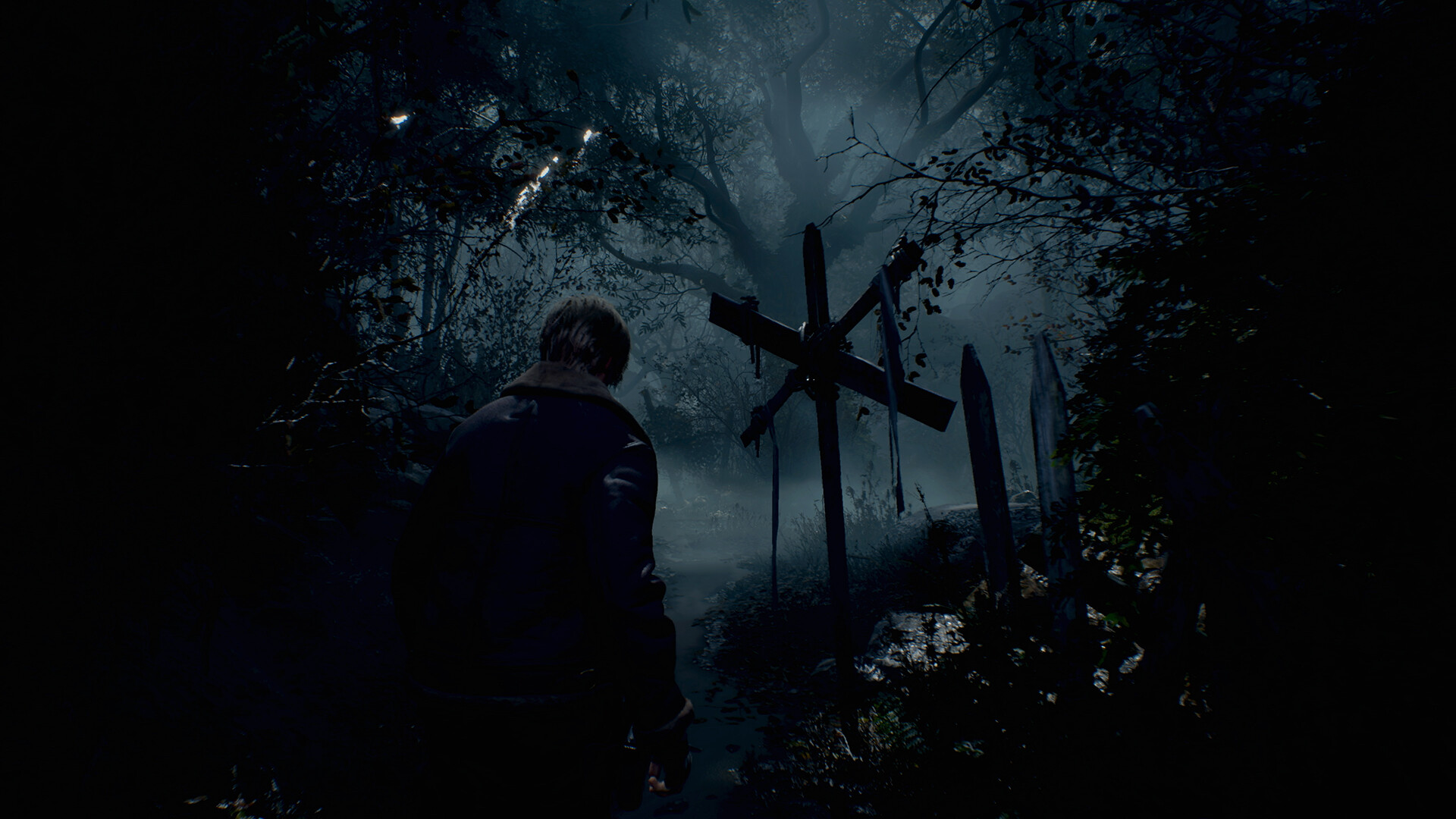
Leon's visit to a plague-infested Spanish village defined the action-horror hybrid genre in 2005, and the remake somehow makes it better without sanding down what made the original a landmark. Over-the-shoulder gunplay, iconic chainsaw-wielding villagers, a Merchant whose stock got genuinely broadened for this version: it's a faithful reconstruction of everything that worked, tightened for a more modern run-and-gun feel.
The village siege in the opening hour is still one of the best set pieces in horror gaming, remake or original. If you've somehow avoided this franchise entirely, this is the single best entry point: confident, polished, and unafraid to actually be scary between the action beats rather than treating horror as an afterthought to the combat.
The Merchant himself has become as iconic as any monster in the franchise, and the remake's expanded stock genuinely changes how you approach the back half of the campaign compared to the 2005 original.
6. Alien: Isolation
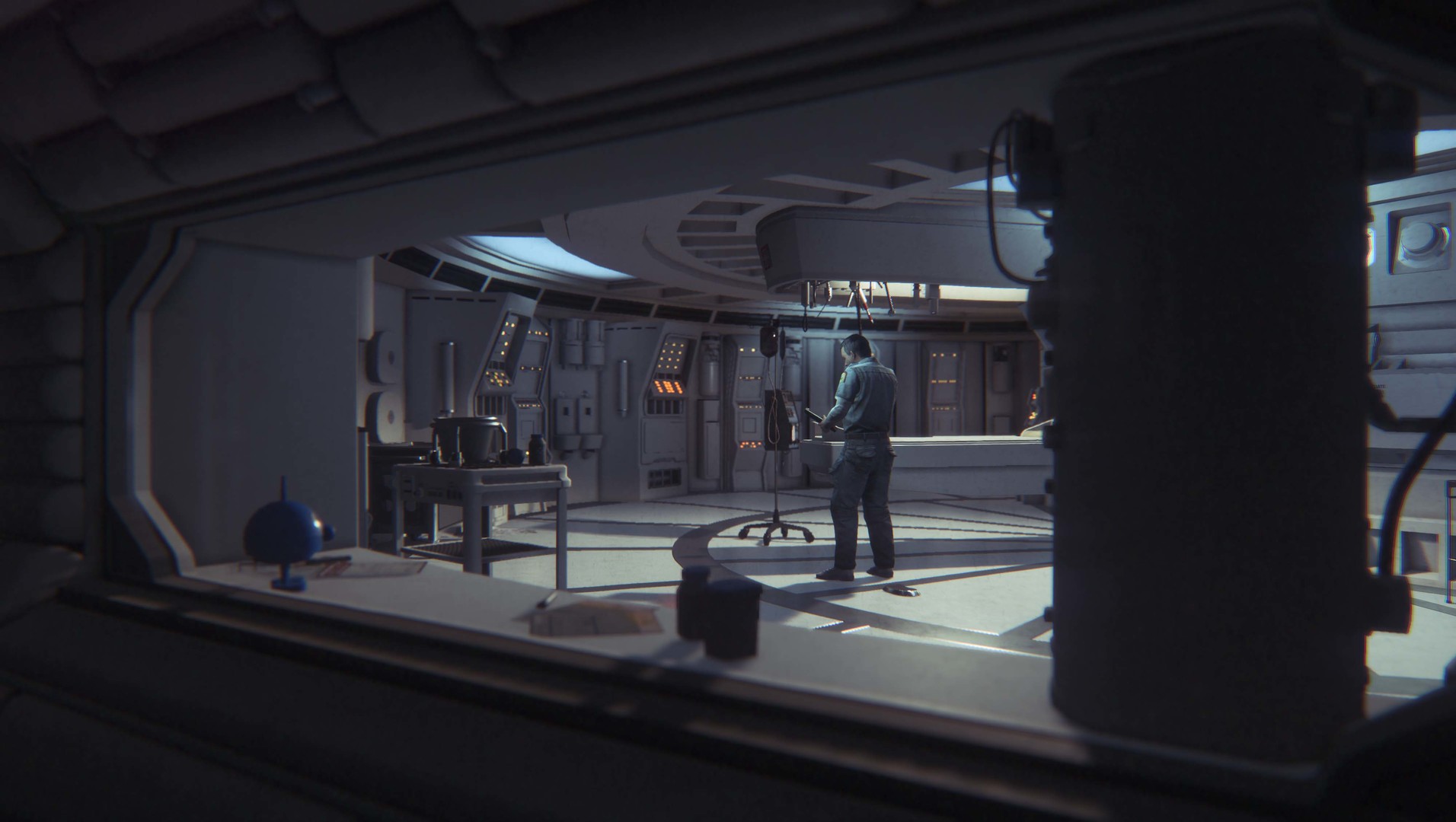
The only licensed horror game in the last twenty years that actually justifies its license. Creative Assembly built the Xenomorph's AI with two separate systems that don't communicate directly with each other, one that hunts based on sound and sight, one that learns your specific habits over time. The result is an enemy that genuinely adapts rather than following a scripted pattern, over a decade before that became a design conversation most studios are still having.
You play Amanda Ripley searching a derelict space station for her mother, only to find the same beast that hunted Ellen decades earlier. The atmosphere sustains itself for the entire runtime without a single dip, a genuinely rare achievement across fifteen-plus hours of a single sustained threat. This is the rare horror game where the sequel-baiting title didn't matter, because what shipped genuinely earned its name.
Most horror games this length have to introduce new gimmicks to keep tension from flattening. This one simply doesn't need to.
7. Resident Evil 7 Biohazard
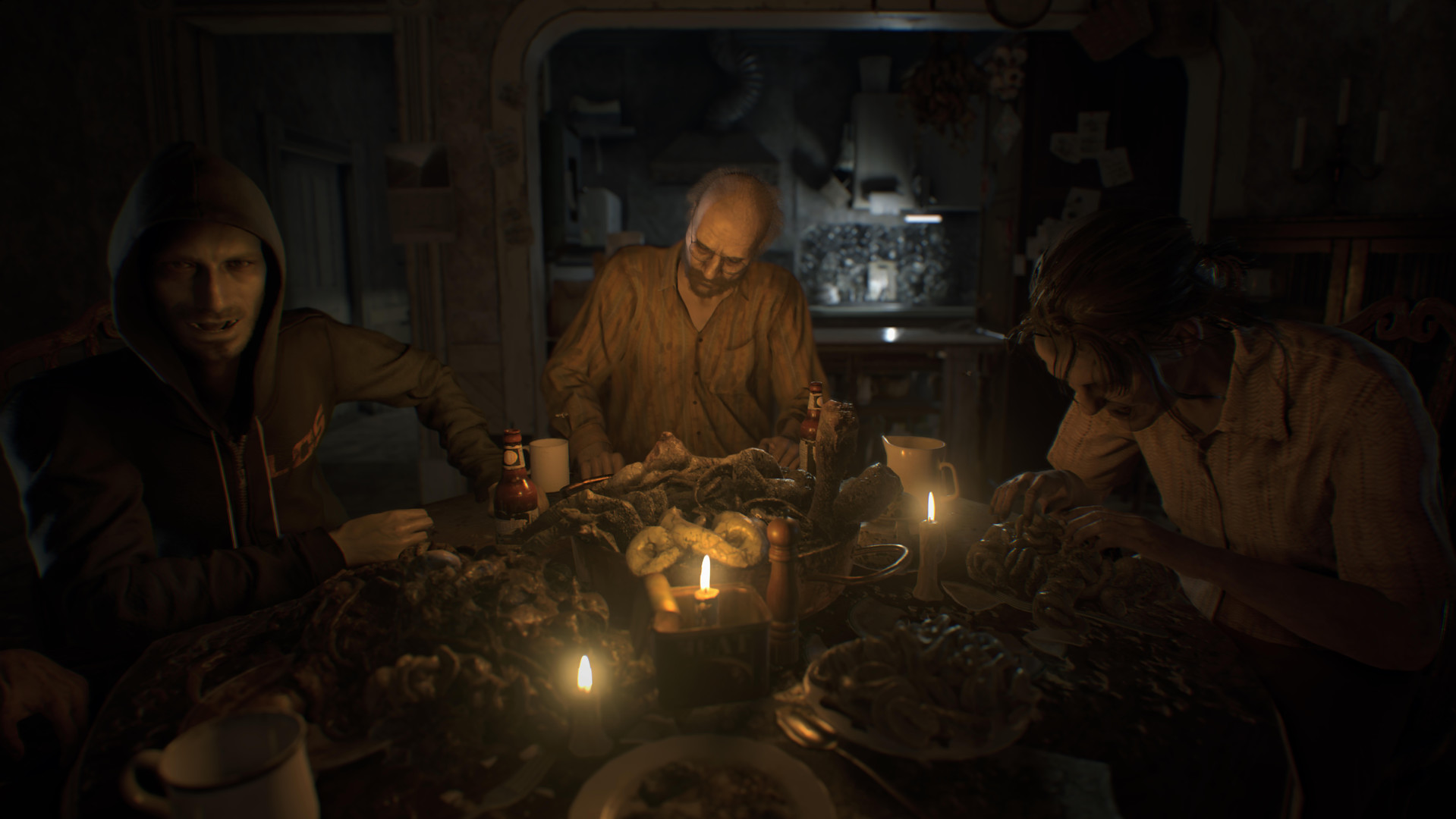
Could have been a disaster: a clunky, forced update to a revered series. Instead it's a triumph, easing the franchise's shift to first-person perspective into a recognizable, modern reinvention without losing what made Resident Evil feel like Resident Evil. The Baker family are brilliantly subversive tormentors, and the mysteries around them are artfully concealed rather than dumped in exposition.
Switching to first-person wasn't a gimmick decision. It makes the horror feel uncomfortably close and personal in a way the series' fixed-camera history never attempted, and many longtime fans consider this the scariest mainline entry specifically because of it. VR support exists on compatible platforms if you want to find out exactly how intense that gets.
The plantation setting and the Baker family's specific brand of Southern Gothic menace gave the series a genuinely new visual identity, one that later entries have continued building on rather than abandoning.
8. SILENT HILL 2
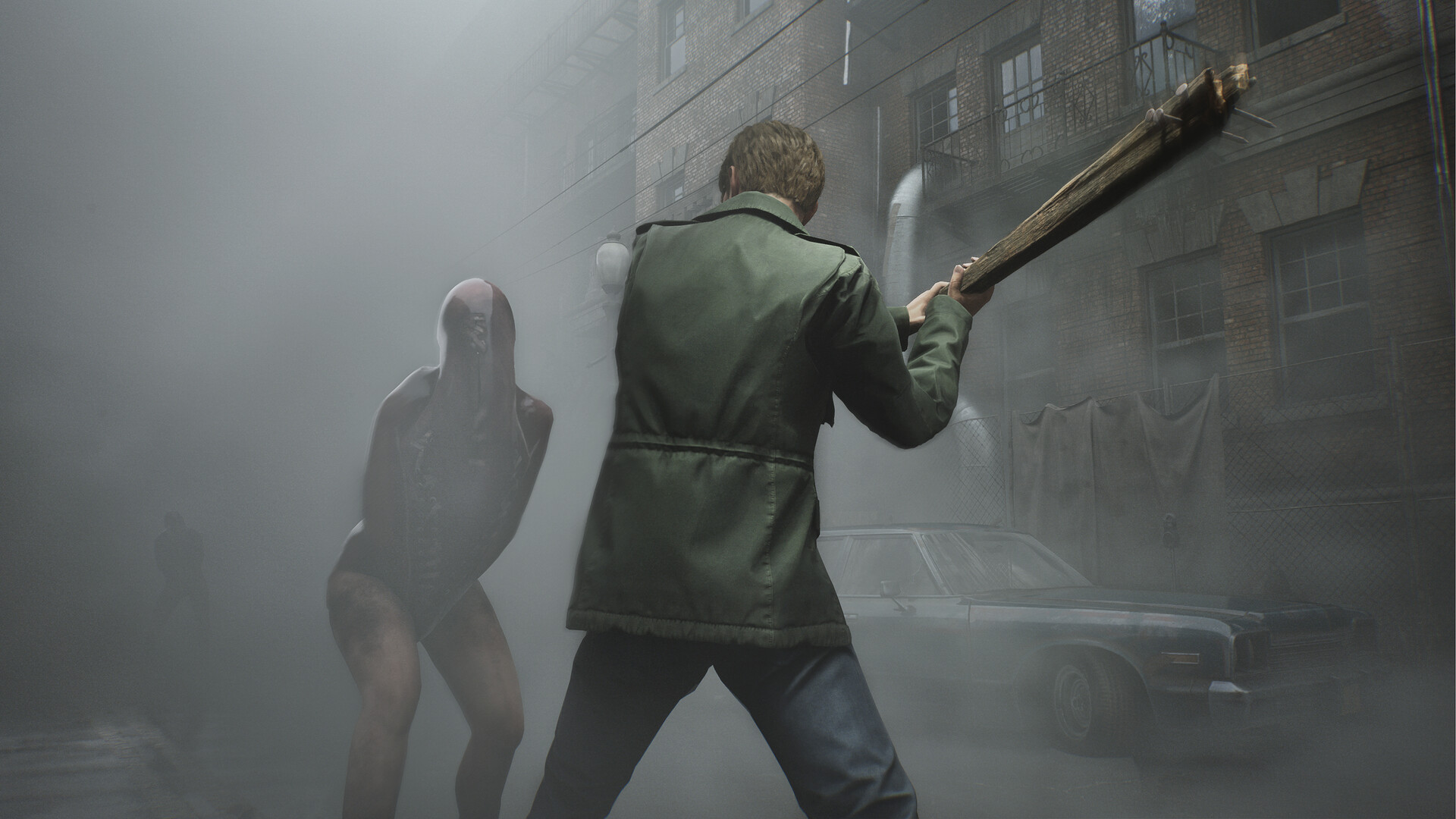
James Sunderland returns to the empty town of Silent Hill after receiving a letter that seems to come from his dead wife, and Bloober Team's remake finally gives one of gaming's most psychologically ambitious horror stories the presentation it always deserved. Pyramid Head and the nurses are here, rendered in stunning modern detail, but they were never really the point.
The real horror is James's own anguish and guilt over his wife's death, surfacing in every corner of the town he walks through. The deeper you go, the worse it gets, and the more affecting. This is a story worth being listened to and parsed as much as it's a horror game worth playing, and the remake treats that balance with real respect.
Bloober Team, previously known mostly for smaller psychological horror titles like Layers of Fear, proved with this remake that they could handle a genre-defining classic without diluting what made the source material matter.
9. FATAL FRAME II: Crimson Butterfly REMAKE

Widely considered the best entry in one of Japanese horror gaming's defining series, and the 2026 remake modernises the visuals while keeping exactly what made it work. Your only weapon against soul-stealing ghosts is an ancient camera, meaning the sole way to fight back is to face your enemy directly through the viewfinder, an increasingly terrifying proposition as the game escalates.
Characters frozen in place with fear, a personal story about two sisters dealing with loss and guilt that goes deeper than most horror games attempt, and combat built entirely around confronting rather than avoiding what's hunting you. This is Japanese horror at its most distinctive, and the remake earned its 88.8% positive score fast for a title barely months old.
The crossover costume content shared with SILENT HILL f on release is a genuinely nice touch for players who own both, two of Japanese horror's most significant properties acknowledging each other rather than existing in isolation.
10. Resident Evil Requiem
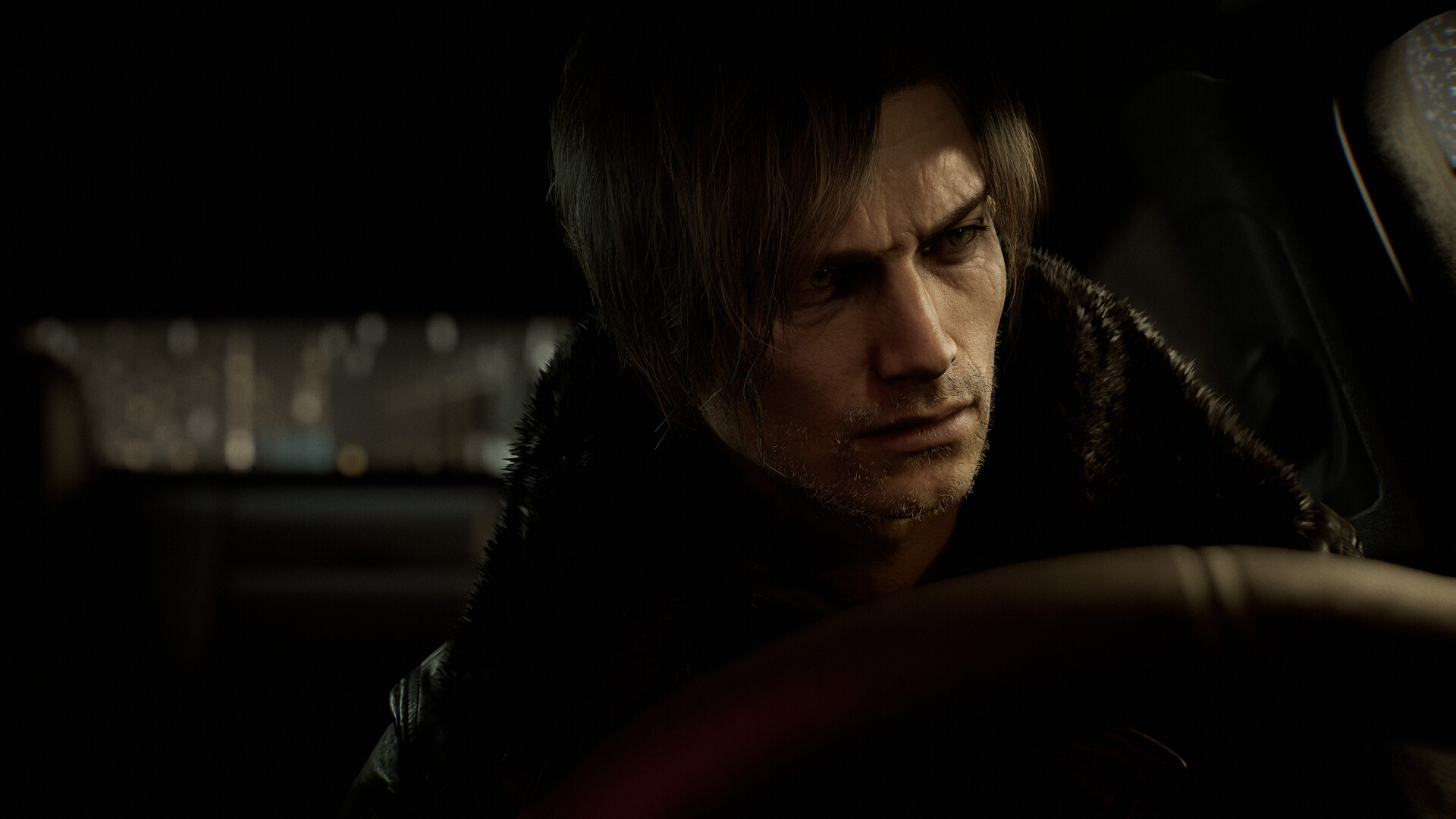
Leon Kennedy returns after fourteen years out of the mainline series, splitting the campaign with a new character, Grace, whose sections trade his confident gunplay for something closer to the tension of the earliest games, rationed ammo, tight corridors, puzzles you have to actually think through. Broke 344,000 concurrent players in its first weekend. That's not marketing spend, that's a genuine event.
The honest criticism, since a list this size with none would be a press release: at over thirty hours it overstays its welcome in the back third, and Grace's survival-horror tension gets diluted every time the game hands you back to Leon and a shotgun. It wants to be two different games and mostly, remarkably, gets away with it.
The engine work specifically deserves credit. Capcom's RE Engine has been iterating for years now, and Requiem is the clearest evidence yet that the tool has matured into something that can carry both Leon's confident action beats and Grace's tighter survival horror without either feeling like a compromise.
11. Visage
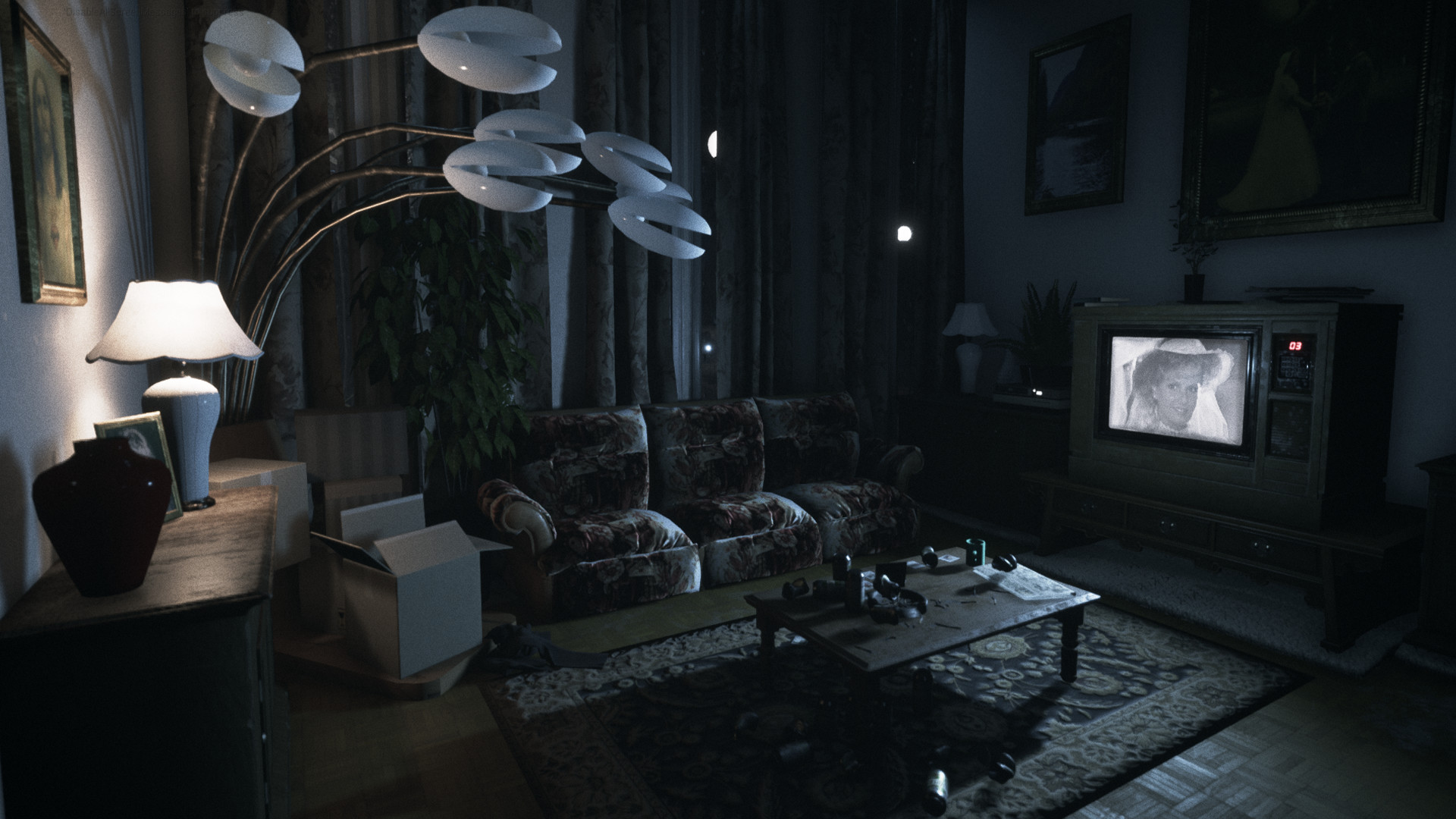
An Amnesia-inspired haunted house game where sanity, light, and darkness are your only real tools, pushed further into slow-burn dread than almost anything else in the genre. Each chapter unfolds a different family's tragedy within the same house, and the sense that something is always paying attention never lets up. This isn't jump-scare horror. It's the kind that rewards patience over reflexes, and punishes anyone expecting quick, cheap thrills.
Multiple chapters mean multiple distinct tragedies to work through, each with its own tone and pacing, but the house itself ties everything together into a single sustained, deeply atmospheric nightmare. Widely regarded within horror communities as one of the scariest indie games ever made, and after finishing it, that reputation checks out.
SadSquare Studio built this on a genuinely tiny budget relative to what it accomplishes, funded substantially through crowdfunding, which makes the sustained quality of its atmosphere even more impressive in context.
12. Darkwood
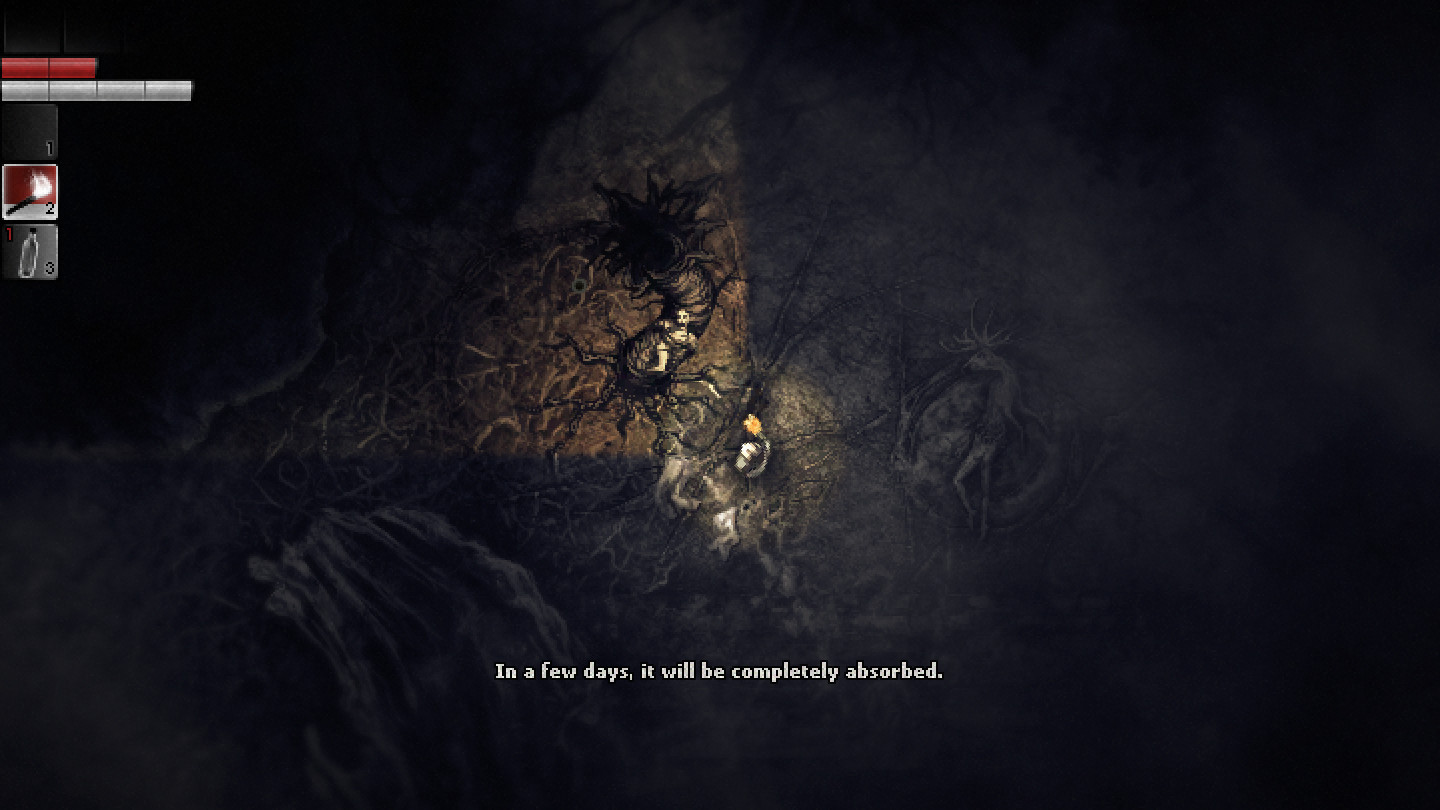
The best top-down survival horror game ever made, and one of the most underplayed. Acid Wizard Studio built a corrupted Eastern European forest that never explains what happened to it or what the corruption actually wants, leaving fragments for your imagination to assemble into something worse than anything the game could have shown you directly. By the third hour, the forest is genuinely under your skin.
The night sections are the game's masterstroke. Barricade yourself in your hut, listen to things try to get in, and pray your preparations were enough. There's no safety anywhere except what you build yourself, and the resource management required to maintain that safety is exactly what makes the risk of leaving feel real every single time.
The top-down perspective, unusual for horror generally, turns out to be exactly right for this specific kind of dread. You can see more of the environment than a first-person game would show you, and somehow that makes the uncertainty of what's actually out there worse, not better.
13. Outlast
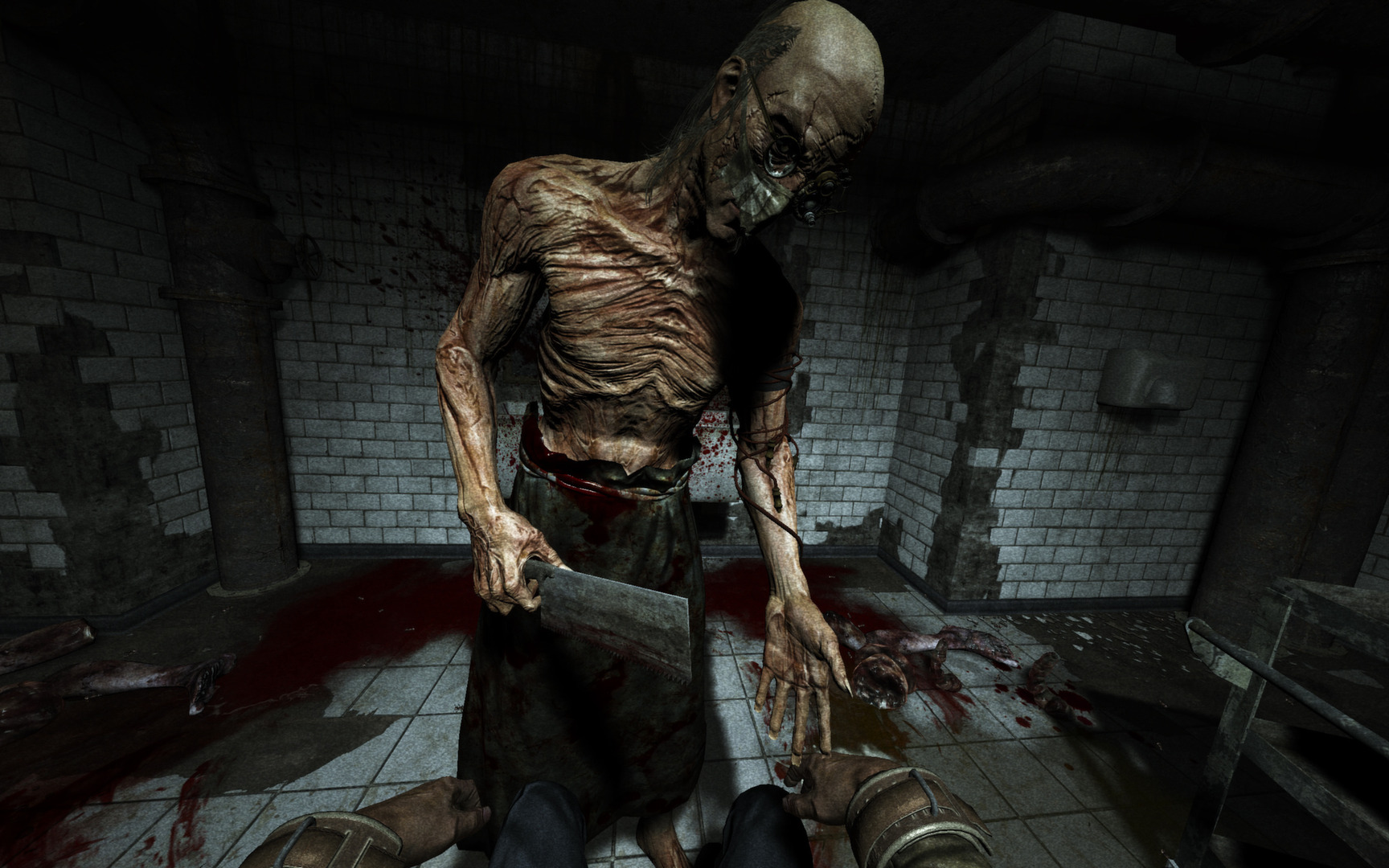
The game that made survival horror mainstream on YouTube. Red Barrels' camcorder night vision mechanic is one of the smartest ideas in horror gaming, grainy, glowing green, and just close enough to how real night vision actually looks to make the whole thing feel uncomfortably plausible. The first two hours inside Mount Massive Asylum are genuinely excellent, dense with atmosphere and real dread.
It leans too heavily on jump scares in the back half, and the narrative loses some coherence as it escalates. Both real criticisms. Neither disqualifying. This is still the best entry point into horror gaming for first-timers, and it's frequently available for well under five dollars, which makes the flaws easy to forgive.
Red Barrels went on to build The Outlast Trials from the lessons learned here, and comparing the two shows a studio that genuinely understood which parts of their original formula were worth scaling into co-op and which parts needed to stay solo.
14. The Mortuary Assistant
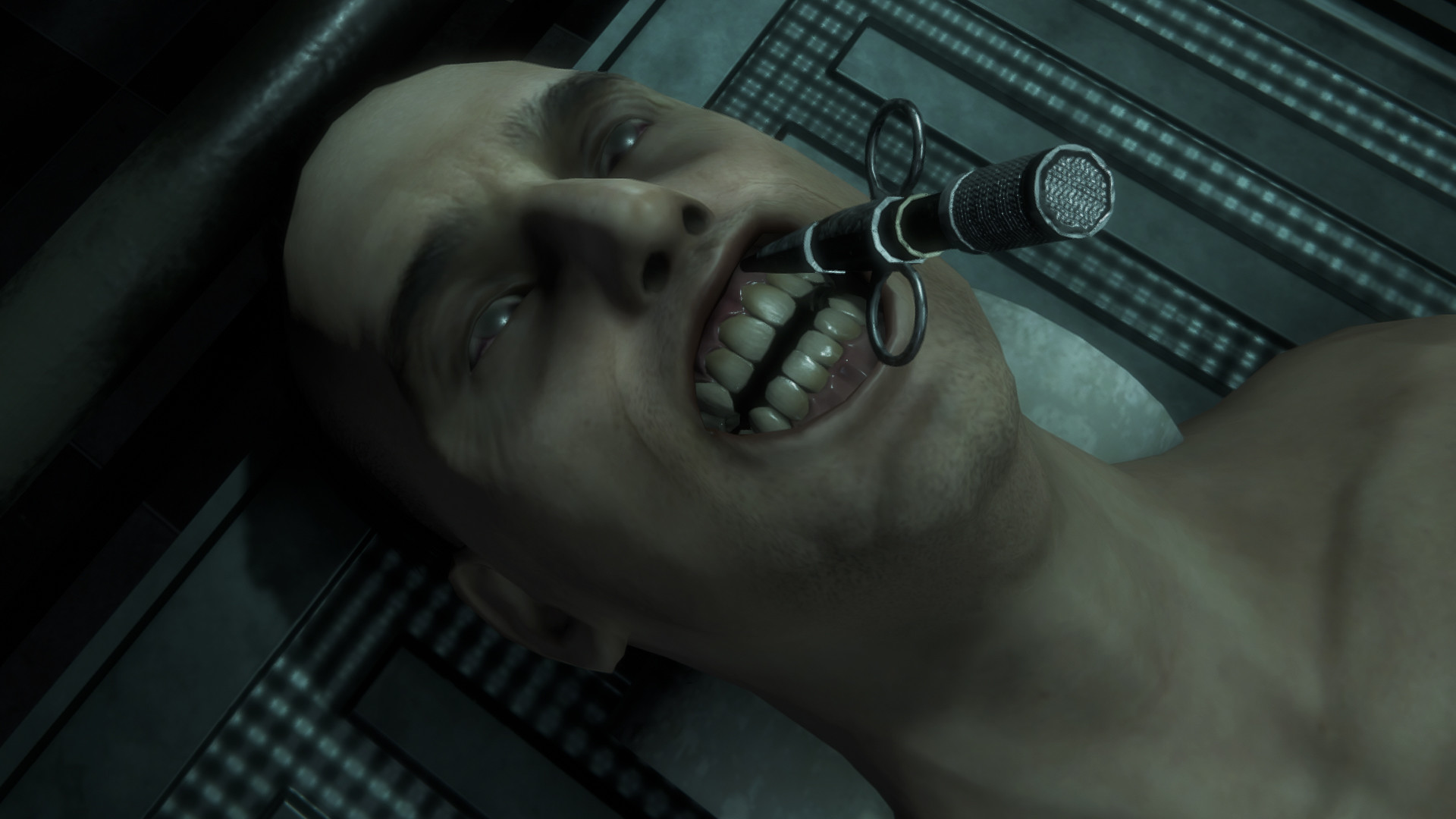
Your first day at River Fields Mortuary. You're embalming the dearly departed on your gurney when you notice an ominous woman in white staring back from the end of a long corridor, and by the time you look at your table again, the body is gone. Procedurally-generated scares mean this happens differently every time, keeping every playthrough tense in a slightly different way rather than becoming predictable on a second run.
A scalpel in your hand and a demon in your soul, fighting to exorcise it before you become fully possessed. The atmosphere is sustained across an entire shift rather than front-loaded into a few set pieces, and the procedural element genuinely means you can't just memorise your way through it the way you can with most scripted horror.
DarkStone Digital is a small studio, and the level of polish on the procedural scare system specifically suggests real technical ambition well beyond what the price tag would suggest.
15. Mouthwashing
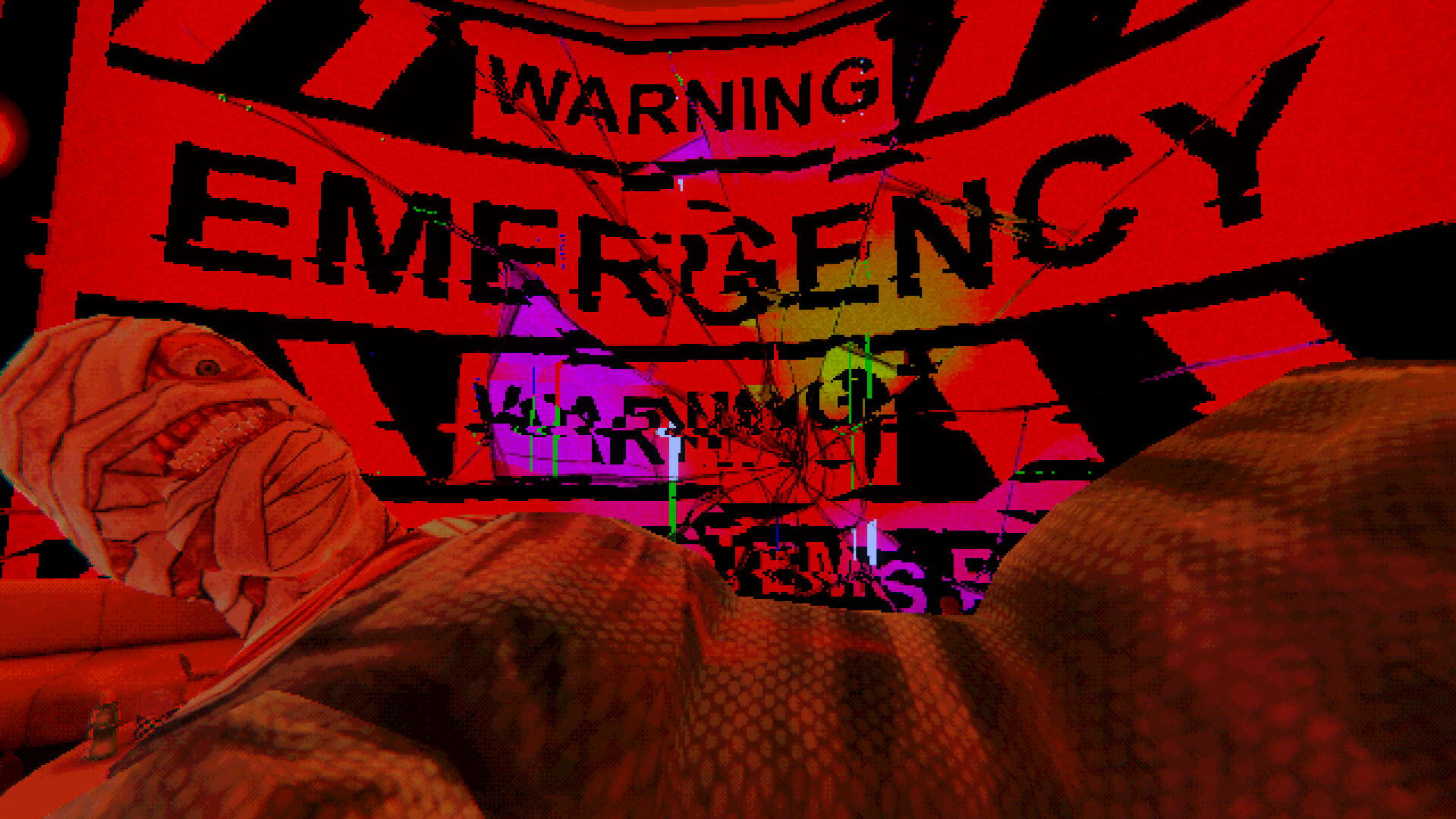
What happens to people in crisis when the structures that constrain their behaviour are removed. No monsters. Entirely human, and somehow more unsettling for it. Wrong Organ's non-linear structure reveals what actually happened aboard a stranded cargo ship gradually, and what it reveals is genuinely awful in a way that lingers well past the two-to-three-hour runtime.
This is psychological horror doing exactly what the genre promises and rarely delivers: no jump scares, no supernatural crutch, just the slow, dawning realisation of exactly how bad a situation got and exactly why. One of the most disturbing games released in 2025, and it earns every bit of that reputation through craft rather than shock value.
Wrong Organ's non-linear structure means the actual chronology of events only becomes clear well after you think you understand what happened, and piecing it together after the credits roll is its own kind of unsettling exercise.
16. The Backrooms 1998
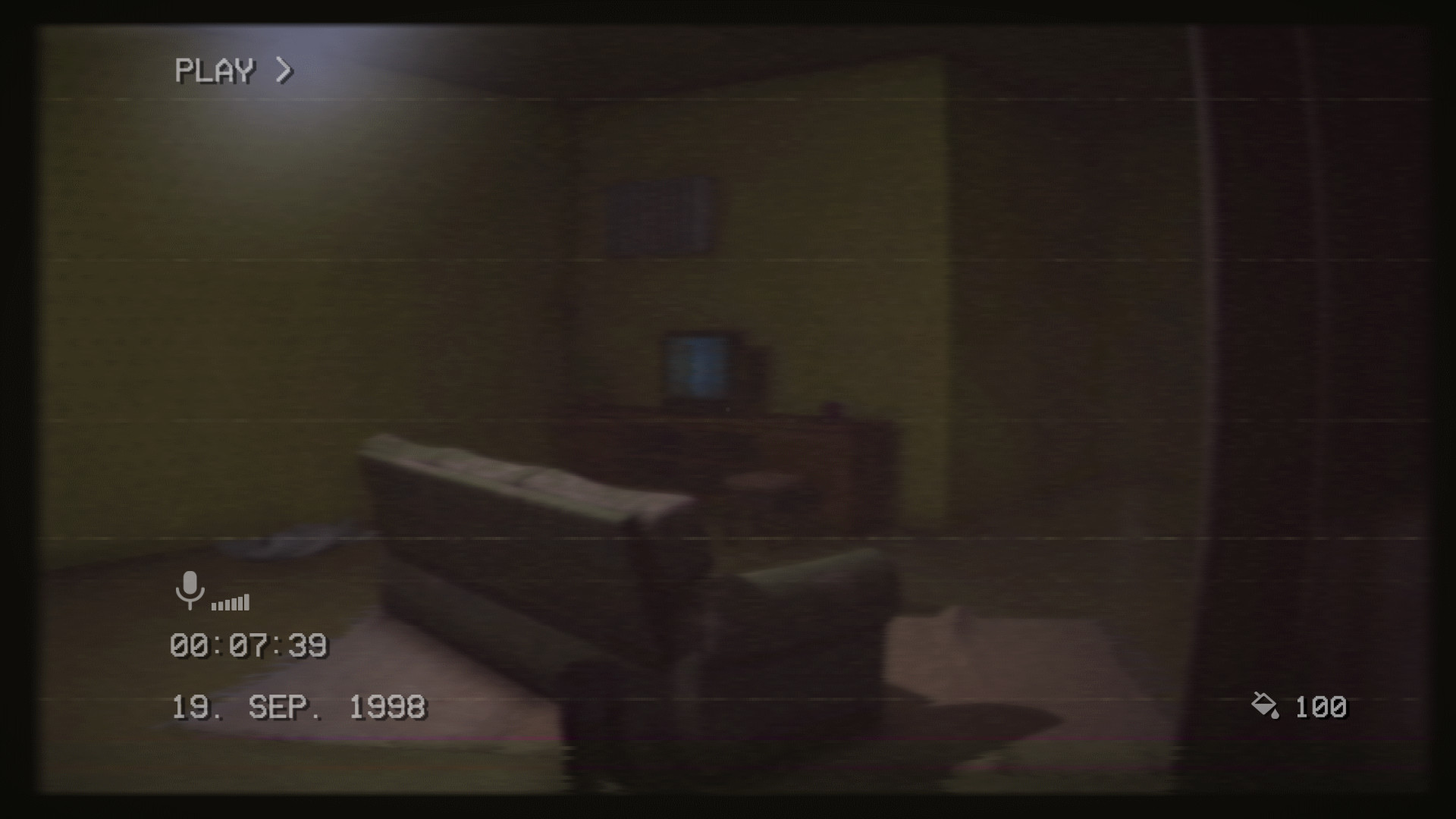
The internet's beloved liminal-space horror concept, rendered as a genuinely tense found-footage survival game. You roam the endless, off-yellow corridors of the Backrooms as a teen who fell through in 1998, marking your path, scavenging supplies, and piecing together what happened, while trying very hard not to make a sound.
Built largely by a single developer, and it delivers exactly the sustained, sound-based dread the concept promises. Don't step on glass. Don't knock things over. It will hear you. That constant fear of your own noise does more work here than any single scripted scare, and it's the reason this one genuinely got under my skin the first time I played it.
The found-footage framing device does real work distinguishing this from the dozens of other Backrooms-inspired games that have shown up on Steam since the concept went viral. Most lean on the aesthetic alone. This one actually commits to the format's storytelling logic.
17. Fear & Hunger
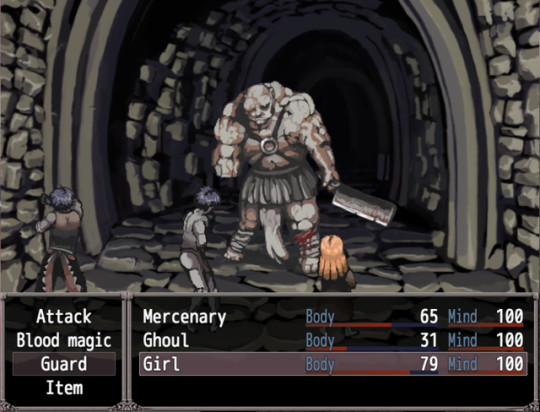
Not for everyone. Fear & Hunger goes places no commercial studio would ever be permitted to explore, built by one developer in RPG Maker, of all engines. The most transgressive horror RPG ever made, and that's not hyperbole. Read the content warning before you buy this one, because it means exactly what it says.
For the audience it's actually for, this is essential, uncompromised horror that refuses every safety rail the genre usually keeps. It won't work for most players, and that's by design rather than a flaw. If the warning doesn't scare you off, what's inside genuinely will.
A sequel, Fear & Hunger 2: Termina, exists and expands the world considerably, though starting with the original is still the right call for understanding what the series is actually trying to do.
18. SILENT HILL f
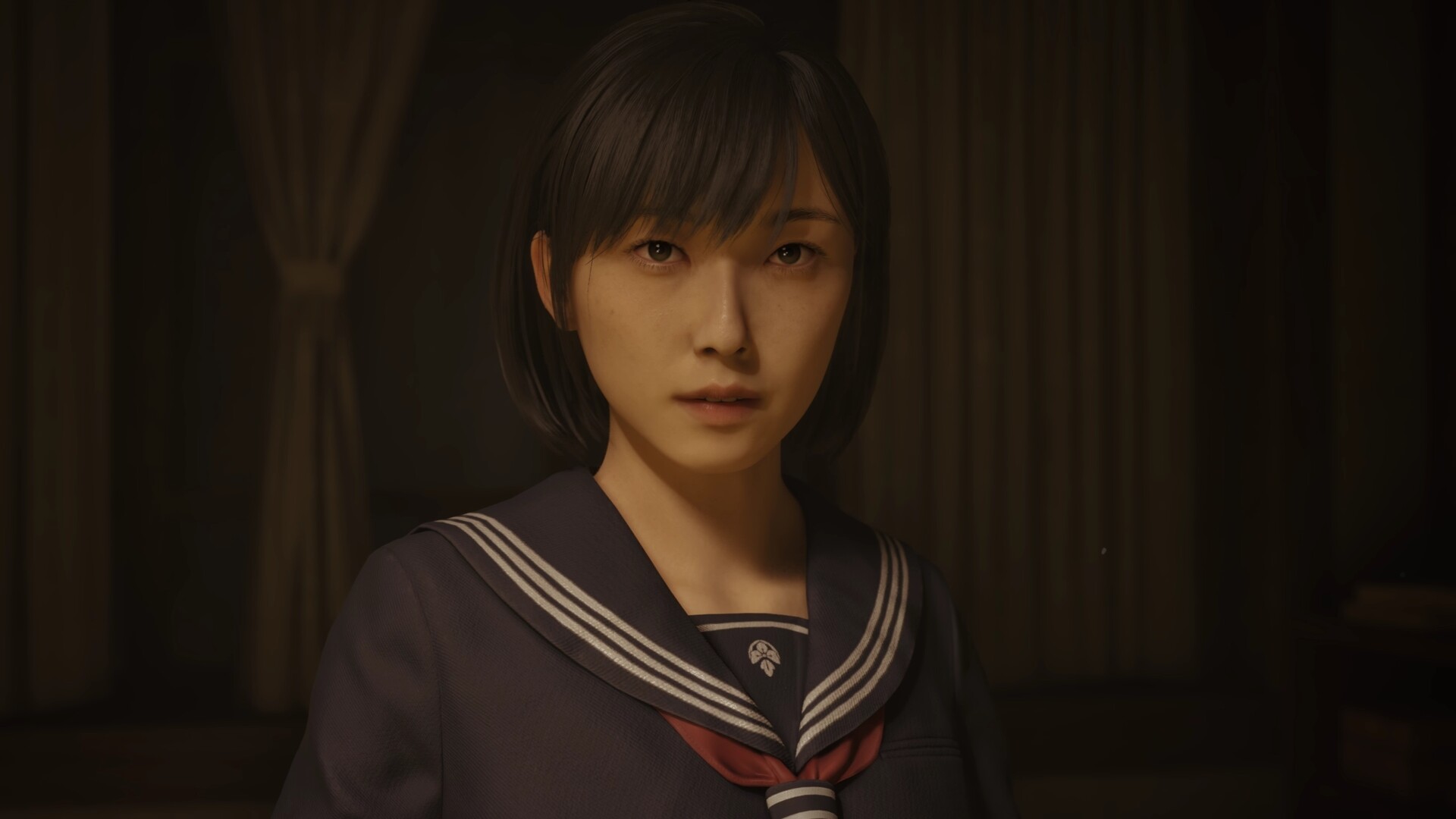
Not a mainline entry, but every bit as spooky and atmospheric as the series' best outings. Set in 1960s Japan, schoolgirl Hinako Shimazu confronts terrifying monsters after her hometown is overrun with a sinister fog, and the game's clever, unflinching treatment of her fear of womanhood and how society objectifies and traps women gives it a thematic core most horror games don't attempt.
Combat can be grindy and occasionally frustrating, a real and documented criticism worth knowing going in. The writing carries it regardless. This is well-written horror that doesn't hold your hand, and it stays in your mind long after playing in a way few 2025 releases managed.
NeoBards Entertainment, a studio with a strong background in remaster and remake work, took on an original mainline-adjacent entry here rather than another restoration, and the confidence of that choice shows throughout.
19. KARMA: The Dark World
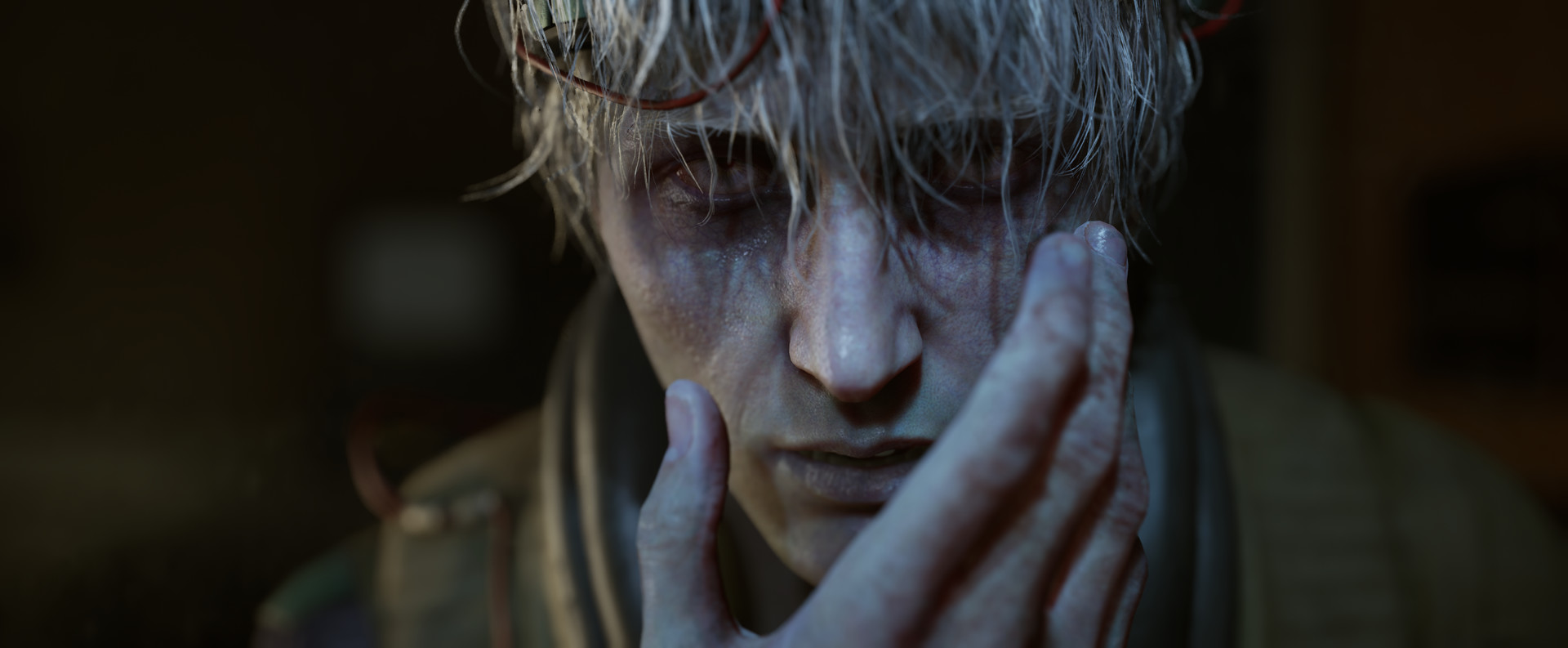
A first-person psychological horror game set in an alternate 1984 East Germany ruled by a surveillance corporation, where you dive directly into suspects' minds. The most visually stunning horror game I've played, full stop, and it earns every surreal moment on the way to a genuinely satisfying, deliberately ambiguous ending.
Critics gave it a 72 on Metacritic. That's a catastrophic misread of what this game actually does. The gameplay is minimal and the final third loses some momentum, both real criticisms, neither disqualifying. Don't let the middling score put you off something this visually and thematically confident.
The mind-diving mechanic specifically, entering a suspect's psyche to piece together their memories, is executed with a visual inventiveness that makes the low Metacritic score look even more like a genuine miss on critics' part.
20. The Sinking City 2

A Lovecraftian survival horror sequel built by a Kyiv-based studio between 2023 and 2026, during Russia's invasion of Ukraine, shifting the series from open-world investigation to focused, Resident Evil-style survival horror. Built through 85,183 documented air raid sirens, power cuts, and water shortages, with staff conscripted mid-project and homes damaged along the way.
That story alone doesn't make the game good. The game is good on its own honest merits: excellent atmosphere, real scarcity-driven combat, a standalone story that doesn't need the original to land. The exploration is more linear than the first game's open world, and some reviewers found the writing thin in the opening hours. Buy it because it earns the praise on craft alone.
Frogwares, the studio behind this, previously made the original Sinking City and several Sherlock Holmes adventure games, and the investigative DNA from that history is still visible underneath the tighter, more combat-focused structure here.
21. Scorn
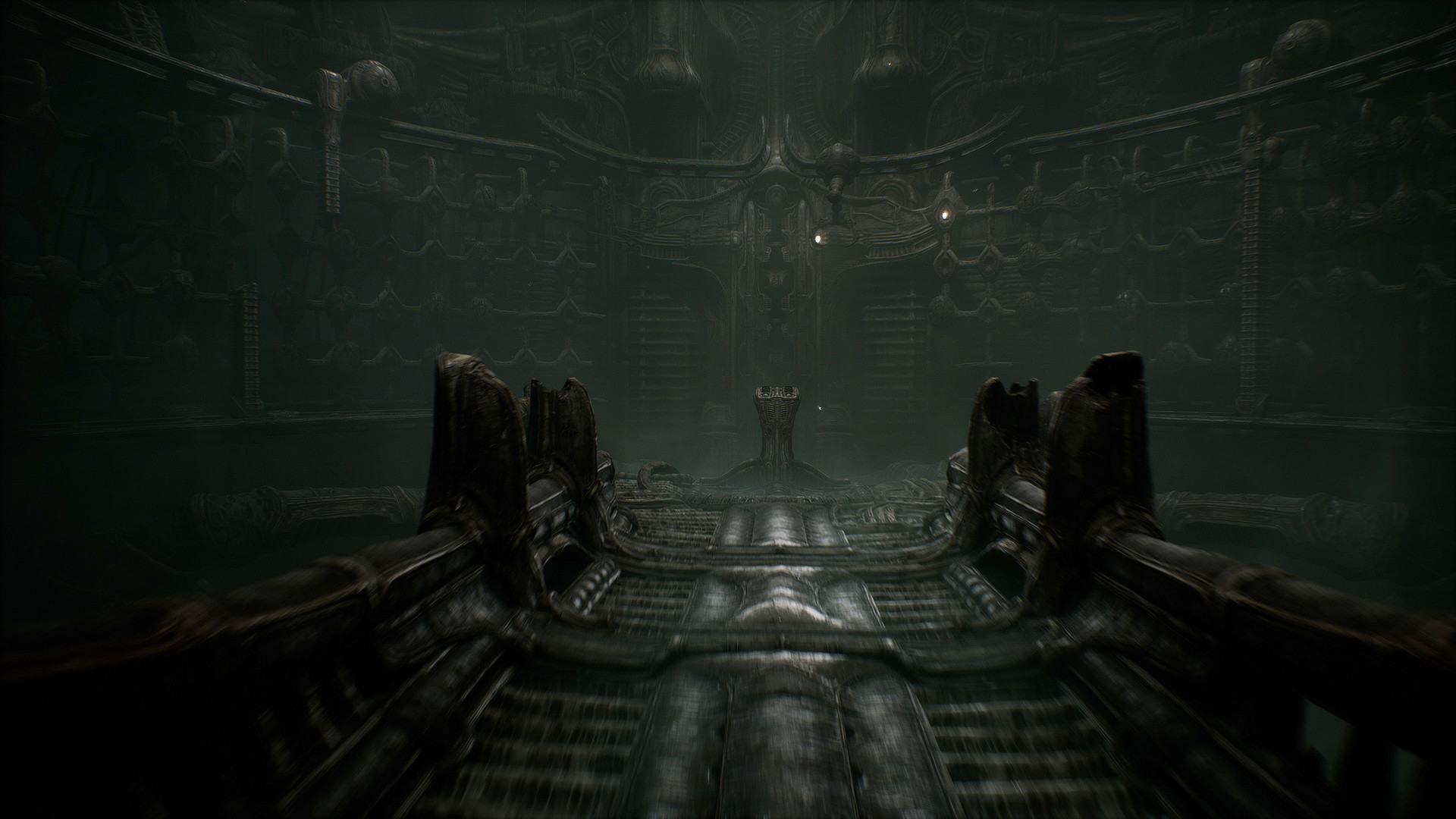
The most visually distinctive horror game ever made. Pure H.R. Giger and Zdzislaw Beksinski, rendered in a world built entirely of bone, flesh, and biomechanical dread that draws directly from both artists' visual languages more closely than any other game has attempted. The gameplay is deliberately obtuse: minimal guidance, environmental puzzle-solving, an unsettling sense of navigating a living organism rather than a level.
The slower pacing and lack of clear direction won't suit everyone, and the review score reflects that genuine split in reception. For players seeking pure atmosphere over conventional gameplay clarity, though, nothing else in the genre looks quite like this. Worth it for the art direction alone.
Ebb Software spent nearly a decade in development on this one, and the sheer commitment to a singular, uncompromising vision shows in a way that few horror games with this kind of ambition manage to actually ship intact.
22. Resident Evil Village
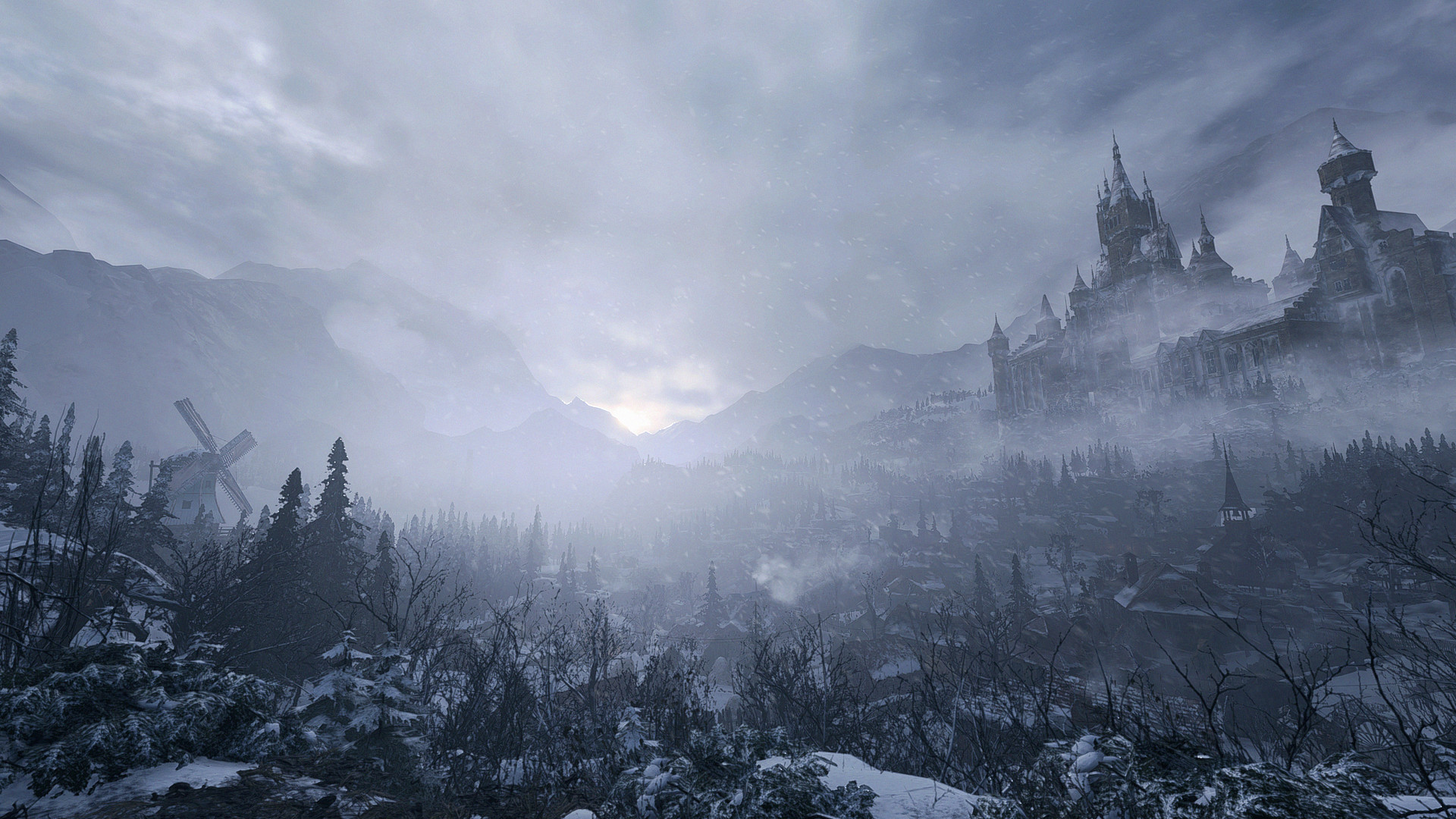
Ethan Winters' search for his daughter in a gothic European village ruled by four distinct Lords, most famous for Lady Dimitrescu, though the whole village earns the attention she got on release. Each area governs its own tone, from Dimitrescu's castle to a genuinely disturbing doll-filled house, trading RE7's sustained dread for a wider range of horror flavours across a single playthrough.
The first-person perspective carries over from RE7, but Village leans harder into gothic spectacle and mid-game action. Some longtime fans miss the earlier game's consistency. It's still confident, well-crafted horror with real production value behind every set piece, and Lady Dimitrescu's internet phenomenon status was genuinely earned.
The Duke, the game's merchant character, carries a lot of the tonal levity between areas, and that contrast turns out to matter more than it sounds like it should for keeping four wildly different horror registers from feeling disjointed.
23. Little Nightmares II

The best horror game made for people who don't typically play horror games. A small child navigates a world scaled for looming, threatening giants, with accessible puzzle-platforming carrying the moment-to-moment gameplay while the atmosphere does all the actual horror work. The Thin Man chapter specifically is the closest any game has come to replicating genuine nightmare logic.
Tarsier Studios understood that accessible doesn't have to mean toothless. This is atmospheric rather than gory, unsettling rather than shocking, and it's the single best recommendation on this entire list for someone who's curious about horror games but has always found the genre too intense to actually start with.
The Hunter chapter early in the game does an underrated job of establishing the series' rules of engagement: you cannot fight, only evade and outsmart. That groundwork matters before the more famous Thin Man sequence asks you to apply it under real pressure.
24. Crow Country
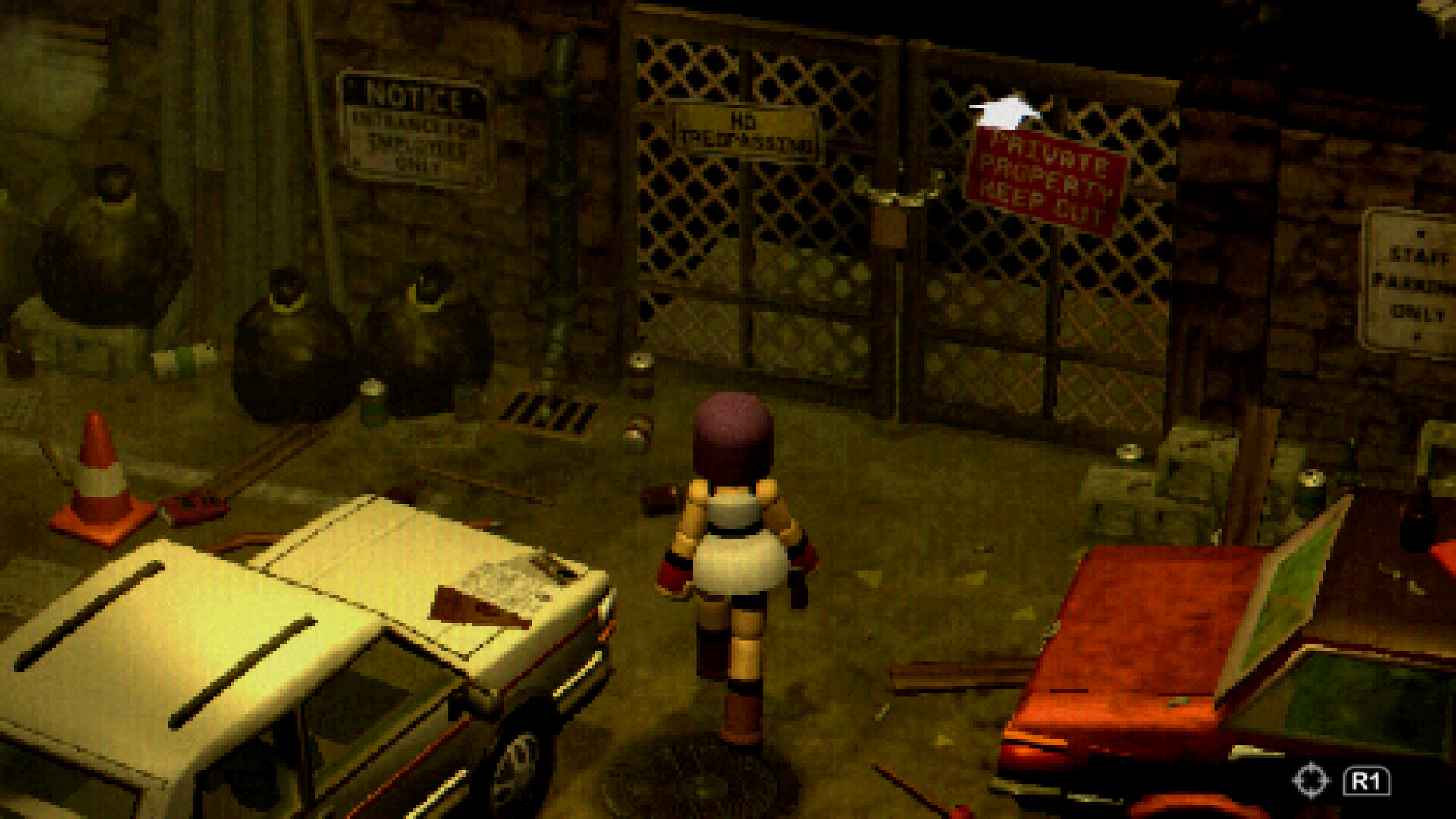
The highest-rated game on this entire list, and it is not close. Built by SFB Games, a two-person British studio, sitting at 98.1% Overwhelmingly Positive. You play Special Agent Mara Forest investigating an abandoned 1990s theme park where the owner vanished and the animatronics stopped staying animatronic, pure late-90s Resident Evil in structure, filtered through a grainy PS1 aesthetic that makes the whole thing scarier rather than dated.
Five hours, no filler. The puzzles are genuinely well designed rather than obtuse for the sake of it, and the theme-park setting gives the whole thing a colourful, almost cheerful visual language the horror plays against rather than with. Proof the genre's best ideas still come from small teams, not AAA budgets.
SFB Games' commitment to the PS1-era filter isn't just nostalgia bait. The limited draw distance and grainy texture work genuinely obscure threats in ways a modern, clean rendering engine wouldn't, and the horror is measurably weaker in any screenshot that doesn't include it.
25. Dead Space
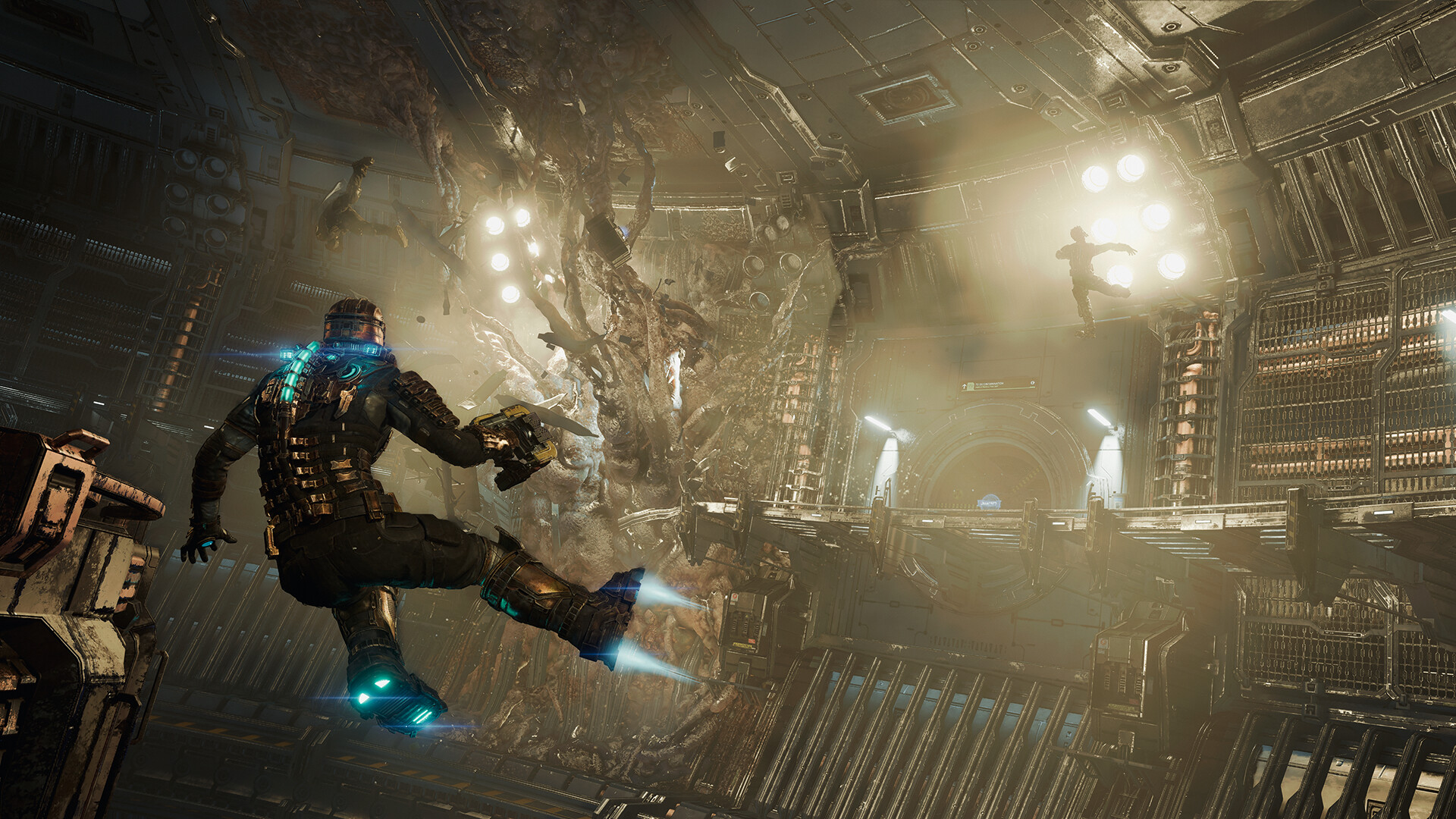
A stunning remake of a modern survival horror classic. The Ishimura is even creepier than you'll remember it in 2008, as you step back into Isaac Clarke's boots on a mission to investigate strange goings-on aboard a seemingly abandoned spaceship, only for things to go south almost immediately once you're inside.
Constantly pursued by horrific creatures known as necromorphs, the remake has been praised for its stellar visuals, sound design, and its notoriously punishing permadeath Impossible Mode for players who want the ultimate test. Even if you've never played the original, this is definitively the best way to experience it. Just don't aim for the head.
Motive Studio's remake added a full voice for Isaac Clarke, who was famously silent in the original, a genuinely significant change that some longtime fans resisted at first and most came around on once they actually played it.
26. Amnesia: Rebirth
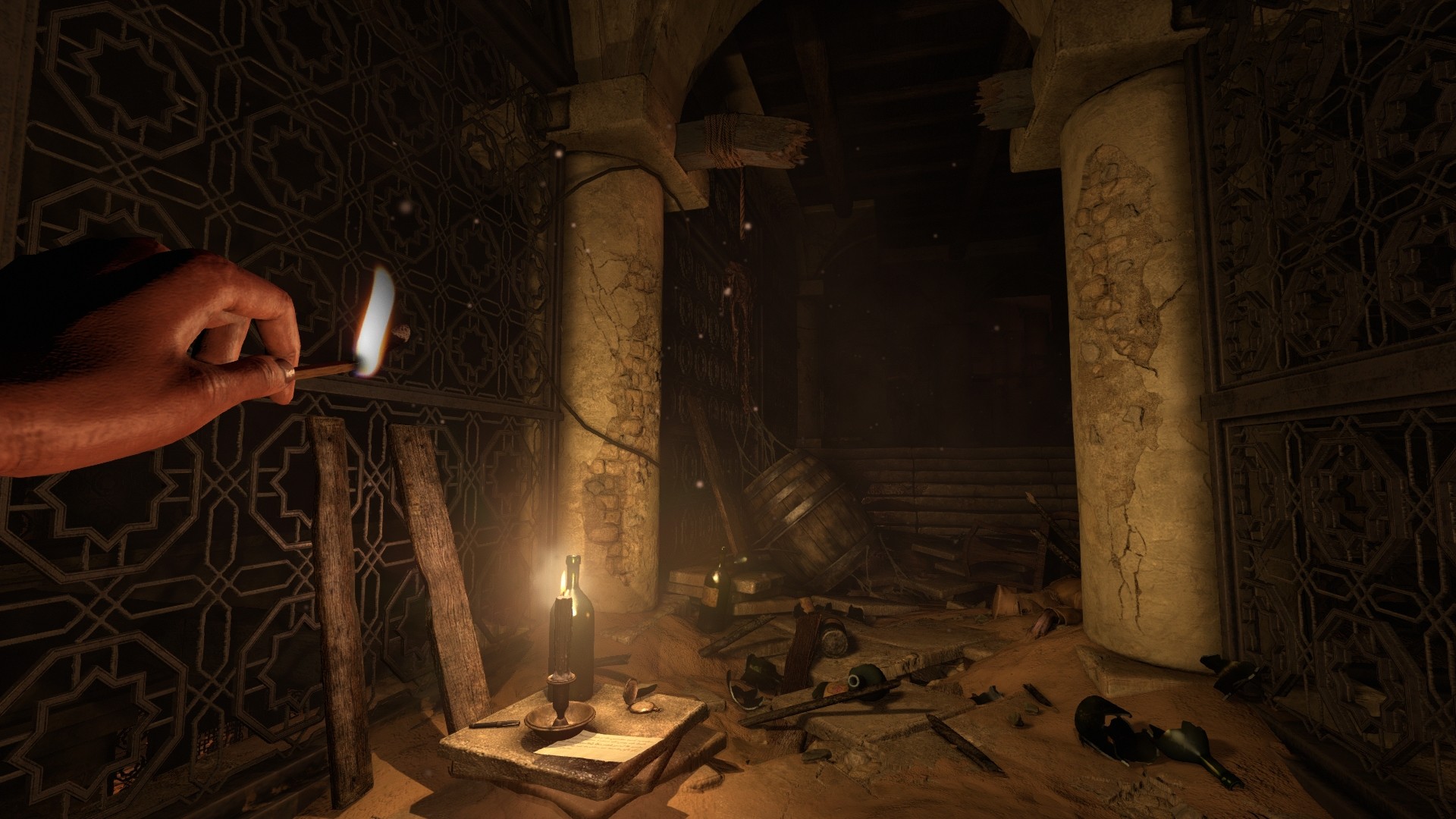
Not as good as The Dark Descent, but genuinely better than its reputation suggests. Tasi Trianon navigates a nightmarish version of colonial Algeria in 1937, weaving a pregnancy-centered narrative into Frictional's established sanity-and-vulnerability formula. It doesn't reach the same benchmark of dread the original set, but the setting and story give it real distinctiveness rather than functioning as a straight retread.
Play The Dark Descent first if you haven't. Rebirth is better appreciated with that foundation already in place. Once you're there, this earns its spot on any serious horror list purely on the strength of a story that goes places the original never attempted.
The desert setting is a genuine departure from the series' castle-and-facility comfort zone, and while it doesn't always land as effectively, the attempt to expand what an Amnesia game can look like is worth crediting on its own.
27. The Outlast Trials
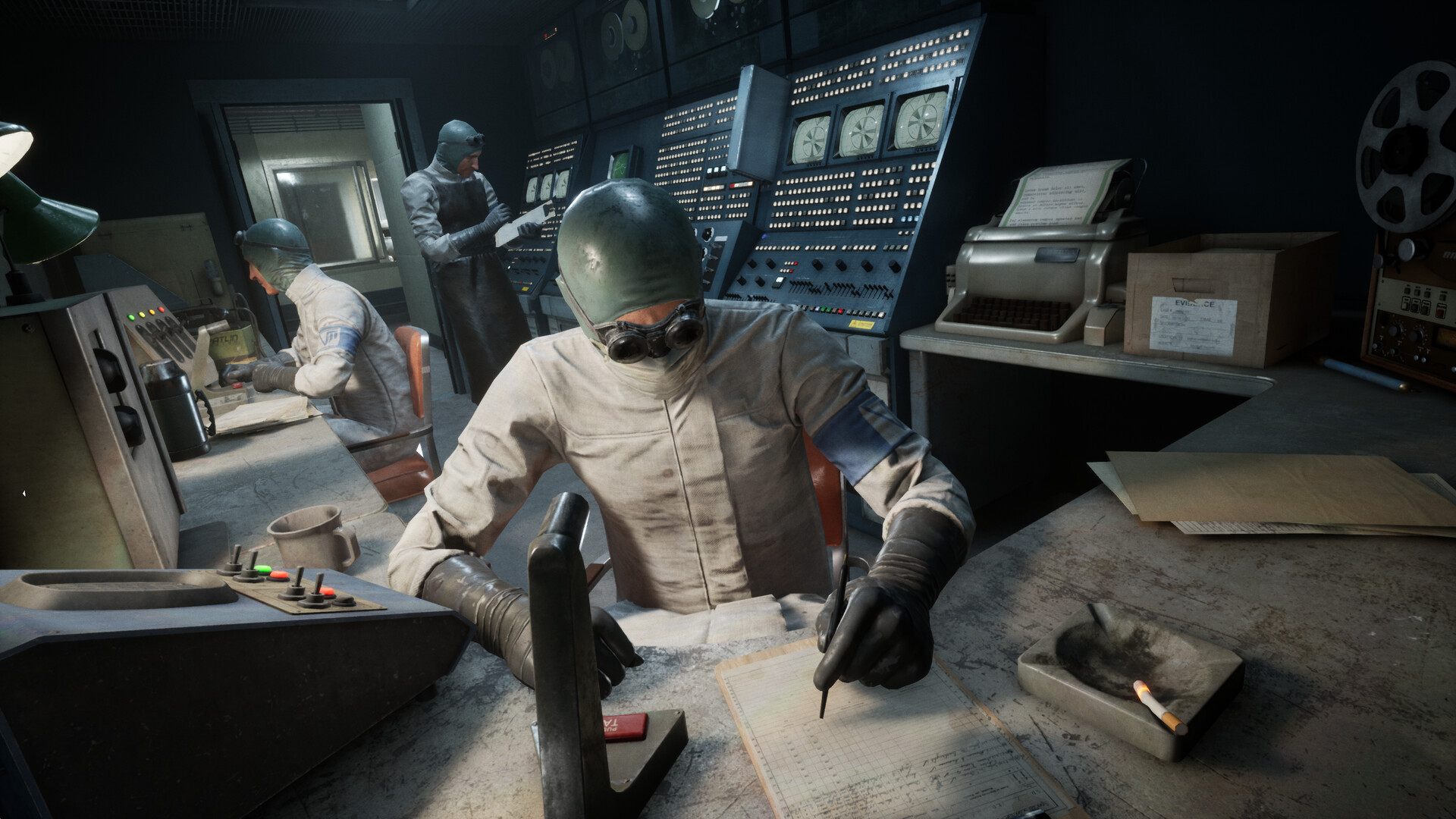
Red Barrels take the camcorder dread of the original Outlast and hand it to a group. Cold War-era human experimentation trials, playable solo or with up to three friends, with the night-vision mechanic now shared across a squad rather than carried alone. The diverse trial environments keep the format from feeling repetitive across dozens of runs.
The concurrent player count has settled since launch and the later trial tiers can grind without a committed group, but 53,000-plus reviews sitting at 94% positive is not an accident. If your group liked the original, this is the obvious next step, and it's genuinely one of the better co-op horror options on Steam right now.
The character customisation and cosmetic systems layered on top of the core horror loop are a genuinely odd fit on paper, but in practice they give the repeatable trial structure a reason to keep returning beyond just the horror itself.
28. Doki Doki Literature Club
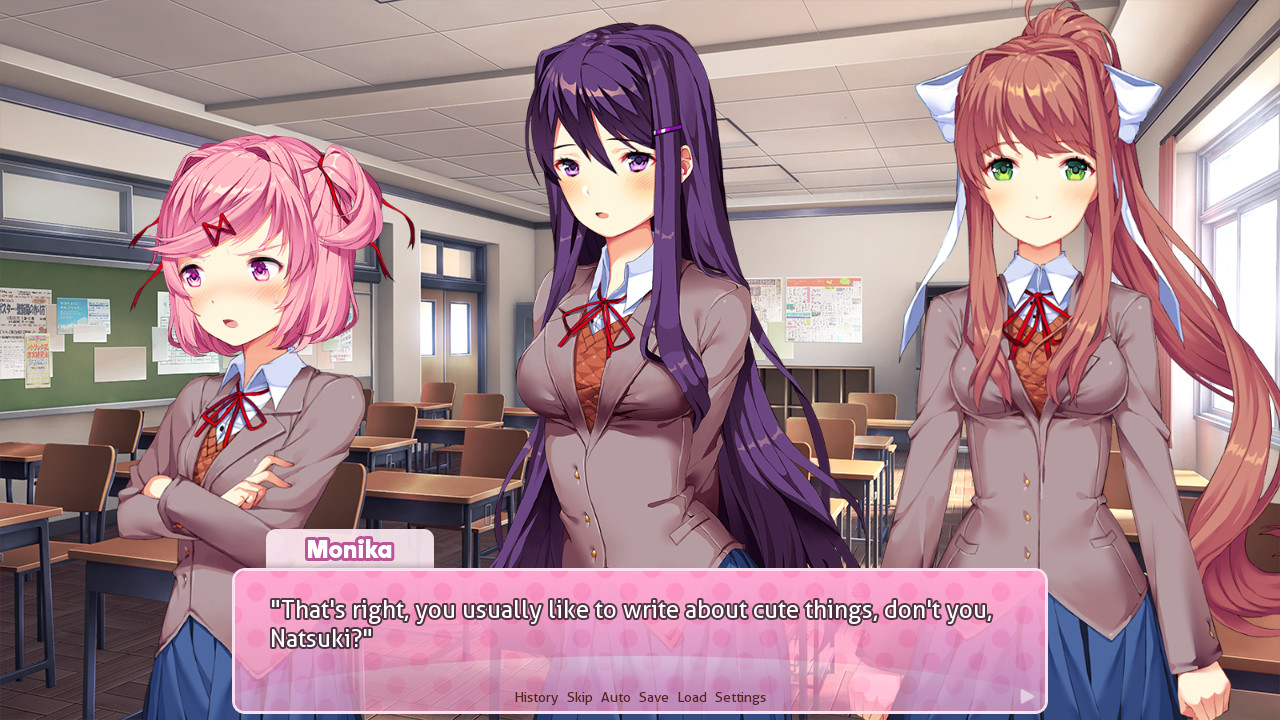
Presents itself as a visual novel about a high school literature club. This is accurate for approximately the first hour. What it becomes after that is something I'm not going to describe, because the less you know going in, the more effective the whole thing is. The content warnings on the Steam page exist for real reasons: this is not a game for everyone.
The disturbing content it contains is genuinely disturbing rather than performatively shocking, and that distinction matters more than most horror games understand. It's completely free, which means there's no real reason not to try the first hour if the content warnings don't exclude you.
Team Salvato's decision to release this for free rather than charge for it was a deliberate choice tied directly to what the game does with genre expectations. Charging money for it would have undercut the specific kind of trust it needs from a player going in blind.
29. SONG OF HORROR Complete Edition
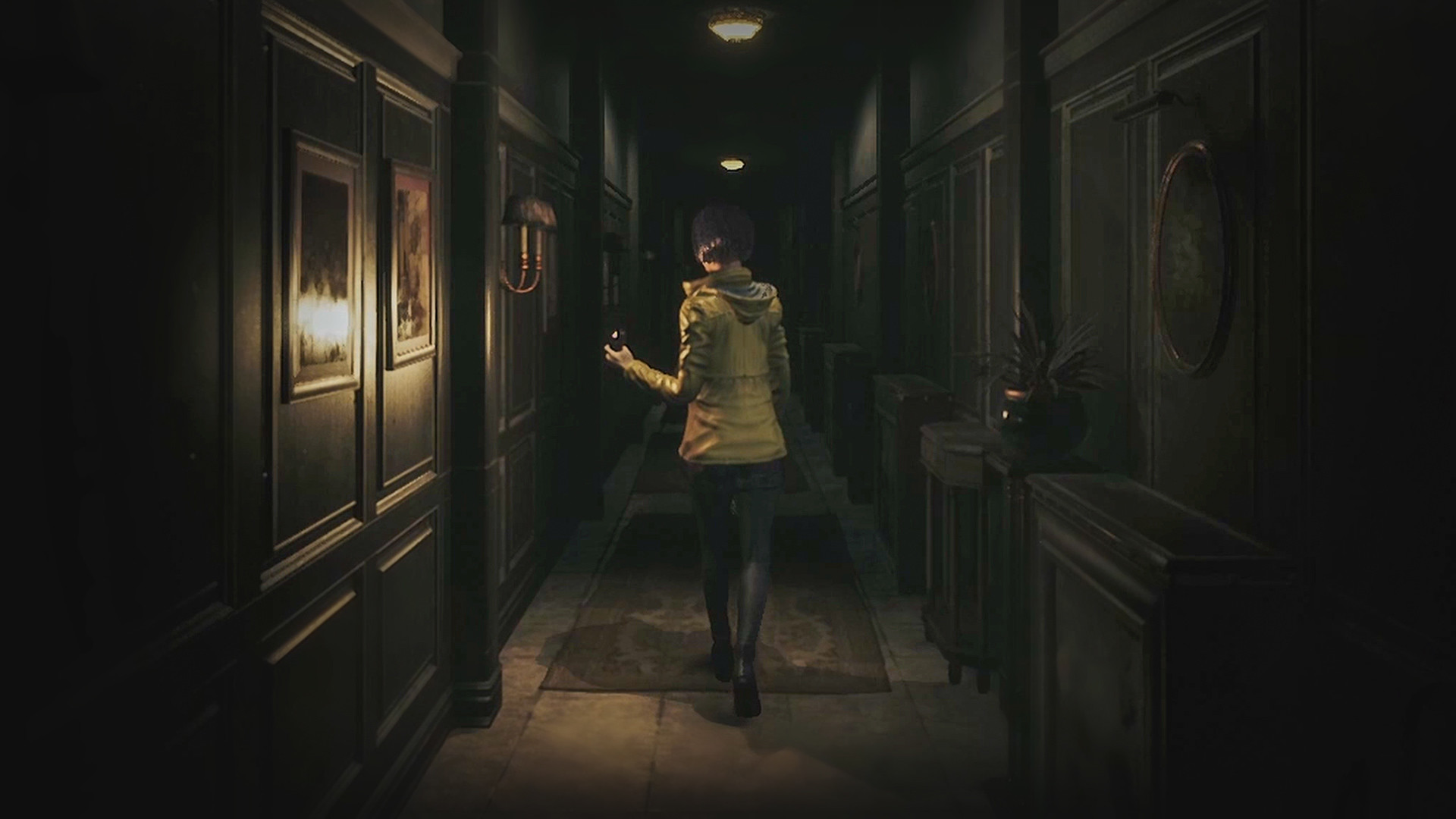
Permadeath survival horror across five episodes, investigating disappearances tied to a mysterious antique music box called The Presence. The real hook: lose a character to the game's genuine permadeath system and they're gone for the rest of the story, forcing real weight into every decision rather than treating death as a checkpoint reset.
Fixed camera angles and deliberate pacing evoke classic survival horror directly, and the rotating cast means the stakes never fully reset even after a loss. Pacing and some technical rough edges across its episodic release drew mixed reception, which the score reflects honestly, but the permadeath structure alone makes it worth knowing about.
Protocol Games released this across five separate episodes originally, and the Complete Edition bundling here means you get the full permadeath stakes across the whole story rather than a fragmented, waiting-between-episodes experience.
30. Still Wakes the Deep

A 1970s North Sea oil rig, cut off from the world, where drilling has disturbed something ancient and wrong deep beneath the sea floor. From The Chinese Room, known for narrative-driven titles like Everybody's Gone to the Rapture, it pairs genuinely tense survival-horror sequences with strong Scottish working-class character writing that carries real weight alongside the horror.
The claustrophobic, isolated setting does a lot of the atmospheric heavy lifting, and the game is genuinely shorter than most entries on this list, five to six hours, but it doesn't overstay its welcome. A tight, well-written horror experience that knows exactly how long its own premise should run.
The Chinese Room's decision to set this specifically in 1975, rather than a more generic modern setting, grounds the oil rig's technology and isolation in a period where help genuinely couldn't arrive quickly, which does real work for the sense of being trapped.
31. The Evil Within
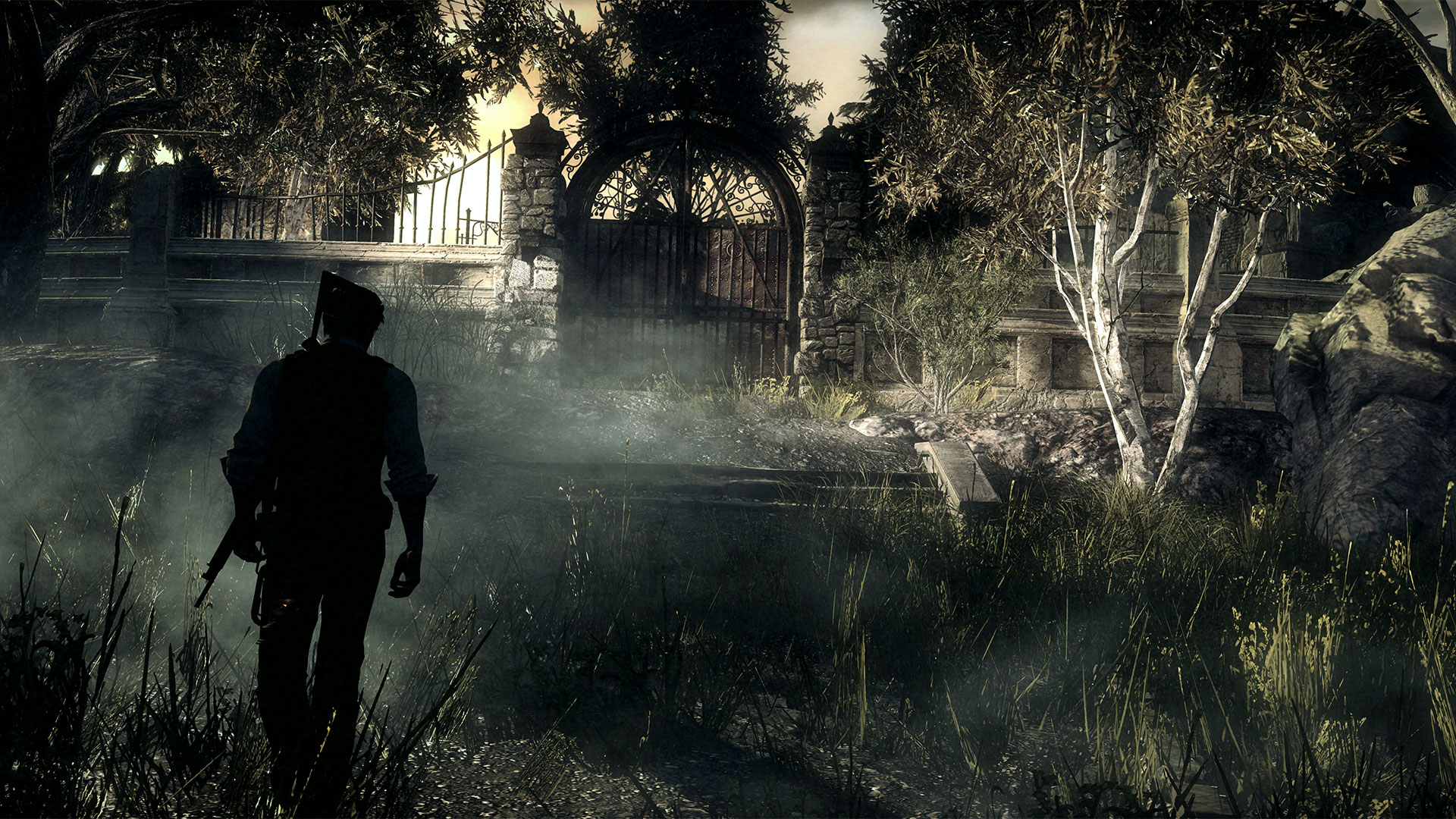
Shinji Mikami's spiritual successor to Resident Evil 4, and it shows in every scarcity-driven survival mechanic. Detective Sebastian Castellanos investigates a massacre at a mental hospital and finds himself trapped in a shifting, nightmarish version of reality where nothing stays where it should be, hunted by some of the most memorably grotesque creature designs in the genre.
The lower review score reflects real, documented complaints: a locked aspect ratio and camera that frustrated players at launch, and pacing that sags in the middle stretch. Both genuine issues. Neither disqualifying for horror fans specifically, who'll find real oppressive atmosphere and scarcity here that's worth pushing through the rough edges for.
The sequel, The Evil Within 2, addressed several of the original's camera and pacing complaints directly, which is worth knowing if this entry's rough edges are the main thing holding you back from the series.
32. Layers of Fear (2016)
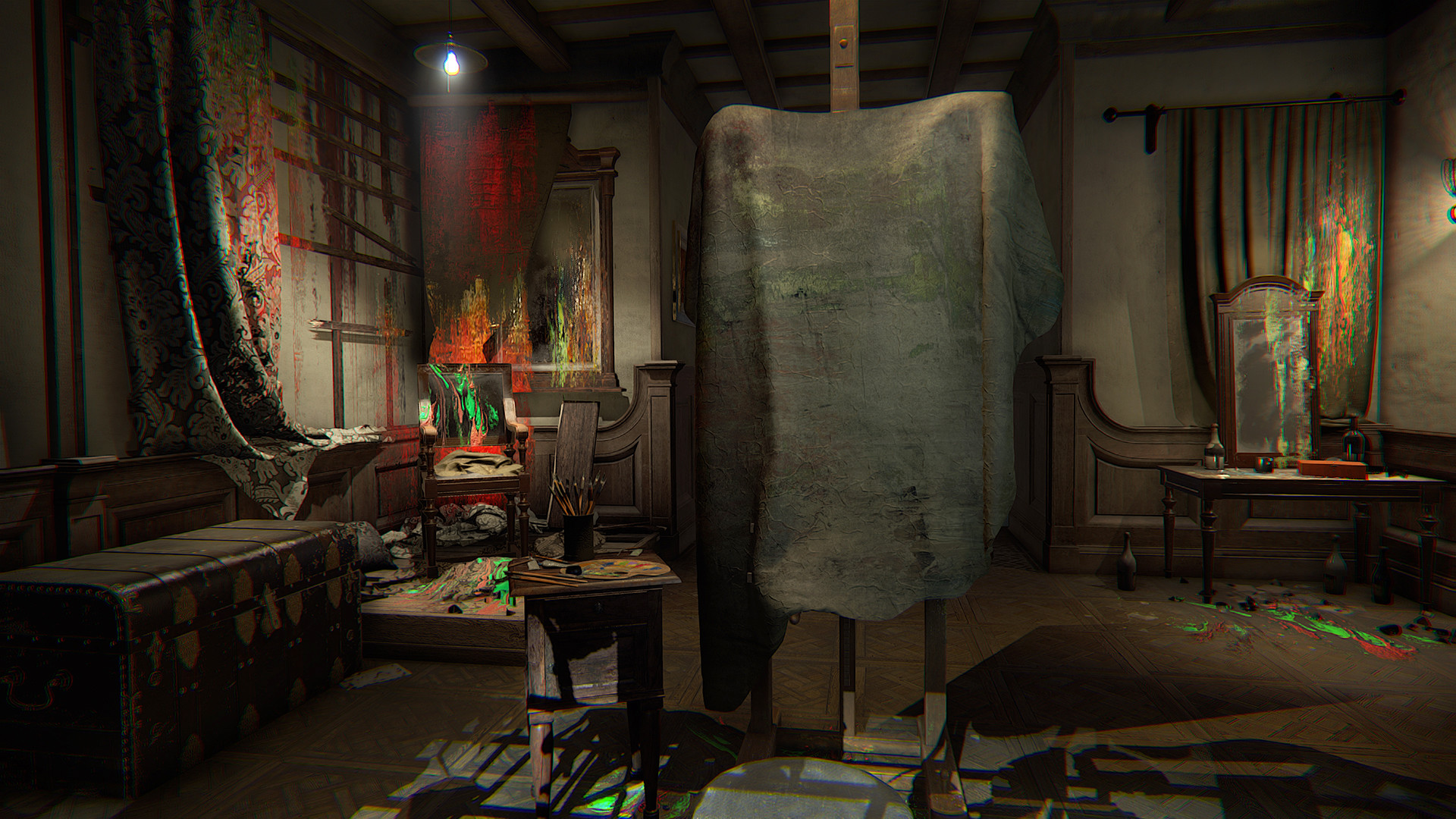
Most games can make you jump. Few can make you doubt yourself in real life. An unreliable narrator explores a spooky, cavernously empty Gothic house that quietly rearranges itself around him, with the story unravelling slowly through unreliable narration of the physical world itself. Doors disappear, corridors warp out of shape just at the edge of your vision.
The game rearranges itself specifically to mirror the protagonist's collapsing sanity, built around an obsessional painting made from questionable materials that only deepens the unease the longer you spend in the house. A tight four-to-five-hour experience that never wastes a moment establishing its central trick.
Multiple distinct endings reward paying attention to environmental details on a second playthrough, turning what looks like a single linear walking experience into something with genuine reason to revisit.
33. Slender: The Arrival
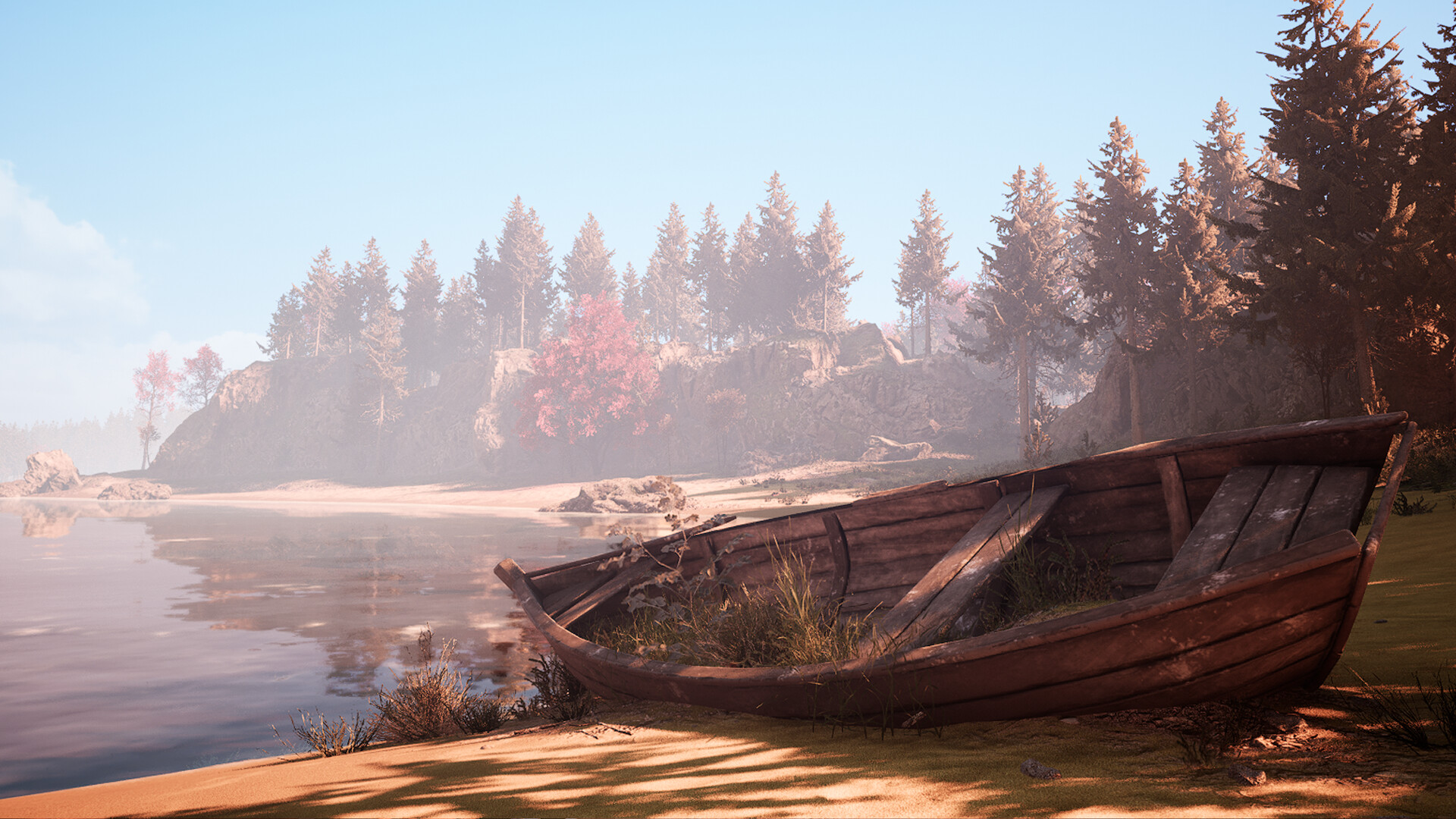
The officially licensed follow-up to the free browser game that turned Slender Man into a genuine internet horror phenomenon, and the formula every "collect items while avoiding a stalker" horror game since has copied directly. Explore dark environments collecting pages while managing a limited flashlight, with the titular figure appearing unpredictably at the edge of your vision.
It holds up reasonably well over a decade later, even if the core loop can feel dated and repetitive compared to what it went on to inspire. Worth playing for horror history alone: this is the game an entire generation of walking-simulator horror traces its lineage back to.
Blue Isle Studios later moved on to other projects entirely, and this remains the clearest evidence of what made the original Slender Man concept work as more than just an internet fad, pure, sustained, unresolved dread from something that never quite lets you see it clearly.
34. Until Dawn
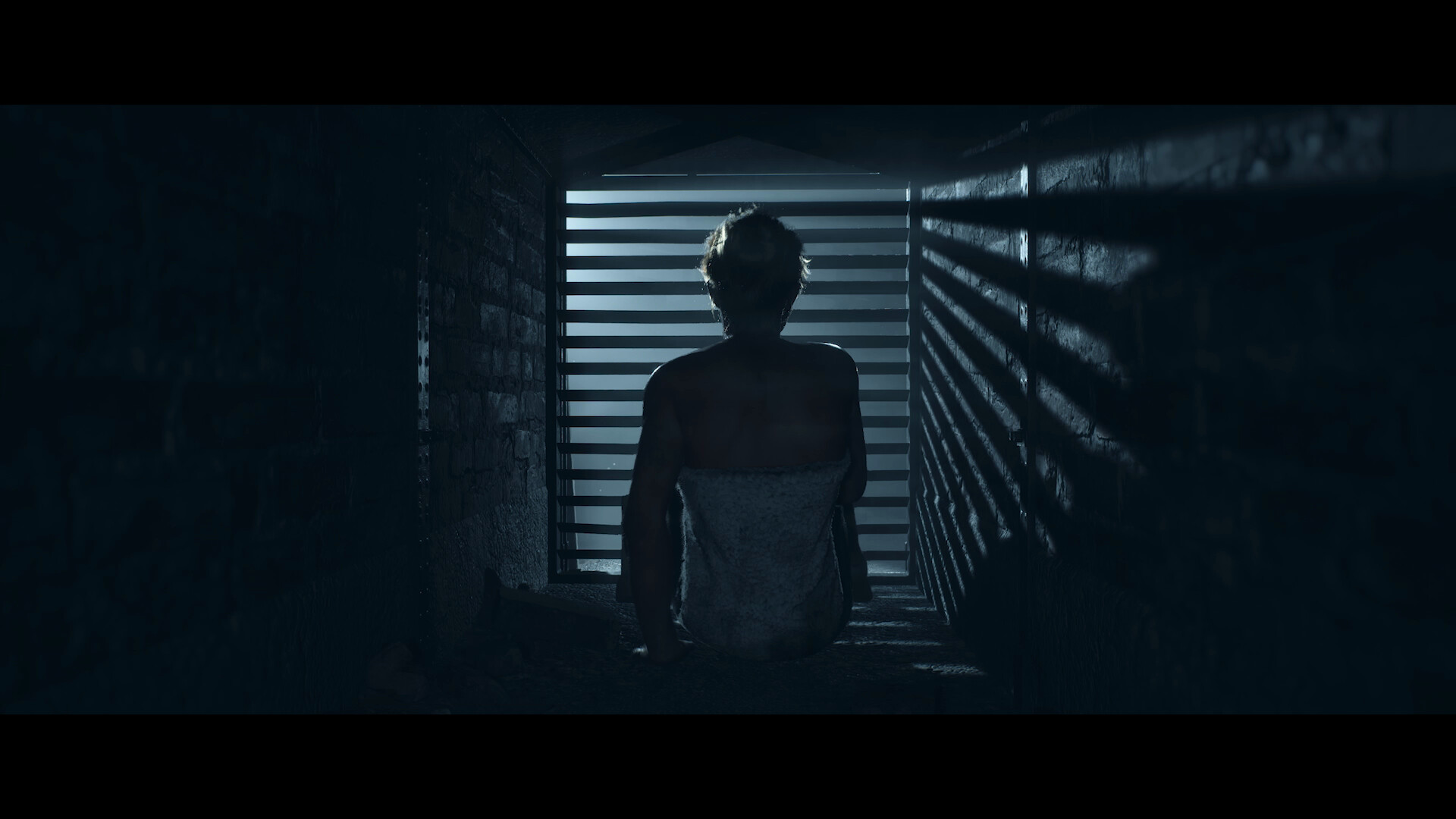
A pack of teens go on vacation to an isolated mountain cabin, only to find something heinous is set on killing them off, one by one, based directly on your own decisions. Characters die gruesome deaths if you can't navigate the game's horror-movie logic, and it takes every opportunity to scare you while packed with knowing winks to slasher genre tropes.
Willfully, soulfully entrenched in horror tradition, and it uses those tropes brilliantly. You'll love the ridiculous twists even when you see them coming from a mile away, and you'll laugh as much as you scream. Few horror games capture that specific sense of grisly fun so well.
Ballistic Moon's PC port preserved the original's branching-choice architecture faithfully, meaning the replay incentive from the 2015 PlayStation original carries over completely rather than being simplified for the new platform.
35. Mundaun
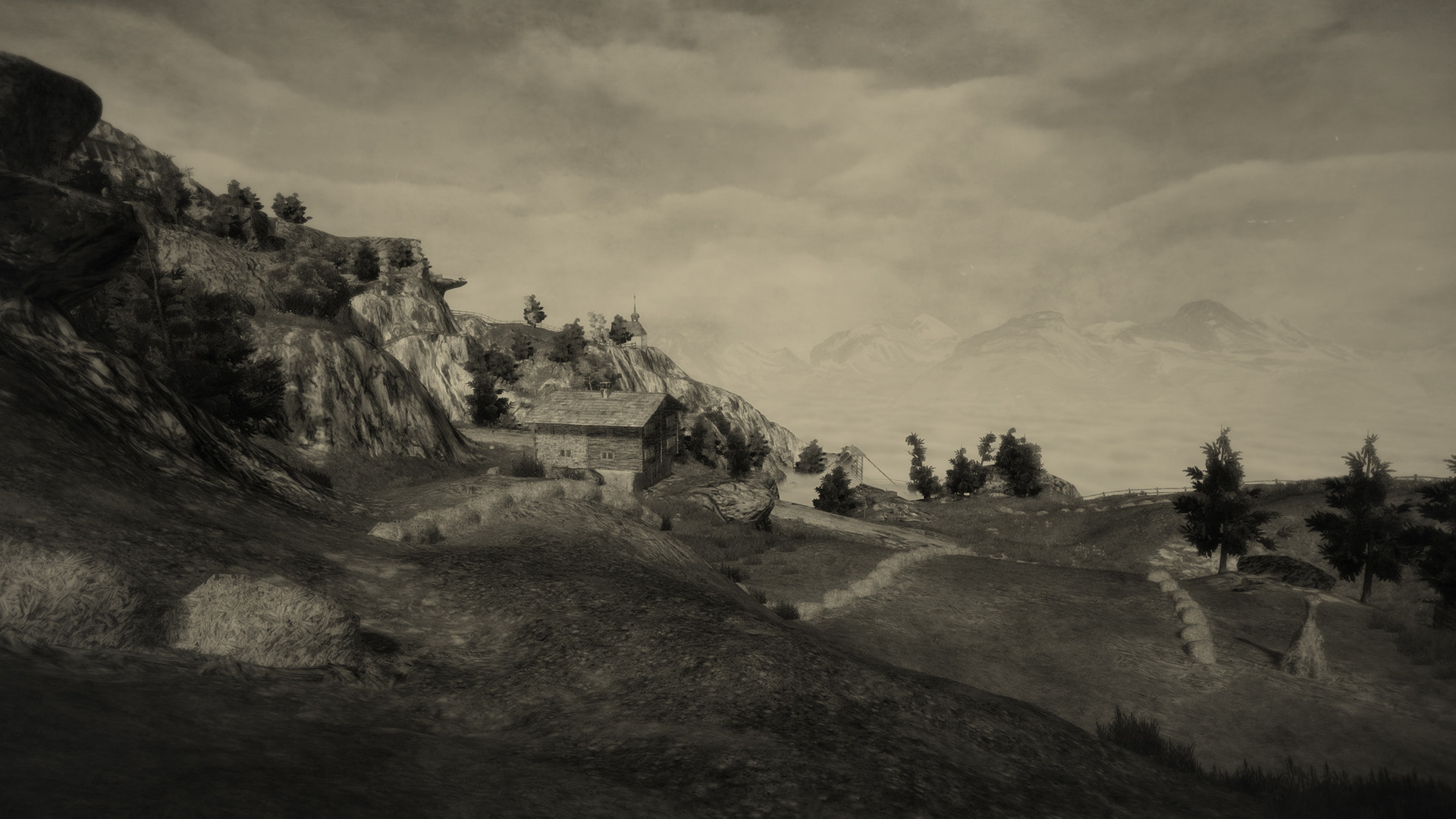
A weird, creepy little game with a The Lighthouse and Midsommar vibe to its strange, hand-drawn tale. The black-and-white, first-person scares see you revisiting your Swiss hometown after your grandfather's death, uncovering an ancient family curse built from real 1920s-era folklore rather than generic horror-movie tropes.
The scratchy penciled art, entirely hand-drawn, gives the whole thing an otherworldly vibe most horror games never attempt. It's a little clunky in places, with a few unclear puzzles and goals, but worth powering through for a horror game built from a genuinely different cultural foundation than almost anything else on this list.
Composer duties, art, and writing were all handled by the same tiny team, and that singular authorial voice is a large part of why the game feels genuinely foreign in a way most horror doesn't, rather than just visually distinct.
36. Observation

You play as the AI managing a space station after something has gone wrong, not the person trying to survive. The perspective inversion creates a specific kind of unease conventional horror can't replicate: you are simultaneously the horror and the help, and No Code's game exploits that uncomfortable position well across its runtime.
The most conceptually original entry on this entire list. Some players find the camera-and-system-management gameplay less viscerally engaging than traditional first-person horror, which the review score reflects honestly, but the concept itself is worth experiencing regardless of how you feel about the moment-to-moment mechanics.
No Code's follow-up work since has continued exploring unconventional perspectives in horror and sci-fi, and this remains their clearest statement of what that approach can do when executed with full commitment.
37. What Remains of Edith Finch
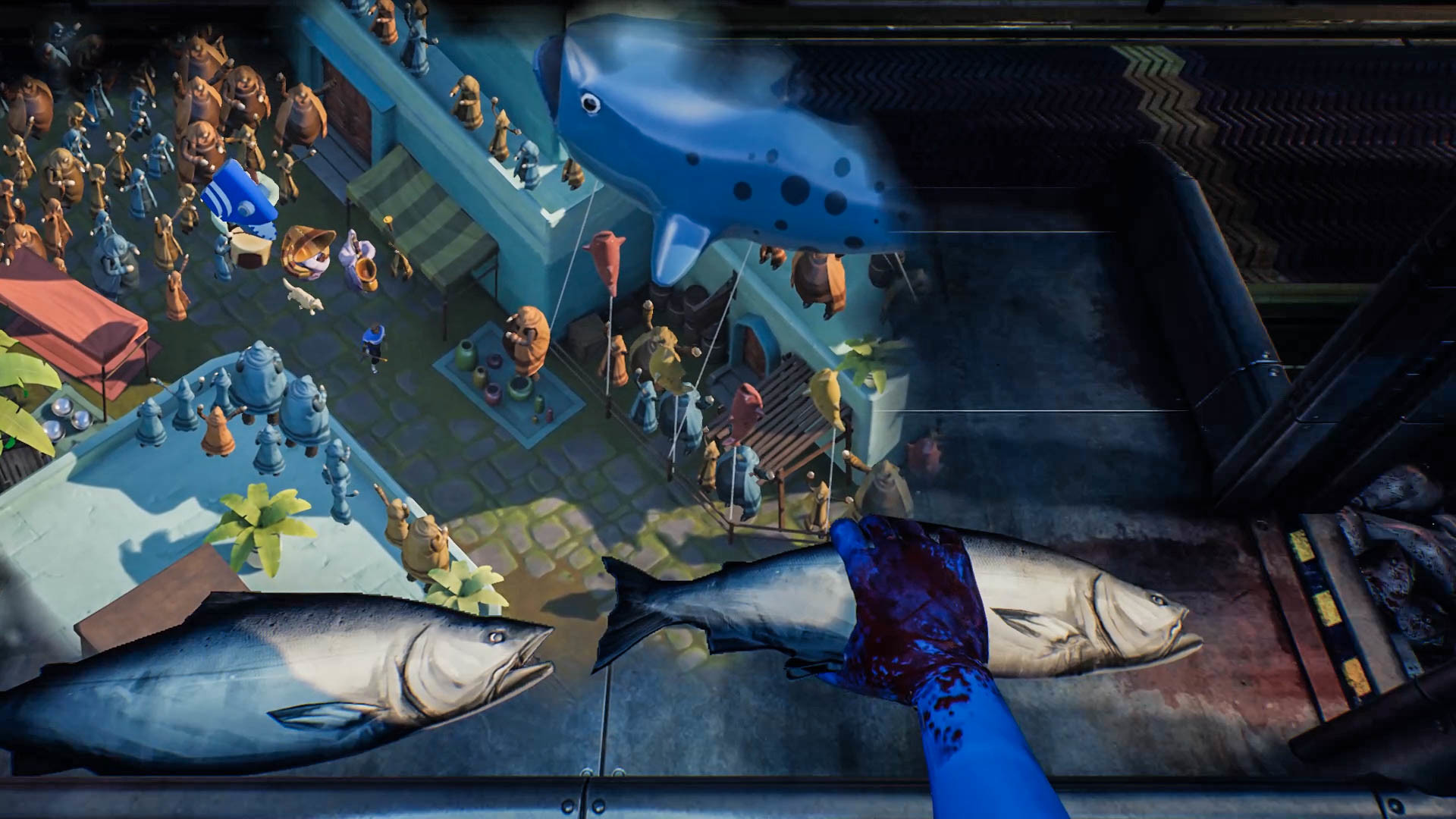
Every death in the Finch family is a short playable sequence in a different style. The cumulative effect is profound and genuinely lingering: by the time you reach the final sequence, you've experienced each of these losses personally rather than just heard about them, delivered across a tight two-hour runtime that never wastes a moment.
Not conventionally scary. Psychologically affecting in a way that earns its place on a horror list anyway, dealing with loss and family history through a horror-adjacent lens rather than a purely frightening one. One of the most complete short narrative experiences available anywhere on Steam.
Giant Sparrow deliberately varied the gameplay style of every single death sequence, some are more traditional exploration, others abstract entirely into something closer to poetry, and that formal variety is a large part of why the two hours never feel repetitive.
38. Sunless Sea
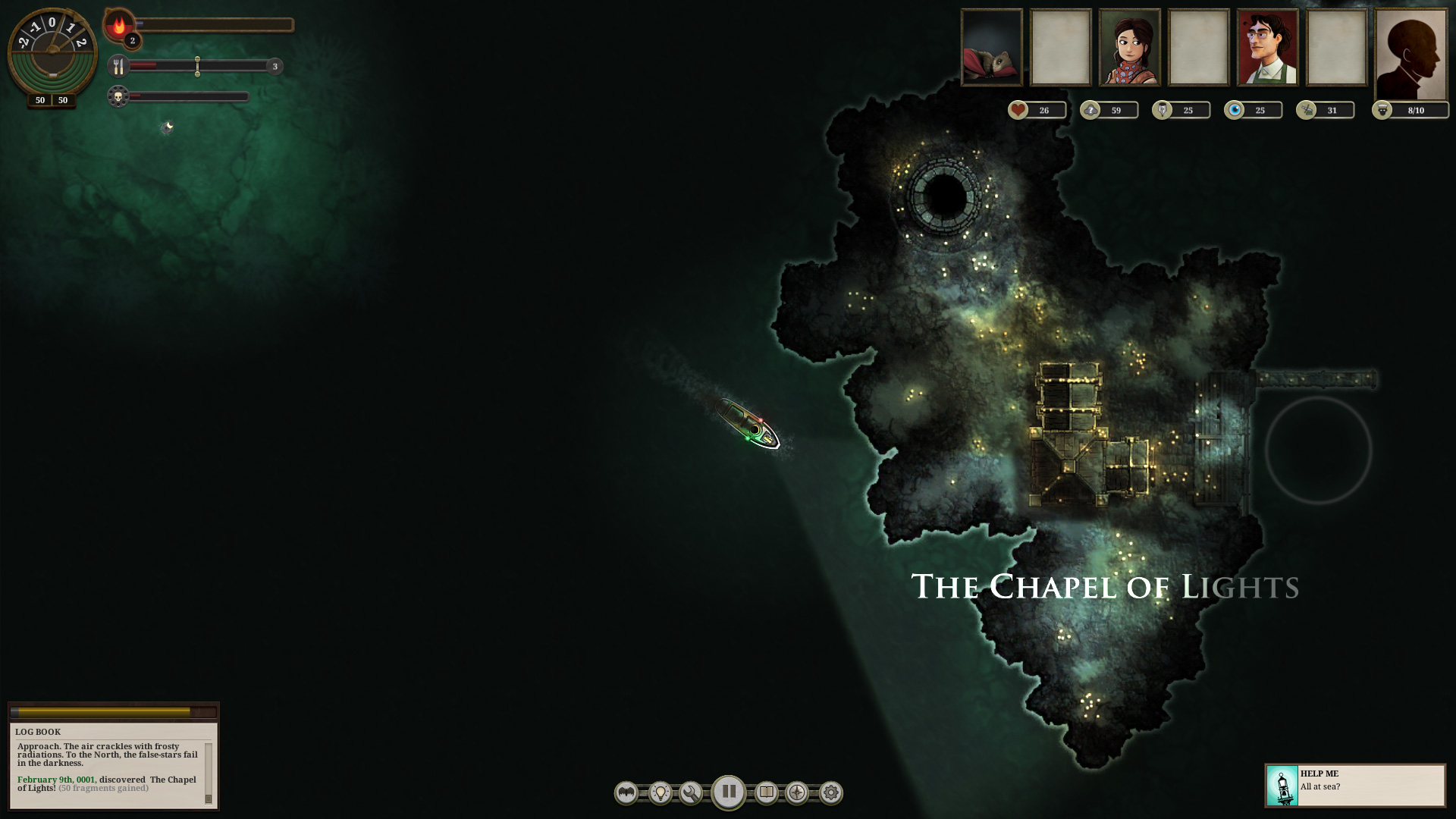
Literary Lovecraftian horror. An underground ocean beneath London where the rules are incompatible with human sanity, delivered almost entirely through dense, evocative writing rather than jump scares or visual spectacle. The horror accumulates through evidence that the world below London has been operating on its own logic long enough that nothing human survives its depths unchanged.
A punishing roguelike structure with permadeath means losing captains and starting over is core to the experience, not a failure state to avoid. Horror for people who read, genuinely. If that's your kind of dread, nothing else on Steam delivers it quite this way.
Failbetter Games built this within the same Fallen London universe as their other titles, and while no prior knowledge is required, longtime fans of that setting will recognise plenty of texture that rewards familiarity without requiring it.
39. Returnal
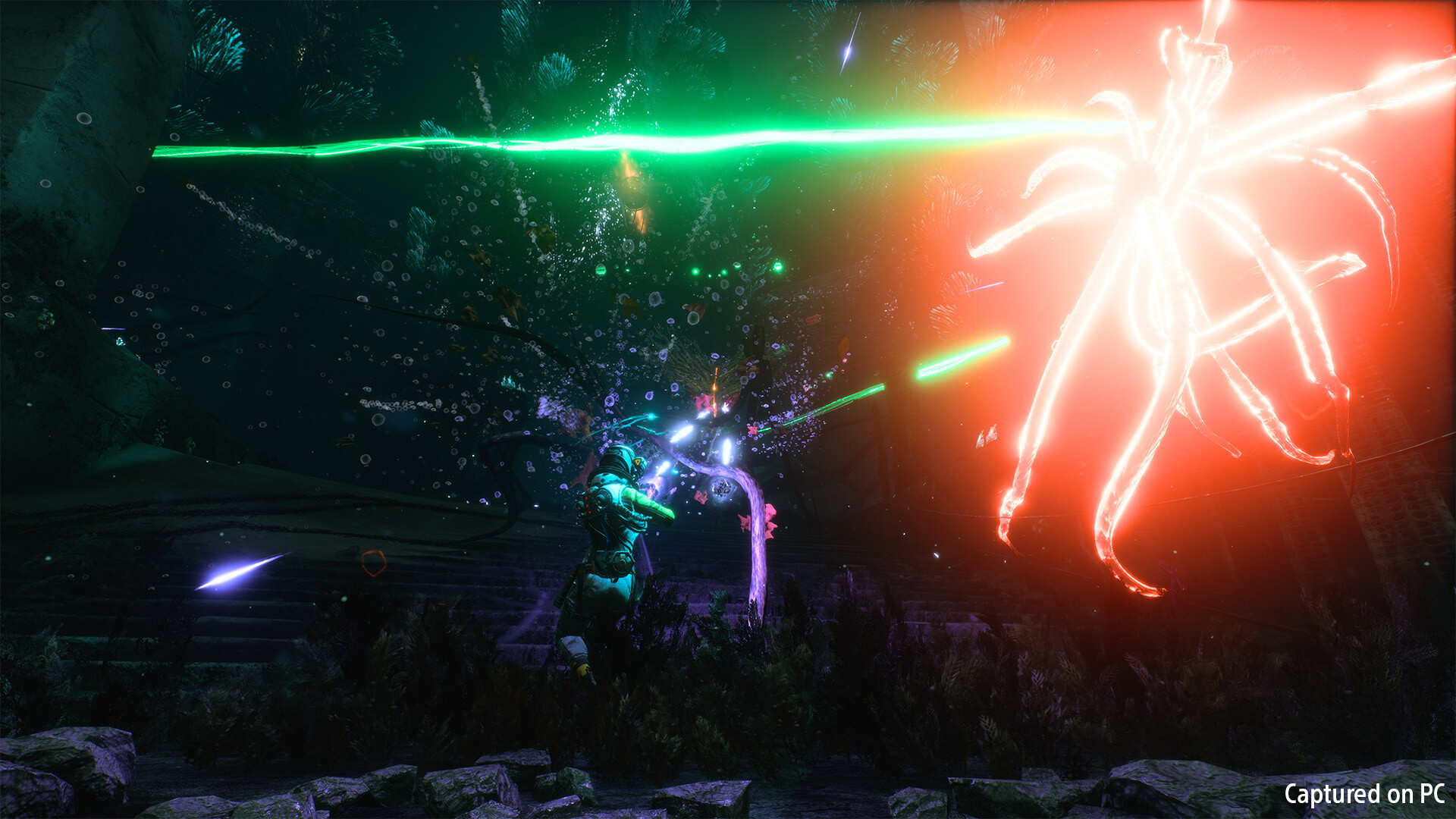
Not an obvious scary game on the surface, but a strong vein of cosmic horror runs through everything Returnal does. Pilot Selene is trapped in a time loop on a hostile alien planet littered with Lovecraftian ruins and wrong-shaped monsters, piecing together a disturbing story as she dies and returns, again and again, to the same nightmare.
It's a big ask mechanically: fighting through waves of monsters and impossible-feeling boss fights repeatedly. But there's a genuinely great atmosphere and unnerving narrative running beneath the roguelike action. More unnerving than jumpy, and worth the difficulty for the atmosphere alone.
Housemarque's background in high-intensity arcade shooters like Resogun shows clearly in the moment-to-moment combat feel, even as the game's atmosphere and story pull hard in a much more contemplative, dread-focused direction.
40. Iron Lung
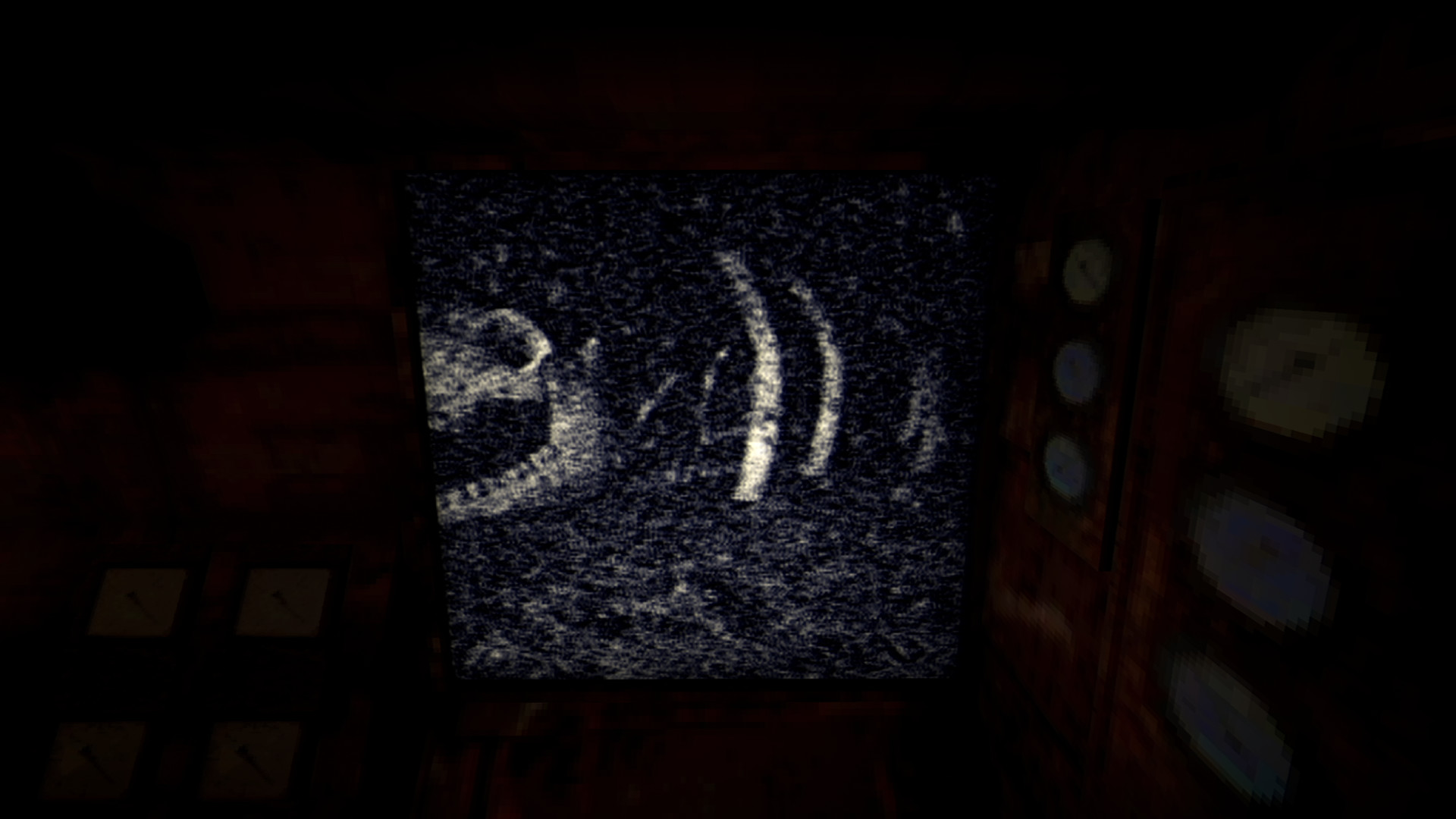
Pilot a cramped, battered submersible through an ocean of blood on a distant moon, taking required photographs in near-total darkness while something moves out there in the murk. David Szymanski, also known for the acclaimed shooter DUSK, strips horror down to a single claustrophobic premise and executes it with total confidence.
Short at one to two hours, but it earns every minute. The near-total darkness and cramped confines of the vessel build a specific, sustained unease that lingers well past the credits, proof that a genuinely tight, focused horror idea doesn't need a long runtime to land.
David Szymanski released this between larger projects, and the fact that a solo developer could deliver something this atmospherically complete in such a short runtime says something real about focus mattering more than scope in horror specifically.
41. The Walking Dead: Saints & Sinners
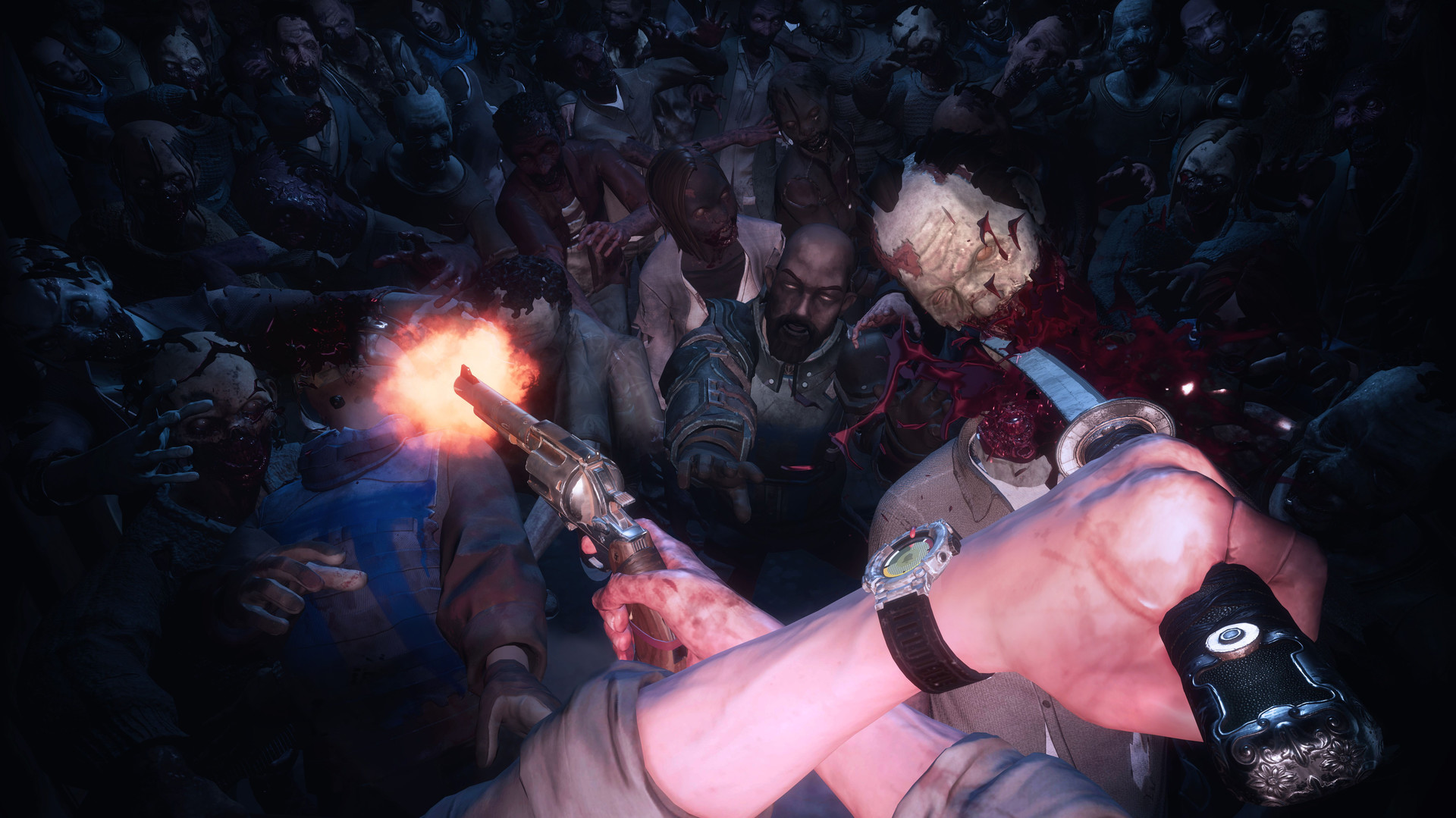
One of the greatest playable interpretations of zombie fiction ever made, and it requires VR to fully land. That's the only real barrier here. Swinging an axe or stabbing a screwdriver into a zombie's skull, physically, with your own hand, creates a visceral tension flat-screen zombie games simply cannot replicate. A semi-open post-apocalyptic New Orleans rewards cautious, house-by-house exploration.
It has nothing to do with the comics or TV show beyond the zombie premise, so no prior franchise knowledge is required. If you have a VR headset and any interest in zombie horror, this is close to essential. If you don't, it's the single best argument for getting one.
A sequel, Chapter 2: Retribution, expanded the world further, and Skydance Interactive's continued investment in the format suggests VR zombie horror has found a genuinely sustainable audience rather than being a one-off experiment.
42. Phasmophobia
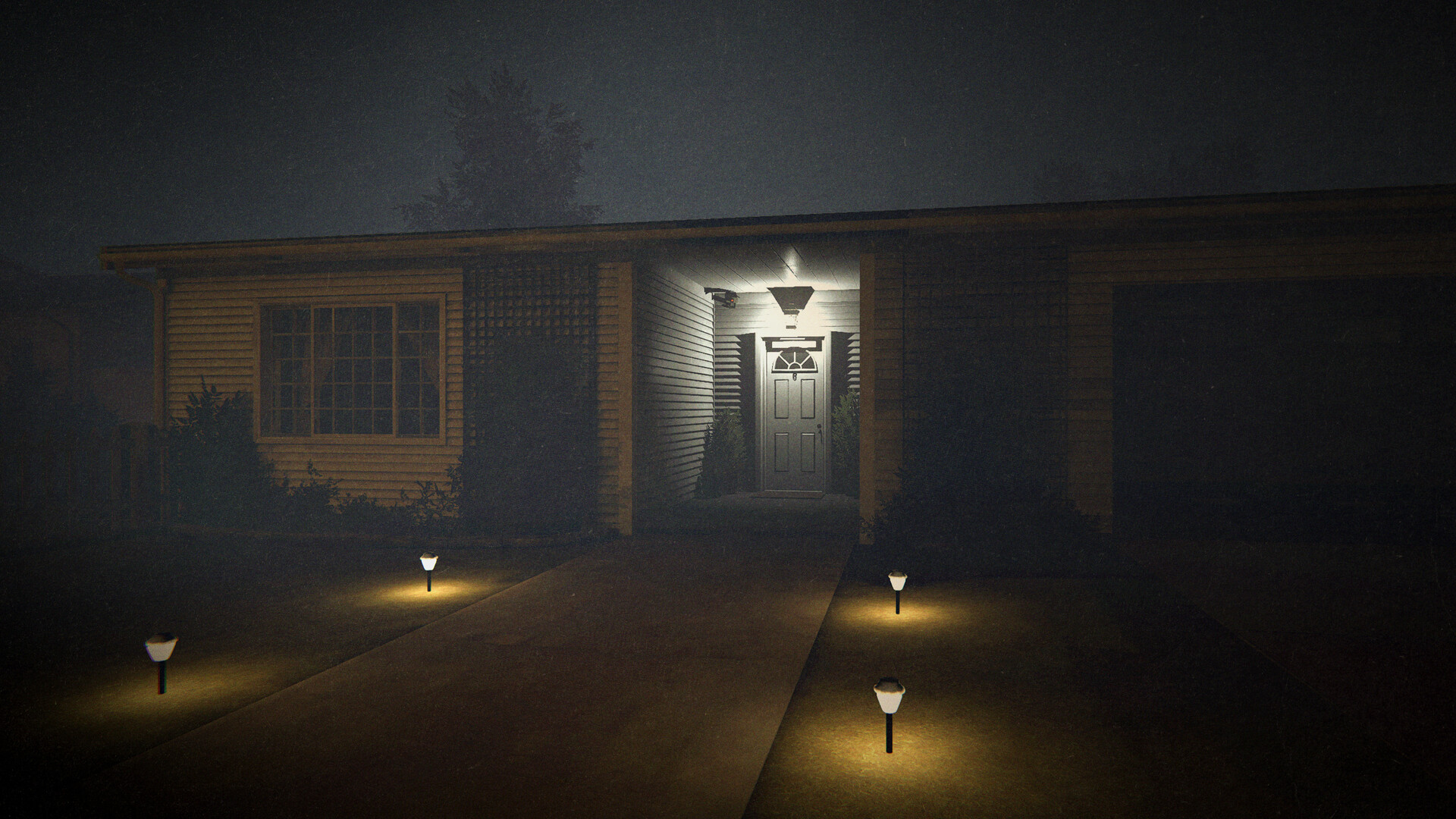
Launched in 2020 Early Access from a solo developer, and it remains in Steam's top 100 most-played games years later, a genuine phenomenon, not typical Early Access longevity. You and up to three friends enter haunted locations, using equipment to collect evidence and correctly identify the ghost type, since the specific way it kills you depends on exactly what kind of ghost it is.
The role-playing it enables, whispering, watching from the truck, arguing over EMF readings, creates a collaborative tension few other games in the genre replicate. Ongoing content updates continue to expand and refine the core loop years after launch, and it remains one of the best co-op horror experiences on Steam.
The evidence-gathering system has been expanded substantially since launch, with ghost types and their specific tells growing more numerous and more distinct, which keeps veteran players engaged years after they'd otherwise have learned every trick.
43. Lethal Company
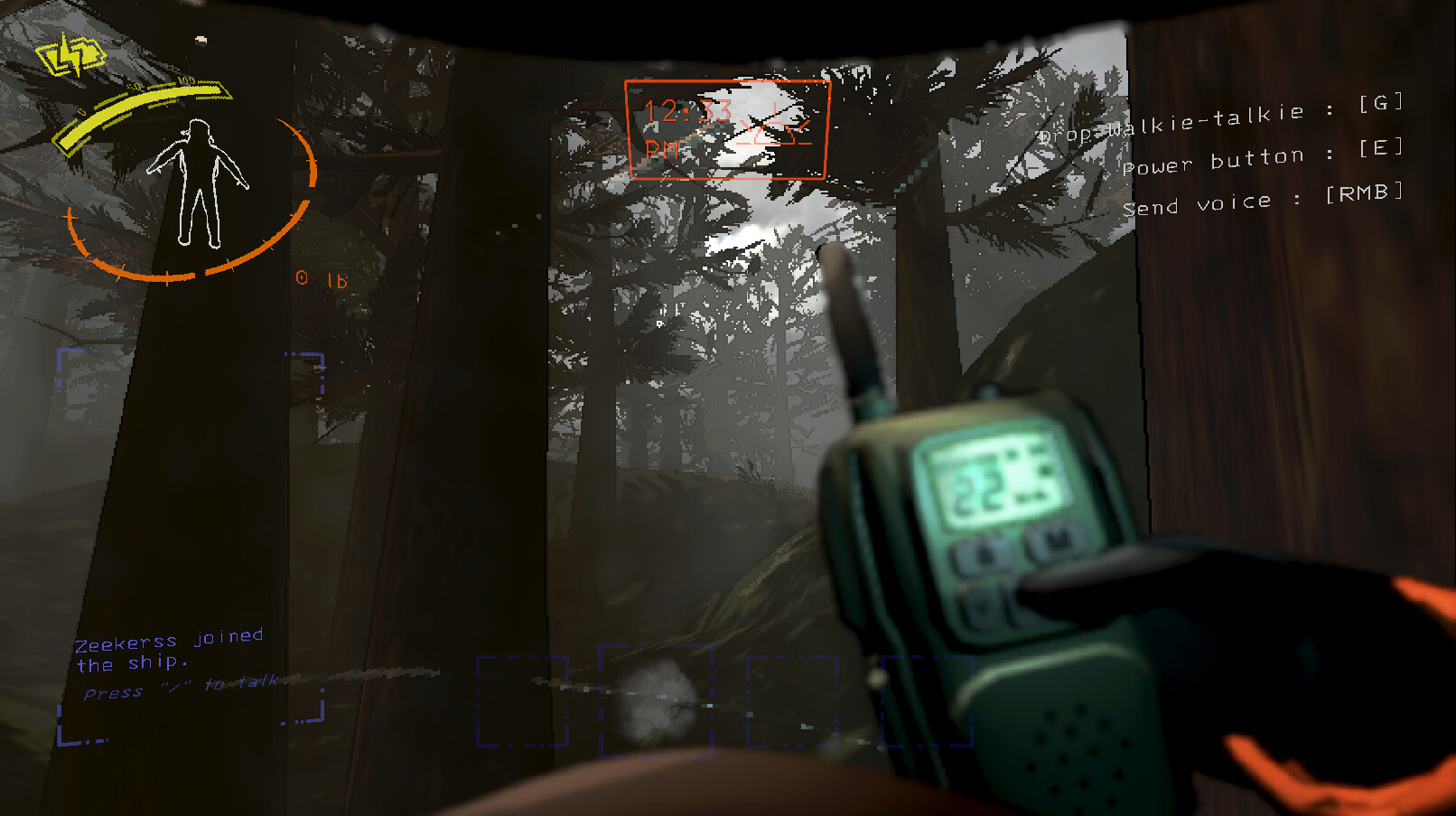
One of the highest-rated games on Steam, and the reason co-op horror exploded as a genre in the first place. A solo developer project that peaked at over 271,000 concurrent players and became a genuine cultural moment. You work for a corporation collecting scrap from abandoned moon facilities, trying to meet quota before the deadline while something wrong shares your space.
The monsters don't feel gamey. They feel like something that shouldn't be there, and sound design carries much of the horror, especially with headphones in a dark room. Slightly older now, and R.E.P.O. has arguably surpassed it for brand-new players, but the mod scene is enormous and the base design remains among the best in the genre.
Zeekerss has continued supporting this with regular content updates years after the initial concurrent-player explosion, which is a genuinely rare commitment from a solo developer who could reasonably have moved on to a new project by now.
44. R.E.P.O.
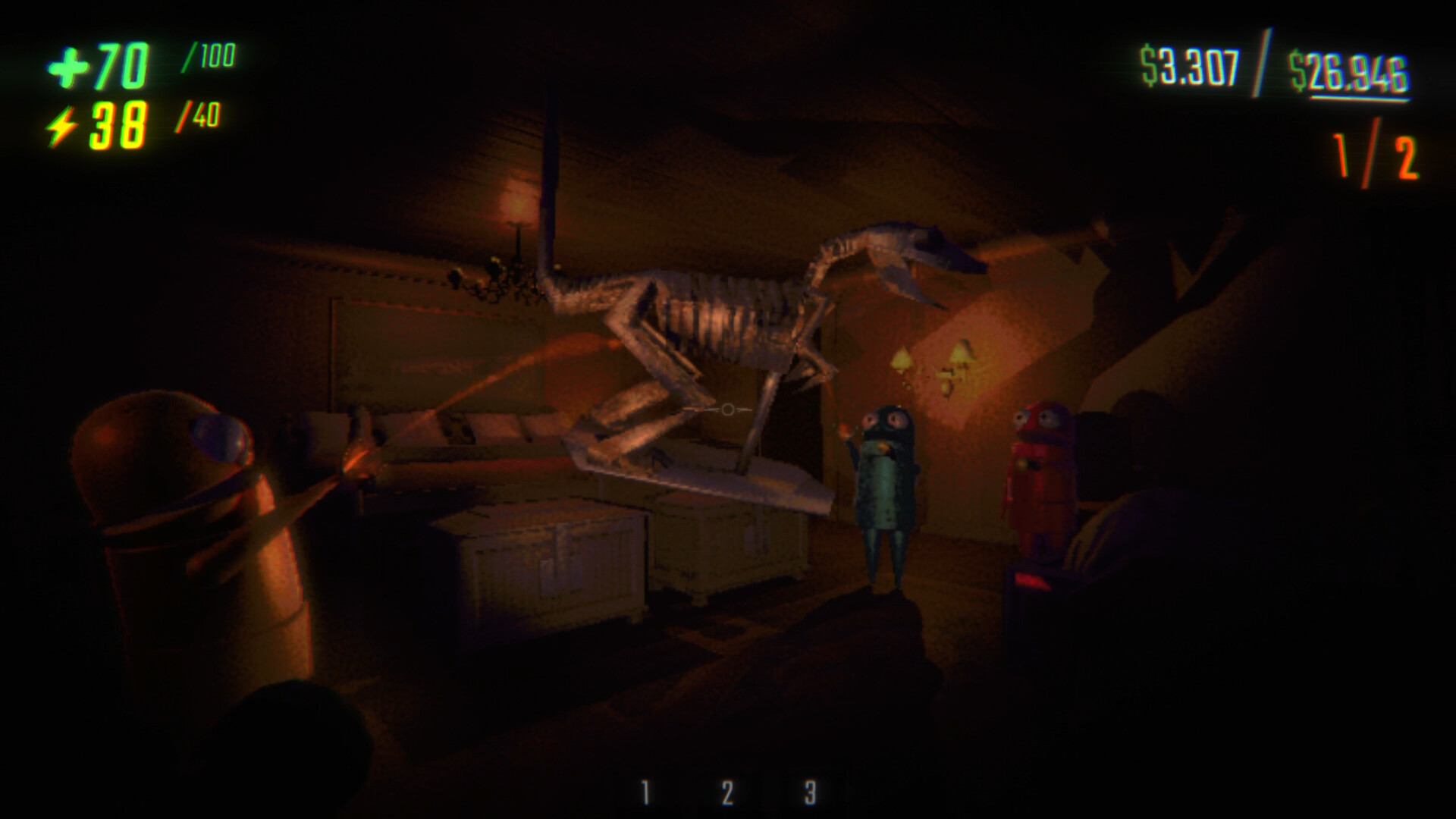
The best co-op horror game released in 2025, and it's not close. Up to six players collect valuables from haunted locations while physics-based chaos ensures nothing goes to plan. The valuables are full physics objects, meaning the mayhem is baked into the design rather than scripted. Each monster type has distinct behaviour patterns and audio cues learned over dozens of runs.
The game rewards communication and punishes lone-wolf players with a consistency that feels almost personal, and the tension escalates from manageable to genuinely tense in a way few co-op horror games manage. At under $10 split however many ways your group wants, this is the easiest recommendation on this entire list.
semiwork built the physics-based valuable system specifically to create chaos that no two groups will ever experience identically, and that unpredictability is doing more of the comedic and tense heavy lifting than the monster designs themselves.
45. Content Warning
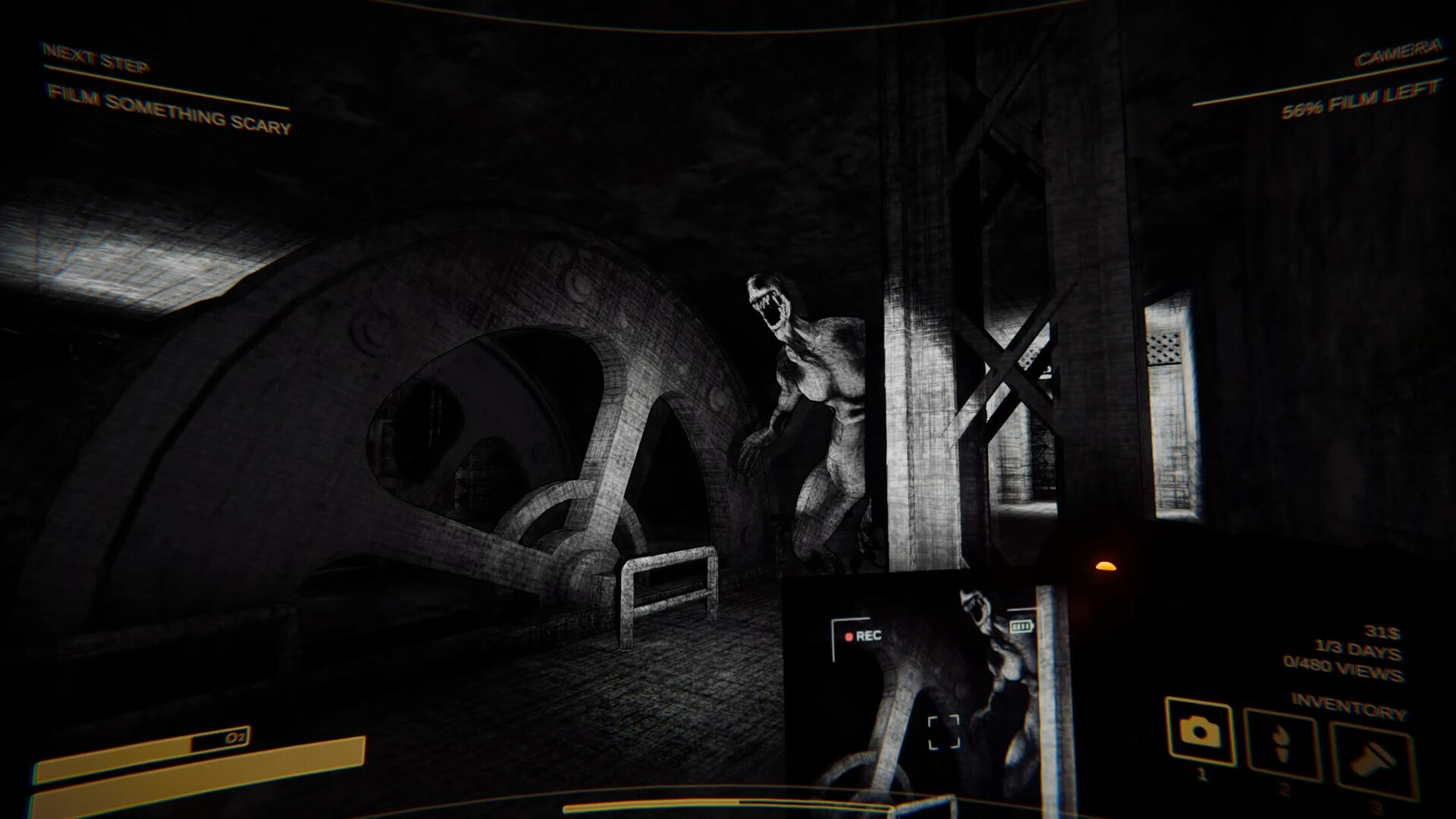
The best concept in the entire co-op horror genre. You and your friends go into a monster-infested underground world with a camera, film whatever terrifying things you find, and upload the footage for views. Your objective isn't just to survive: it's to survive AND get good footage, two goals that are frequently in direct conflict.
Free for its first 24 hours, generating enormous initial player counts, and it's settled into a steady, active community since. The core loop, film something awful, upload it, watch your numbers go up, remains endlessly replayable with the right group, and the filming objective creates a group dynamic no other co-op horror game has matched.
Landfall's decision to make the first day completely free was a genuinely smart go-to-market call for a game that depends entirely on word-of-mouth clips and shared footage to actually sell itself.
46. Dead by Daylight
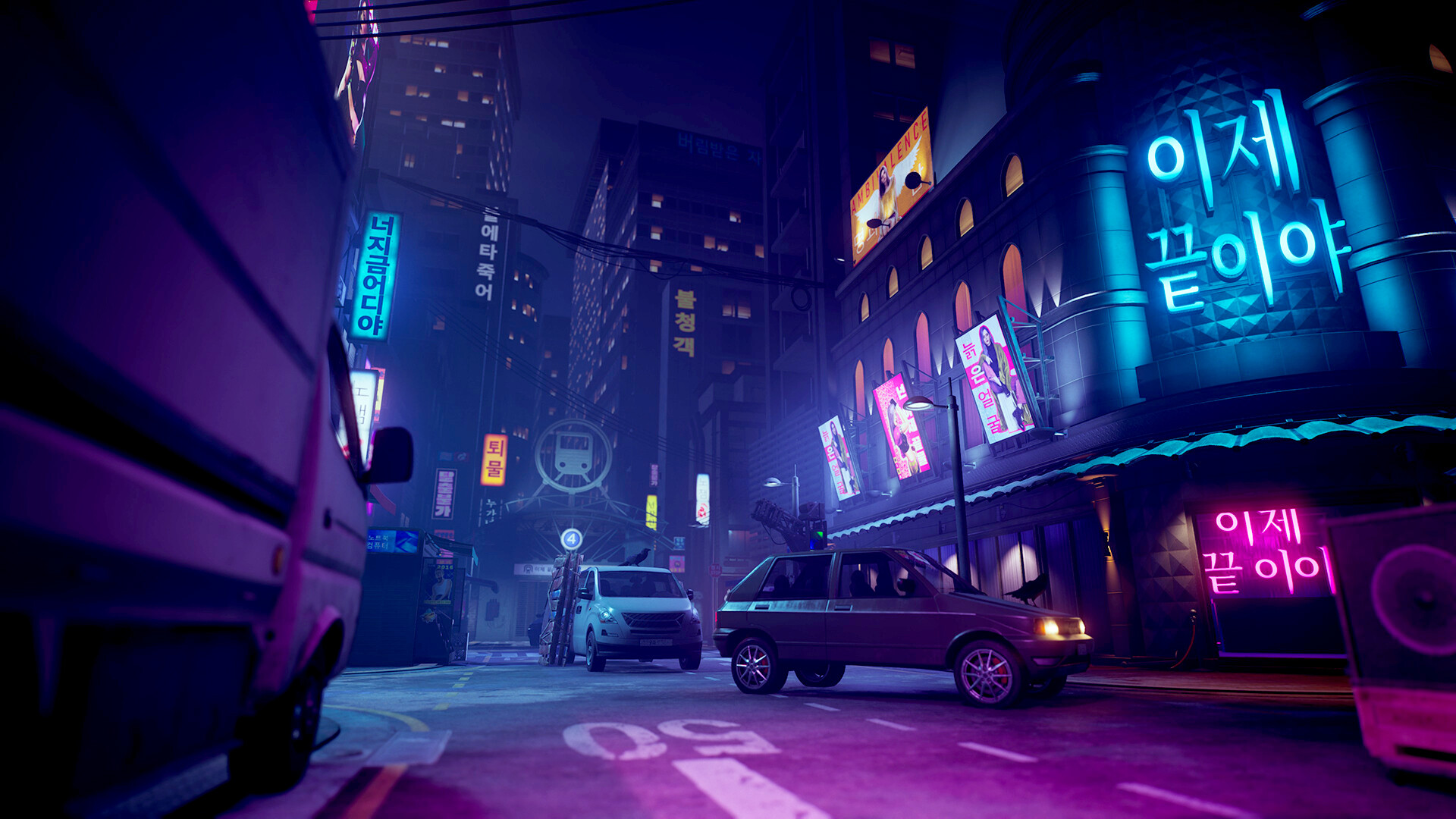
A different kind of co-op horror to everything else on this list. Four survivors against one player-controlled killer, in an asymmetric structure where one player controls the monster while the others repair generators and try to escape. Nearly a decade old, and it's the game that proved asymmetric horror had a viable long-term audience.
The lower review score is worth naming honestly: the progression system has drawn years of criticism, DLC pricing is aggressive (licensed killers like Michael Myers and Freddy Krueger are paid additions), and killer/survivor balance has been a long-running source of community friction. Still, nothing else on the market gives you the specific experience of being the monster.
Behaviour Interactive has kept adding licensed killers from major horror franchises for nearly a decade now, and while the DLC pricing draws real criticism, the sheer breadth of horror IP represented in one game is genuinely unmatched anywhere else.
47. Five Nights at Freddy's
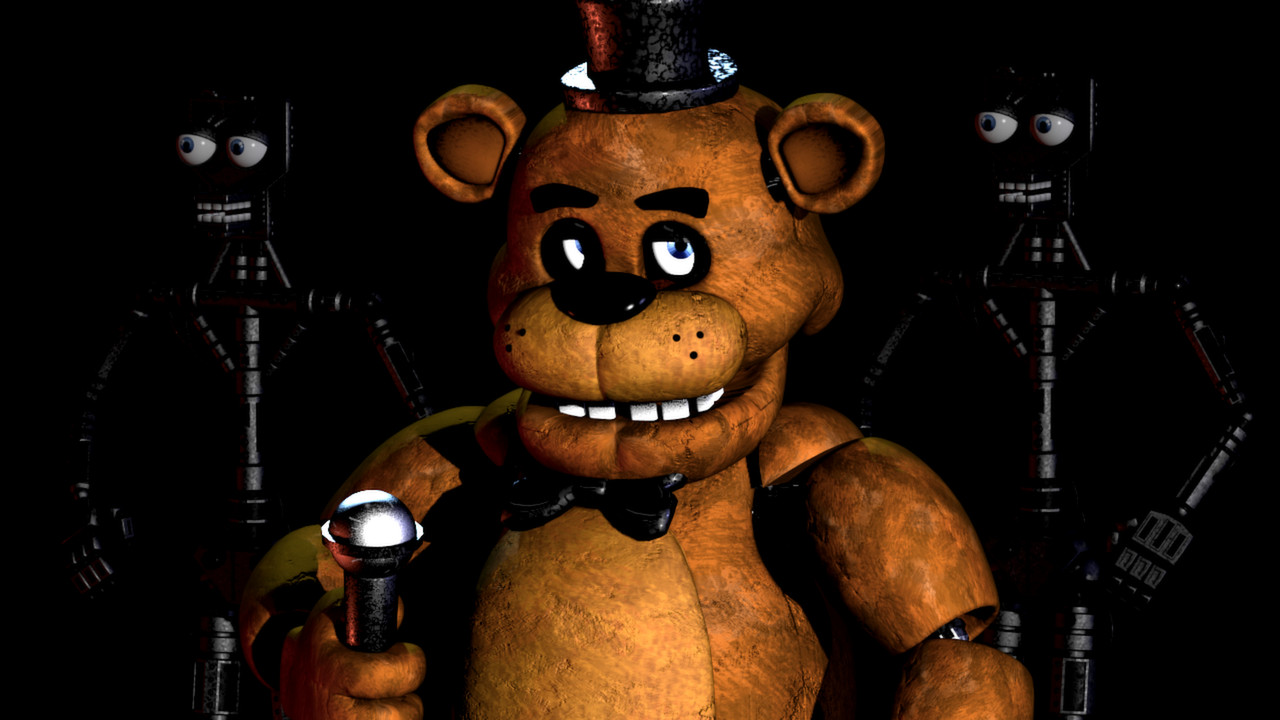
One person, one remarkable game, and a mechanic so elegant it spawned an entire genre and a franchise most players have some awareness of even without playing a single entry. You manage power across five cameras and two doors at Freddy Fazbear's Pizza while animatronic characters try to reach your office. Manage the power well enough to survive until 6am. That's the entire game.
The original is worth playing first because no subsequent entry in the now-massive franchise, including recent imitators, has matched the purity of its design. The resource management tension is genuinely inventive, and the jump scares earn their placement because the game specifically trains you to dread them.
Scott Cawthon's decision to step back from active franchise development in recent years has left the series in other hands, which makes revisiting the original specifically feel like returning to a purer, more singular vision than anything that followed.
48. Carrion
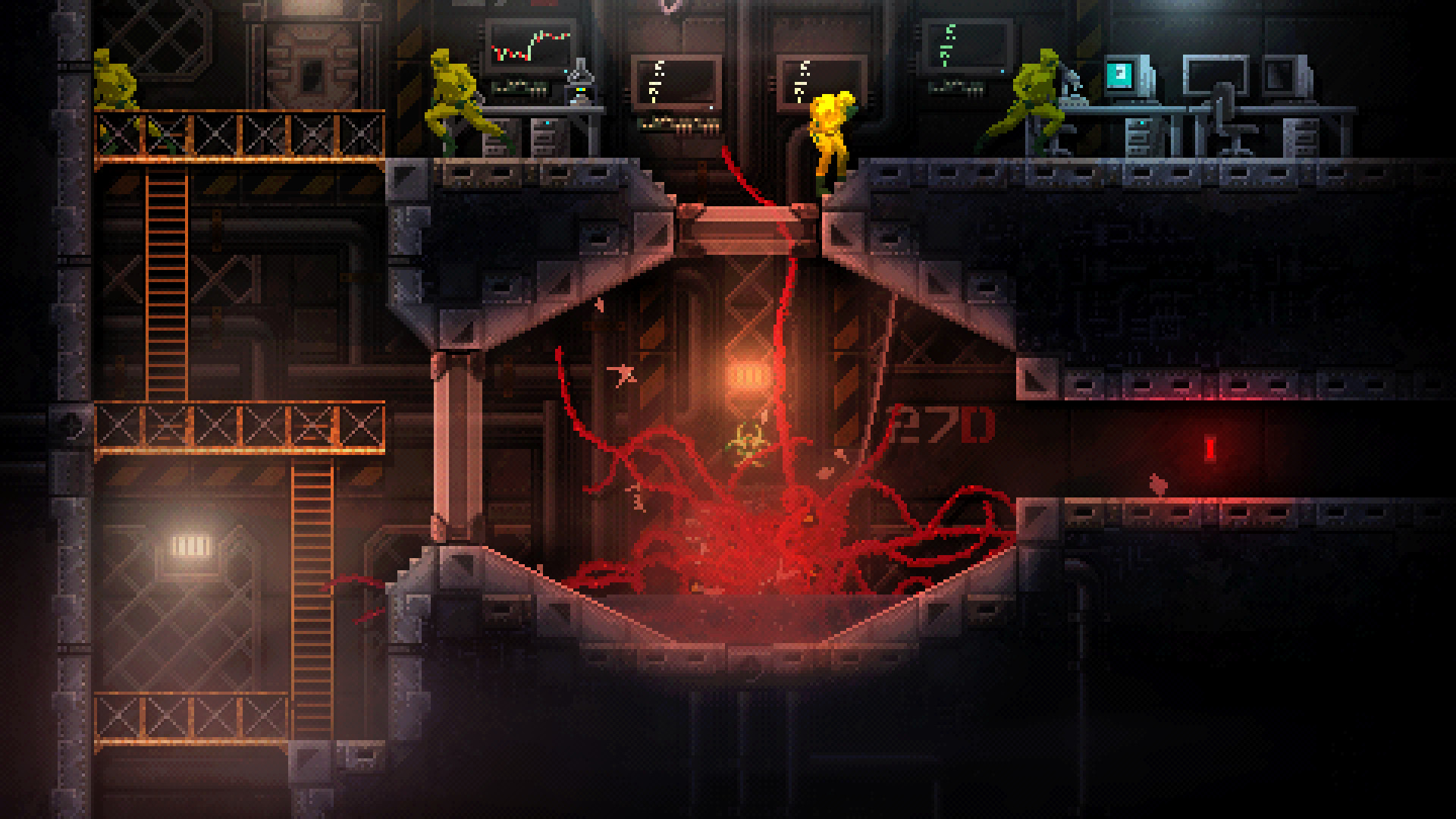
Might look like a bit of fun because it is, but it's also a genuinely well-made horror game that reverses the roles and lets you play the monster. Through a pixelly recreation of tentacles and teeth, it captures the essence of a good creature feature as you hoover up screaming scientists, rending limb from limb and leaving nothing but parts in your wake.
It's excessively gory in a laugh-out-loud way, with decent puzzles woven between the carnage using an ever-expanding range of monster powers. This genuinely isn't scary, since you're the one doing the terrorising, which makes it perfect for skittish horror fans who want the aesthetic without the dread.
Phobia Game Studio's decision to give the creature an ever-expanding toolkit of powers rather than a single ability means the back half of the game keeps introducing genuinely new ways to be a monster, rather than just reskinning the same core loop.
49. Poppy Playtime
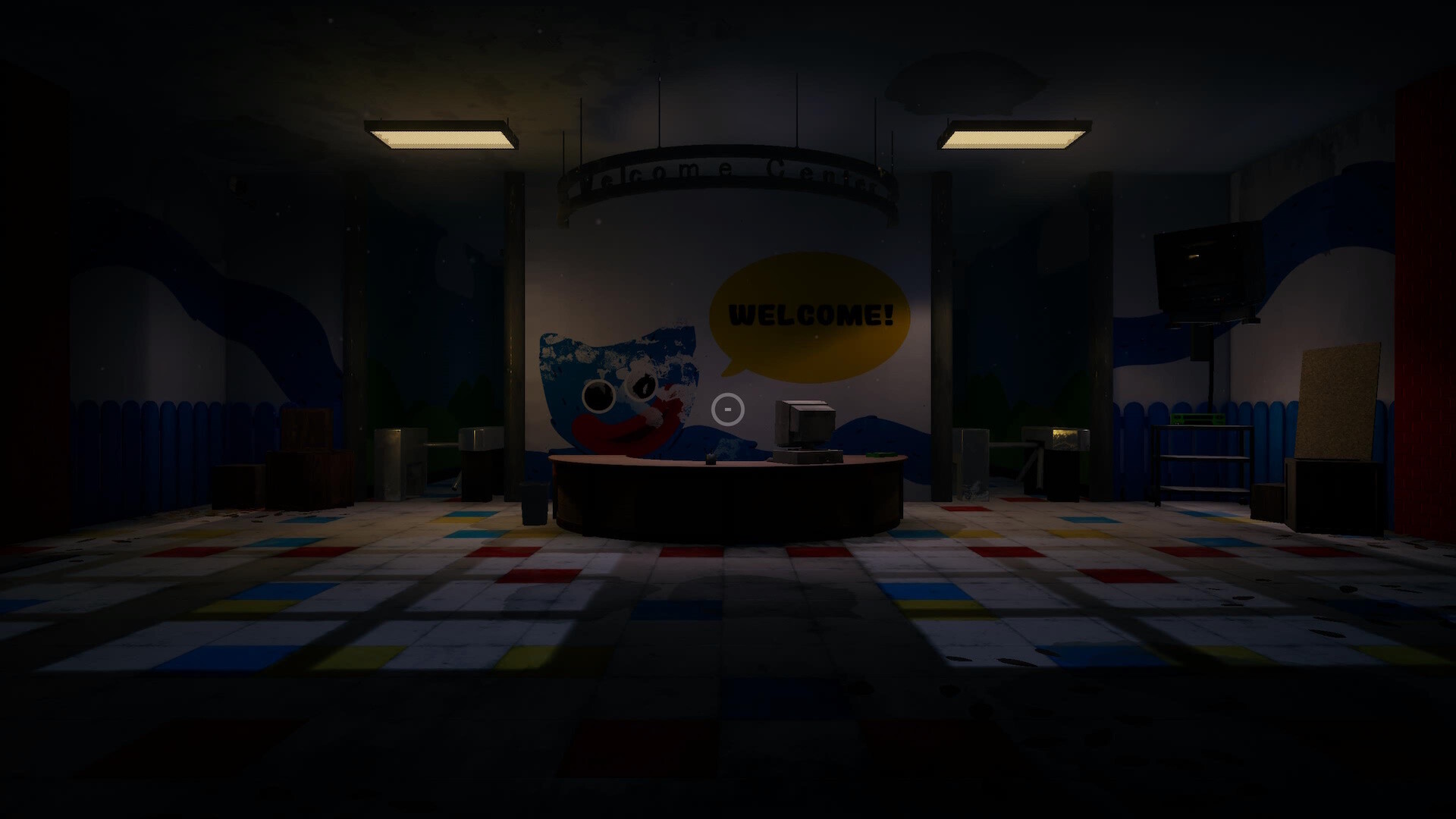
An abandoned toy factory, a decade after its staff vanished without explanation, and a multi-purpose grappling-hook glove for puzzle-solving and survival. Released episodically since 2021, each chapter has grown both the mystery and the cast of unsettling, once-cute mascot characters, becoming one of the defining titles of the mascot horror subgenre it helped popularise.
The first chapter is completely free, which makes this an easy recommendation regardless of your budget. Genuine puzzle-solving via the grappling hook keeps it engaging beyond just scares, though later chapters have drawn some real criticism for pacing and price relative to length.
Mob Entertainment's episodic release model has meant real gaps between chapters, which has tested some players' patience, but each new chapter has consistently expanded the underlying mystery rather than treading water to justify the wait.
50. Inscryption
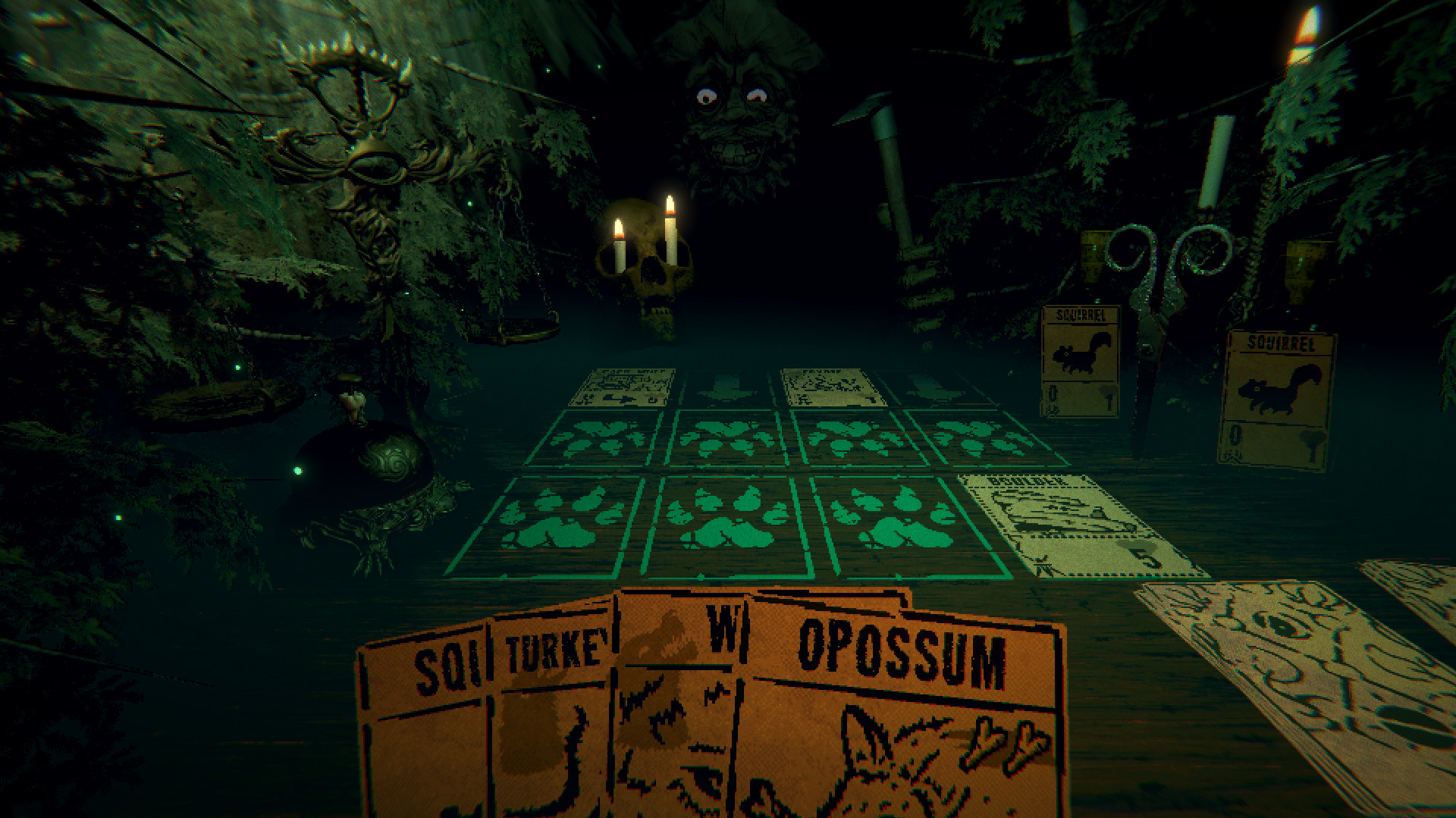
I'm not going to tell you much about Inscryption. The best thing I can do for you is send you in blind. Any description diminishes what the game does when you discover it for yourself. What I will say: it starts as a cabin-based deck-building game with a sinister atmosphere, and it does not stay there.
From Daniel Mullins, also behind Pony Island and The Hex, sharing their approach to games as objects that interrogate their own nature. The deck-building mechanics are genuinely excellent on their own merits. The surrounding structure is something else entirely, and its BAFTA Game of the Year win was fully justified. Play it before someone tells you what it does.
Daniel Mullins has a consistent pattern across his catalogue of building games that actively distrust their own medium, and this remains the clearest, most fully-realised version of that idea he's shipped to date.
Fifty games. Every horror subgenre Steam actually has to offer, from the sixteen-year-old benchmark at the top to a solo developer's found-footage liminal-space nightmare that came out this year. If you've made it this far, you now know more about what's actually good in this genre than most horror-focused outlets bother to cover in a year of separate articles.
A few honest patterns worth naming rather than burying in fifty separate entries. The best horror on Steam right now splits cleanly into two camps: small teams doing something a AAA budget would never greenlight (SIGNALIS, Darkwood, Crow Country, The Backrooms 1998, Mundaun), and genuinely massive studios finally getting the remake formula right (Resident Evil 2 and 4, Silent Hill 2, Fatal Frame II). The middle ground, competent but unremarkable horror with a real budget behind it, barely shows up on this list at all, because it barely exists as a category worth recommending.
Co-op horror deserves its own honest note. Phasmophobia, Lethal Company, R.E.P.O., Content Warning, and The Outlast Trials are ranked lower here than their cultural footprint might suggest, and that's deliberate. This list is ordered by how much a game stays with you after you've finished it, and co-op horror is built for the opposite experience. You play these to have fun with friends in the moment, not to lie awake at 2am. That's not a knock. It's just a different job than what Amnesia or SOMA are doing, and both jobs matter.
A pricing note worth stating plainly, since it changes how you should actually approach this list: buying all fifty at full price would run you close to $1,400. Nobody should do that. A meaningful chunk of these titles are frequently discounted well below their listed price: Amnesia: The Dark Descent regularly drops under $2, SOMA and Darkwood both go on sale for well under $10, and several of the co-op picks near the bottom of this list cost less than a fast-food meal at full price to begin with. Every linked FAQ page pulls live Steam pricing specifically so you're never looking at a stale number here, sale or not.
One more honest pattern, since it's the kind of thing that only becomes visible once you've actually assembled fifty of these side by side: Japanese horror developers are having a genuinely stronger run right now than almost anyone gives them credit for. Capcom's remake output, Bloober Team's SILENT HILL 2, Koei Tecmo's FATAL FRAME II remake, and NeoBards' SILENT HILL f all land in the top twenty of this list, and none of them are coasting on nostalgia alone. Each one is doing something a straight remaster wouldn't have accomplished. If you only take one recommendation away from this entire guide beyond the number one spot, let it be this: the current wave of Japanese horror remakes and reinventions is worth paying attention to as a genuine moment for the genre, not just a string of unrelated releases.
This is the pillar page now. New releases get added here as they earn their spot, existing entries get their pricing and review data refreshed automatically through the linked FAQ pages, and anything that gets delisted or superseded gets pulled rather than left to rot. Bookmark this one specifically if you're only bookmarking one horror list on this site.